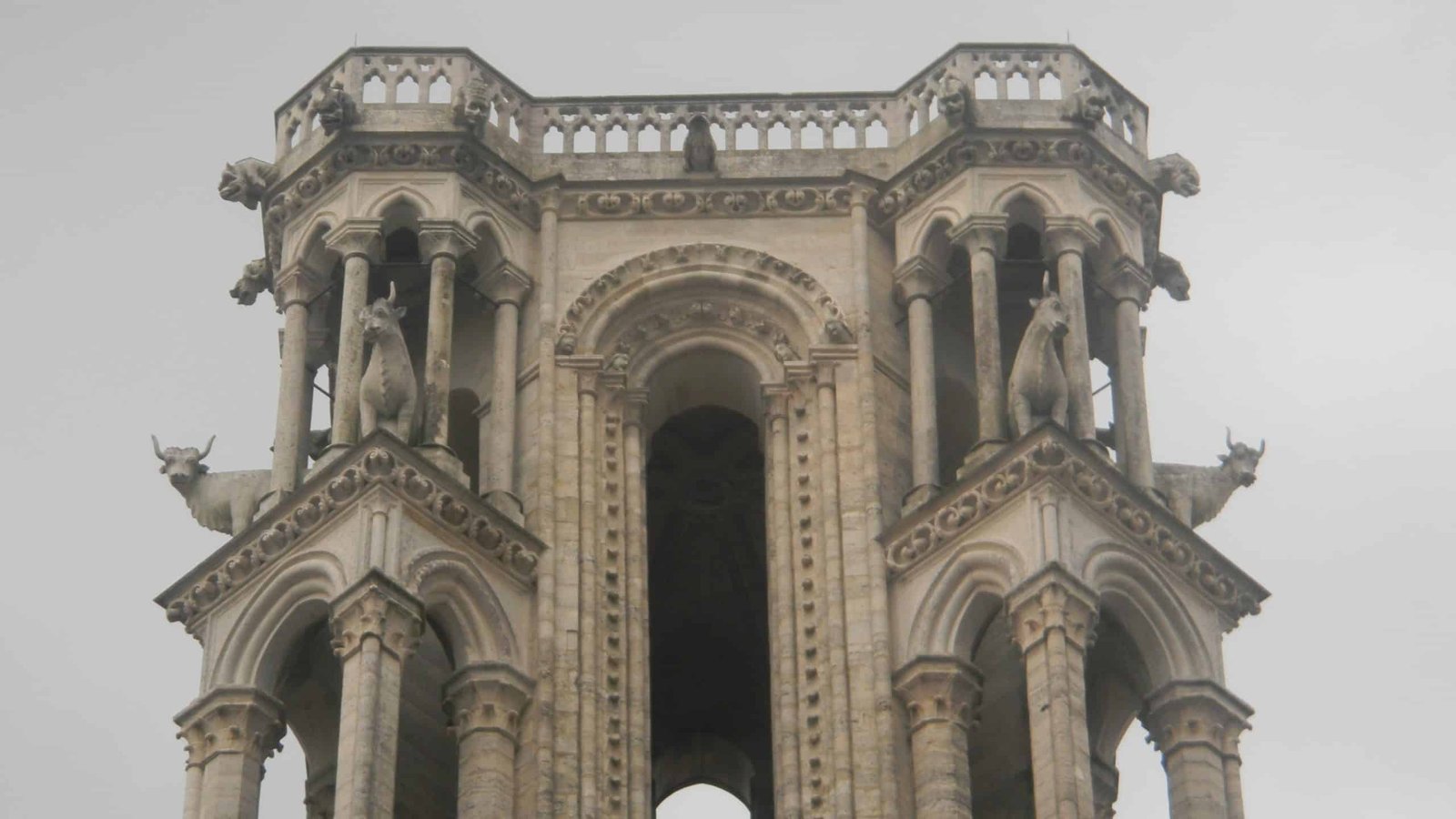
The first phase of the development of Gothic style was very cool because architects were experimenting with new forms without having a standard design yet.
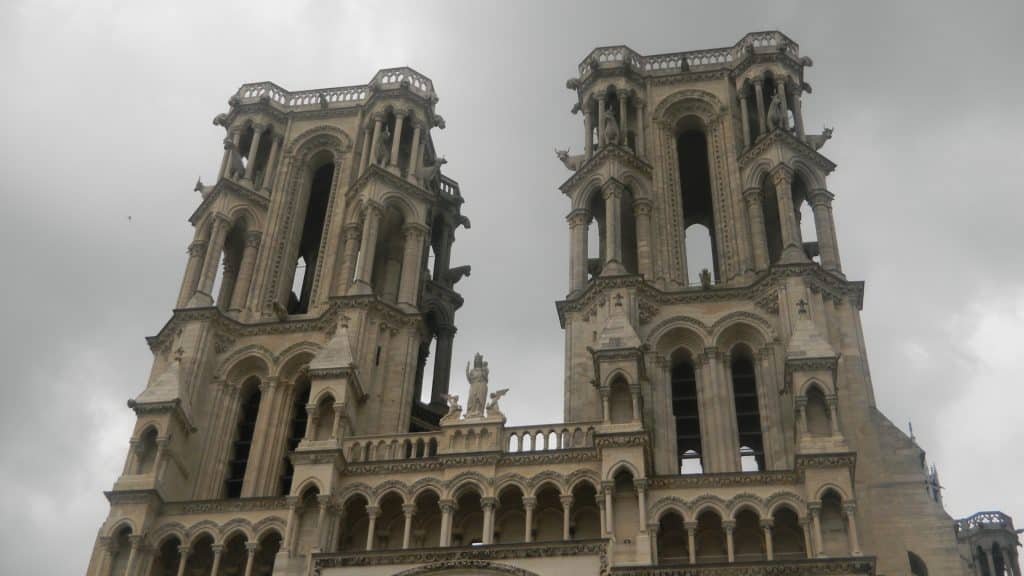
You can thus see a lot of variety in ways that builders were expanding beyond the simple two-dimensional designs of earlier churches, and into a more dynamic world that merchants and scholars in Europe’s growing towns could relate to. A more sophisticated way of seeing the world was opening up.
Laon presides on a 200- foot hill north of Paris. It became one of the main cloth-trading towns in northern France–it was a key link between Paris and the cloth-trading towns in Flanders. So, Laon had a large population of merchants, and they were becoming aware of themselves as a new class.
The cathedral of Laon was begun in the 1150s, and it was built through the rest of the 12th century.
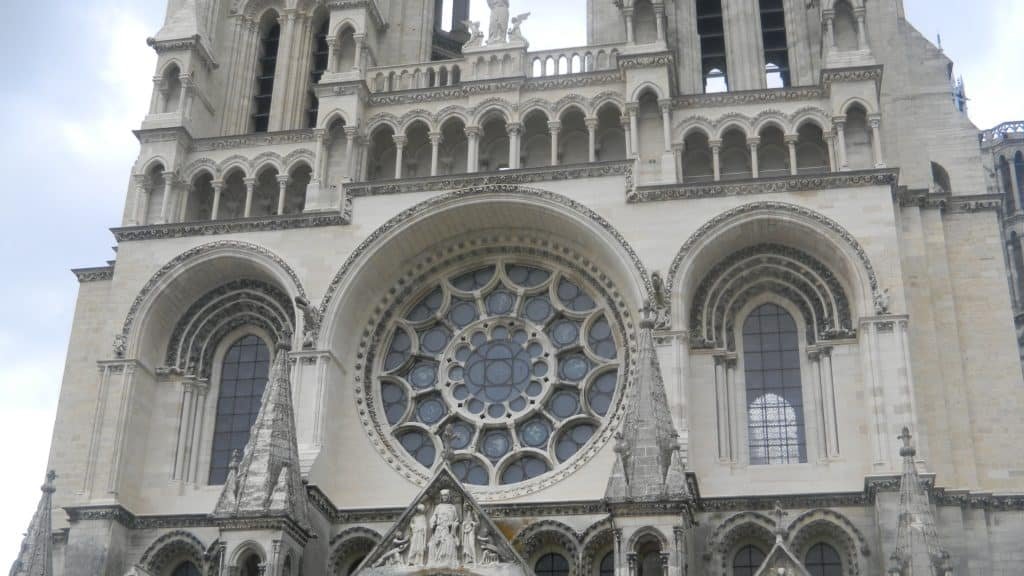
The late 12th century was Gothic style’s experimental time. The first Gothic structures, the choir and narthex of the abbey church at St. Denis, were dedicated in the early 1140s. Chartres Cathedral later became the classic design (in the early 13th century). The cathedrals at Sens and Noyon also represent this period, But Laon Cathedral is my favorite example.
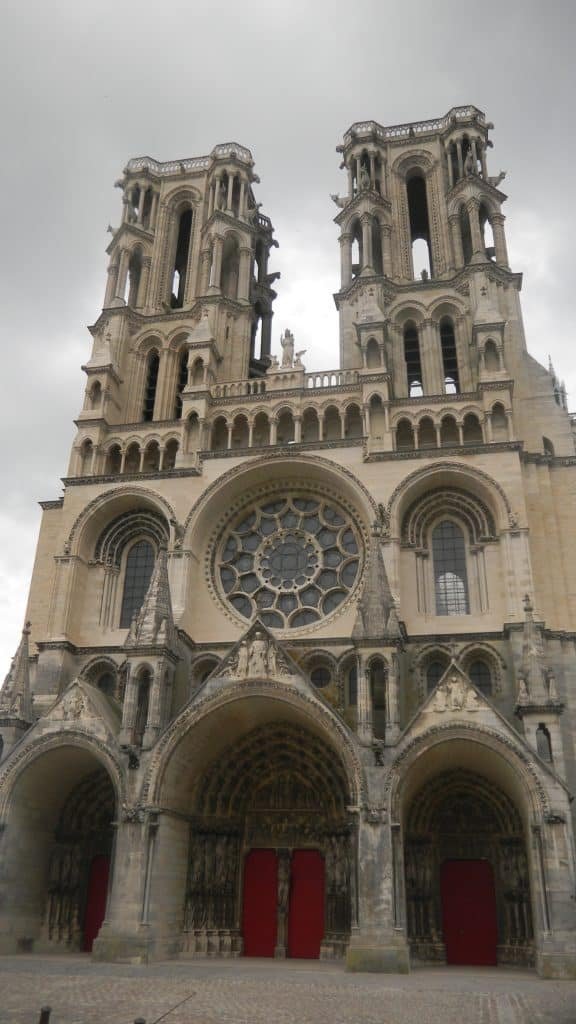
St Denis’ west facade already began to partition space into sections, which give it a more dynamic look than older Romanesque churches. But, what an advancement at Laon! The towers, the middle section with the circular stained glass window arrangement, the entrance level, and the facade as a whole dramatically break space into positive and negative volumes that create dynamic interplays of light and shade–even on the cloudy day when I was there. Laon’s merchants and scholars must have found this new emphasis on light and three-dimensional space riveting. The sacred order of the universe, which medieval cathedrals embodied, was expanding into new idioms, and becoming fitting for the world, which was being made more dynamic by increasing literacy and use of money. And that isn’t all.
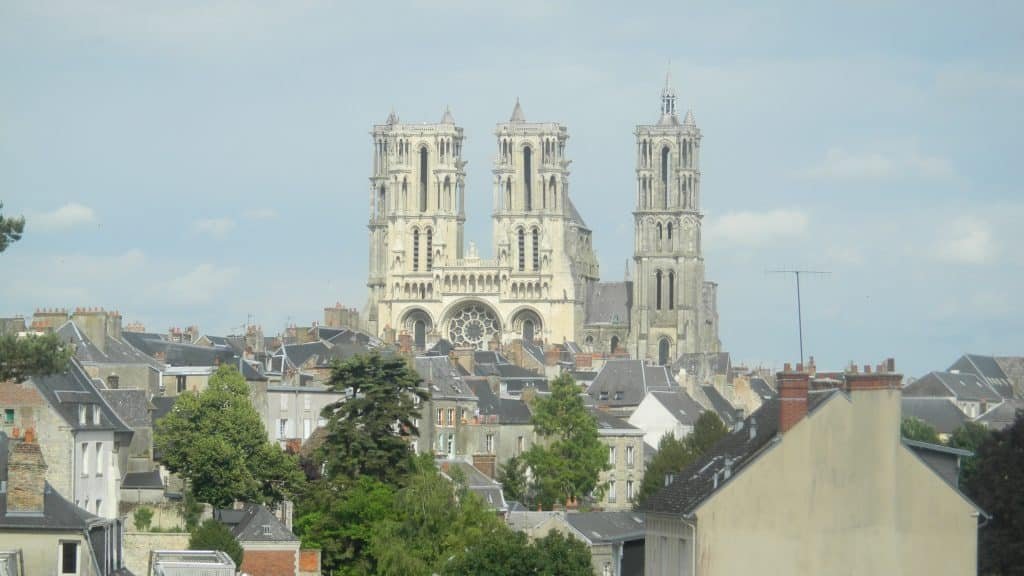
The cathedral’s reflections change as you walk around the town, and as the weather changes–the sun came out by the time I took the top picture. Laon’s lofty perch winds in an S-curve as graceful as a pirouette. The cathedral is at one of the town’s ends. So, people in the Middle Ages saw the west facade presiding over their homes and the surrounding countryside, and changing colors all the time. Divine light shone throughout the world.
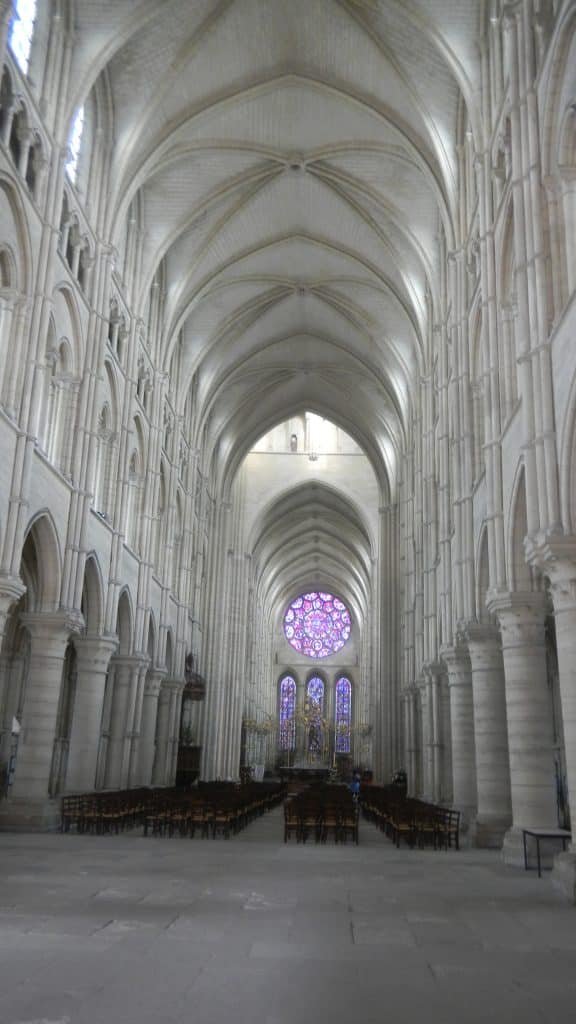
Entering Laon Cathedral doesn’t bathe you in ordinary light. You’re immersed in something that would have transfixed the people in the Middle Ages who built it. Let’s step into their world.
1. Literacy was growing, and a merchant class was emerging in the late 12th century. Laon was a key cloth trading town between Paris and Flanders, so it had its share of both.
2. The western entrance and choir of the abbey church of St. Denis were the first fully Gothic structures–dedicated in the 1140’s. The entrance made space into a more dynamic interplay between light and shade than earlier churches did. Laon’s exterior advanced this so much that it seems to radiate light all over Laon.
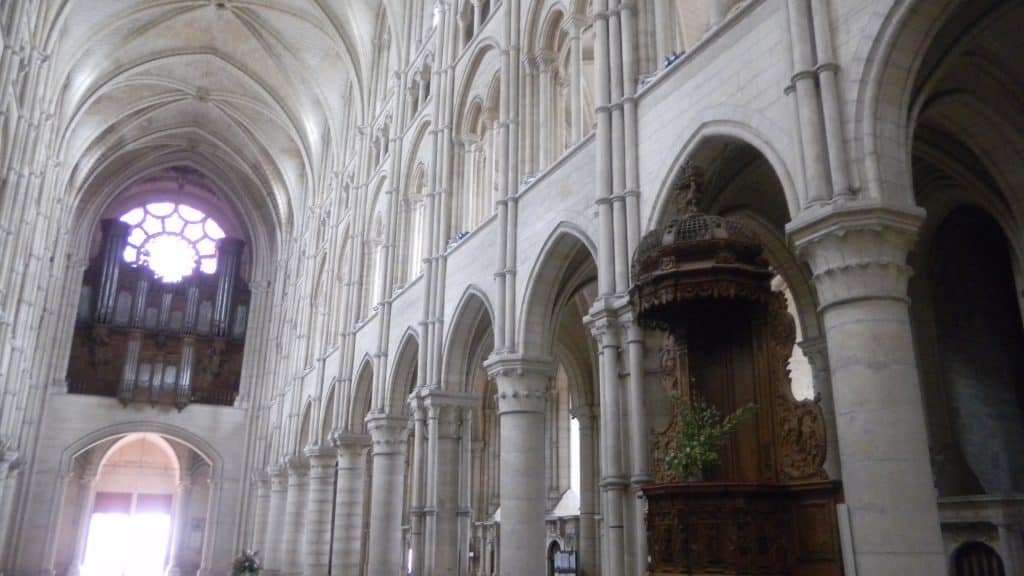
Laon Cathedral’s interior is so infused with divine light that everything seems illuminated with God’s glory. I took the first picture from the entrance. The above picture looks back at the entrance, after you walk to the center of the church.
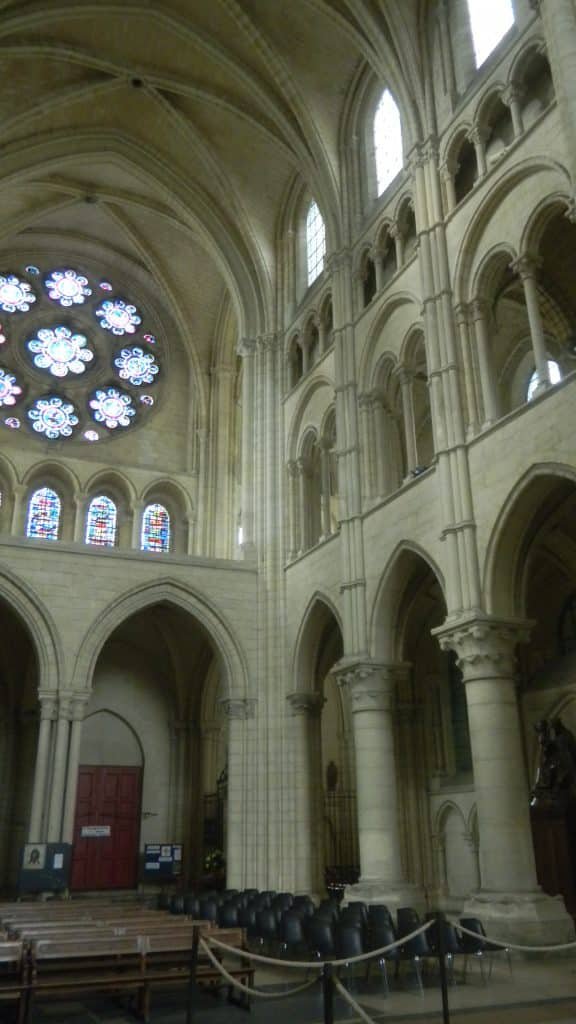
The above photo looks into the transept from roughly the same spot.
I was amazed by the amount of light in there–the sky was completely overcast, and rain was starting to fall. This is dark as the church ever gets in the daytime.
Medieval folks must have been enthralled on a sunny Easter day, as they celebrated Christ’s Passion, and the renewal of spring.
Laon Cathedral’s interior was even more mesmerizing in the late 12th century because it expressed an old view of the world and an emerging view, and integrated them masterfully:
1. The rows of columns and arches down the nave and transept repeat static geometrical forms on a monumental scale. This is the older Romanesque view (which you can explore in the cathedrals at Mainz and Speyer)–God’s divine order arches over the universe. This view of static geometry as absolute truth is a legacy from ancient Greece.
2. But the Gothic arches soar over the columns, and the interior has more light in it than Romanesque cathedrals do. Laon Cathedral’s builders seemed to want to transcend the conventional static order.
What they were striving for was both more spiritual and more worldly.
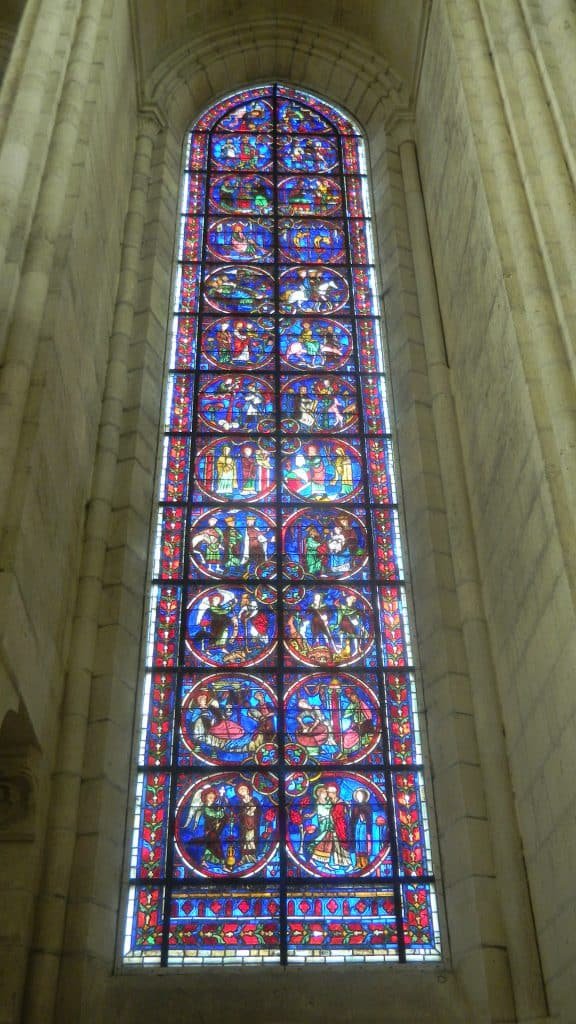
Above, we can see one of the three sets of stained glass windows that are visible in the first picture in this post (from the entrance). Its majestic height makes it seem otherworldly, and it helps fill the church with light. But–
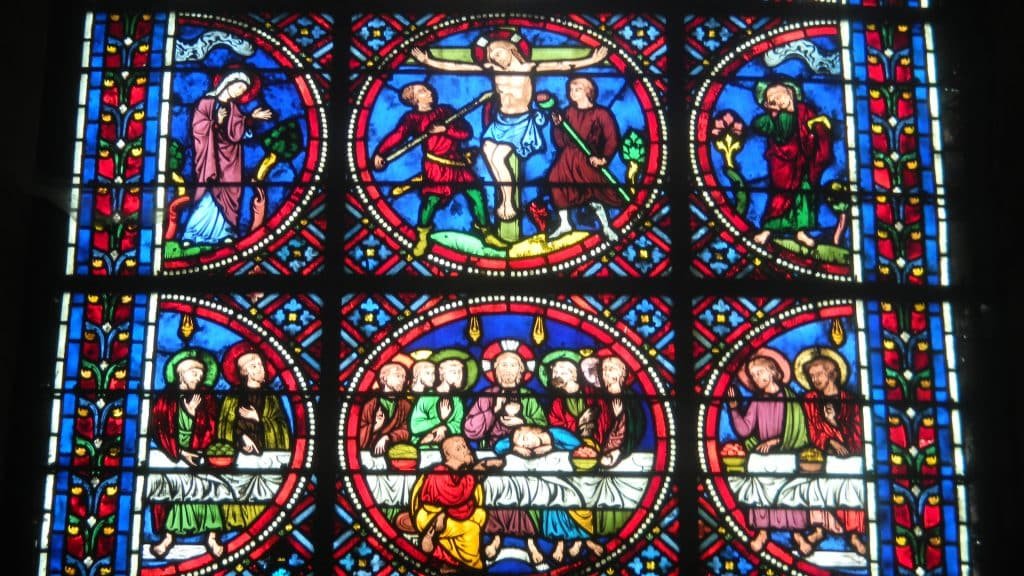
Faces are expressive (especially in the Last Supper scene in the middle of the bottom), and bodies contort energetically (particularly in the scene of Christ’s crucifixion). You can also see this blending of the spiritual and material worlds at St. Denis. But Laon Cathedral was begun in the 1150s–a little later–and the realism was advancing.
Towns were growing in Europe; literacy was increasing, and more money was being used. People were looking for new meanings beyond the monolithic order that the Church and kings were trying to impose in the 11th century. Laon Cathedral is one of the best immersions into the world of people in that transitional time.
As people’s perspectives were opening up, they might have noticed that the area around Laon is easy to fall in love with. The beauty of the countryside gave people more reasons to appreciate the world.
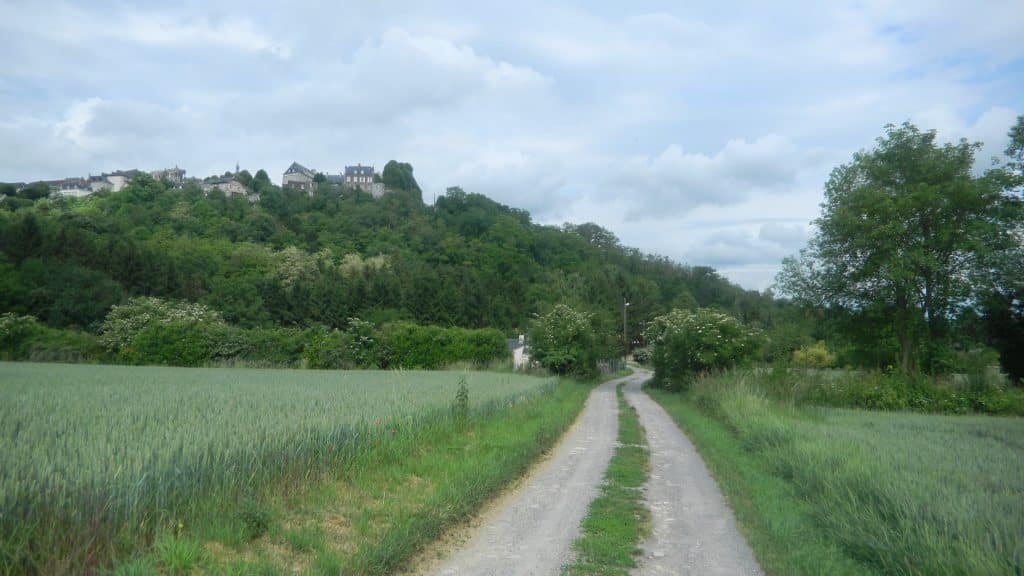
Some of the West’s greatest art was about to follow as Gothic Style reached its classic forms. We’ll explore them in later articles.