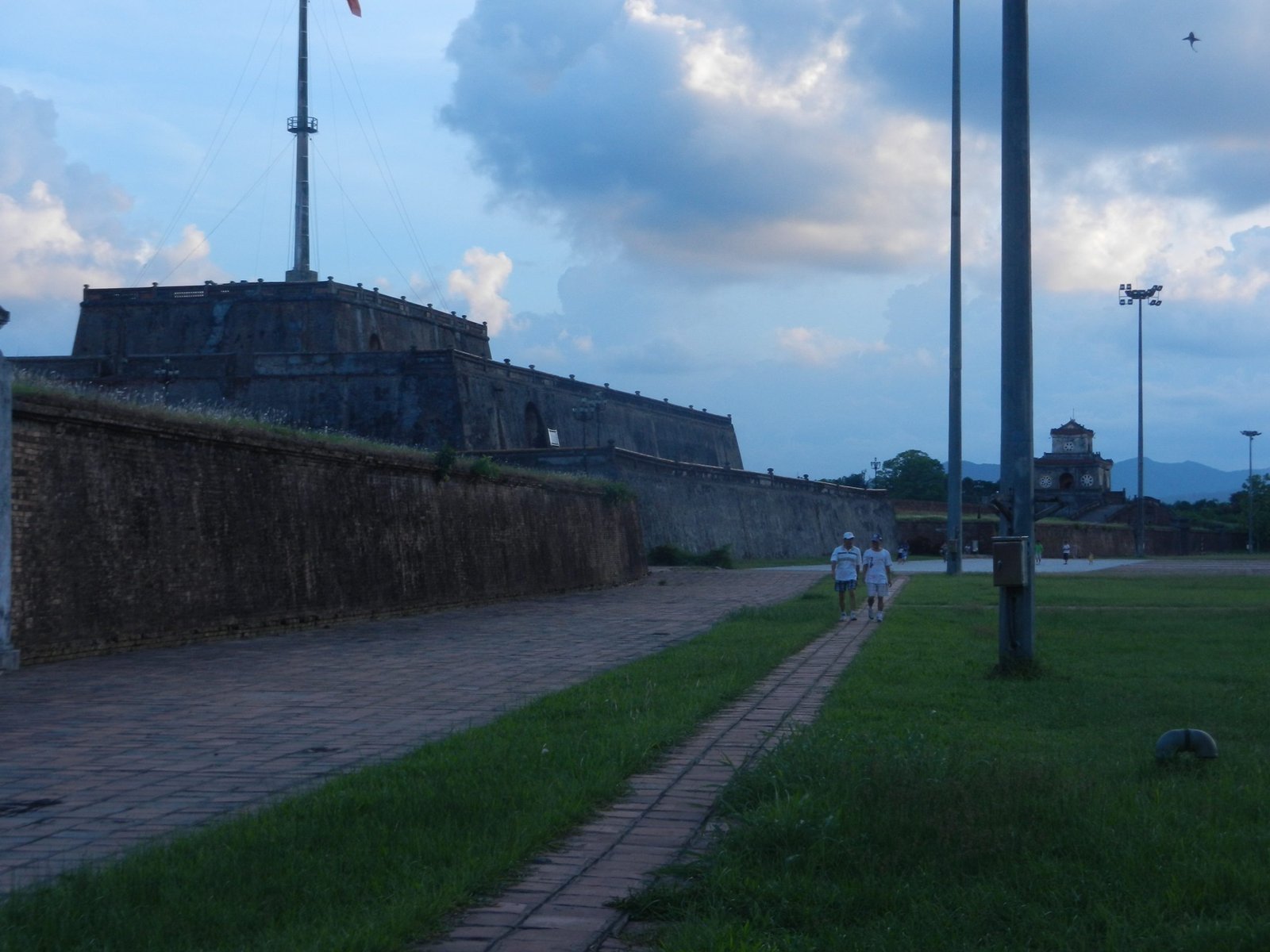
In 1802 the last Nguyen lord, Nguyen Anh, defeated the Tay Son rulers of Vietnam after a traumatic civil war. He returned from the north to the area around Hue, proclaimed himself Emperor Gia Long, and quickly began planning the royal city. He and his successors tried to create an ethereal world that blended Vietnamese and Chinese artistic influences.
This beauty spread beyond the palace to make the whole area seem like a perfect blend of heaven and earth.
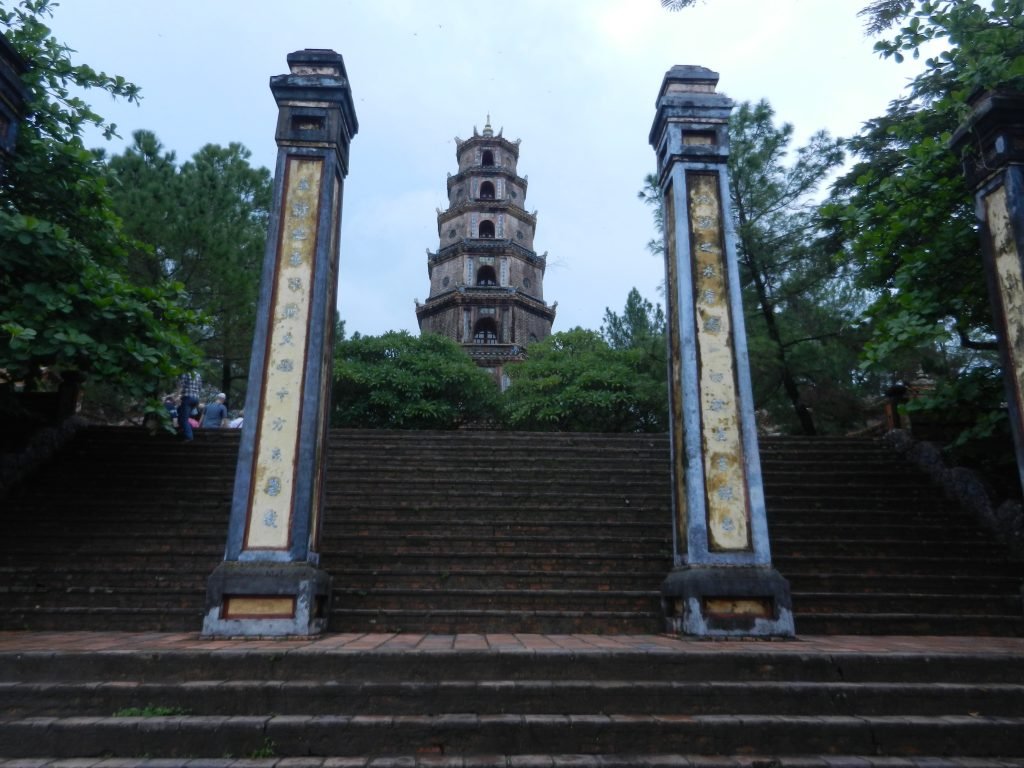
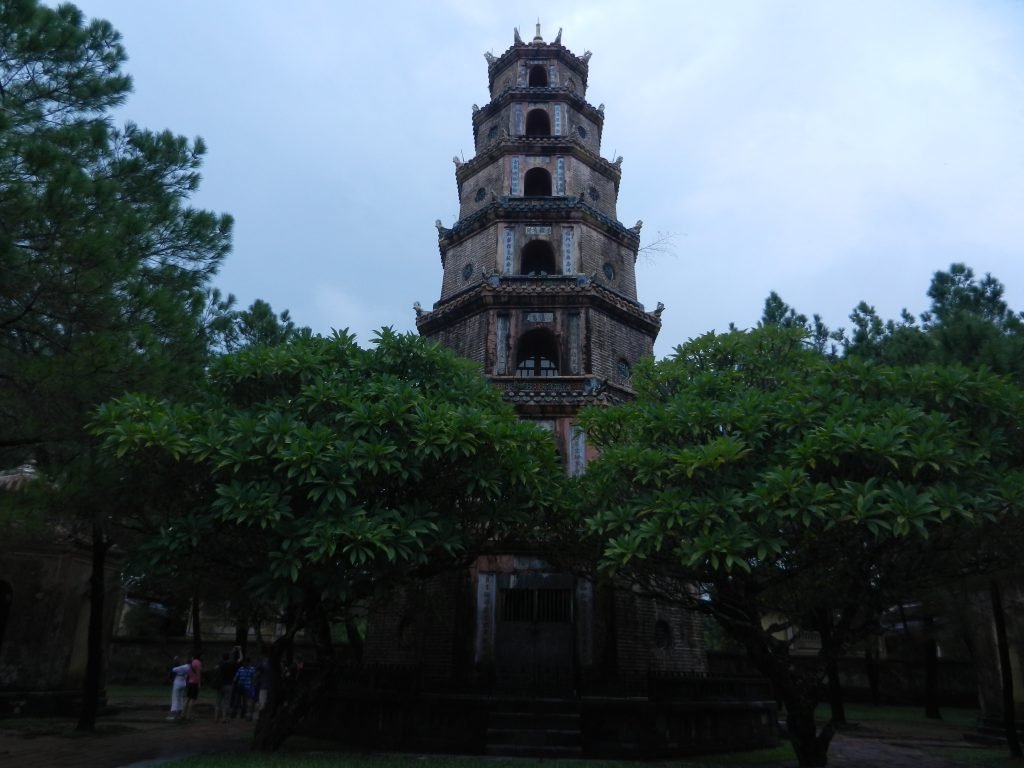
The Thien Mu pagoda (above) had been built in 1601 by the Nguyen lord Nguyen Hoang about 2 1/2 miles from where Gia Long would construct his palace and citadel.
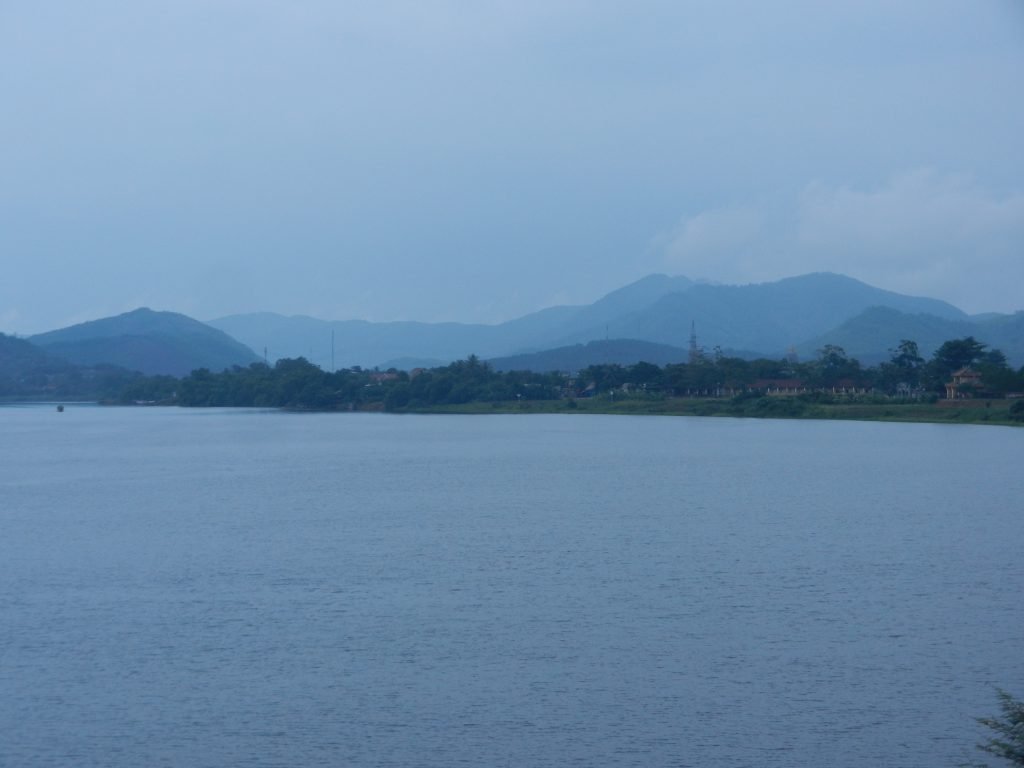
It was built by one of the best views of the Perfume River. The mid-19th-century emperor Thieu Tri included it in his list of the 20 most beautiful sites in the Hue area. He constructed the current pagoda, and it was later restored several times.
Emperors erected their tombs across the river, which were grander than any previous royal shrines in Vietnam. Some took years to select their sites to find the optimal feng shui and optimize harmony between heaven and earth. Concubines and servants lived in compounds at the sites to honor their departed royal and maintain his temple compound.
Gia Long’s tomb is in a pretty ruinous state, but the second ruler’s, Minh Mang’s, is very well preserved.
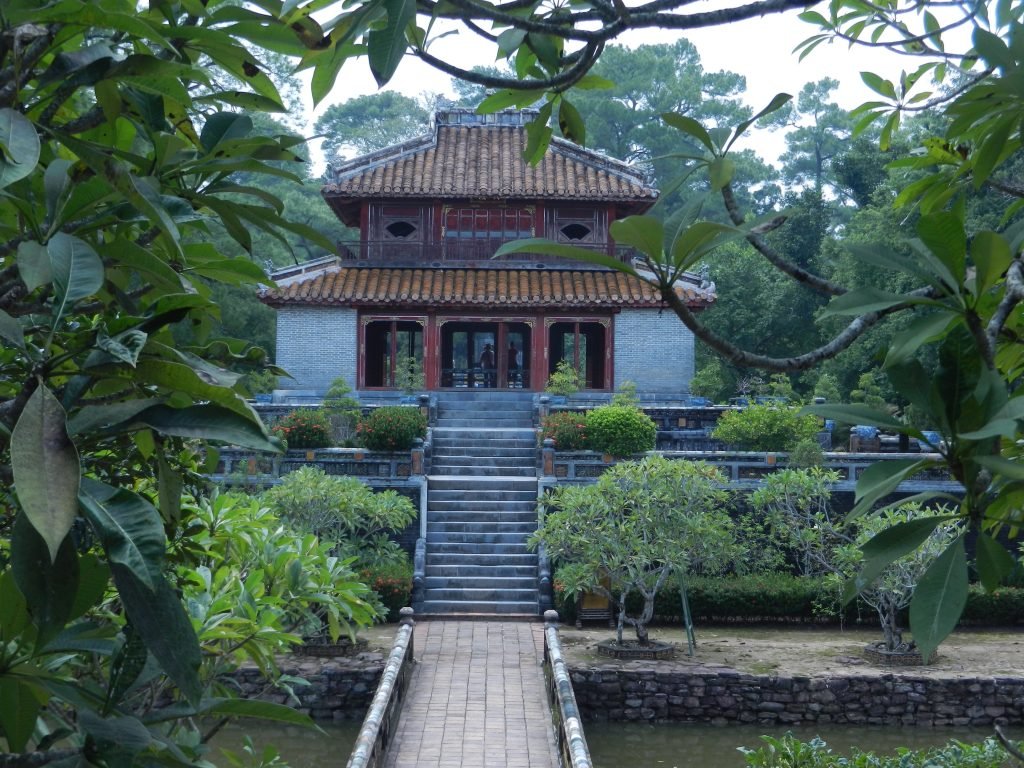
The minh lau (pavilion of light–above) seemed to shine even in the monsoon season when I was there. People back in the day gathered there to view the moon. It rises next to crescent-shaped lake that represented it.
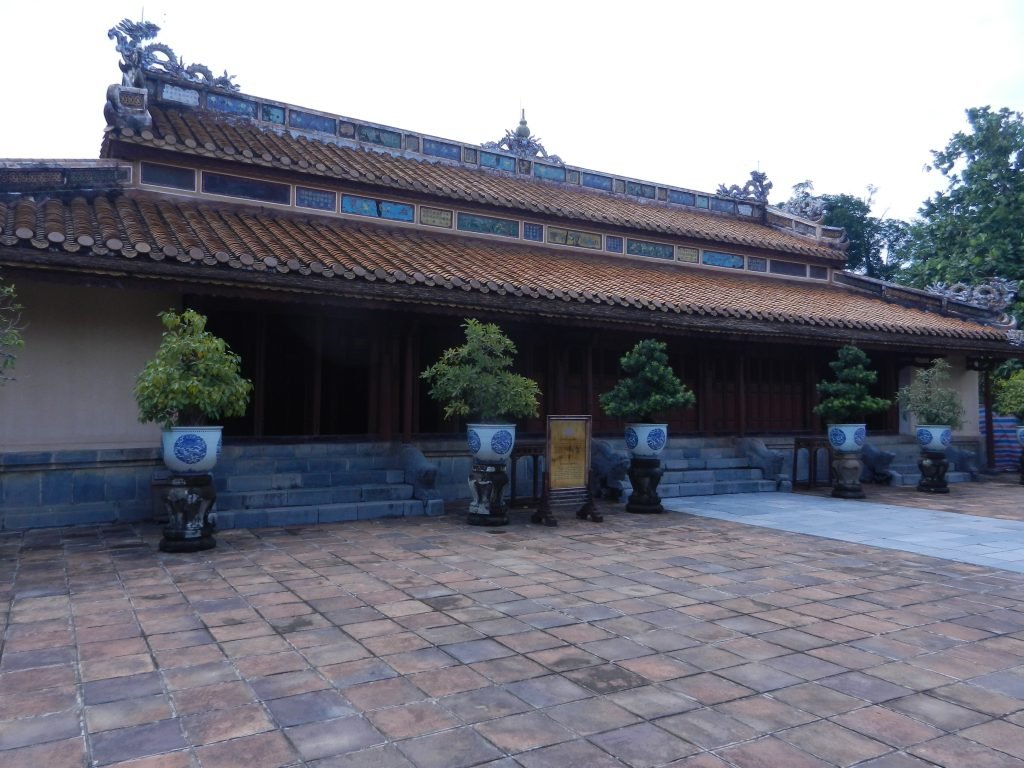
Minh Mang’s main temple is across a footbridge.
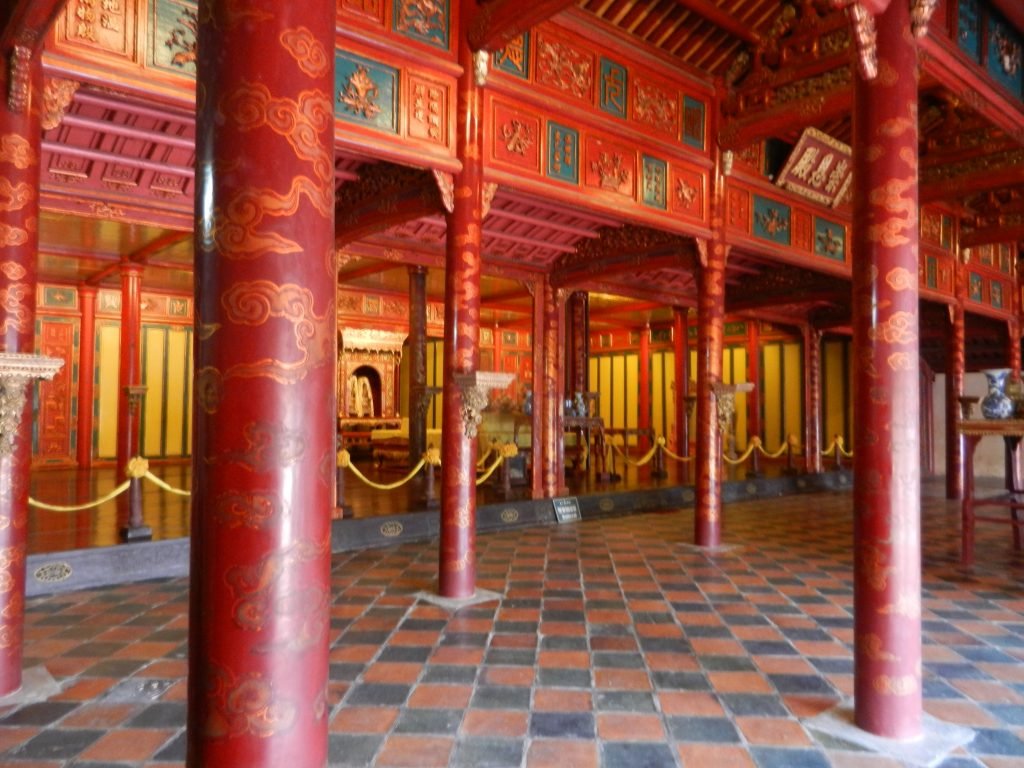
It provides an elegant space for commemorative rituals.
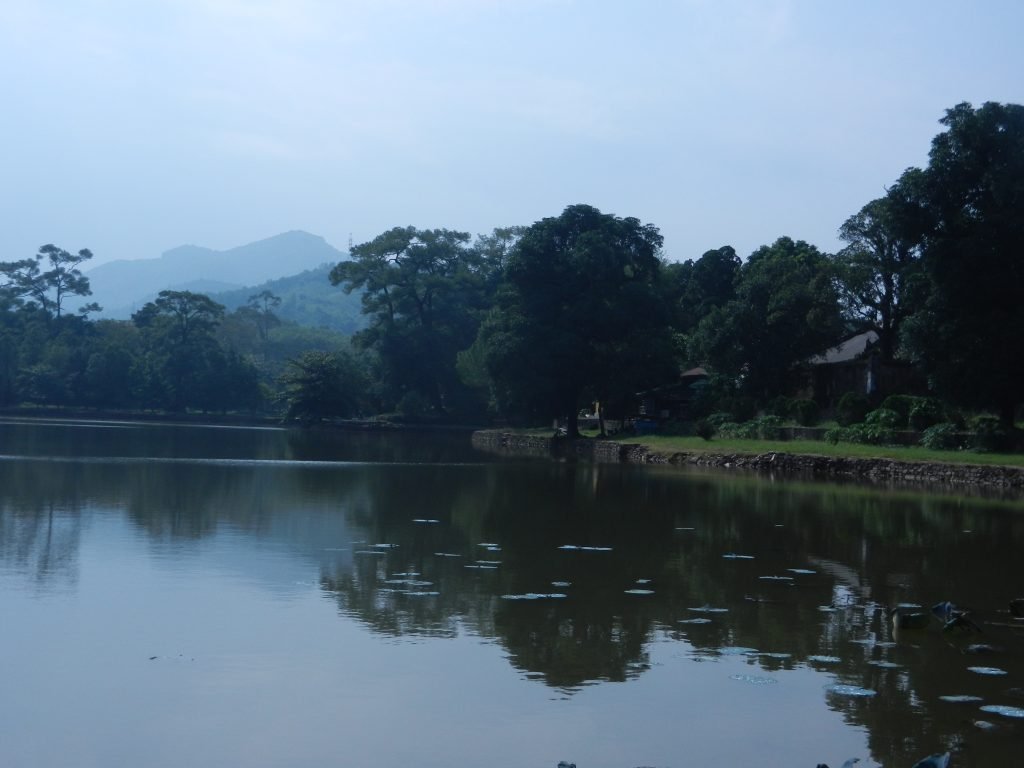
The mountains and artificial lakes around the buildings made the natural surroundings seem to be in perfect harmony. Minh Mang’s entire temple compound is womb-shaped, so it seems to symbolize creation.
His successor, Thieu Tri, had a short reign (1841-1847) before passing away. He wasn’t interested in creating an expensive tomb complex, and told his younger son and successor, Tu Duc, that it’s best to use the funds for more useful thins. Tu Duc prominently displayed the message and promptly began building Hue’s grandest royal tomb ever. He lived there for long periods each year for 16 years to work, rest, compose poetry, enjoy his favorite concubines and courtiers, and escape the city’s more intense political life.
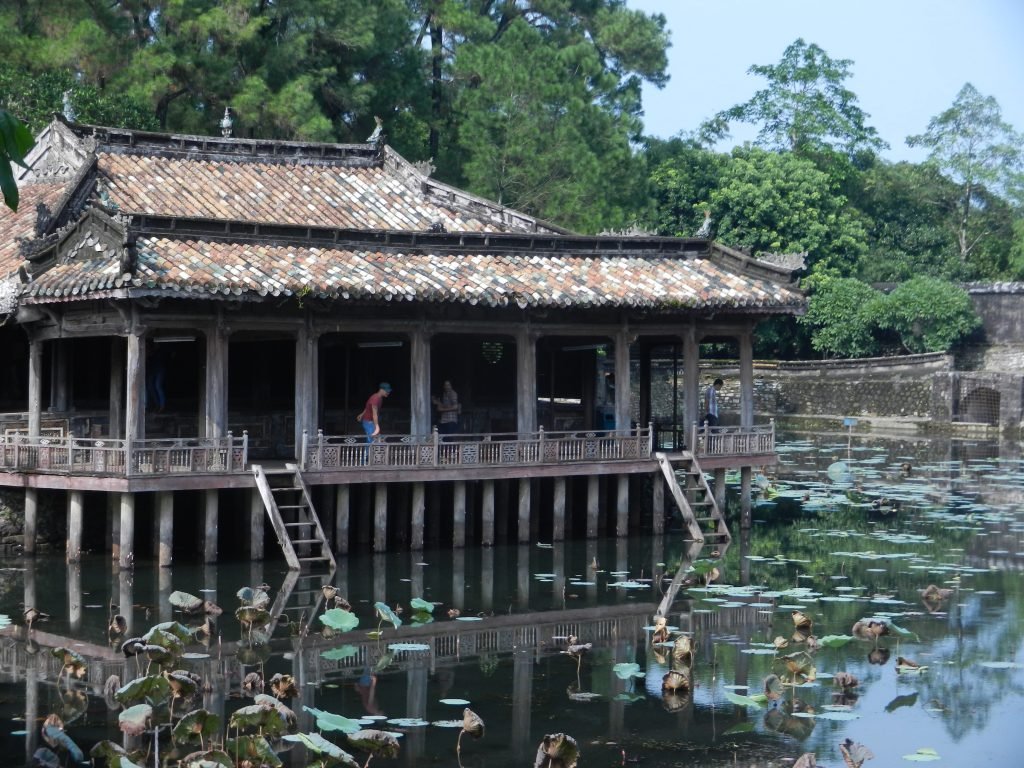
Its lakeside pavilion was an ideal place to chill.
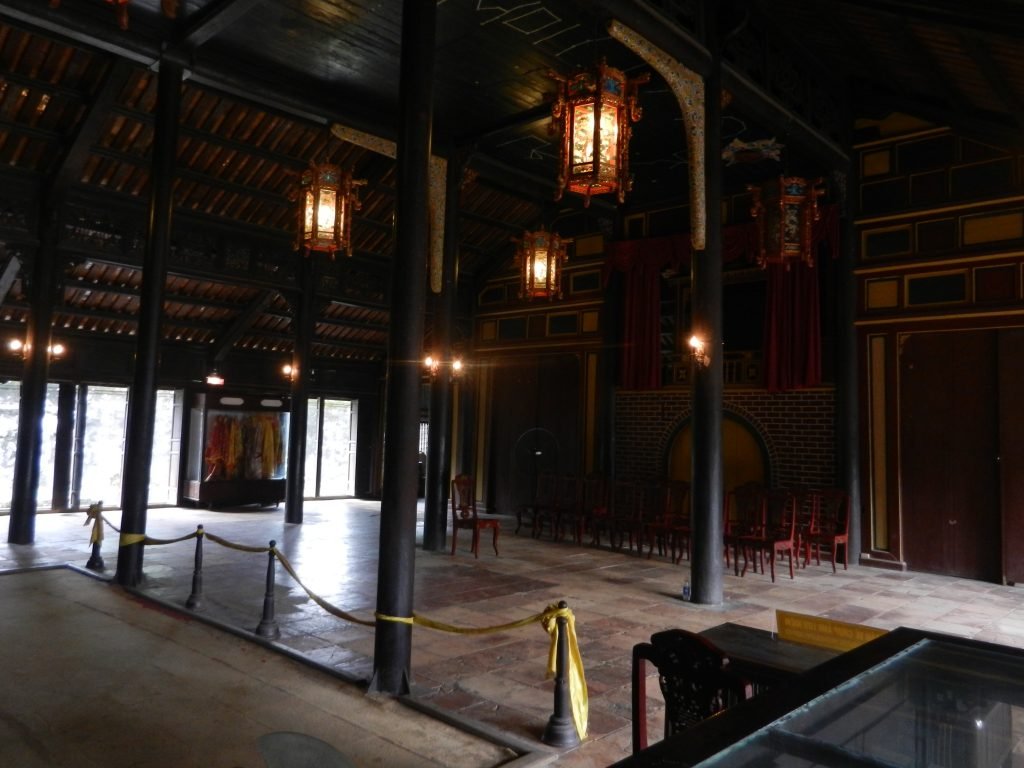
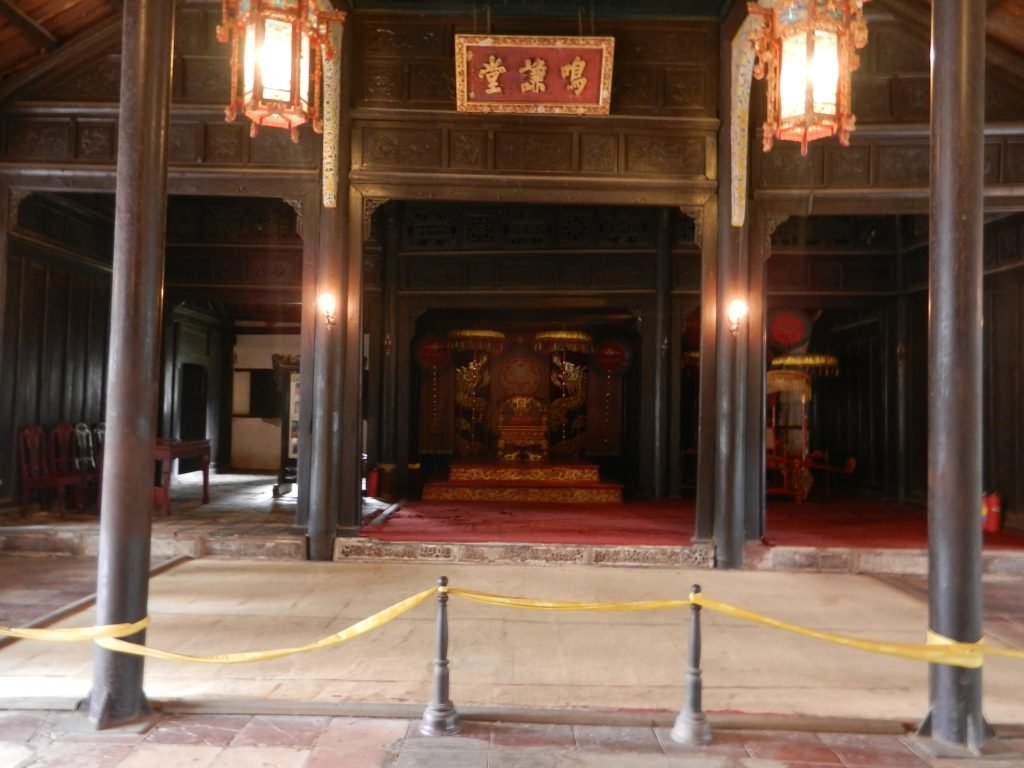
The main building compound housed a theater.
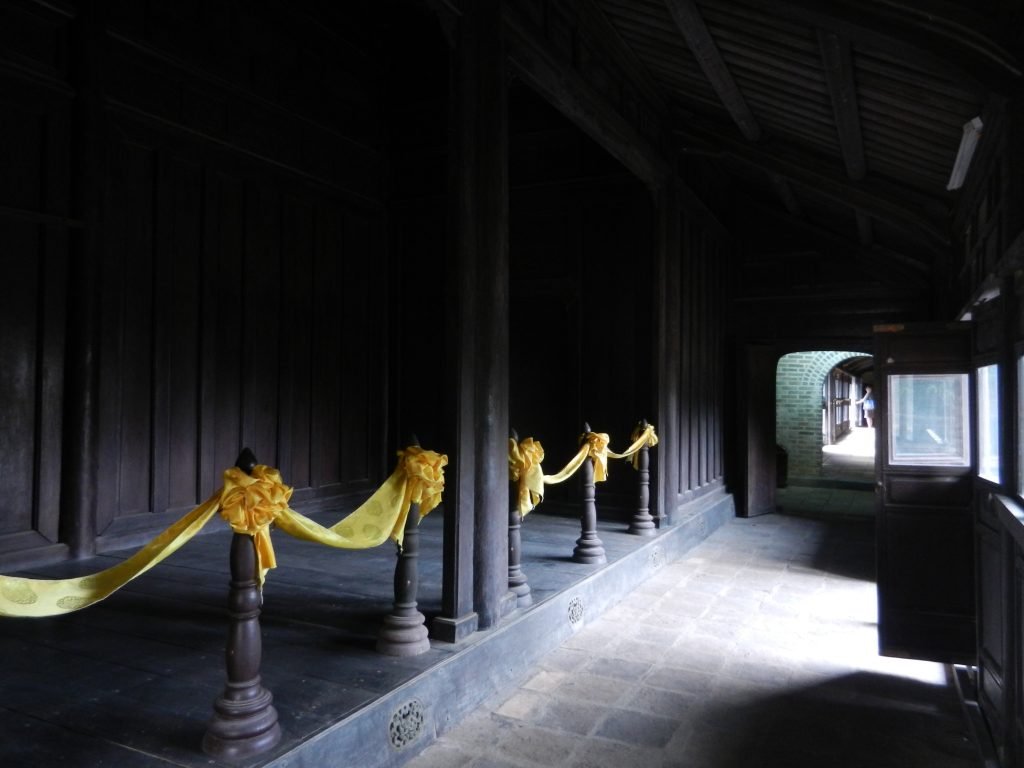
Hallways connect the buildings around the compound. They had nooks that gave courtiers ample space for intrigue.
When the tomb was finished, it was named Khiem Cung (Palace of Modesty). But 3,000 people were forced to construct it, and they were driven so hard that they attempted a coup in 1866. Their harsh conditions were made worse by two successive years of severe drought. Laborers sang, “The walls are made of the workers’ bones, and the moats are filled with the people’s blood.” The rebellion was suppressed, its leaders were executed, and construction resumed. Expenses continued to pile up.
They had already been growing. Minh Mang overextended Vietnam’s influence by trying to dominate Cambodia as Thailand was increasing its influence there. Feeding its occupying forces taxed Hue’s finances, but Minh Mang thought he could impose his Confucian vision on its people, telling his viceroy, “Teach them to grow more rice. Teach them to raise mulberry trees, pigs, and ducks. . . .As for language, they should be taught to speak Vietnamese. Our customs of dress and table manners must also be followed.” He also ordered them to put on pants instead of skirts and wear their hair long rather than close-cropped. They should also stop eating with fingers and greeting from a kneeling position instead of an upright one.
But Cambodians had their own equally rich traditions, which were much less influenced by Chinese Mandarin culture. Cambodians rebelled, and Minh Mang wrote, “Troops were stationed to bring peace. This action was like bringing the Cambodian people out of the mud onto a warm feather bed. . . .Why are there people who hate us and believe the rebels?” The cultural differences were never bridged. After he passed away, Thieu Tri tried to resolve the conflict, but Cambodians remained intractable. His leader in their country returned to Vietnam, blamed himself for the failure, and poisoned himself to death.
Then in the 1860s, Vietnam began to suffer its driest period at least since the early 17th century. As climactic conditions worsened, Tu Duc’s court faced French encroachments. After conquering Saigon in 1859, France expanded north toward Hue. He continued to spend a lot of time at his tomb, composing verses and watching theater. The French invaded Hue in 1885, burned much of the palace, and killed thousands of people.
Emperors would still live in Hue until the last, Bao Dai, abdicated in 1945 at the request of the new revolutionary government. Emperor Khai Dinh (r. 1916-1925) lived in the eclectically designed mansion below.
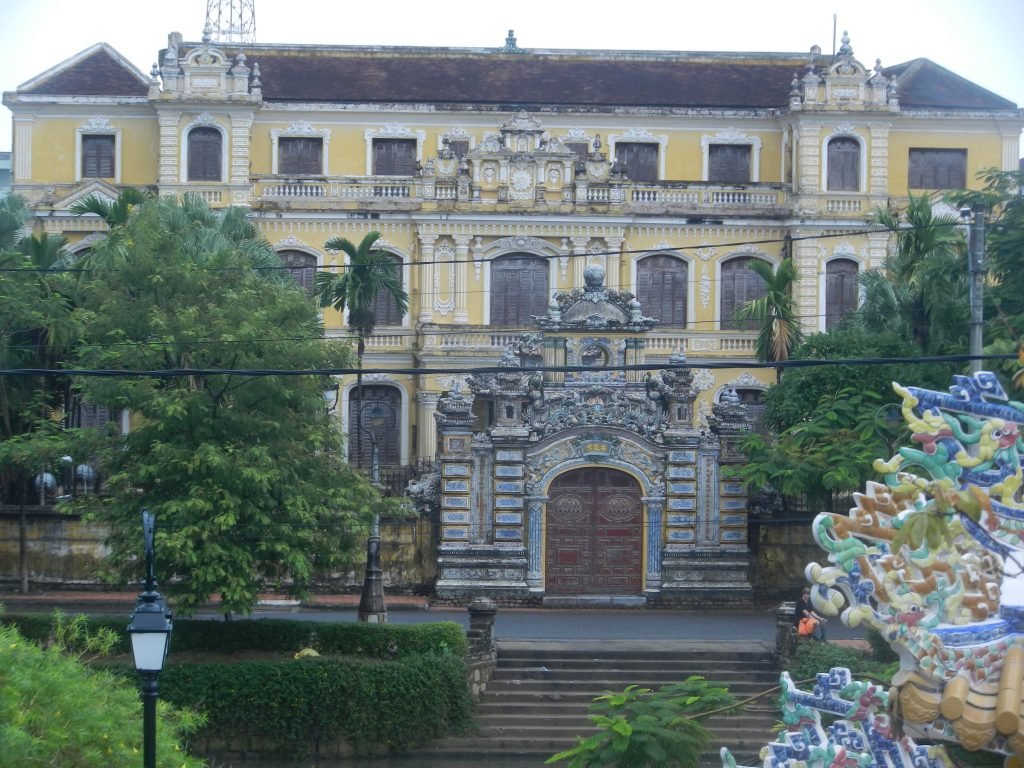
Hue was severely damaged during the anti-French colonial struggle after WWII, in the Tet Offensive in 1968, and when the North Vietnamese PAVN captured it in 1975. But its robust cultural blends has enabled it to remain a symbol of Vietnam. People enjoy many festivals which they associate with Vietnamese culture. The folks below were conducting an autumn festival.
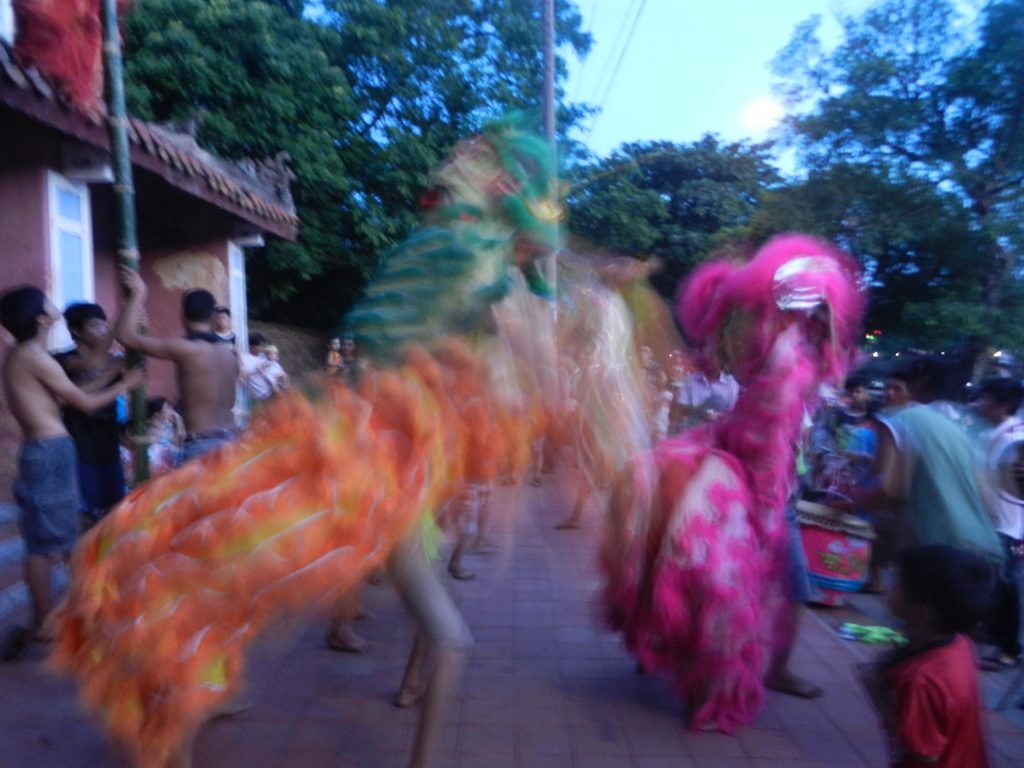
Hue’s cultural landscape has always been multifaceted and vibrant. Elegant and contentious, regal and folksy, it has represented Vietnam’s many faces.