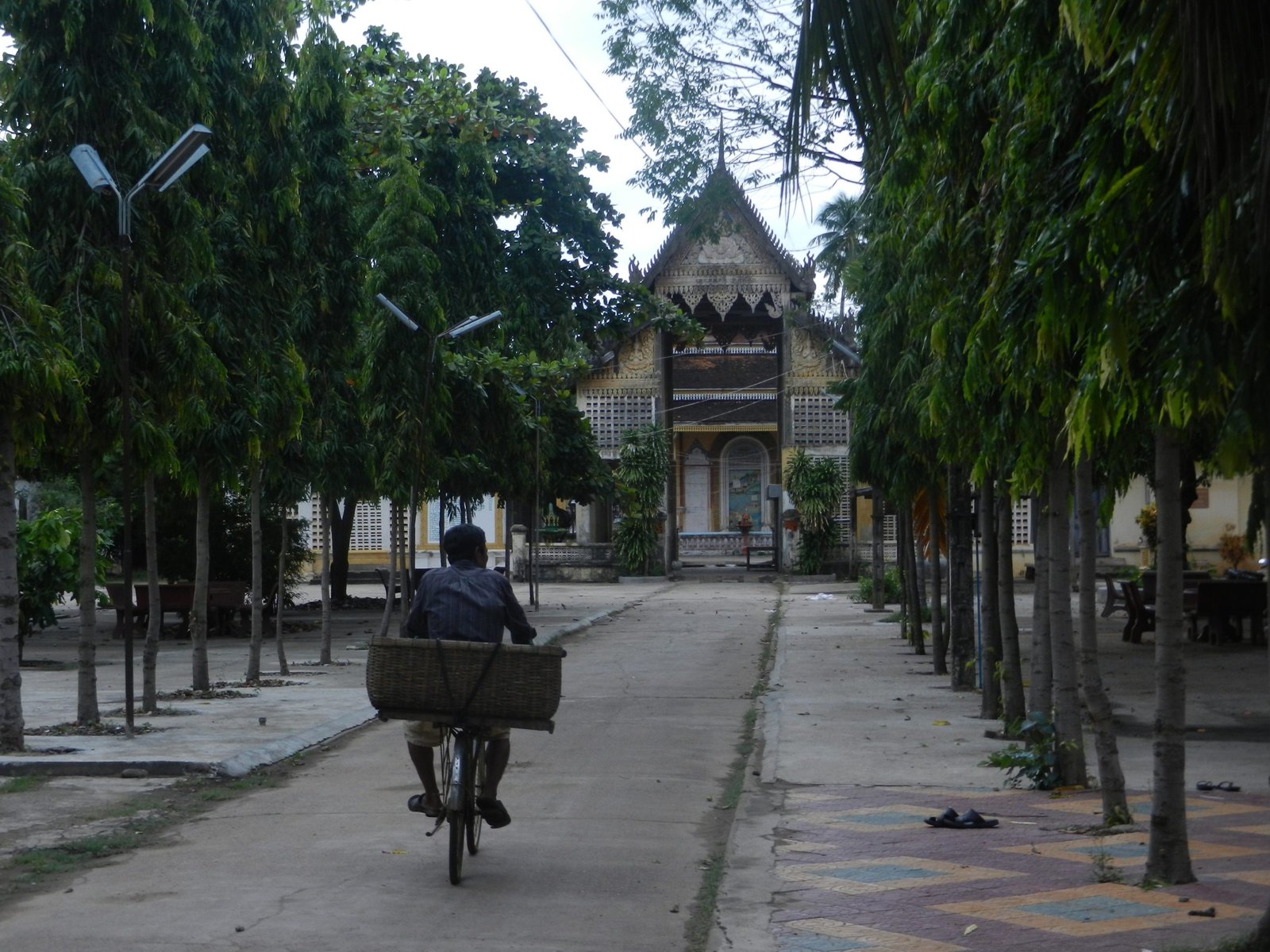
The Khmer Rouge tried to stamp out religion in the late 1970s. Monks were forced to disrobe, pick up hoes, and labor in rice fields. But both Buddhism and folk religions that honor local spirits quickly made comebacks after Pol Pot’s atrocities.

Many modern Cambodian wats have paintings on the walls of the public assembly halls.
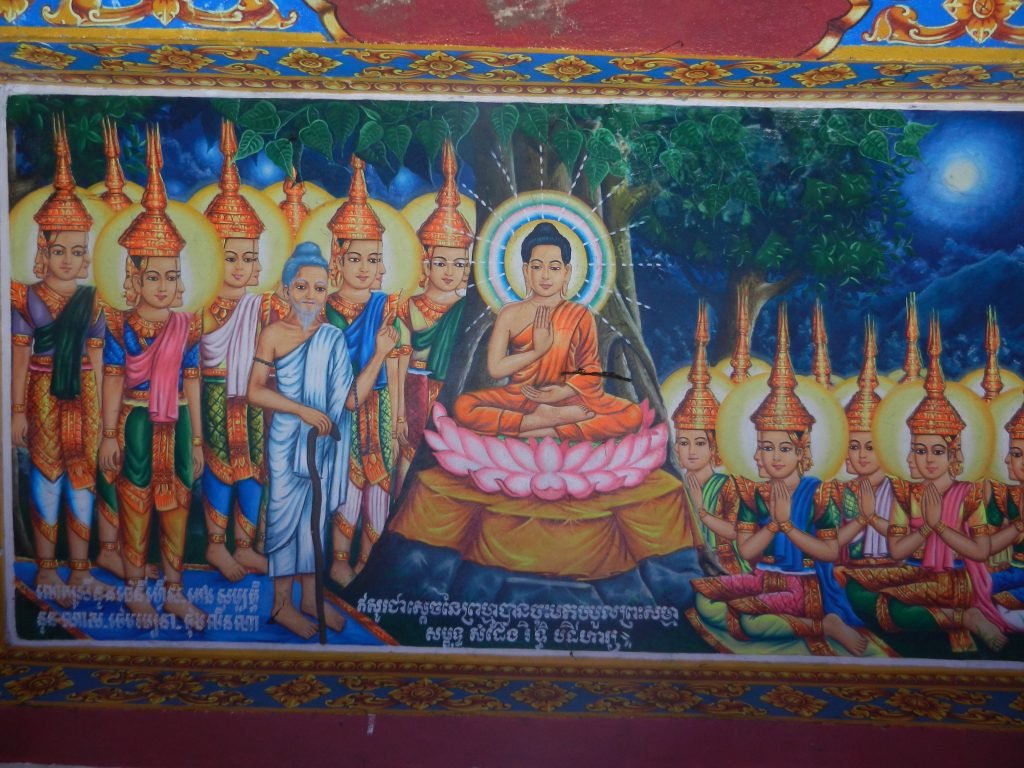
Wats around Battambang, Phnom Penh, Siem Reap, and the Mekong delta are enlivened by images that resemble the Khmer Empire’s portrayals of its majesty. Both of the above scenes are in Wat Phnom Sampeau, which crowns a prominent hill about 12 miles from Battambang. They show the Buddha and his devotees in the ancient royal court’s elegance.
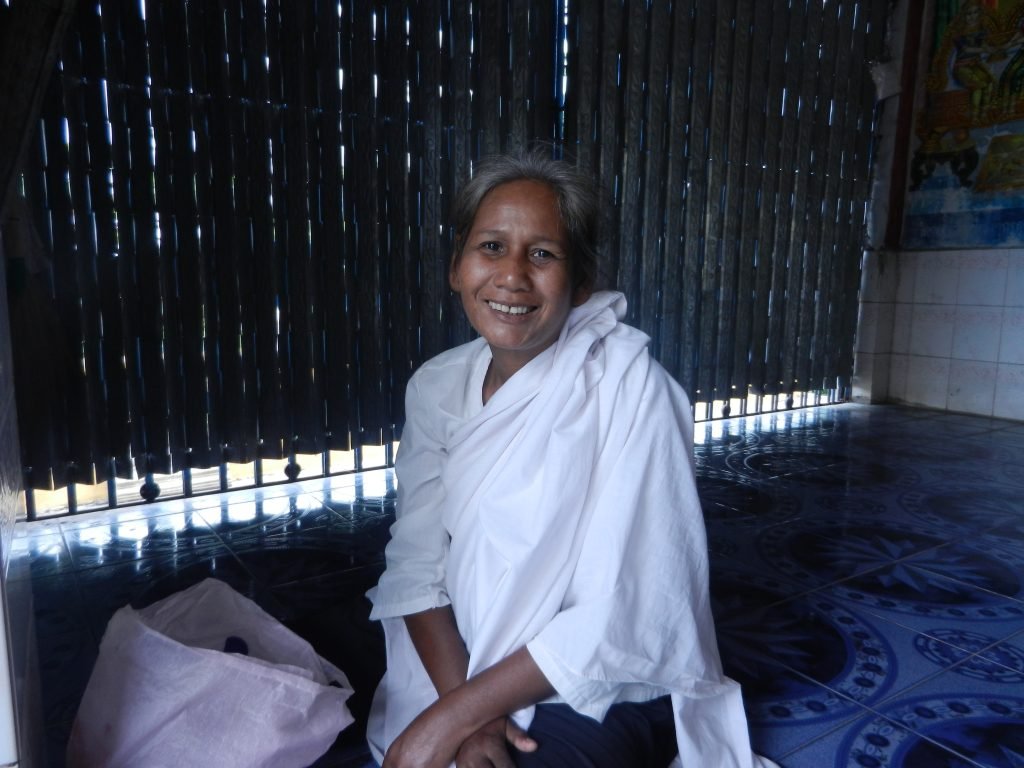
This devotee in the hall exuded the same amount of grace.
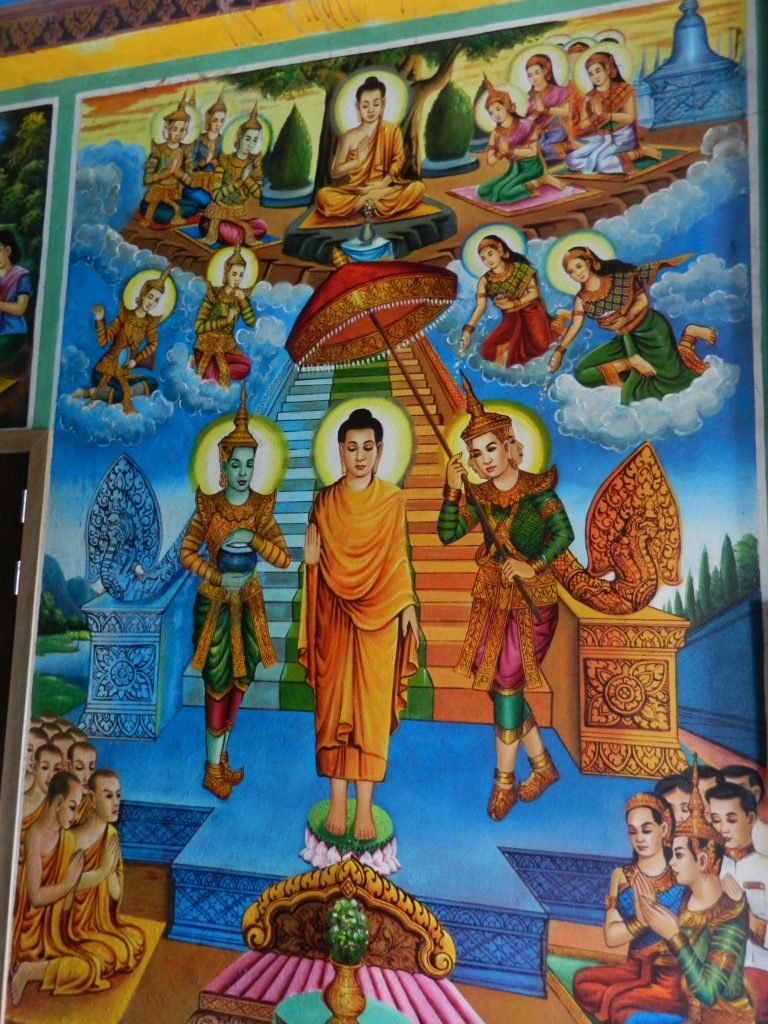
The above painting from Phnom Chisor, which is about 40 miles south of Phnom Penh, shows the Buddha descending Mt. Meru with the kingly splendor of a Khmer monarch promenading down the stairway from the royal palace to the parade ground.
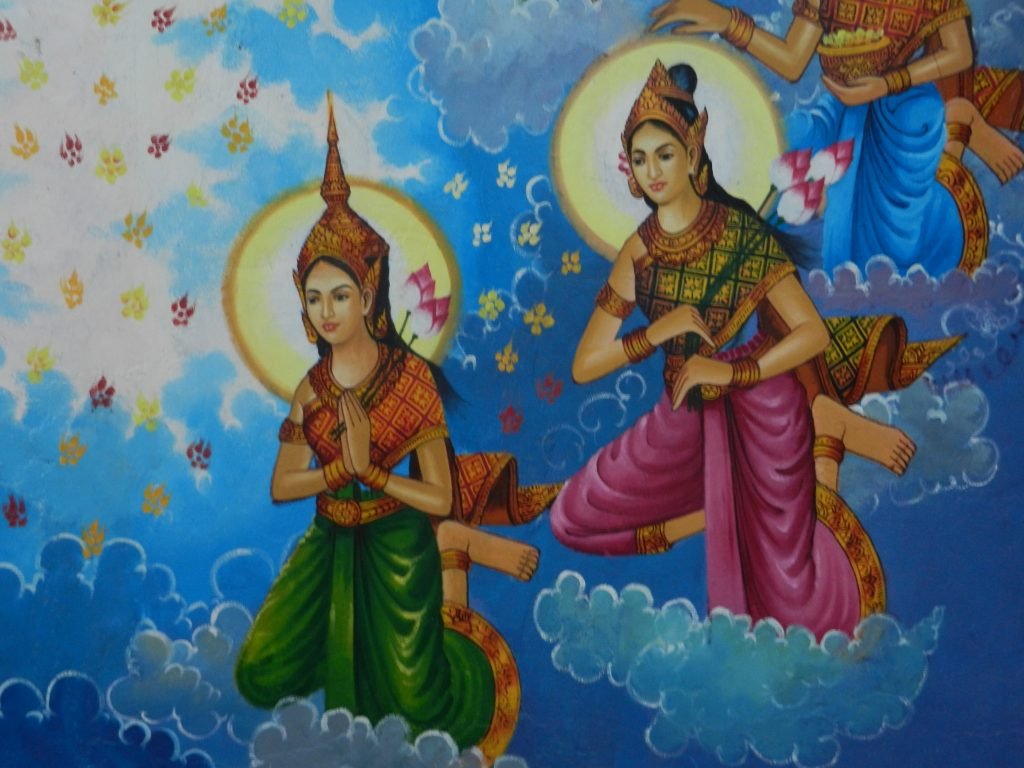
The above painting is also from Phnom Chisor.
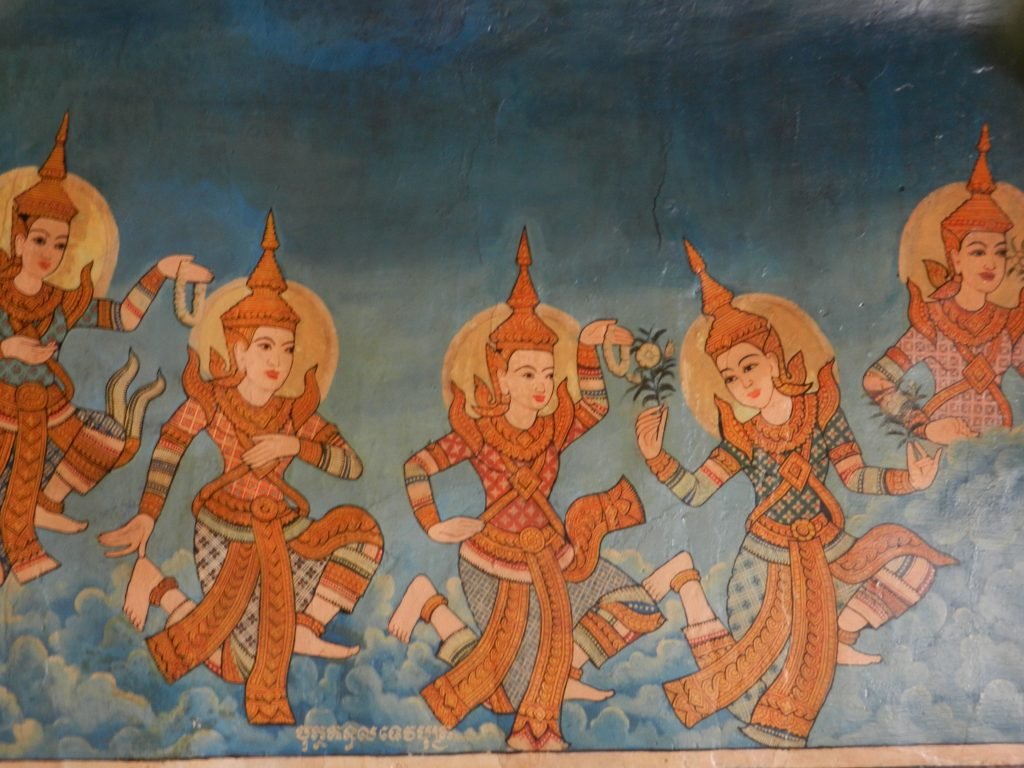
And this one graces a wat in Siem Reap. The women in both scenes are dressed more decorously than the devatas that dance on the walls of Angkor Wat and many other ancient Khmer monuments. But they embody similar visions of heaven by mixing feminine refinement and the royal court’s splendor.

Modern temples show worldly riches equally well. The above painting is from a temple next to Lolei, which is one of the earliest large monuments in the Angkor area.
As modern Cambodians aspire for the loftiest goals they can imagine, many seem to look back to the ancient Khmers’ glory as the greatest good.
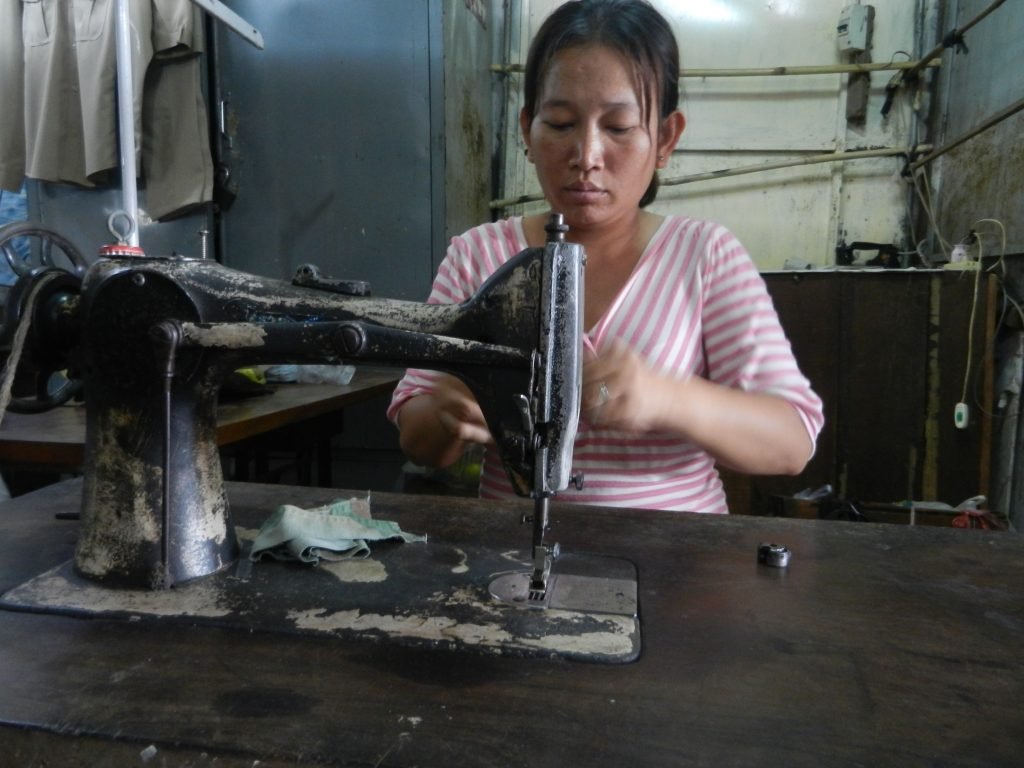
Sadly, Cambodia’s corrupt political leaders keep most of its people a million miles from these ideals while they live it up in their gated Phnom Penh mansions. Is Cambodia cursed, as the title of a book by the reporter Joel Brinkley suggests?
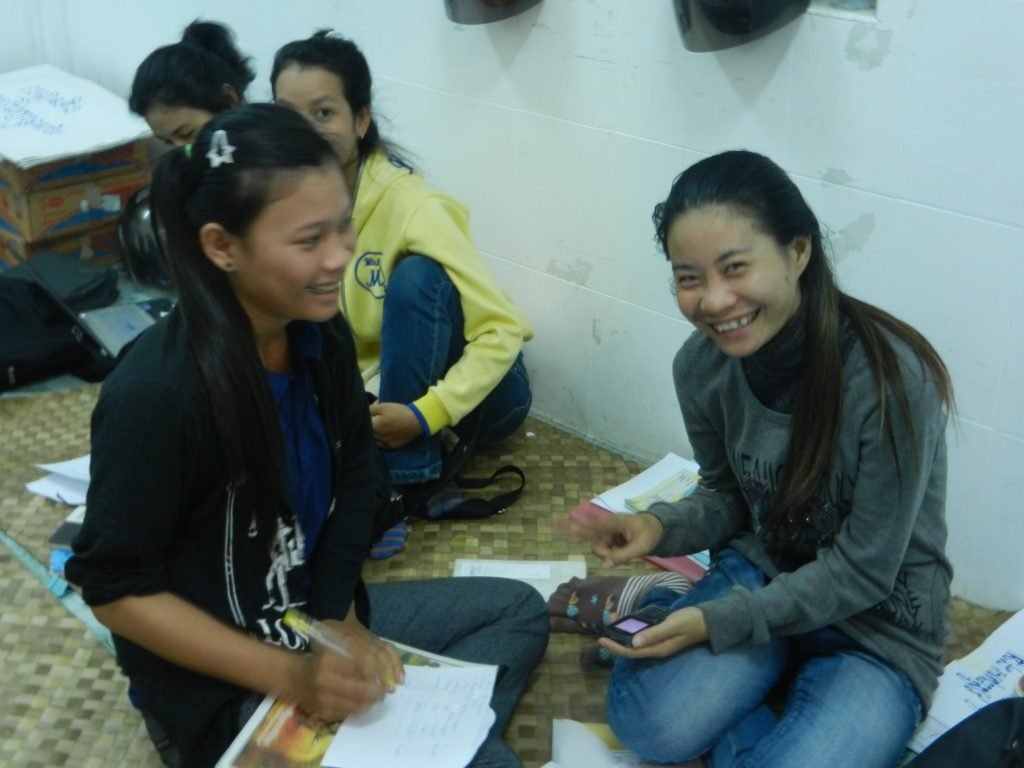
While exploring Battambang, I found a studio for local artists called Sammaki. The girls in the above photo were in a group called Our Strength, which promotes women’s health in Cambodia. Some of its members use one of Sammaki’s rooms to express their views of the world as they transition from girlhood to adulthood.
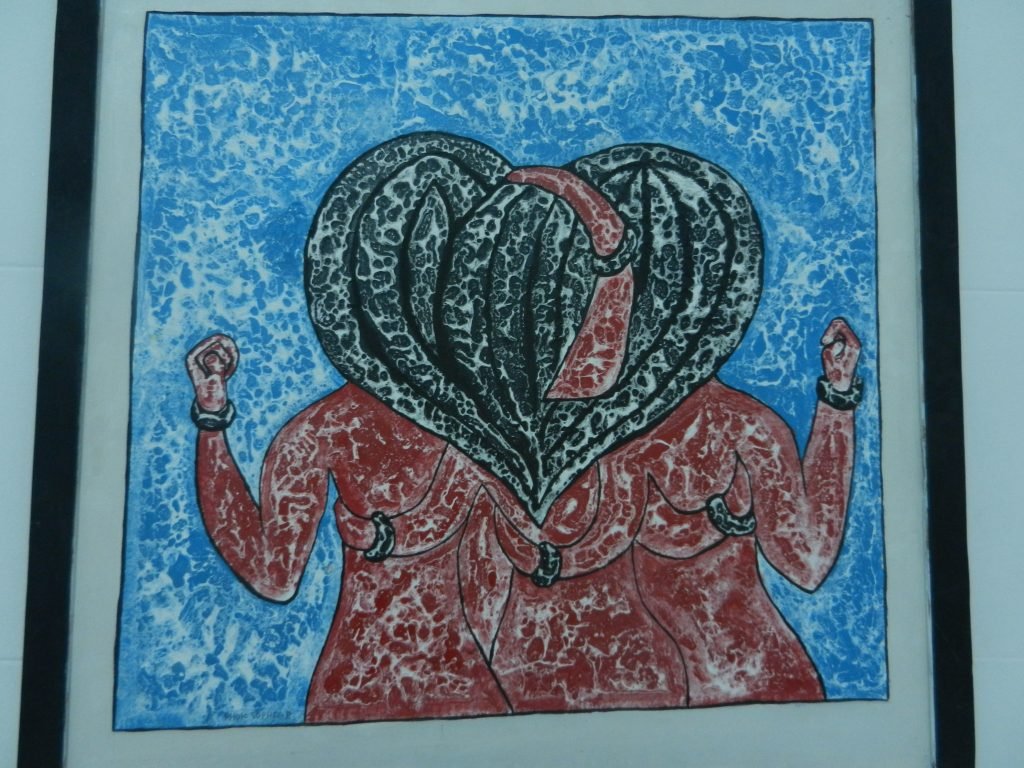
And their views express untrammeled optimism.

These paintings portray love with an exuberance that reminds me of ancient Khmer art. Rather than beating around the bush, many ancient Khmer and modern Cambodian artists freely express emotions.
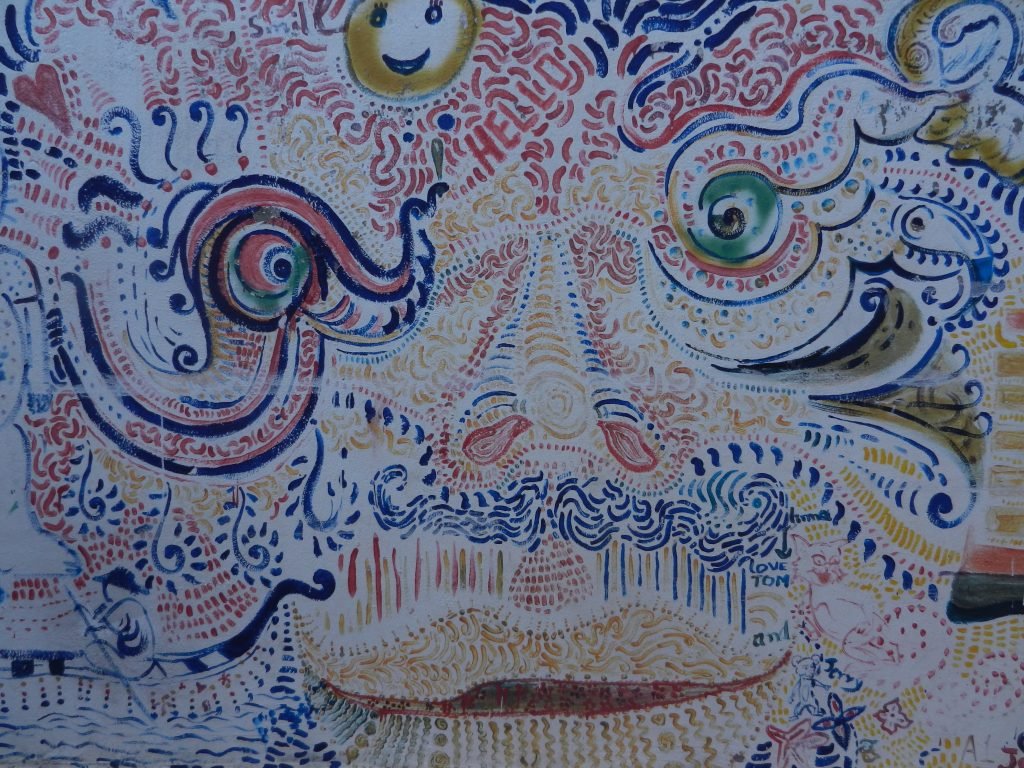
Another painting joyfully blended Buddhist architectural forms, riverine images, and Matisse-like two-dimensional explosions of bright colors.

This one also uses traditional Khmer forms to express exuberance and grace. Ancient Khmers perfected this kind of expression in their art. Some youths are now finding their identities in it.
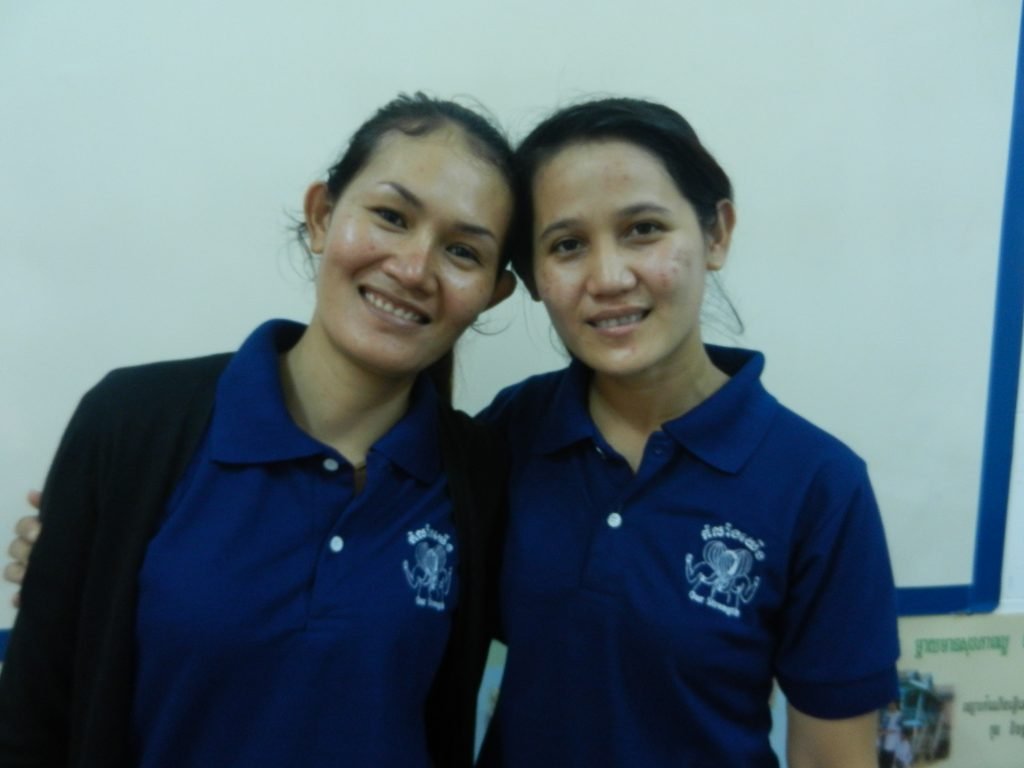
Managers in Our Strength grace the above shot. I thank them and the artists for the warm welcome they gave me.
Preah Ko was one of the first two large monuments in the Angkor area, and it set the standards for blending effervescence and grace. Phnom Bakheng furthered them. Banteay Srei made them more detailed, Angkor Wat climaxed them, and Bayon is a fascinating later variation. All these temples converged into a heritage that still flourishes.