.
Ancient Indians came up with a unique way of thinking about and classifying emotions.
Absorption in the larger environment became central in theories of theater, poetry, painting, and sculpture by the early first millennium CE. The idea of rasa has been foundational in all these arts. Rasa means both flavor and the inner juice of plants. Both are easily associated with the idea of an inner and especially refined essence that flows, which is savored by the spirit and which the connoisseur becomes absorbed in.
Westerners have often located emotion within the individual and the immediate community. Aristotle placed the emotions that plays evoke within the city-state. He said that pity and fear are the two feelings that people experience when they attend a tragedy. He called a play a katharsis because it purifies society. It eases social tensions and encourages people to appreciate their common humanity. The semicircular and earlier oval shapes of theaters strengthened the communal feelings. Walter Kaufmann, in Tragedy and Philosophy, said that people returned home emotionally spent after watching characters dramatically express their sufferings. They were thus less prone to emotional outbursts while dealing with their families, friends, and neighbors.
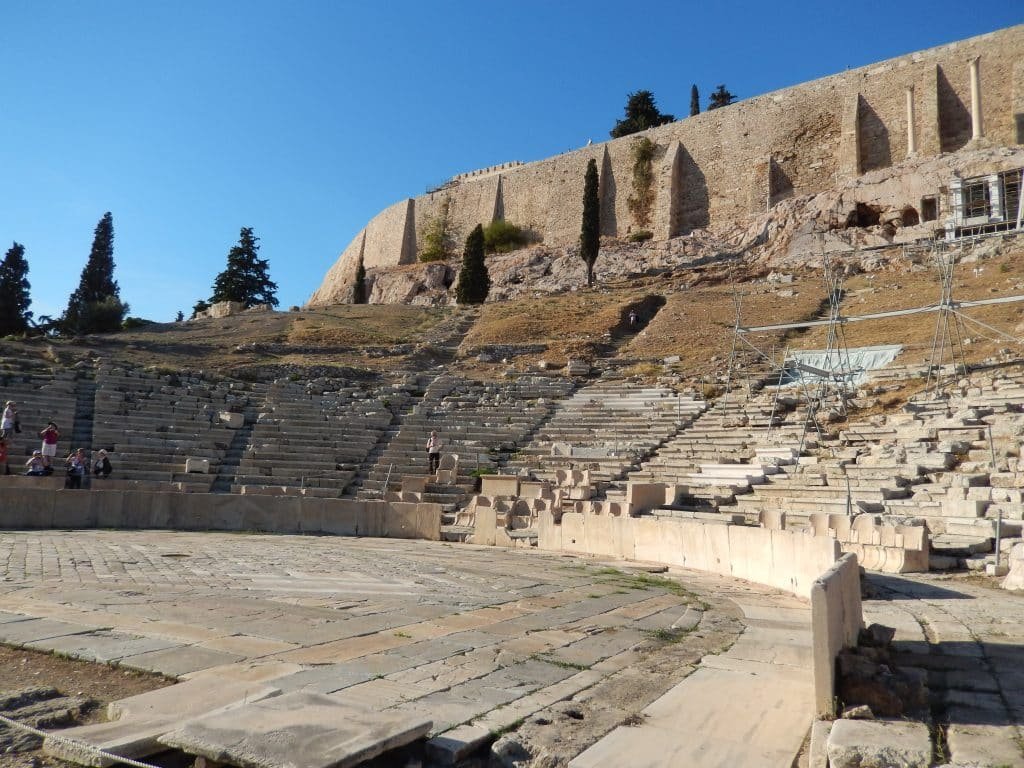
David Konstan, in The Emotions of the Ancient Greeks, detailed a society with commonly shared emotions which were centered on the immediate community in the city-state. The word zelos doesn’t have a modern English equivalent; it referred to a positive spirit of rivalry which contrasted with the negative feeling of envy. Pity (eleos) was treated as more central than it is today. And the Greeks had several words for envy, which together conveyed many nuances of feeling among people in close-knit communities who were constantly observing and competing with each other. But the concept of rasa located emotion in a much vaster field than one’s town.
Bharatamuni was the seminal theorist of Indian drama. Around 2,000 years ago (give or take 500 years—the dates of his life are controversial), he classified eight basic rasas: romantic, comic, heroic, pathetic, brutal, disgusting, terrifying, and wondrous. But the play doesn’t express what people feel in real life with full accuracy. The rasas it conveys are idealized; they’re rarely experienced in pure form in our worldly lives. They exist at the cosmic level, and the emotions we normally feel are denser manifestations of them. Bharatamuni’s Natya Shastra compared the experience of rasa to cuisine. Food is seasoned with various spices so that the combination of all flavors is especially savory, particularly for people with sophisticated tastes.
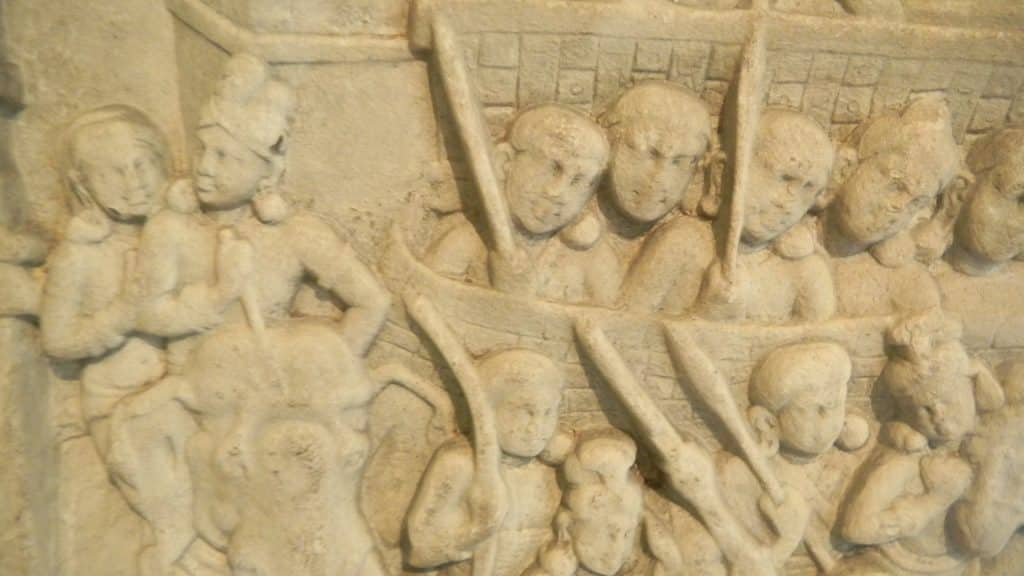
Bhavas are emotions that most people usually feel in real life, and each rasa corresponds with what is called a permanent bhava (sthayibhava). The common feeling of mirth (a bhava) corresponds with the comic (a rasa, which is more refined). We can feel mirthful while hearing a dirty joke about a politician, sex, or an ethnic group. Mark Twain and Oscar Wilde refined mirth into comic observations of humanity in general. Wilde once said, “There are only two tragedies in life; one is not getting what one wants, and the other is getting it.” I recently experienced the feeling/bhava of astonishment (vismaya) when a lightning flash in a freak storm lit up my bedroom in the middle of the night. This feeling can become refined into the rasa of wonderment (adbhuta) upon reflection on nature’s enormity and power.
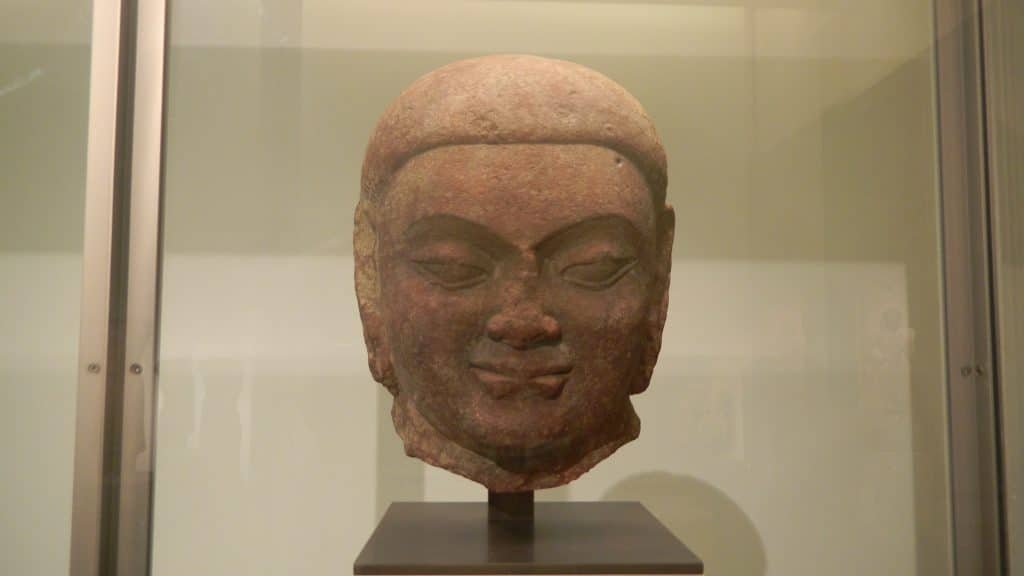
Many more bhavas have been defined and put into sub-categories. There are 33 transitory feelings (vyabhicaribhavas), which are transitional states of the mind or body. Vibhavas are causes and determinants of feelings. Anubhavas are indications of feelings through gestures. The Natya Shastra said that a rasa is produced by combinations of all three types of bhavas, just as tastes are produced by combinations of molasses, spices, herbs, and other ingredients. The Natya Shastra also correlates each rasa with a color and a god.
Modern viewers of plays sometimes have difficulty recognizing the rasa. Gestures are stylized and they have often been expressed in religious sculptures and temple reliefs. The Natya Shastra described mixing different ingredients for connoisseurs. They appreciate all the elements of a work of art, become absorbed in the rasa, and are elevated to a higher state of awareness which is more universal than the individual’s private experiences or the interactions between people in their towns. The locus of a rasa is not concentrated in the individual and immediate community; it’s more distributed throughout the whole cosmos. When properly mixed, a subtle essence of the universe is experienced, which people become absorbed in. Their consciousness thereby expands beyond their individual selves.
Rasa became a basic concept in Sanskrit poetry by the time the complete Ramayana was written. Metaphors and similes were added to express a certain mood. The most popular mood in poetry is viraha, which islove and craving that people feel for each other while separated. The poet creates this mood of longing for the beloved by making trees and flowers wilt, animals and birds weep, and clouds obscure the sky from view. All of nature sympathizes; the sadness is not confined to the forlorn couple.
Tamil poetic traditions have also emphasized absorption in the whole environment. Themes have been associated with different landscapes known as tinai. A mountainous landscape has been associated with the union of lovers, arid terrain with separation, a pastoral region with waiting, a seashore with longing, and a riverside with sulking. Poems have used vivid imagery to make all objects in the landscape resonate with its emotion.
Rasa also became fundamental in painting. Romantic couples are surrounded by profuse foliage, lush grasses, playful birds, and bright-colored buildings so that all amplify the lovers’ exuberant feelings. Krishna and Radha meet, and all the cows and goats in the scene lovingly gaze at her. In another painting, a beautiful young upper-class woman admires herself in a mirror, branches of the trees around her are as lithe and elegant as her slender figure and waist-length hair, and the flowers on the trees are as copious as the jewelry she’s wearing.
Objects in paintings are not usually shown in full detail. Many Italian Renaissance painters enabled the viewer to focus on each object; scenes of biblical characters in a feast included all the food, tableware, and interior architectural decorations that wealthy Florentines enjoyed. But instead of portraying each object individually, Indian painters often made all objects convey the same mood. They’re savored together to make the viewer feel that it’s a universal flow that is not as concentrated in separate things.
Many aspects of ancient Indian culture encouraged people to locate emotions at the cosmic level rather than the personal and local levels. You can discover some in architecture, music, cosmology, and the most ancient literary traditions.