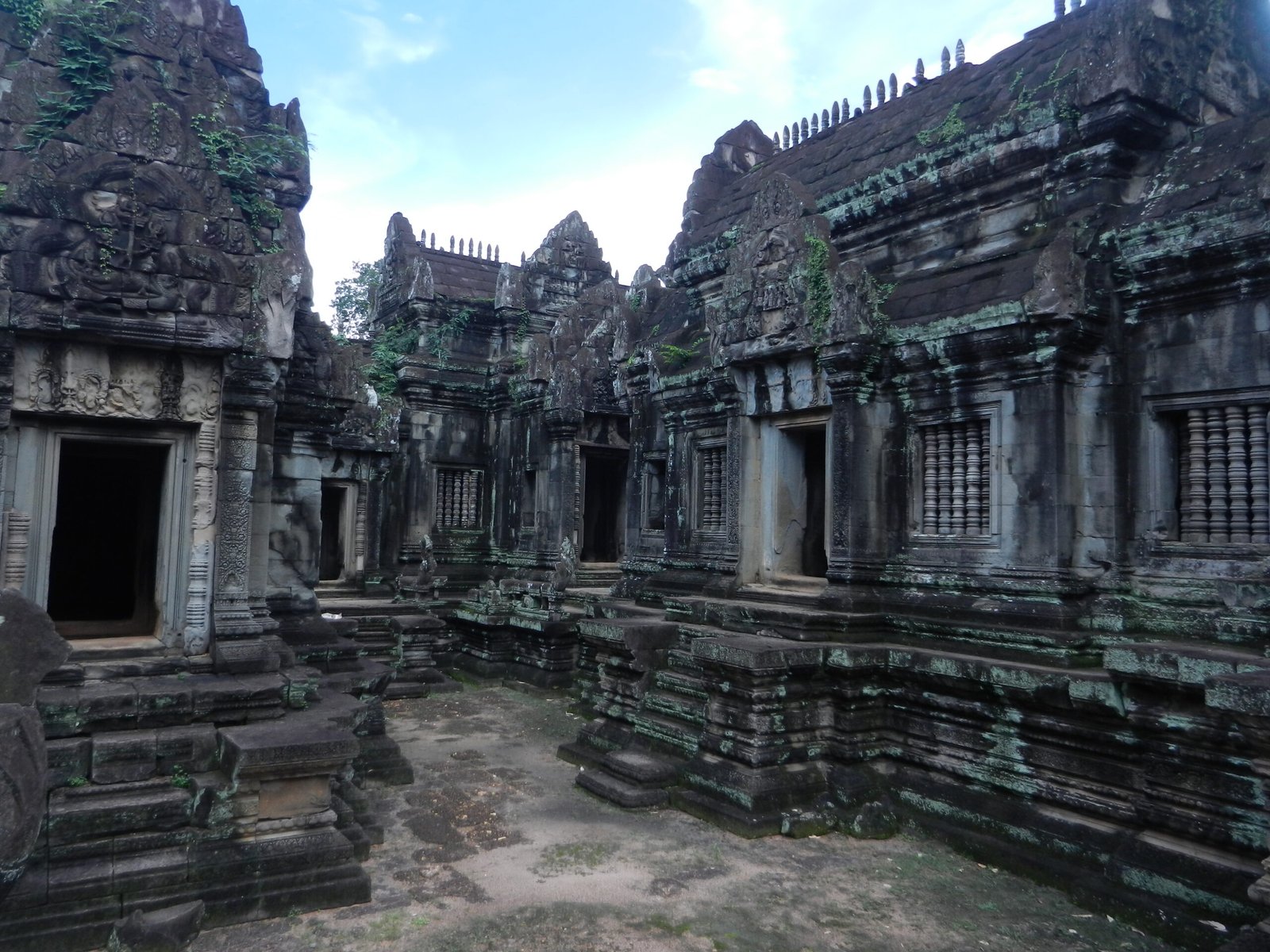
King Suryavarman II built many other temples besides Angkor Wat in the early 12th century. All these monuments reinforced each other in people’s perceptions of the world.
The temple Banteay Samre is a couple of miles east of the main temples at Angkor, and it was a ritual center for the area.. Its name means Citadel of the Samre; it connects it with the local population called Samre. They lived around Phnom Kulen, which is the hill where rivers flowed down to the plain of Angkor.
Many historians think the temple was constructed by Suryavarman II or one of his high officials. Others think it was erected by his successor, Yashovarman II, pointing out its refinement and concluding that it reached the full maturation of Angkor Wat’s style.
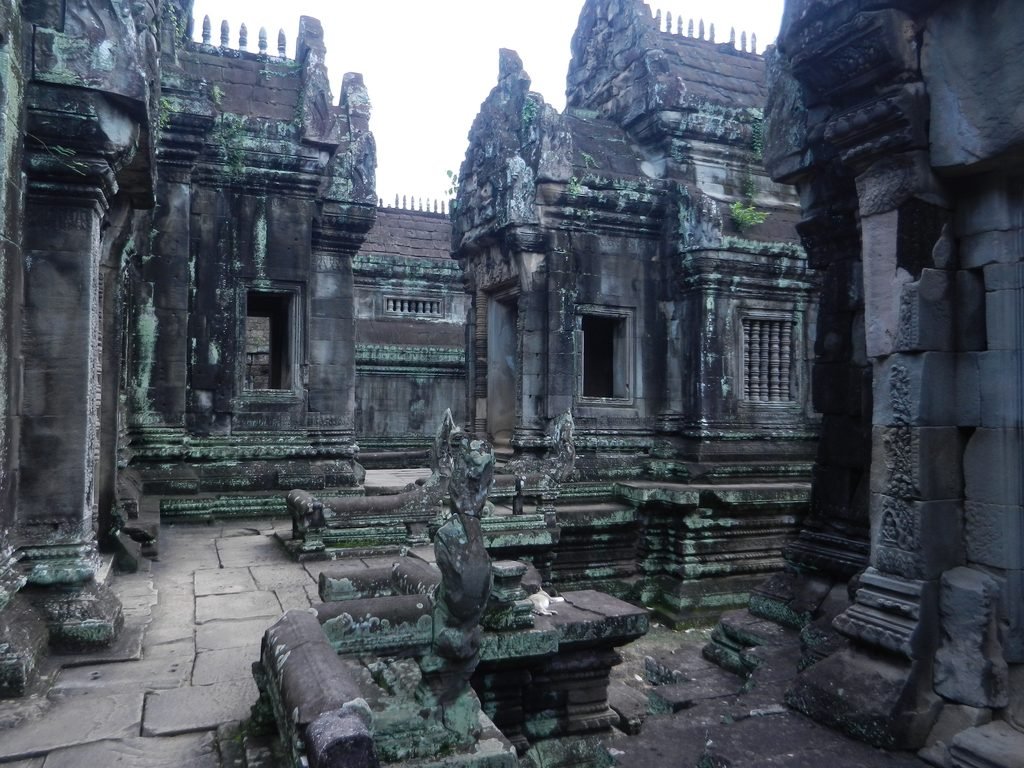
Much smaller than Angkor Wat, its interior courtyard has an intimate feel.
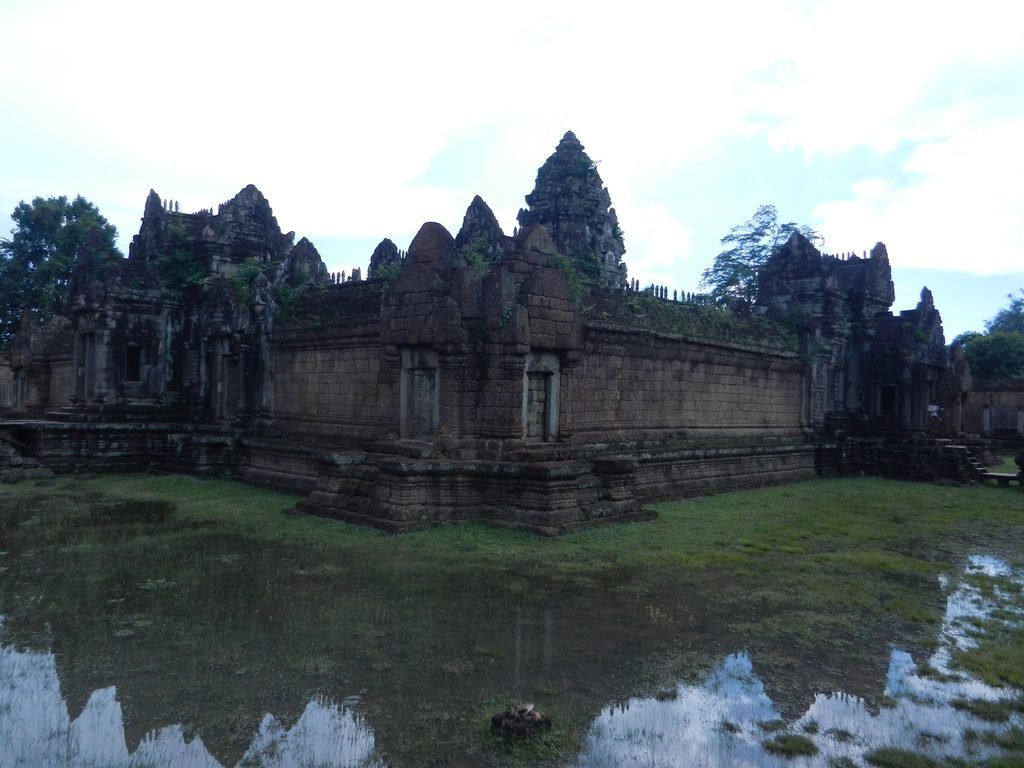
Its exterior does as well, while Angkor Wat feels large enough to have its own satellite.
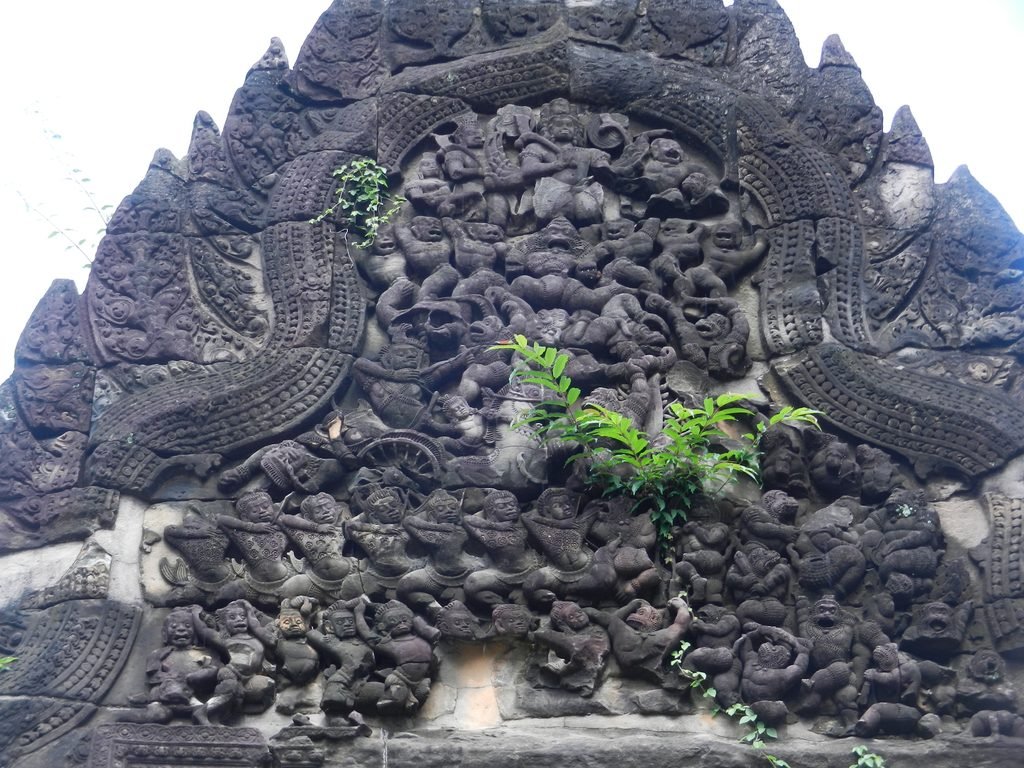
Dense and animated friezes add visceral energy to the elegant interior. As in other temples of the Angkor Wat period, most imagery venerates Vishnu, but as elsewhere, there are also carvings of Shiva legends and Buddhist scenes.
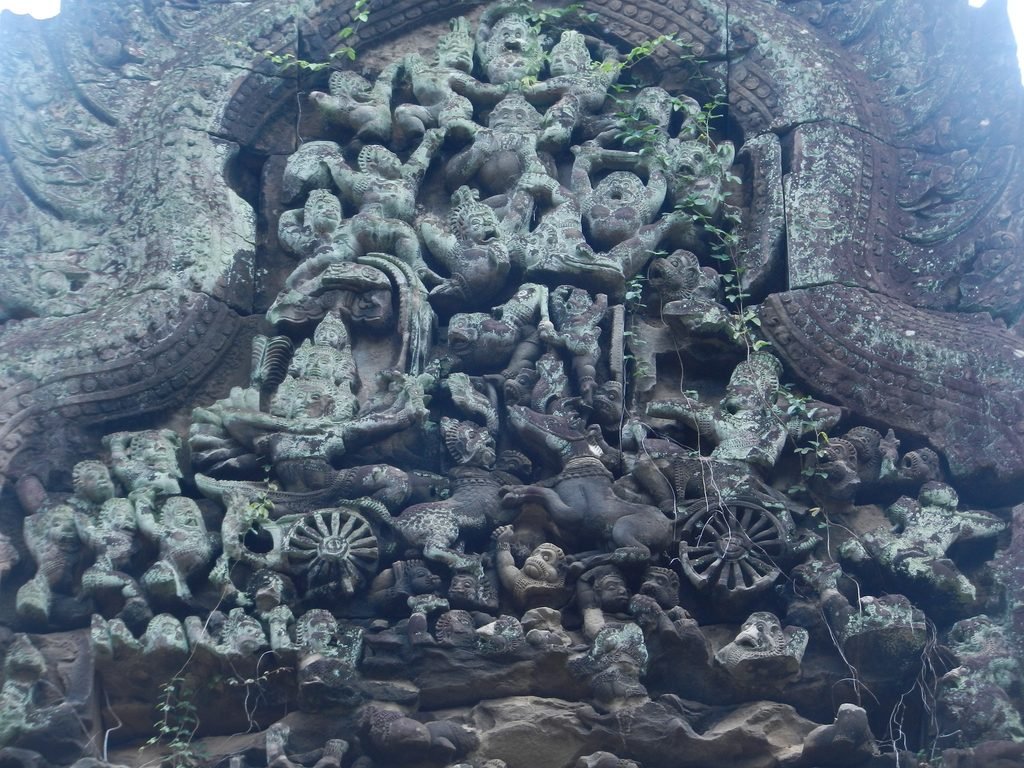
Several scenes are of Hanuman’s monkey army from the Ramayana (above and below).
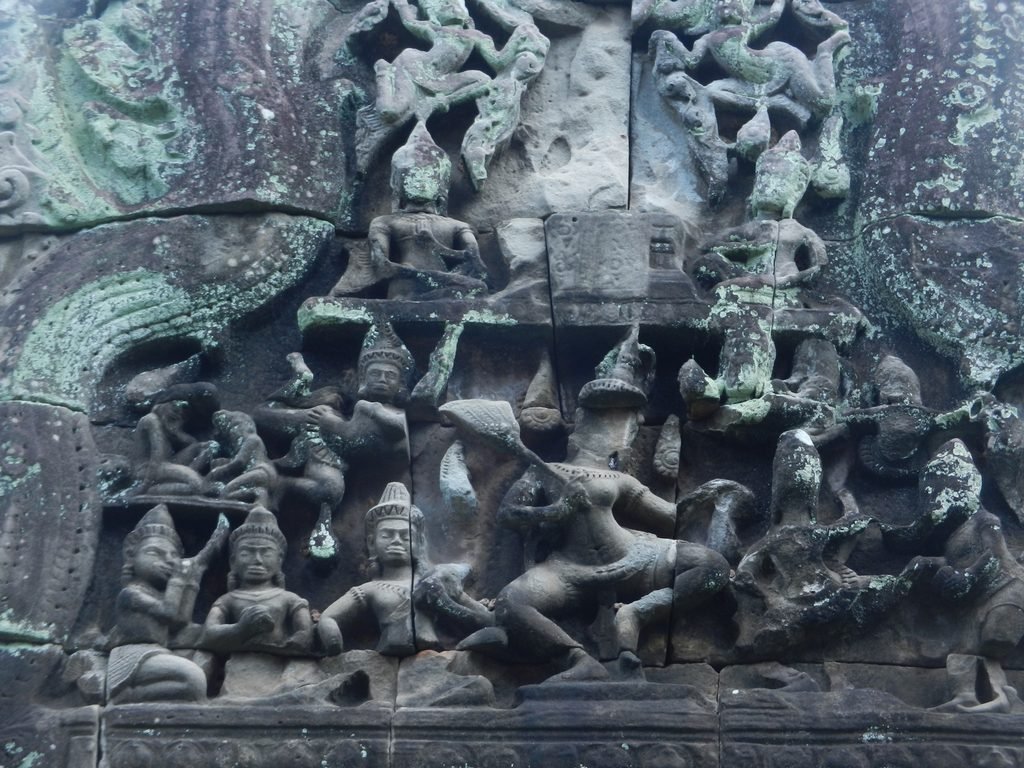
Musicians and dancers. grace another scene. The man on the left is playing a buffalo horn. Some Cambodian musicians still use this instrument.
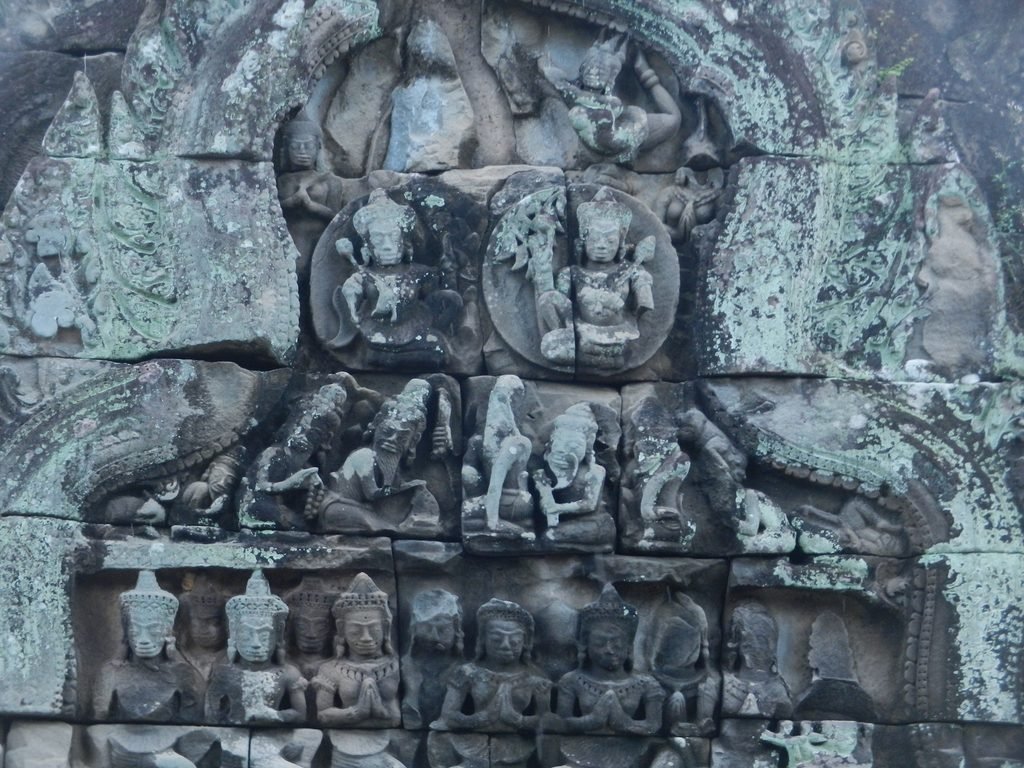
The conjugation of the sun and the moon is shown below.
The next frieze takes us back to the creation of the present universe by showing the birth of Brahma from Vishnu, who reclines on the serpent Ananta.
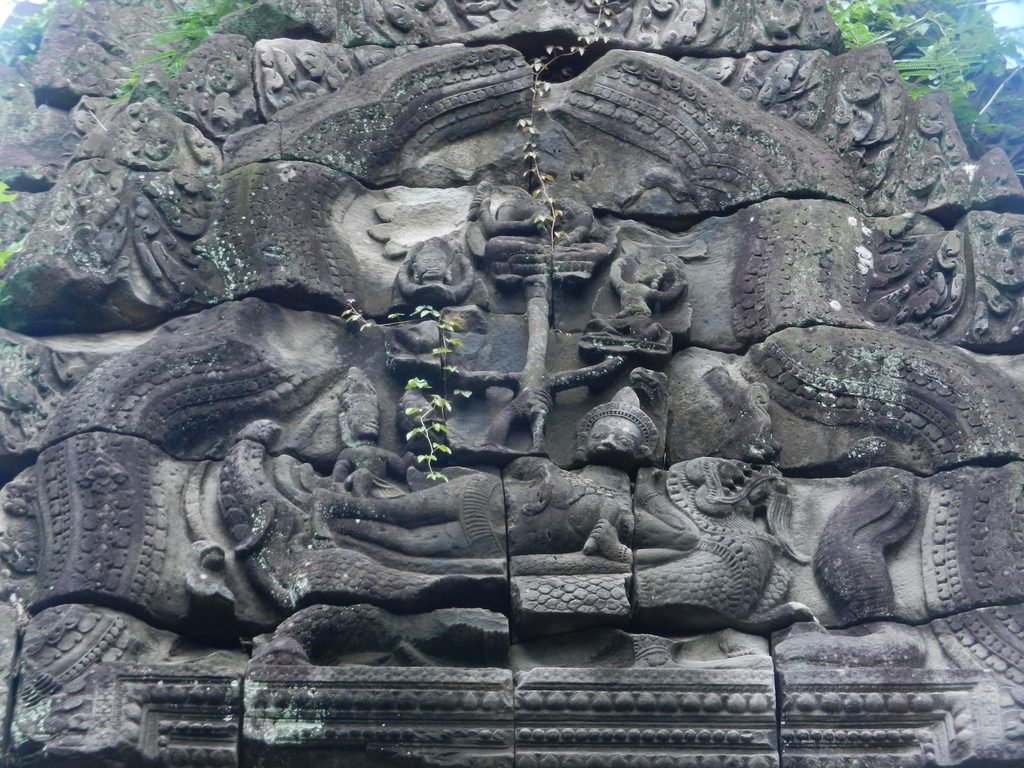
The scenes’ fluidity and naturalism are reminiscent of friezes on Baphuon. They contrast with the elevated, elitist style of many of Angkor Wat’s carvings (below).
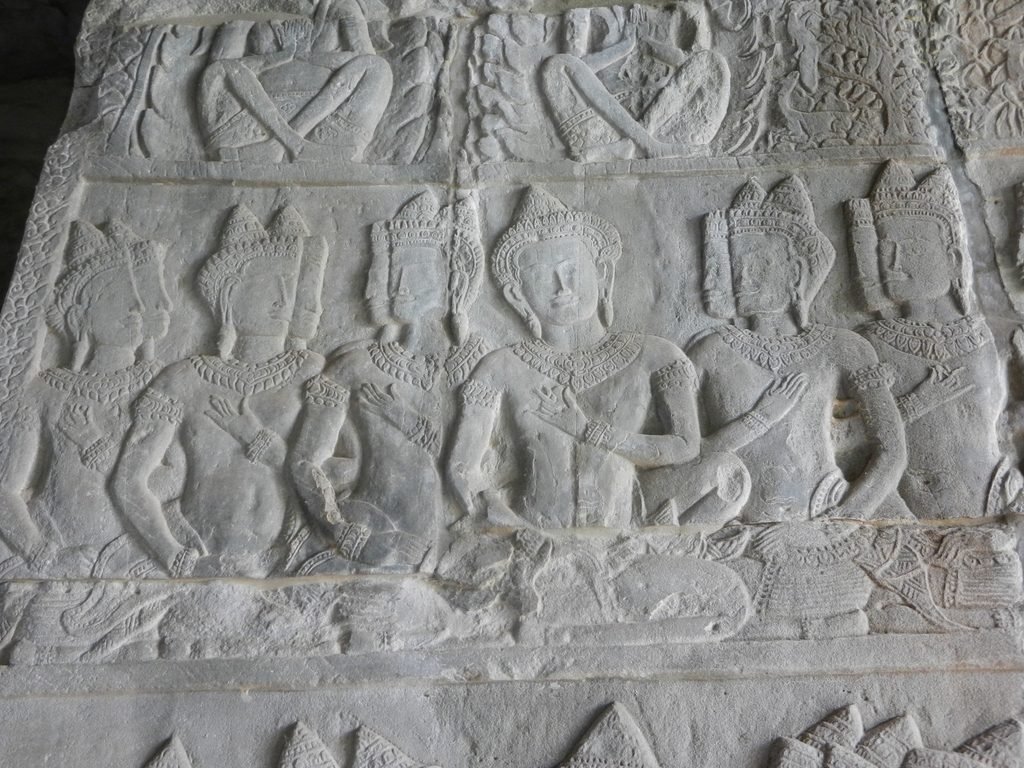
This has led some historians to conclude that Banteay Samre was begun before Suryavarman II took the throne. Several Khmer temples were built during multiple reigns. Whether Banteay Samre was or not, it combines features from pre- and late- Angkor Wat styles.
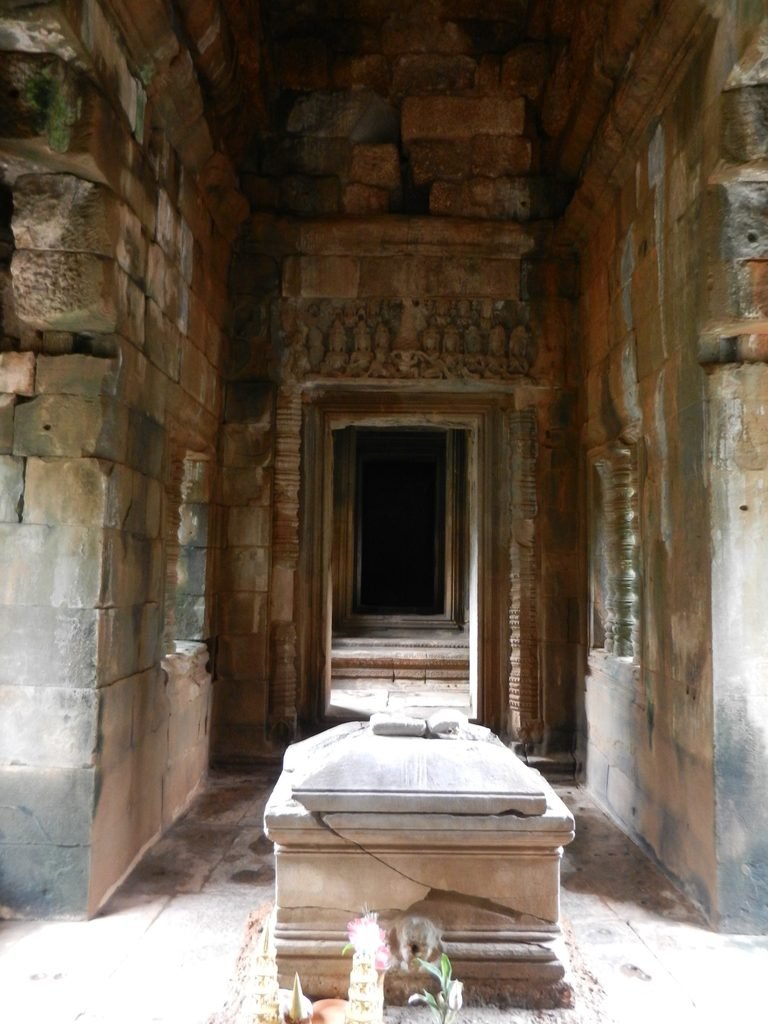
The central shrine’s inner sanctuary is pictured above. The corbelled vault is visible because the wooden ceiling it once rose over has disappeared.
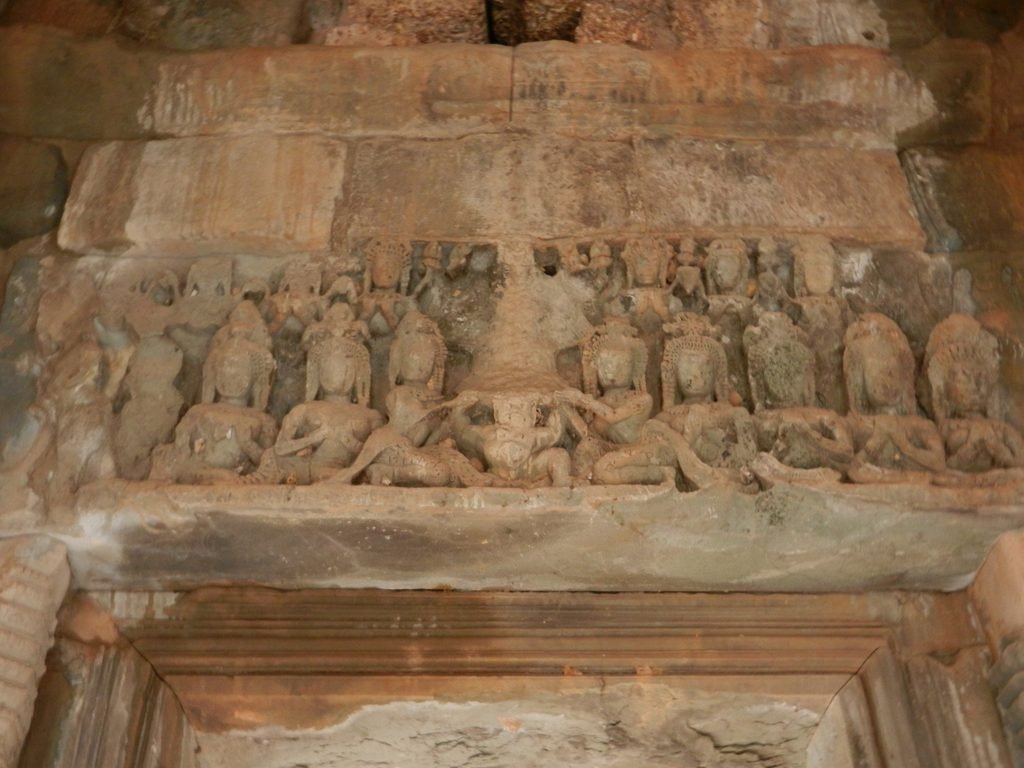
Here’s a closeup of its decorative lintel, which contains seated figures attending a central deity.

Temples from Angkor Wat’s time set standards of refinement and spiritedness that people today have internalized. I asked these kids if I could photograph them, and she immediately posed in a way that was inspired by devatas on Angkor Wat’s friezes. Her identity extends back to the creation of the great Khmer temples.