People often appreciate ancient Khmer temples, including Angkor Wat, one by one, but they existed together in a natural environment and a cultural landscape that converged into perspectives that gave the monuments much of their meaning. Angkor Wat and other magnificent temples such as the Baphuon, the Bayon, and Preah Khan are spellbinding by themselves, but this convergence inspired the Khmers to construct such overwhelmingly large buildings in the first place.
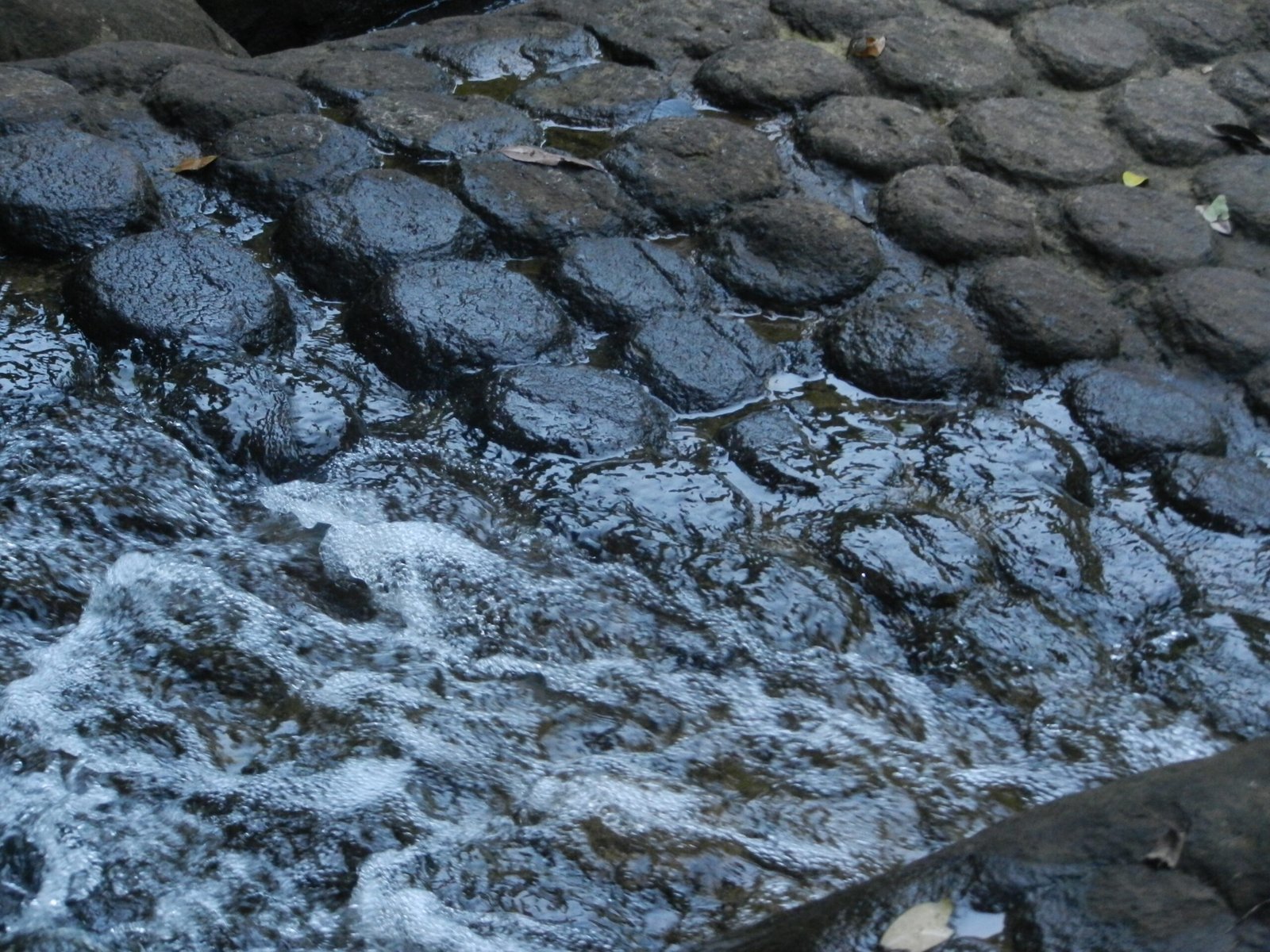
Kbal Spean (bridgehead) spreads by Stung Rosei, a tributary of the Siem Reap River. The site is also known as the River of the 1,000 Lingas from an inscription that says that in 1054 a minister of King Suryavarman I had the lingas carved. It adds that in 1059 his successor, Udayadityavarman II, came to the site and donated a golden linga. Historians have surmised that the area was sacred to local ascetics living in huts and caves. They venerated the river, which symbolized the Ganges.
I visited Kbal Spean during monsoon season, when the water rose over the lingas so that Shiva’s fertilizing energy mixed with the power of the monsoon. The above photo shows the water caressing them before it flows down to Angkor, where ancient Khmers constructed their temples and rice fields.
Vishnu was also worshipped at the site. He was sculpted several times on the river bed and along the banks so that the running water symbolized the primordial ocean before the cosmos emerged. In the photo below he reclines on the serpent Ananta. A lotus grows from Vishnu’s navel, and Brahma, the four-faced lord of creation, sits on it. Shiva and his consort are carved next to them, and they’re riding the bull Nandi.
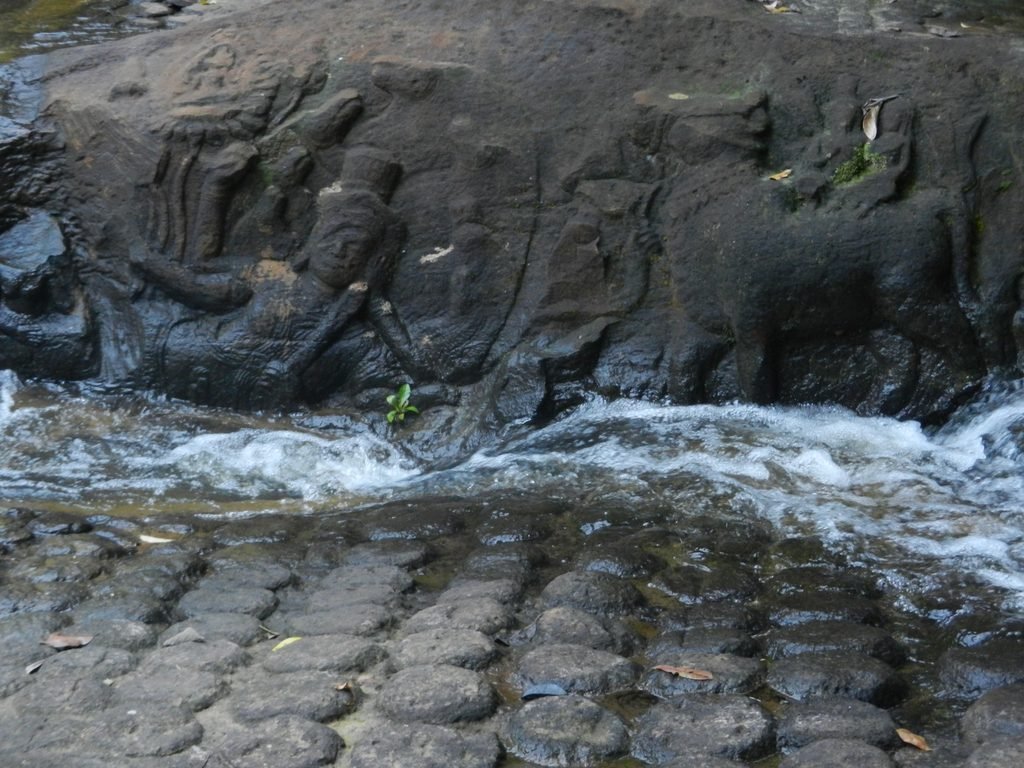
A fertile mixture of ideas converged from Hindu mythology and the local natural surroundings.
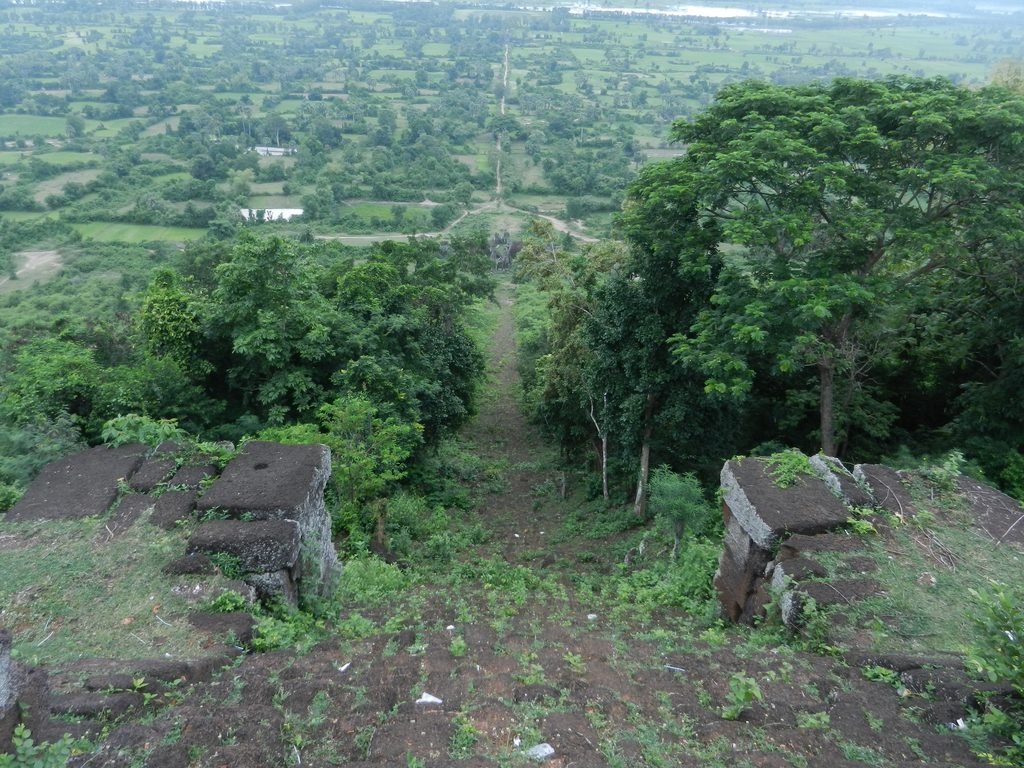
Sculptors began to create Kbal Spean’s carvings when the Khmer Empire was expanding. Suryavarman I extended its influence into what is now Thailand and annexed the Lavo Kingdom, which was centered in Lopburi. South of modern Phnom Penh he erected the temple Phnom Chisor (below), and in the Dangrek Mountains in the north, he added to Preah Vihear.
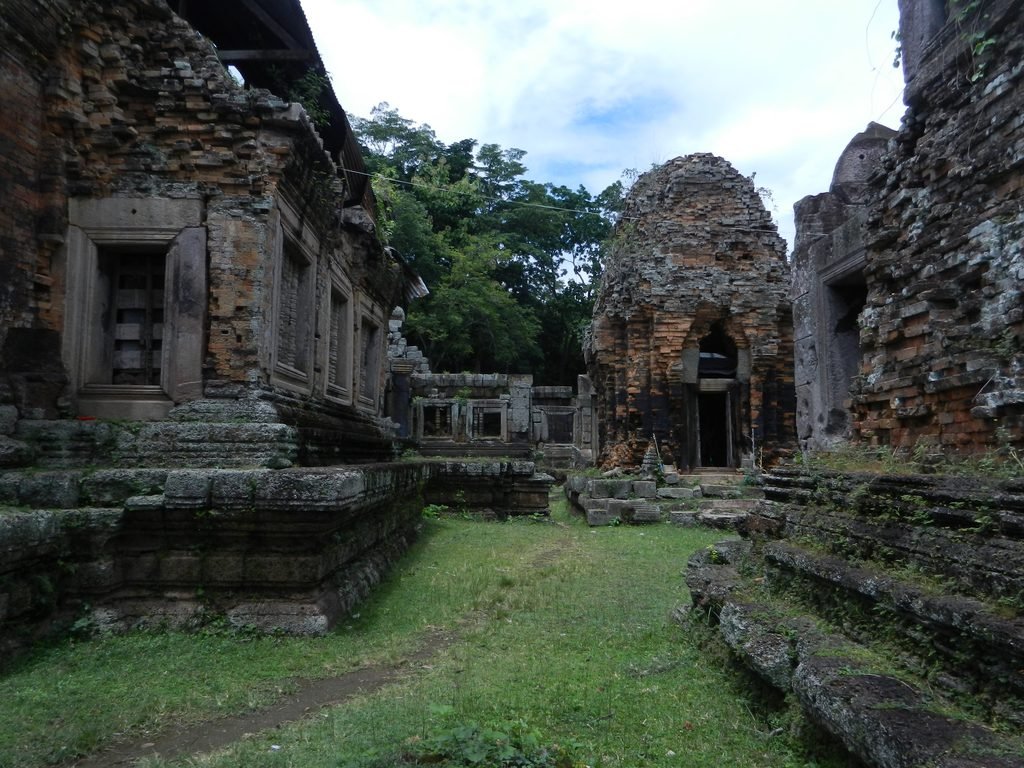
Both temples crown a hill, asserting Khmer dominance in the area.
Suryavarman I extended the irrigation works at Angkor, in a move that suggests that the city’s population was increasing. The historian David Chandler wrote that his reign mobilized bureaucratic abilities to concentrate people in Angkor’s capital. He also said that evidence suggests that merchants traded more locally and internationally then. The new and the longtime residents of the city could be inspired by the fusion of Hindu mythology, the monsoons fertilizing crops, and the power of the king to keep the state in order.
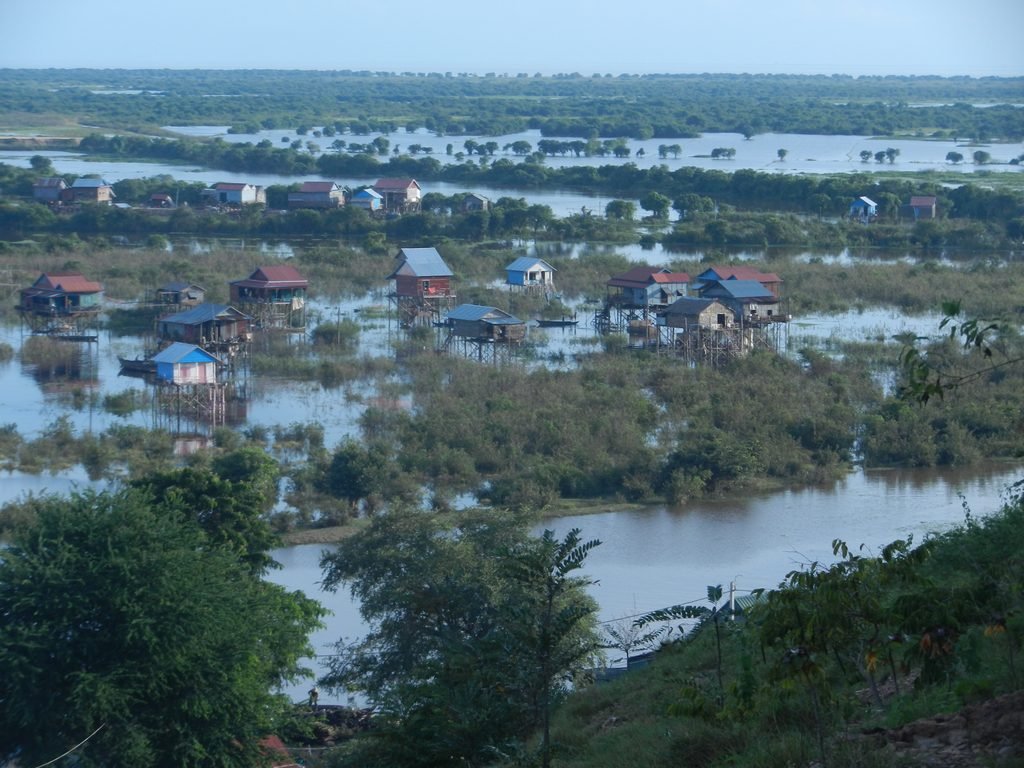
People in local villages I visited were often joyful right after rains, when their fields glistened with fresh water. The efficacy and benevolence of the powers in the universe was confirmed.
You can see another way that Hindu myths converged with local geography in Mauritius.