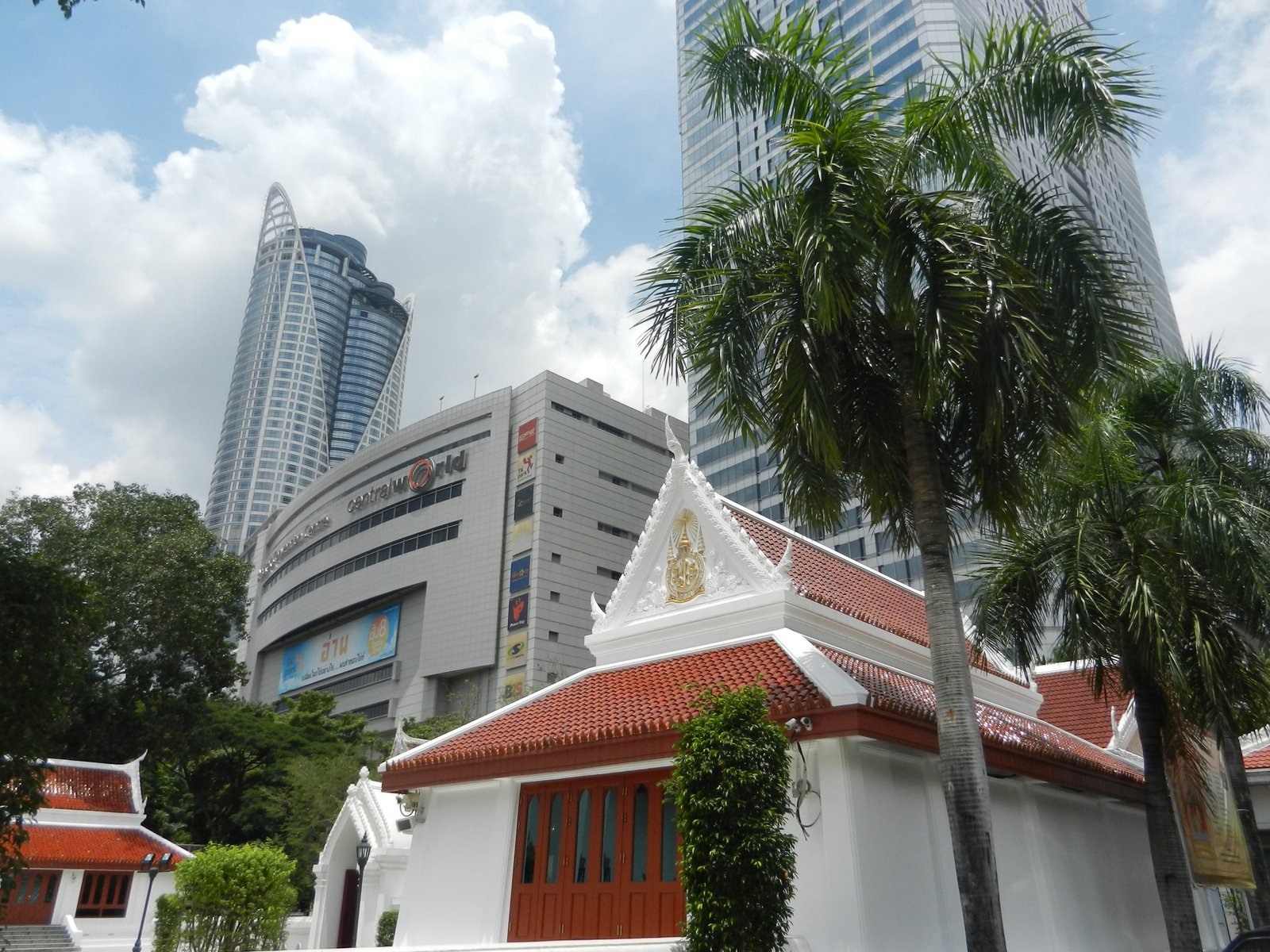
The first kings in Thailand’s new Chakri Dynasty grounded Bangkok in Thai traditions in the late 18th and early 19th centuries by erecting monuments in its center which can make you feel like you’re floating through the heavens as you boat or walk between them, particularly Wat Arun, Wat Pho, and the palace. But Bangkok quickly developed another personality.
The town beyond the three sacred building complexes grew from a network of forested canals into a modern metropolis. Floating wooden houses and shops were the most common sights in the early 19th century. Travelers wrote of long lines of them on each side of the waterways, which thousands of little boats plied. Temples’ spires and the palace rose behind them. Southeast Asians, Chinese, and Westerners rubbed elbows, and bands of musicians pierced the languid air with xylophones and flutes. But these Ayutthayan scenes transformed within 50 years of the city’s founding.
The historian Nidhi Eoseewong noted that Bangkok quickly developed a different atmosphere than Ayutthaya’s, because it became less dominated by the highly ritualized palace and more by commoners. Residents ignored the old social hierarchy from Ayutthaya which had regulated each class’s behavior and attire, and common businesspeople built wats and large homes. An increasing number of Chinese moved into Bangkok and formed large commercial networks that traded rice, sugar, cotton, and wood. Money was used much more than it had been in Ayutthaya. Bangkok was becoming more secular and complex.
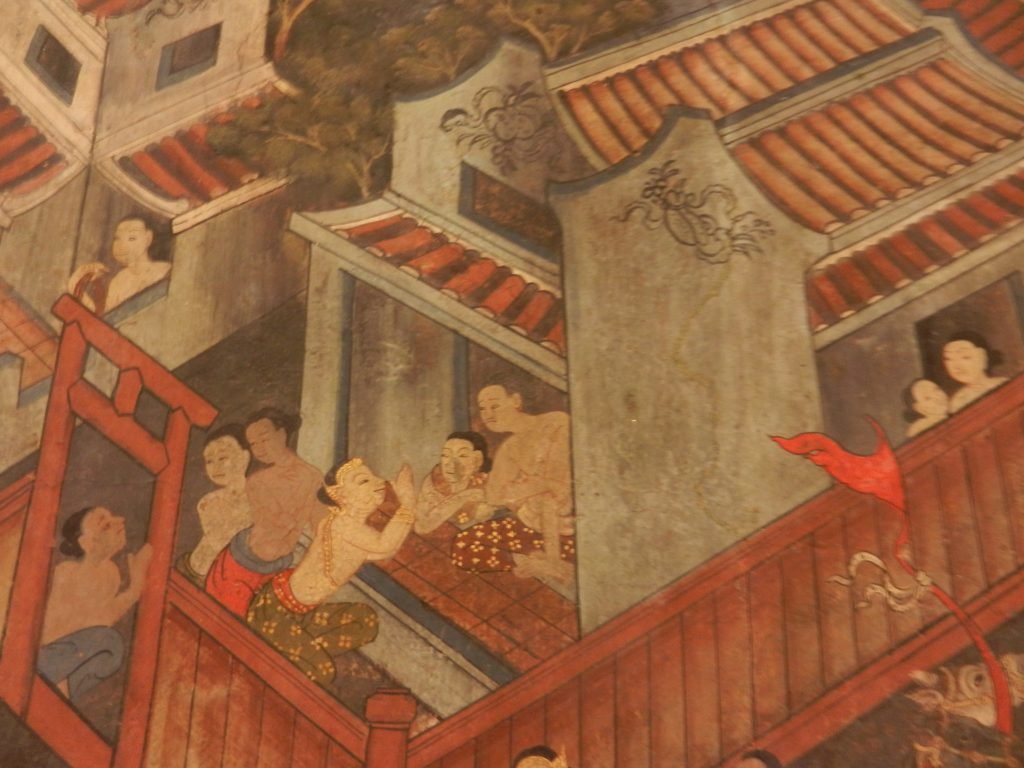
Eoseewong and David Wyatt noted that literature began to reflect this more commercial world. Many of Ayutthaya’s texts focused more on divinities and the royal court, and people had often enacted them in ceremonies. Eoseewong wrote that stories in Bangkok were not as strictly bound to ritualized performances; they were more often privately read. People now enjoyed books in worldly settings as consumer products. Writers often used simpler verse forms that were easier to read, and scenes in literature became more realistic. Cities were depicted in more detail for the sake of enjoyment. Texts were becoming more focused on this world than the supernatural.
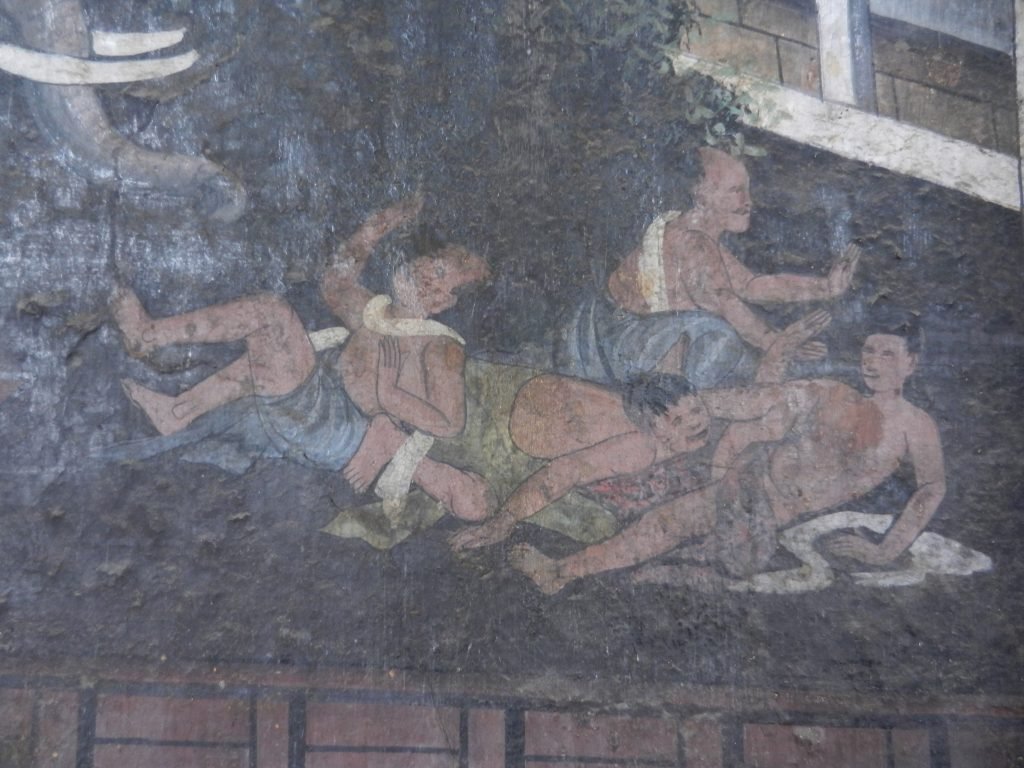
Performing arts beyond the palace also grew, and they enlivened the streets. Bangkok’s zesty night life emerged. Drunks staggered by canals, prostitutes accosted people from boats, and many Chinese men set up gambling houses. The revelers below are from a 19th-century mural in Wat Suthat.
At the same time, some painters learned about Western art and adapted features of three-dimensional perspective. They didn’t completely reduce scenes to it because the foreign influences were mixed with traditional graceful lines and meanderings. Like Florence in the 15th century, Bangkok did more business, used more money, and organized more complex commerce than before. However, Florence inherited the ancient Greco-Roman heritage and Christianity, and it was in contact with towns all over Europe which reinforced the ideas and aesthetics from both. It was also in a different natural environment. Thais had their own rich ancient and medieval past, as well as their own natural landscape, and they synthesized what they learned from the West with them.
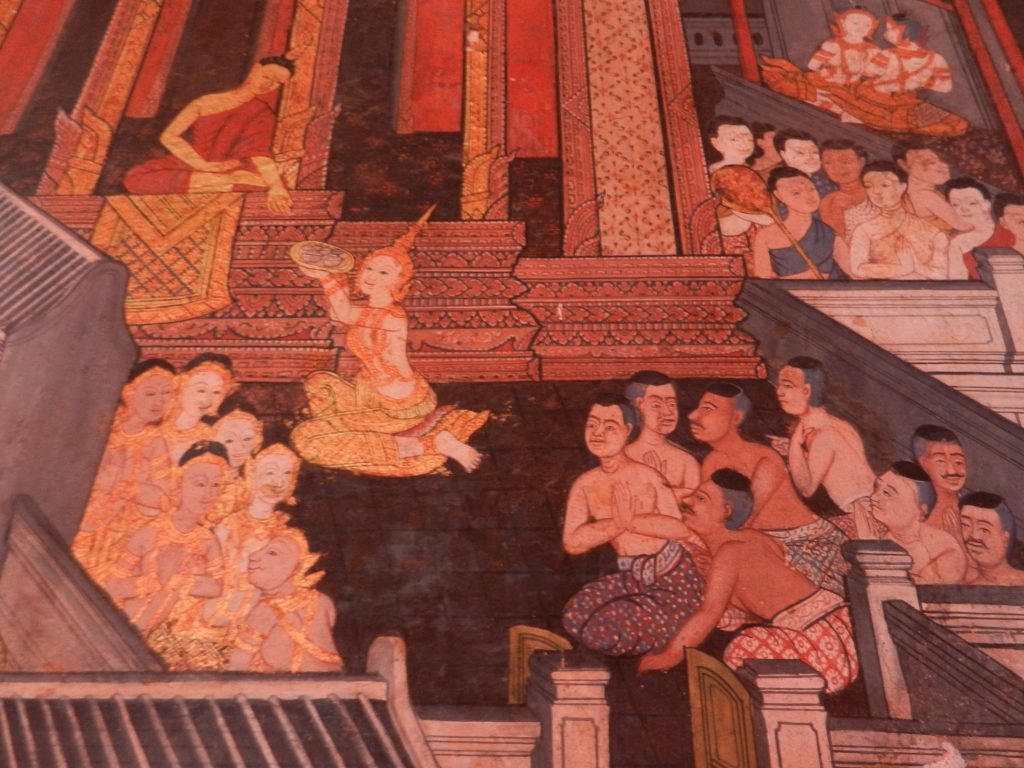
But the newly imported techniques still allowed more analytical arrangements of details. The old elegance was mixing with business people’s worldly interests.

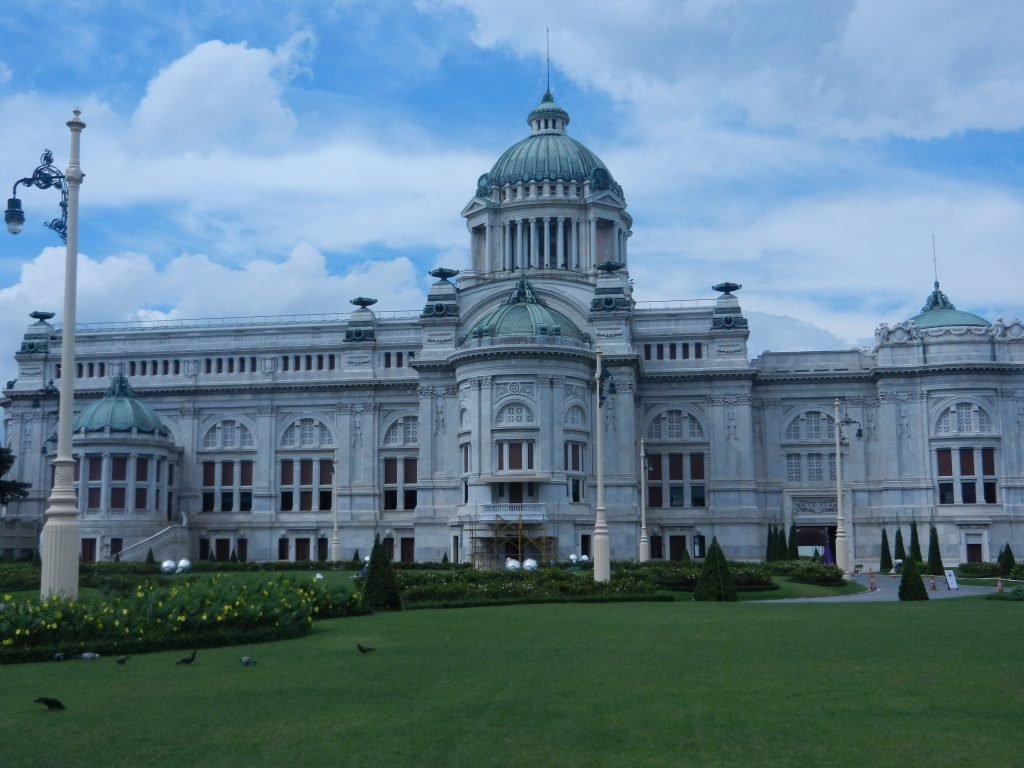
So Bangkok’s spiritual art soon shared space with sensual pop culture, a heady business world, modern boulevards, and architecture from multiple cultures. Ananta Samakhom Throne hall, built by King Chulalongkorn at the end of the 19th century, presides below. It was heavily inspired by the Italian Renaissance.
Sadly, new experiences also included cholera epidemics and canals reeking with pollution. Many Westerners then and now have felt that the city mixes incongruent realities. Transcendental art alternates with gritty surroundings.

But the vibrant city provides diverse perspectives which are side by side.
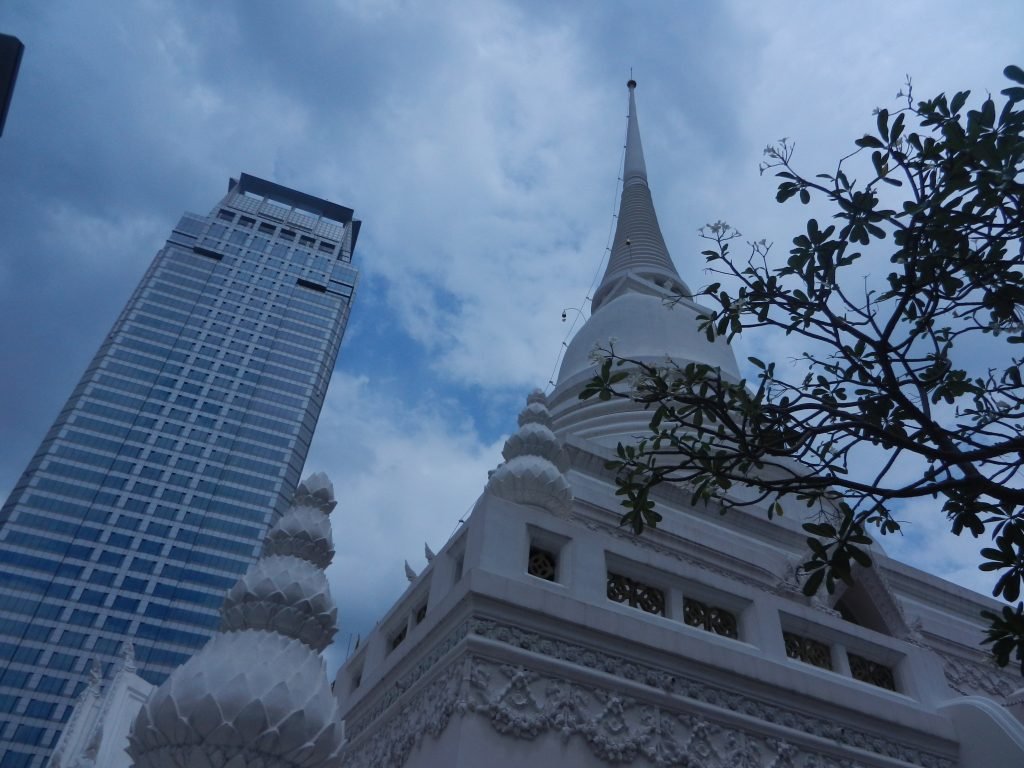
It’s thus a great place for looking At/With/Beyond different cultures.
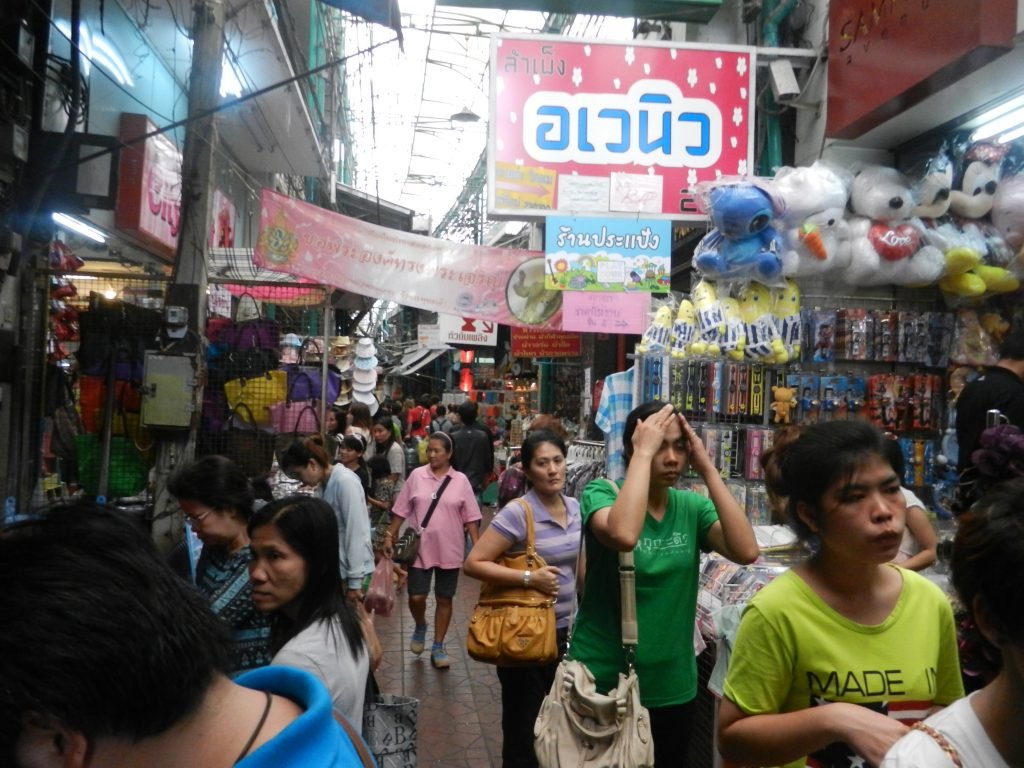
The dense crowds add warmth to the mental flights. Bangkok never ceases to fascinate me.