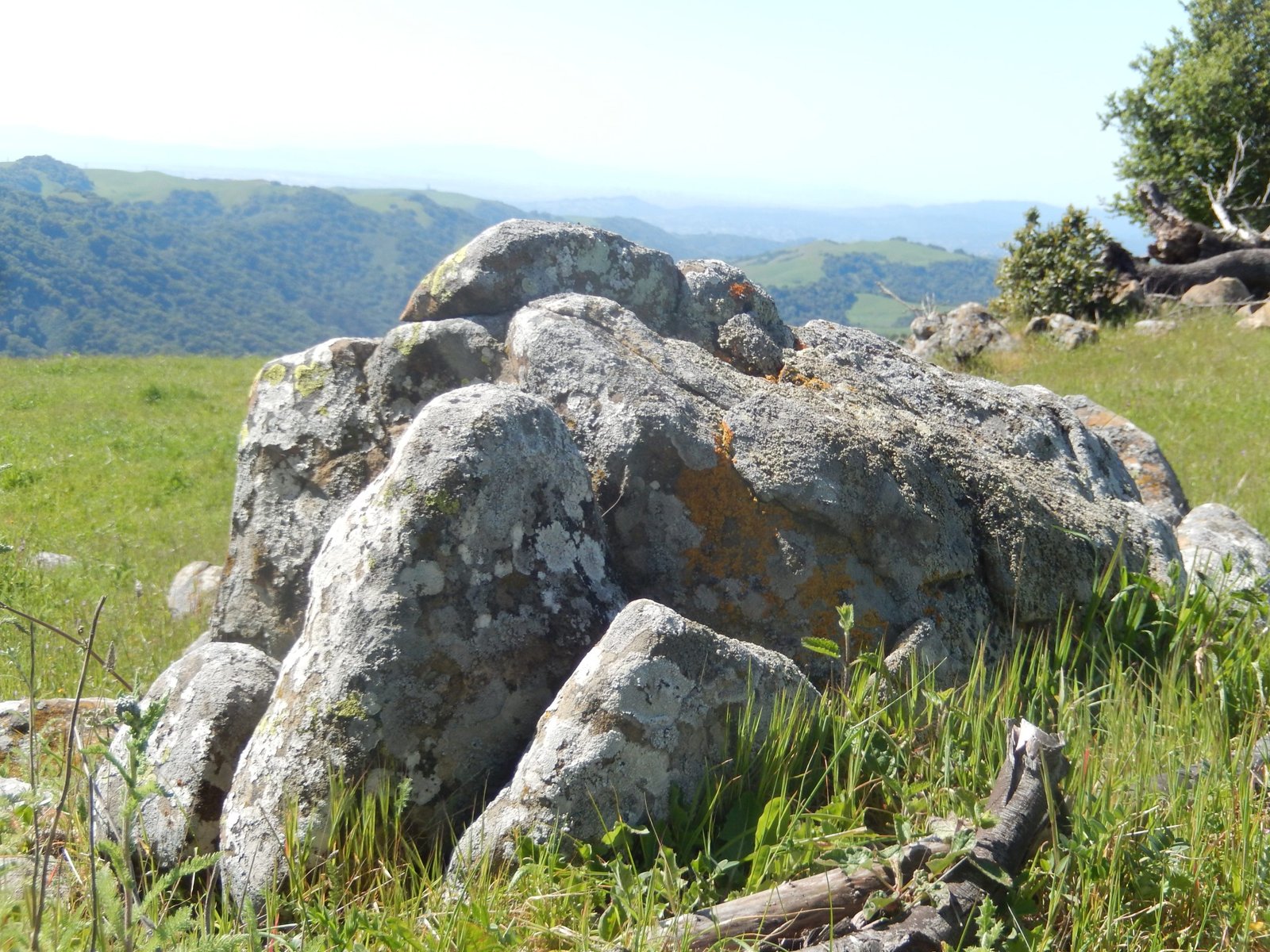
The archaeologist Paul MacKendrick wrote a book about ancient Italy called The Mute Stones Speak. But for First Americans in California, stones aren’t mute; they can impart power and wisdom. They’re ancient and thus closely associated with mythic times. Many Indians in California built a fertile range of concepts around them.
Ohlone who spoke Chocheñyo (their language in Silicon Valley) have told stories about a heroic creature from those times, called Kaknu. They’ve often imagined him in the likeness of a peregrine falcon. He once entered the earth and encountered the lord of the underworld, called Body of Stone, who had previously killed all people who had reached his home. Kaknu fought him, and as a falcon, he was especially agile. Body of Stone was only vulnerable in his neck and navel, but every arrow Kaknu fired hit its mark. Body of Stone groaned at a volume that roared throughout the underworld, and then died and burst in all directions. The large stones on the land today came from his body.
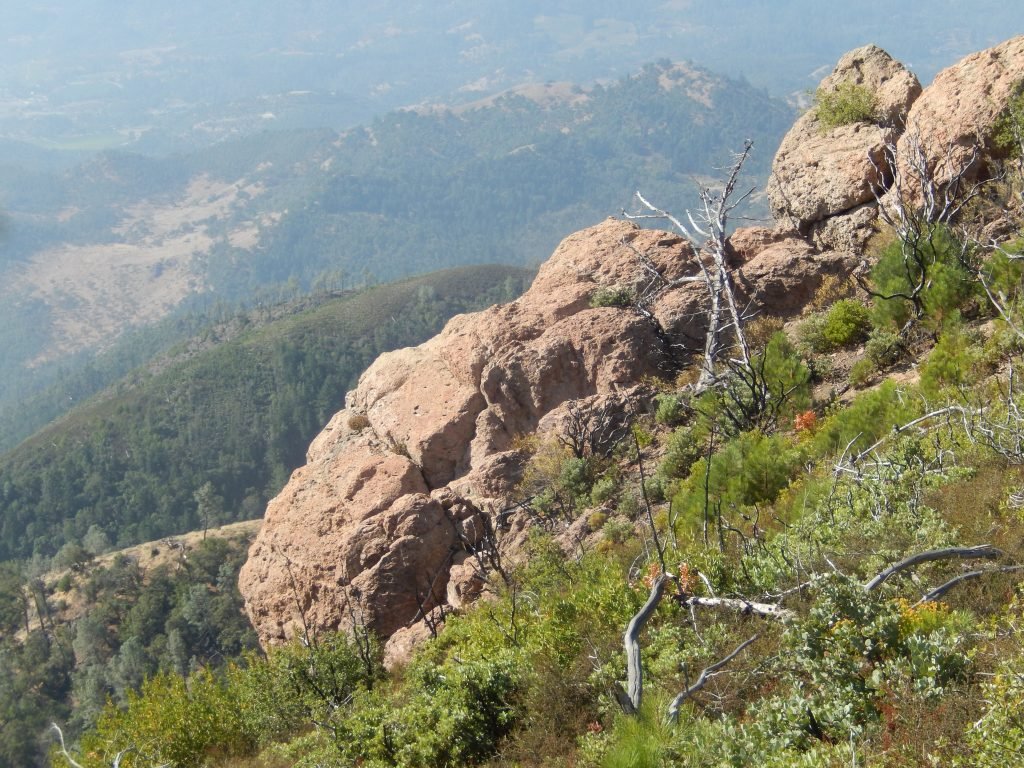
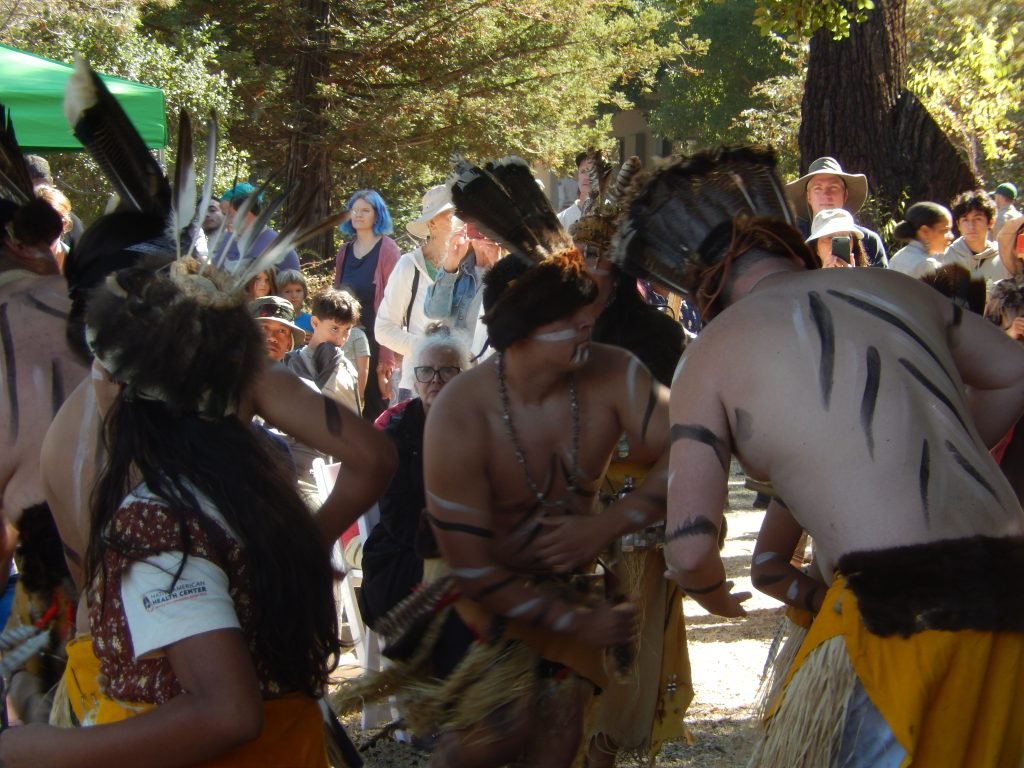
Ohlone and a lot of other First Americans in California associated stones with energies that generate life. They carved ovoid and round indentations in them (called cupules), and they have been associated with a large range of ideas, including fertility, weather control, astronomy, fishing magic, mourning, and tests of character. The recurring theme is that rocks have power, and people accessed it by conducting rituals, like the Ohlone during their New Year ceremonies (below).
Some Pomo couples who wanted to have children went to a large bluish stone that protruded from the ground. Its surface was full of small cuppings and gashes that had been scraped and pulverized as medicine to cure infertility. They were ground into powder which was then made into a paste. The woman’s abdomen was painted with two lines, one running from the top of the sternum to the vagina, and the other traversed the middle of the abdomen. She also ingested some of the paste. Sex at this time was supposed to maximize fertility.

Stones’ association with fertility extended to salmon. The Hupa (Athapascan) pitted rocks in conjunction with salmon runs. They believed that an immortal man during mythic times thought, “Let a stone cup become.” It became, and a salmon emerged in it. More were produced, and the immortal made them swim down the Trinity and Klamath rivers to the ocean.
Several tribes also associated stones with changes of seasons. Nissen and Ritter (1986) made a strong argument for associating cupule and rain rocks with the World Renewal Ceremony of the Hupa, Yurok, and Karuk. The seasonal changes relate to the replenishing of the earth and the birth of water, fish, and plants.

Modern Westerners have often conceived of and classified stones in terms of their chemical compositions, but First Americans in California have seen them as more alive, and they created a rich mixture of concepts around them, as Navajo have done with light. Cultures develop creative ways to think about common objects, which are irreducible to other people’s ways of seeing. We’ll learn more about this as we return to Thailand in the next article.