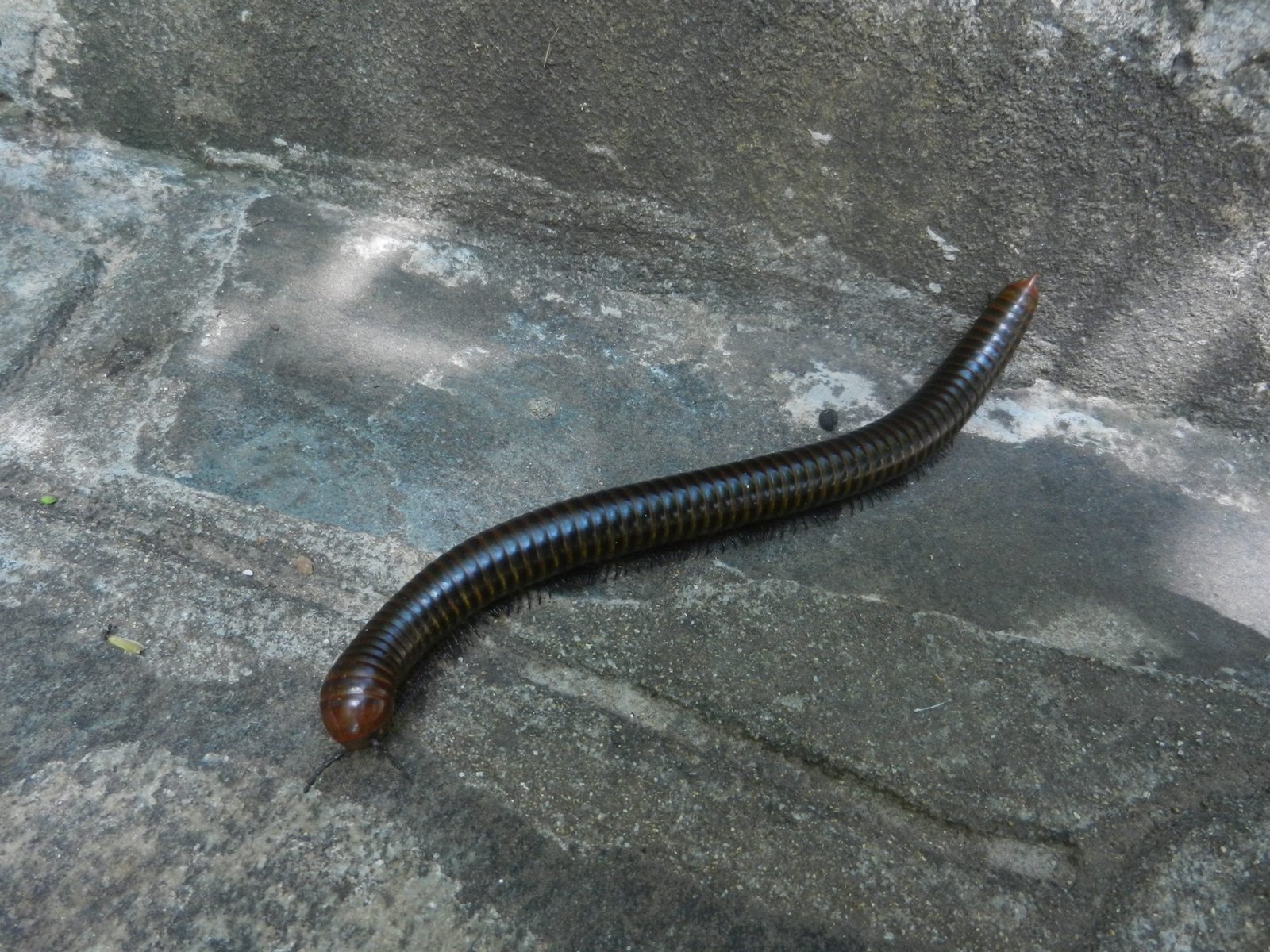
Lifeforms in India proliferate and surround you, from elephants to mosquitoes and lots of species of ants. I brought a box of sweets to an office in Chennai and put it on top of the refrigerator. I thought they would be safe there, but an hour later they were covered with ants. They were much smaller and faster than the docile species in Silicon Valley, where I live. Other species are almost an inch long. Nothing stays uneaten for long. Life transforms quickly in India.
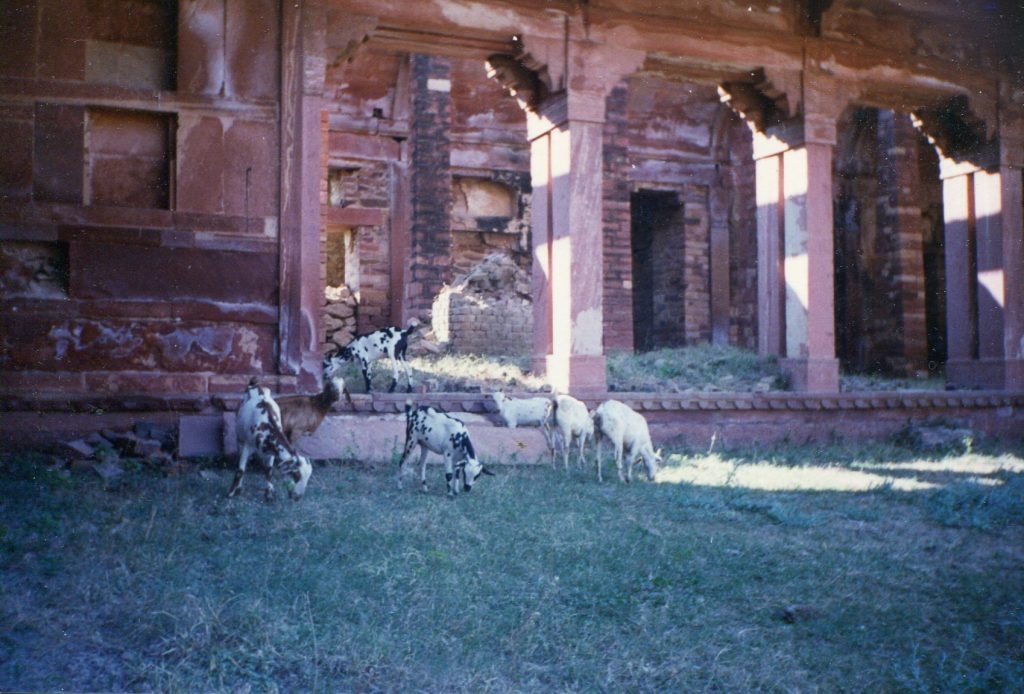
In Agra, two stray dogs panicked and bolted out of a deserted room in the Red Fort as a friend and I entered. They barely squeezed past us in the narrow doorway. It’s hard for anyone to have space to himself for long in India.
And India’s dense blends of life-forms enliven interactions between them. I was waiting for a train in Delhi’s main station just before midnight. It was jam-packed. Men slept on the concrete floor as dozens of others stepped over them. Monkeys spurted between the people.
Most monkeys were placid, but two suddenly began to fight. They screeched loudly for about fifteen seconds, then one gave up and darted away. He deftly dodged people as though he was jumping through a pipal tree’s branches. Everyone laughed. The monkeys added merriment to a trying evening.
“You’re gonna do it, aren’t you, Brian!” How can I refuse when a woman asks this? We were in a group on an elephant safari in Nepal, in the lowlands next to the Indian border. A trainer just gave us an elephant riding demo. A spry man stood in front of her face, pulled her ears forward, placed his foot on her trunk and pushed. She lifted her head, and he sailed over it, turned around in mid-air, and landed with both legs around her back.
The trainer told us we could try, “But remember, you fall at your own risk.” There were 16 of us, and three had already gotten on top of her, so I gingerly approached her. I grabbed her ears, pulled them forward, put my foot on her trunk, pushed and went up in the air–and landed on my stomach on top of her head, with my feet sticking over the front. I squirmed and finally made it to her back and sat–facing the wrong end.
After more squirming, I was facing the proper end. The trainer said, “If you put your feet behind her ears and push them together, she’ll walk.” She went off into the jungle, and kept going. “How do I get her to stop!?” The trainer came, and she stopped and kneeled down so I could easily dismount.
She never made a jerky or unnecessary move while I was on her. I’m sure she could sense my fear (it must have been emanating from every pore), and she was as gentle as a kitten.

The tender group of elephants in the above picture from Mahabalipuram, with the babies playing under the grownups thus struck a chord in me. The monument portrays the unity of life with loving realism.
“How do you spell frustration? I-N-D-I-A!” a native of Chennai said after returning to California. But I found that it’s hard to stay angry for long in India. Something quickly happens that causes laughs. Situations and emotions don’t seem as fixed as they often do in the West.

Neither are species. Those monkeys and elephants are as smart as whips. They make our beloved dogs and cats seem as dumb as dirt. Ancient Greeks and Middle Easterners weren’t surrounded by animals that seem so human. It was easy for them to see people as categorically above all other species. The Greek and Judeo-Christian heritages have stressed this idea. But monkeys and elephants approach our level of intelligence, so in India, it’s easier to see life as a continuum of forms.
And because we’re not distinctly above the level just below us, it’s easy to think that species transmute into each other–that a life is part of a long chain of incarnations that’s determined by karma. Things in India don’t seem as distinct as they often do in the West.
It’s thus also easy to think that all beings emerged from the same abundant energies which generated all life-forms. Even the ants can teach what the Upanishads say: All beings share an inner oneness.
Assumptions that the universe is a vast space-time field of interconnected life forms already had ancient roots in the Rigveda when the Upanishads were composed. They have been expressed in many areas of Indian culture, including music, artistic images, architecture, narrative, and emotional patterns. All converged with each other to reinforce these assumptions so that even ants can encourage you to think on a cosmic scale.