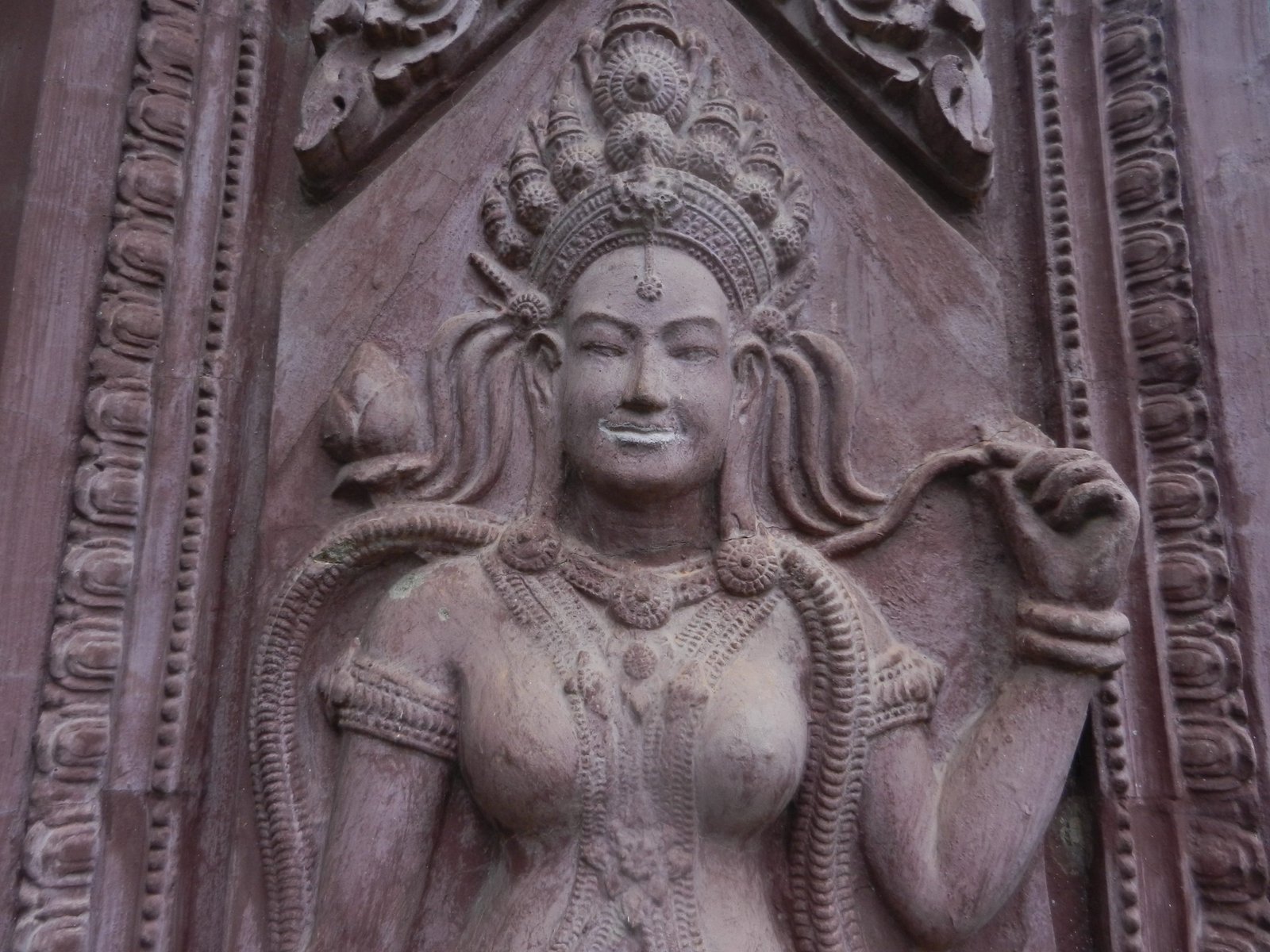
Cambodia has so many ancient Khmer temples and so much natural beauty that they will always give you new things to see. But it also has other great sights to explore. I visited as many modern temples as I could and found that Cambodians are doing creative things with old Khmer art forms.
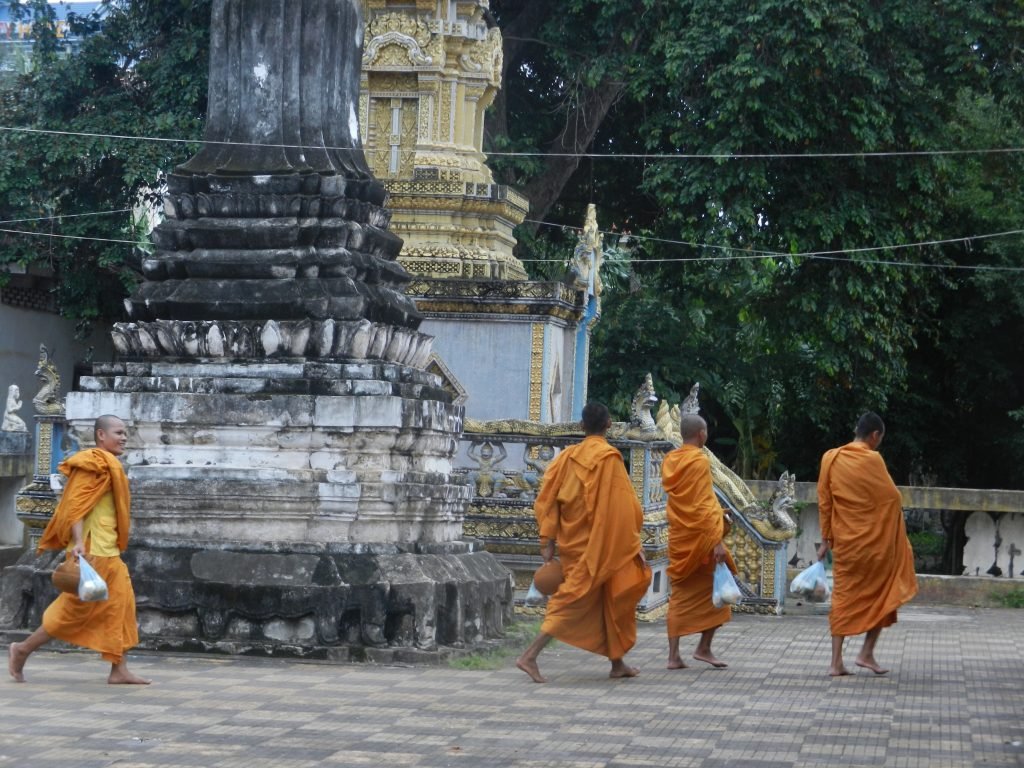
Wats have many elegant buildings besides the main assembly hall. People with enough money erect a large stupa that houses their ashes when they depart. Some temples have sections where many sprout up. You can spend a long time savoring their elegant forms because each is unique.
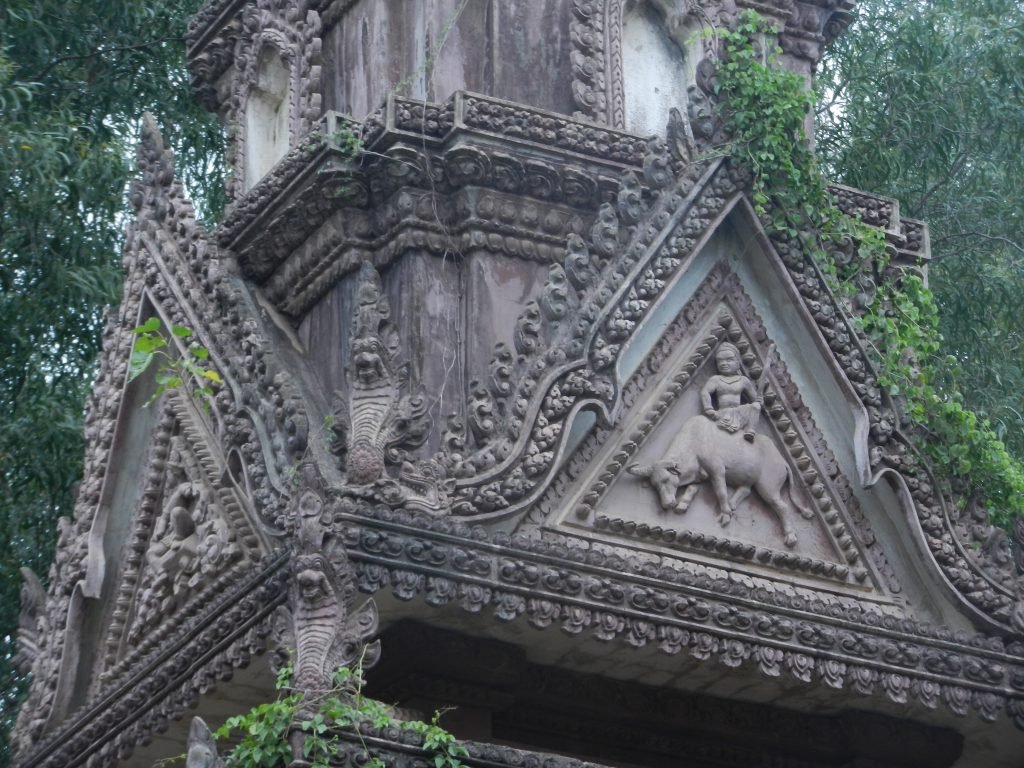
This shrine has deeply carved figures that remind me of Banteay Srei’s sculpture. An undulating crocodile’s body frames the carvings, and a serpent’s head springs from the mouth and sticks up at the corners. But these hallowed ancient Khmer art forms are used in a new way–
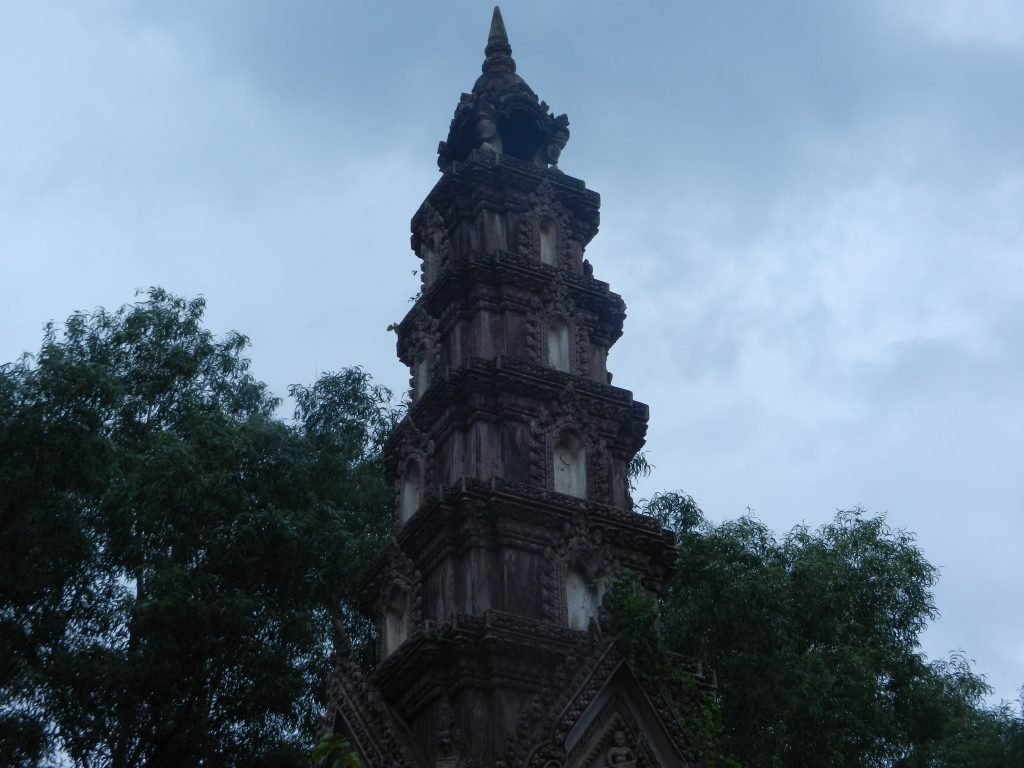
You can see the peaks of the bodies at the bottom of this picture. The shrine has several levels stacked on each other, but it’s much thinner than ancient Khmer monuments. Thai stupas undulate more as they rise to the heavens. Khmers liked sturdiness more, so their monuments’ forms were usually more cube-like. This stupa’s builder used this sign of order and well-being which Khmer kings erected to govern their empire, but modified the forms into something more spiritual–its thinness stresses the vertical dimension. The shrine is thus less imposing.
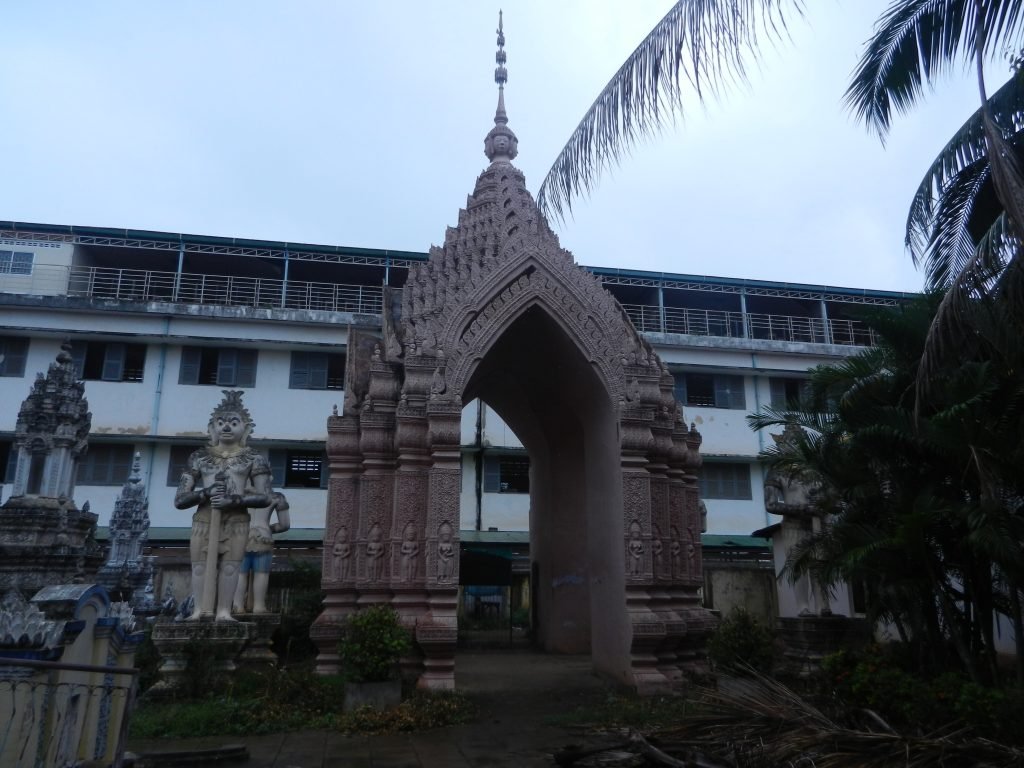
Like several ancient Khmer temples, many modern Cambodian wats have elegant gate-towers.
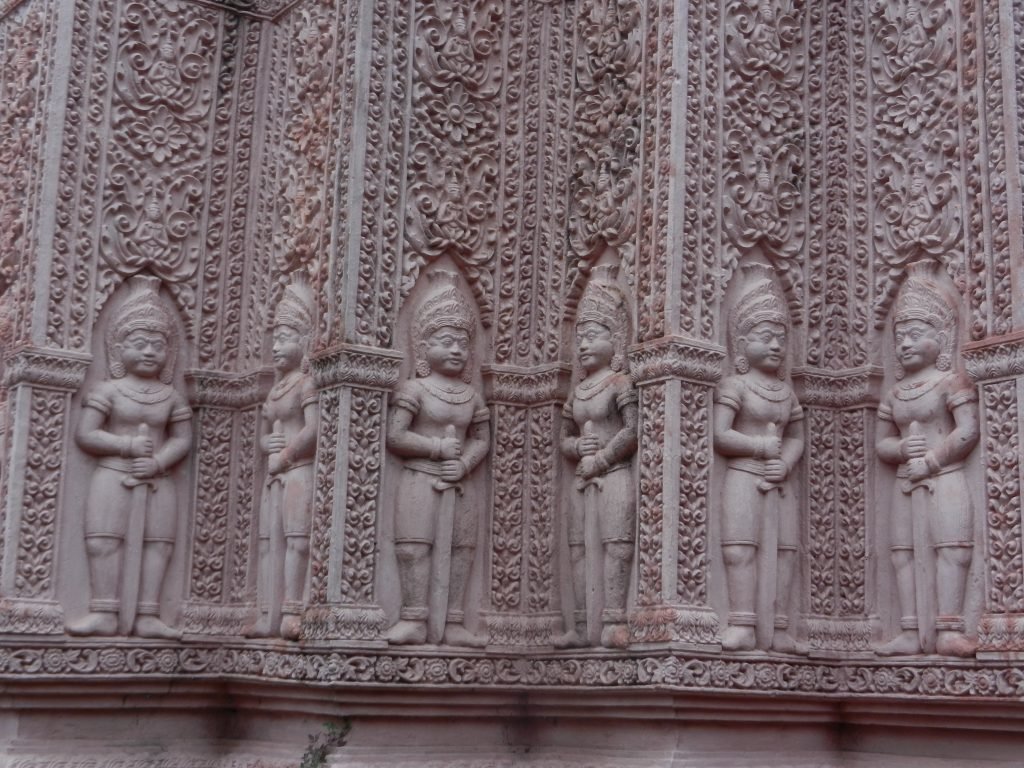
The above two shots are from the main wat in Battambang’s center, Wat Phiphetaram. Carved guardians keep out spirits with bad attitudes. This tradition goes back to the first great temples around Angkor, like Preah Ko. But–
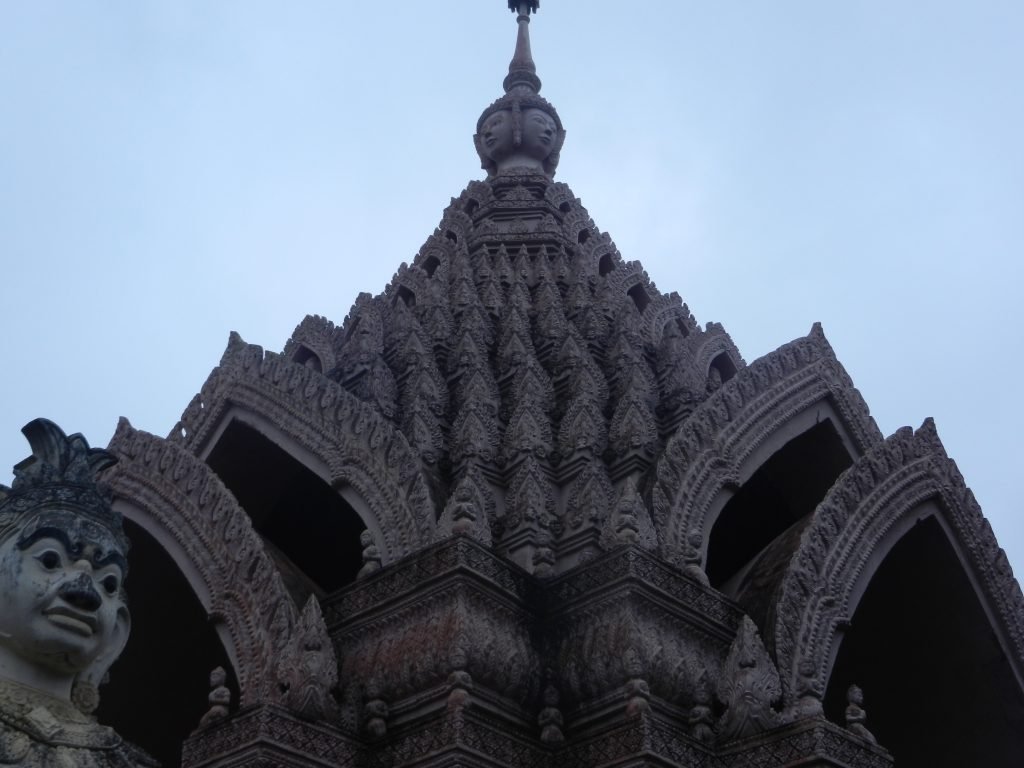
–the roof on this gatehouse is more elaborate.
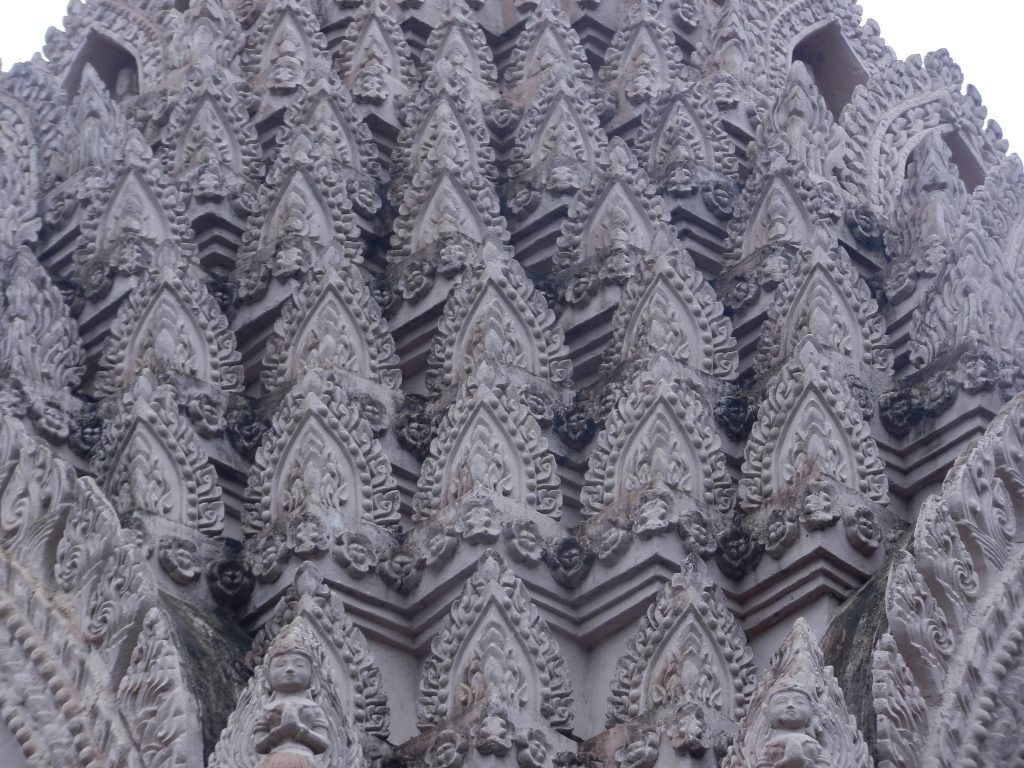
It multiplies the rounded triangular forms that frame many old Khmer carvings. They’re dense, like the Cambodian jungles, but also spiritual. They rise upwards as though the builder saw the path to the heavens in terms of the natural environment.
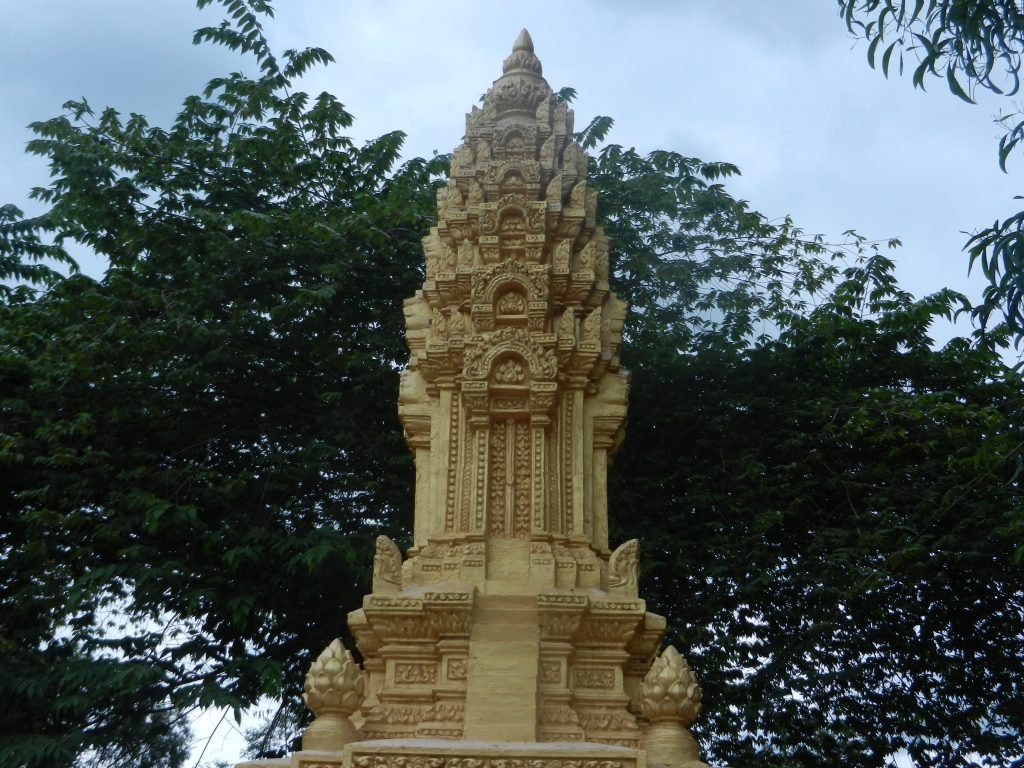
This stupa also blends well with the natural surroundings.
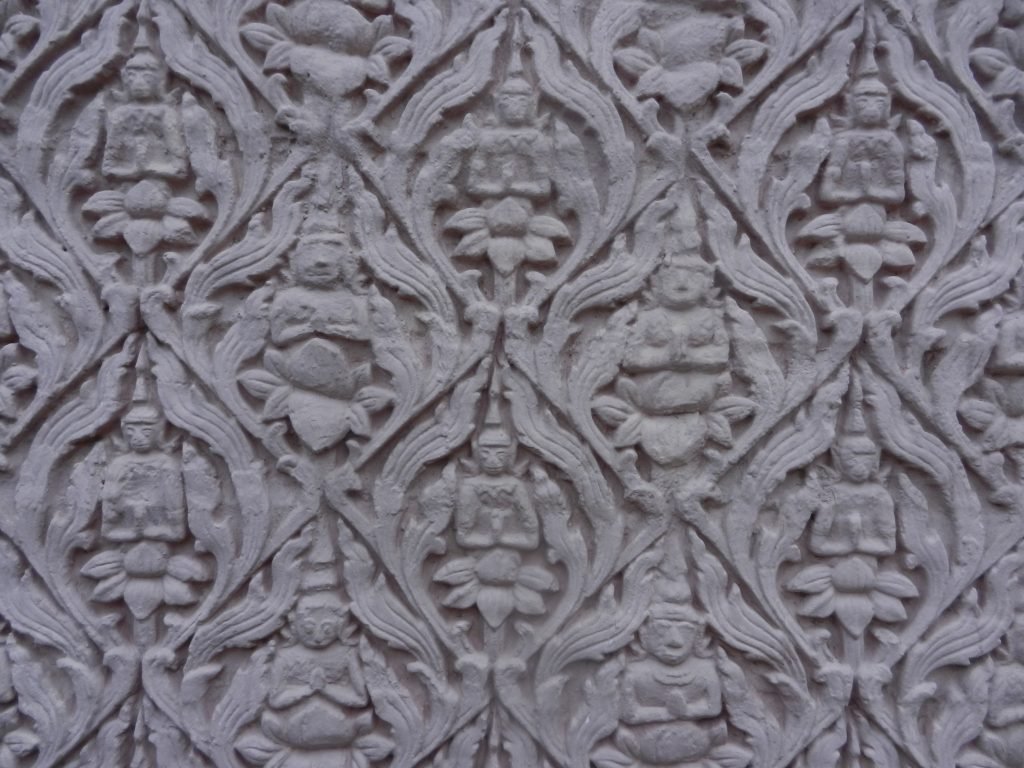
Blending human forms with profuse vegetal growth is an ancient Khmer tradition which goes back to the earliest large temples at Angkor. This tradition graces the four sides of the bottom of a stupa at Wat Phiphetaram (above).
One of the most inspiring things about all the buildings in Cambodian temples is–
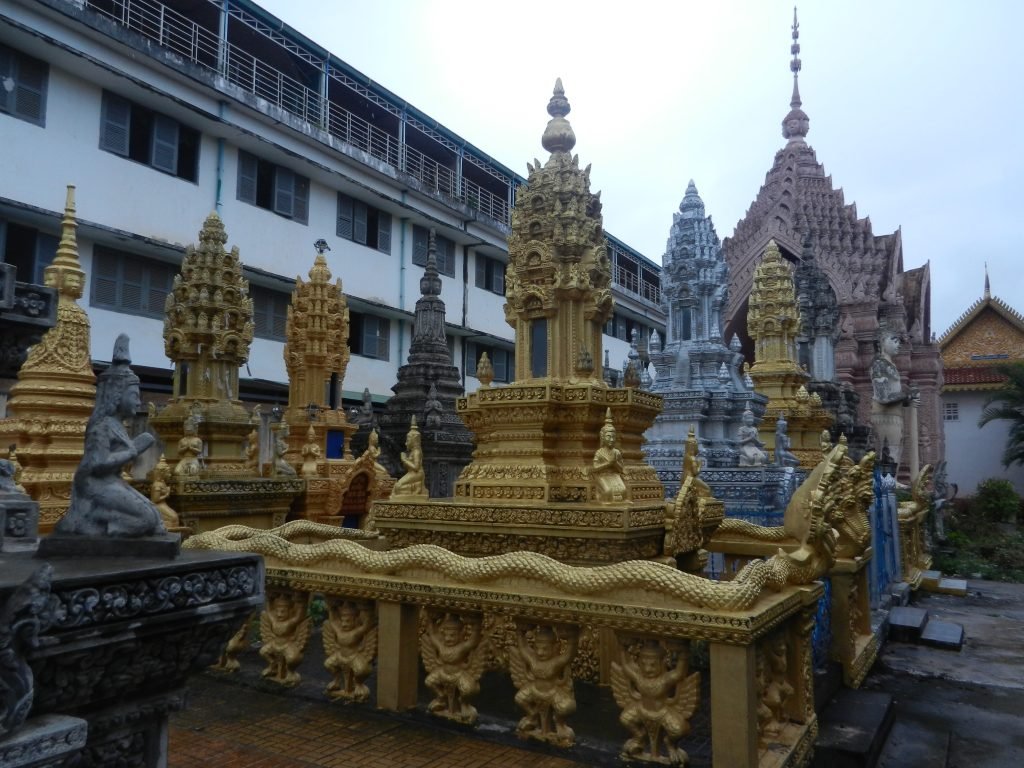
they play off of each other. Each one is unique, and all are exuberant. They all have the old Khmer spirit; like Angkor Wat–their elaborate forms exult in nature’s abundance. The old Khmer glory lives in people’s aspirations for the highest spiritual goals.
You can walk around Cambodia’s wats and enjoy endless varieties of Khmer-style heaven.