The Khmers knew how to start with a big bang. The temple on Phnom Krom was built by an early Khmer king, Yasovarman I or his court officials around 900 CE. He founded the city of Angkor and established ideas that the Khmers unified themselves with for the next 500 years. Exploring it will take you into some of Angkor Wat’s cultural foundations.
But these foundations require a little climbing to explore. Phnom Krom is a 449-foot-high hill. Yashovarman built his royal cult temple, Phnom Bakheng, on a hill in the middle of Angkor. So Phnom Krom echoed some of Angkor’s main shrine’s meanings.
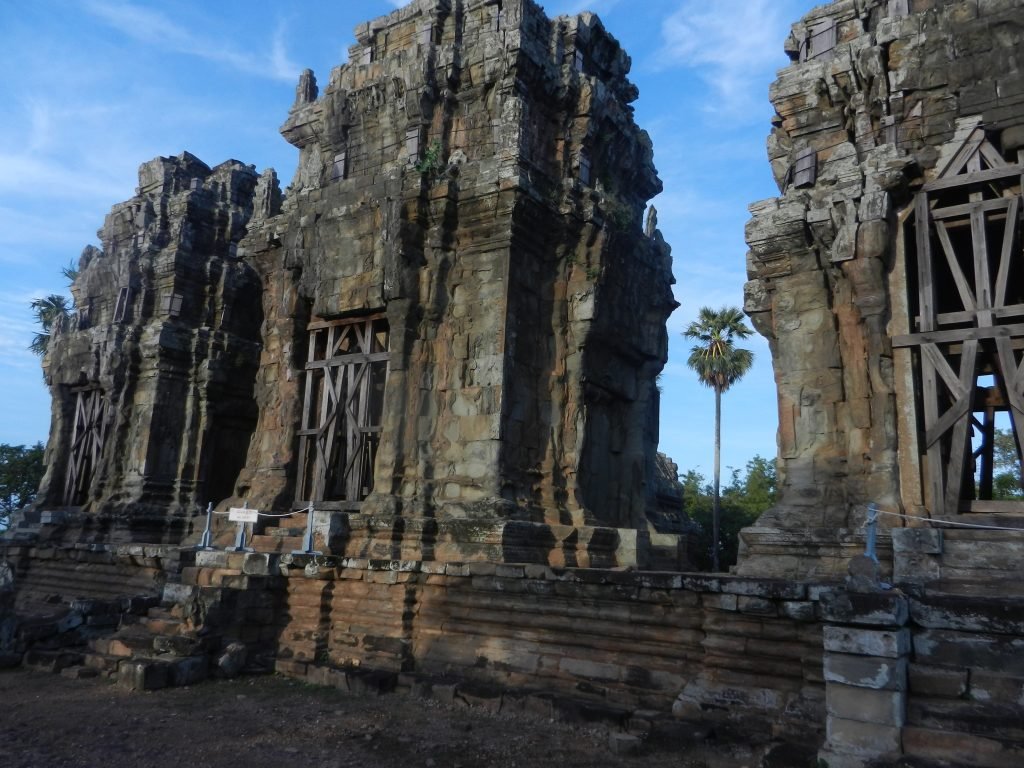
In Khmer royalty’s fashion, the vision that inspired the temple on Phnom Krom was big. The central tower was dedicated to Shiva. Most kings who ruled before Angkor Wat’s builder worshiped him. Khmers and many other Southeast Asians associated him with their local ideas of spirits on hills and of the land’s power to generate life. The north tower honors Vishnu and the south shrine is for Brahma. So all three gods in the Hindu Trimurti stand together and crown the hill. The three towers are on the right in the above photo.
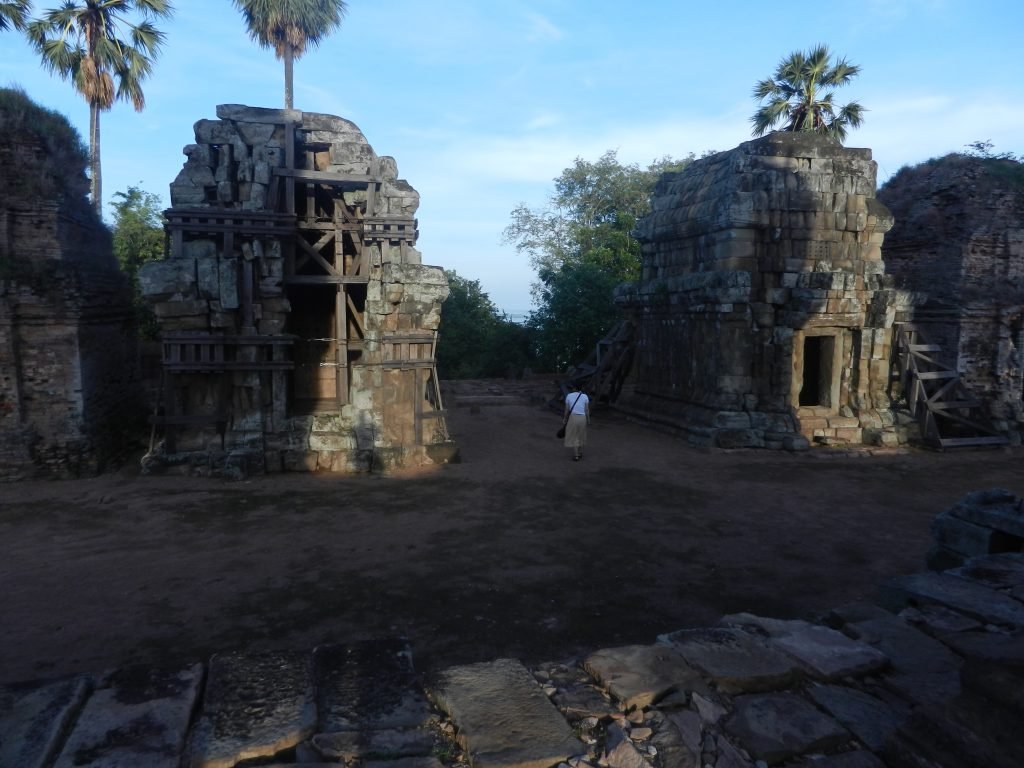
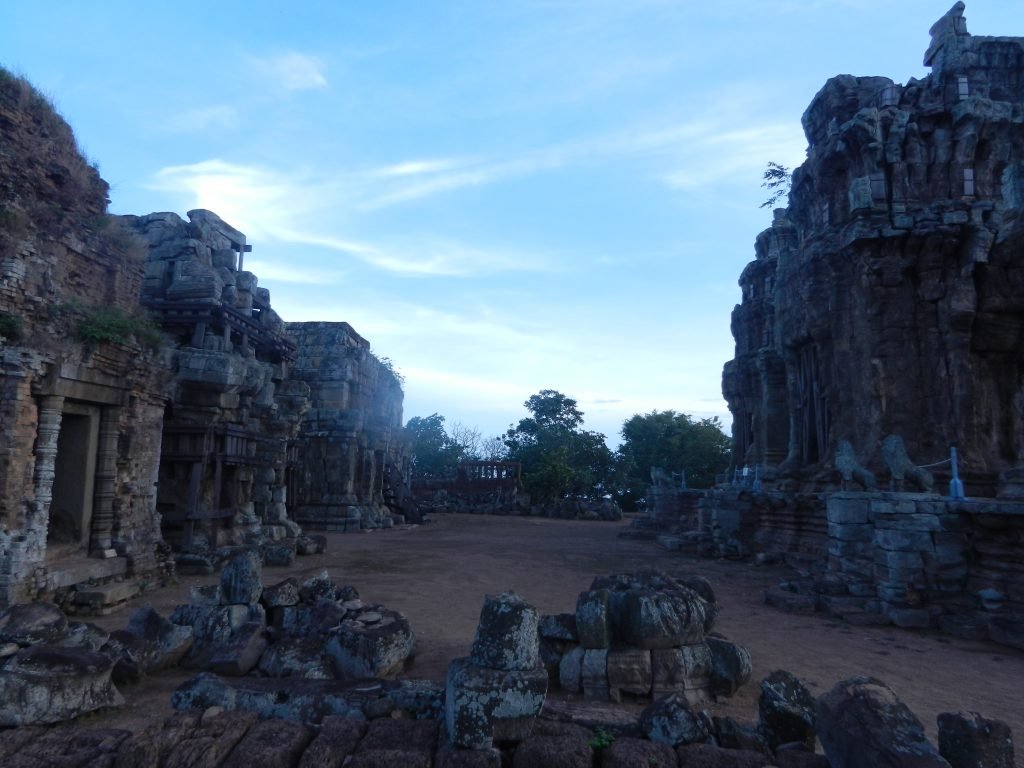
The above shot’s from the towers’ platform. Four buildings called libraries face it, and ten rectangular buildings surround these structures. A wall with a gatehouse in each cardinal direction encloses all of these buildings. So Yasovarman might have thought that the Trimurti’s cosmic order is symmetrical.
But it’s also supremely elegant.
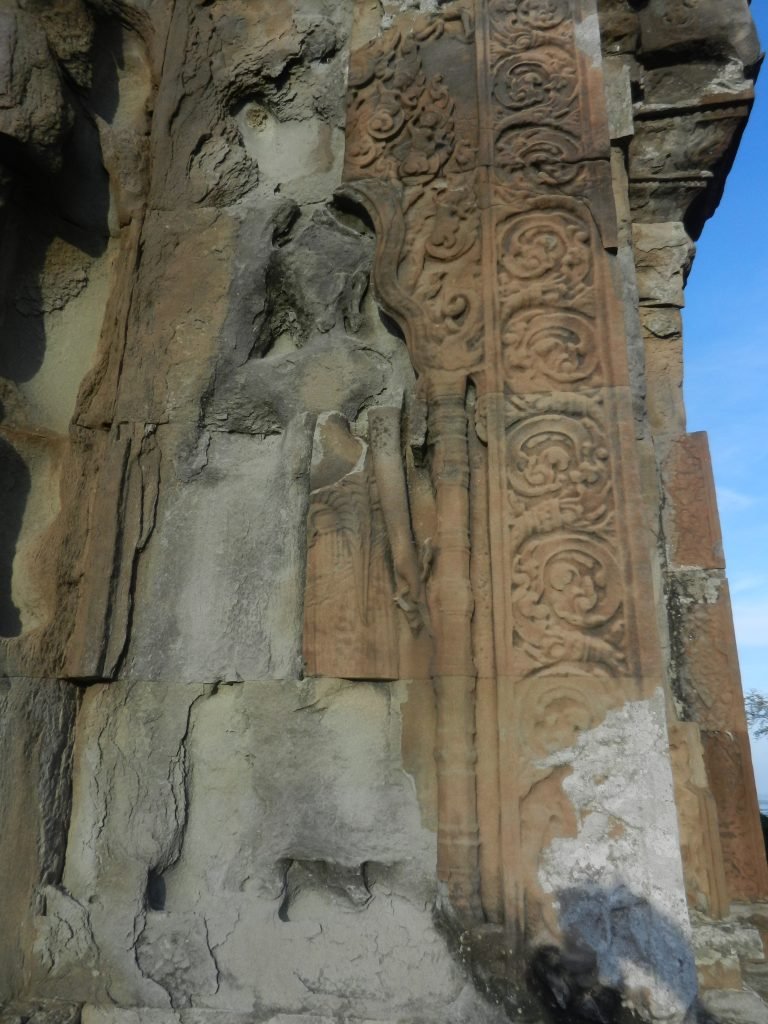
Weather-worn sculptures adorns the three central shrines.
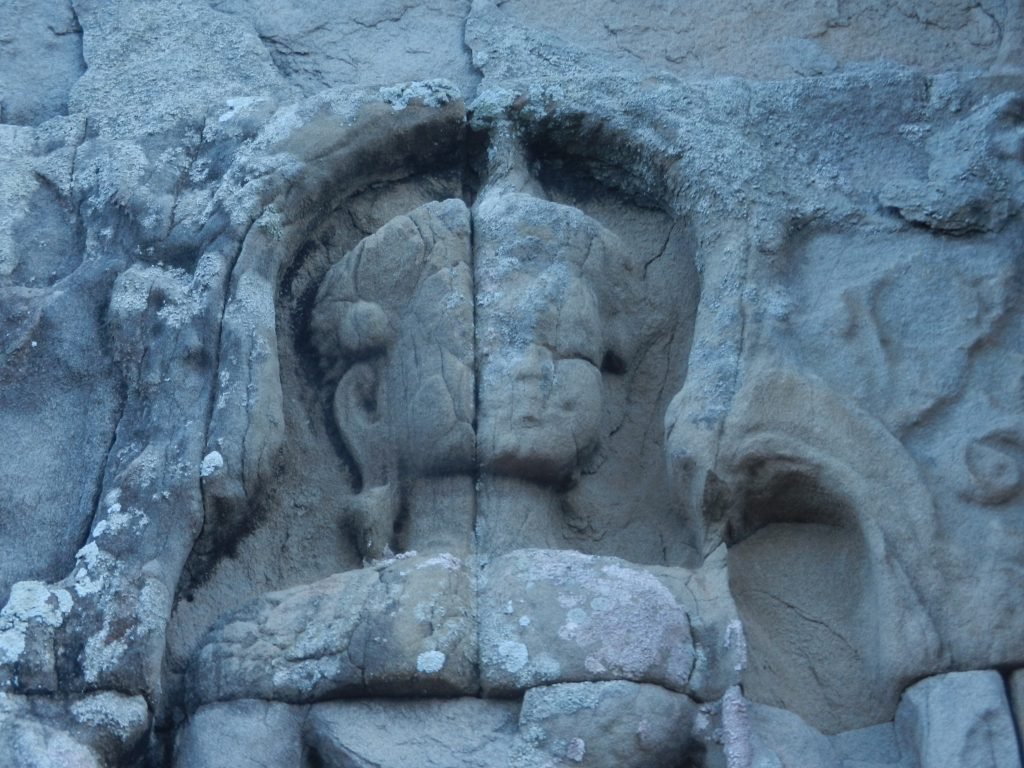
Guardians flank the doorways. They’re aloof and aristocratic, like the guardians on Preah Ko. which Yasovarman’s father, Indravarman I, built. So father and son were establishing an image of unaffected strength that they wanted to rule their growing empire with. King Suryavarman II followed in their footsteps with his self portraits on Angkor Wat.
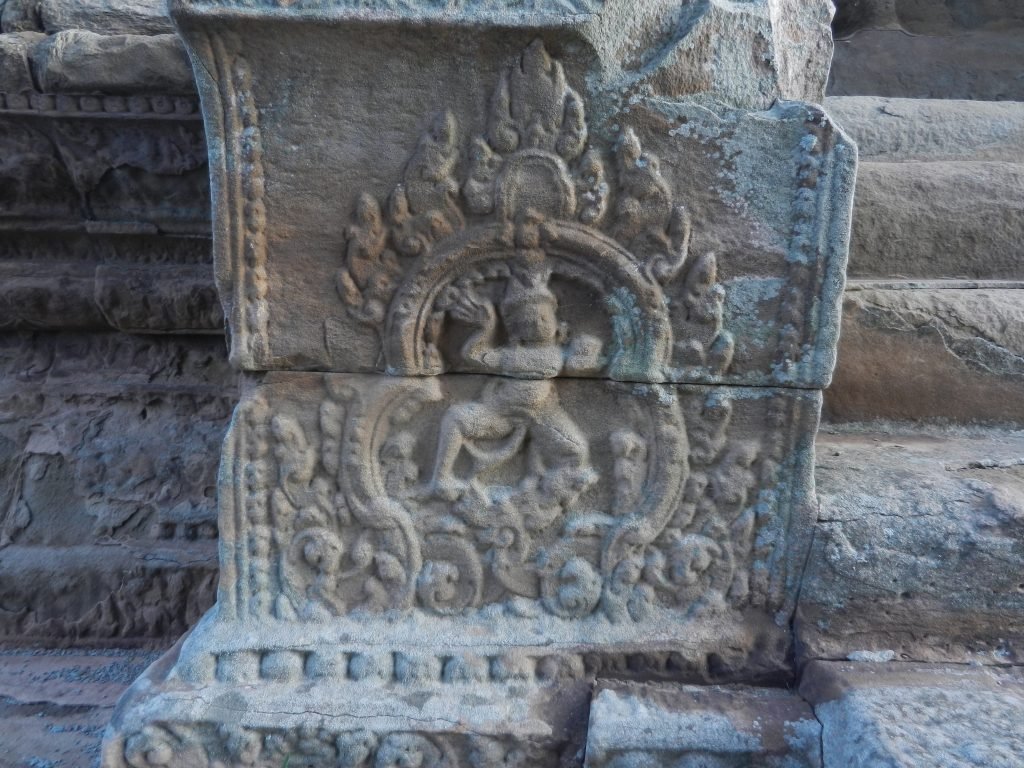
Dancers surrounded by dense vegetal patterns enliven the base of the central platform.
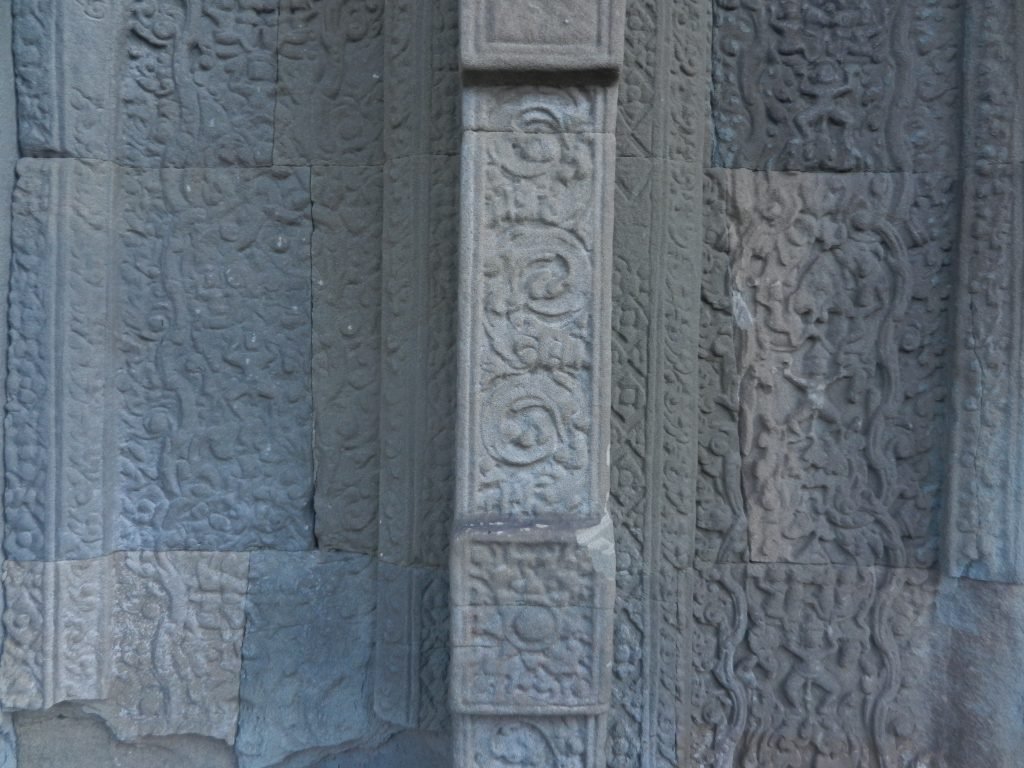
Thick vegetal motifs also grace Phnom Krom’s false doors.
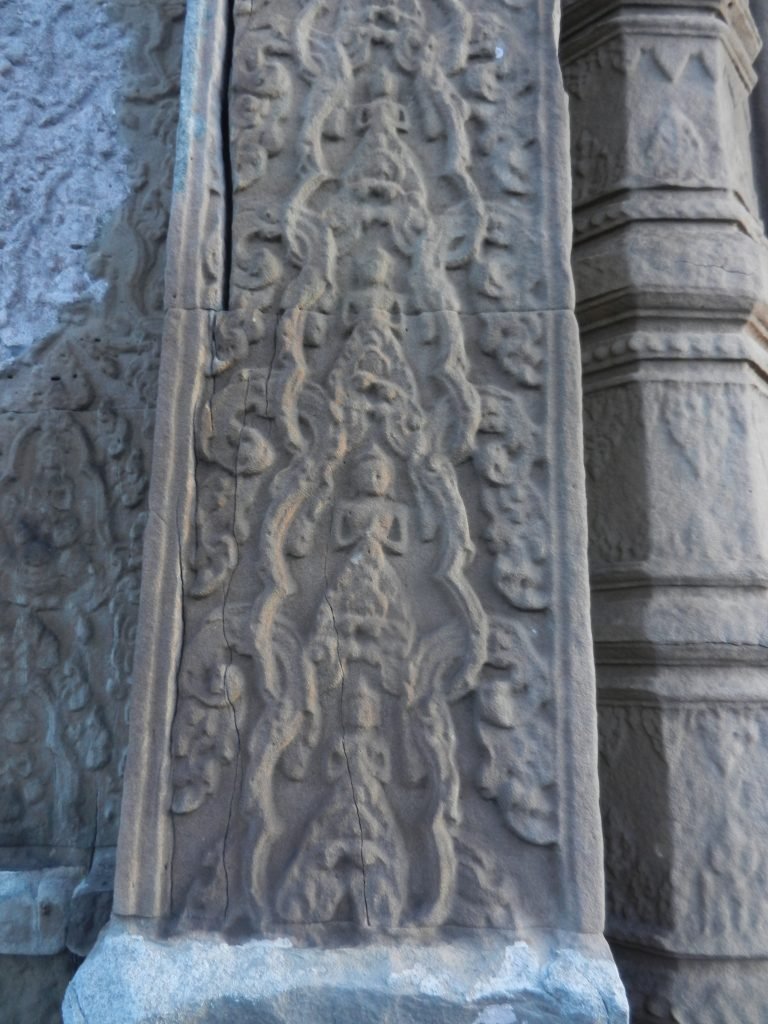
And they rise up the sides of the shrines. Resembling flames, they seem to exude energy. But their elegance tempers Shiva’s destructive power.
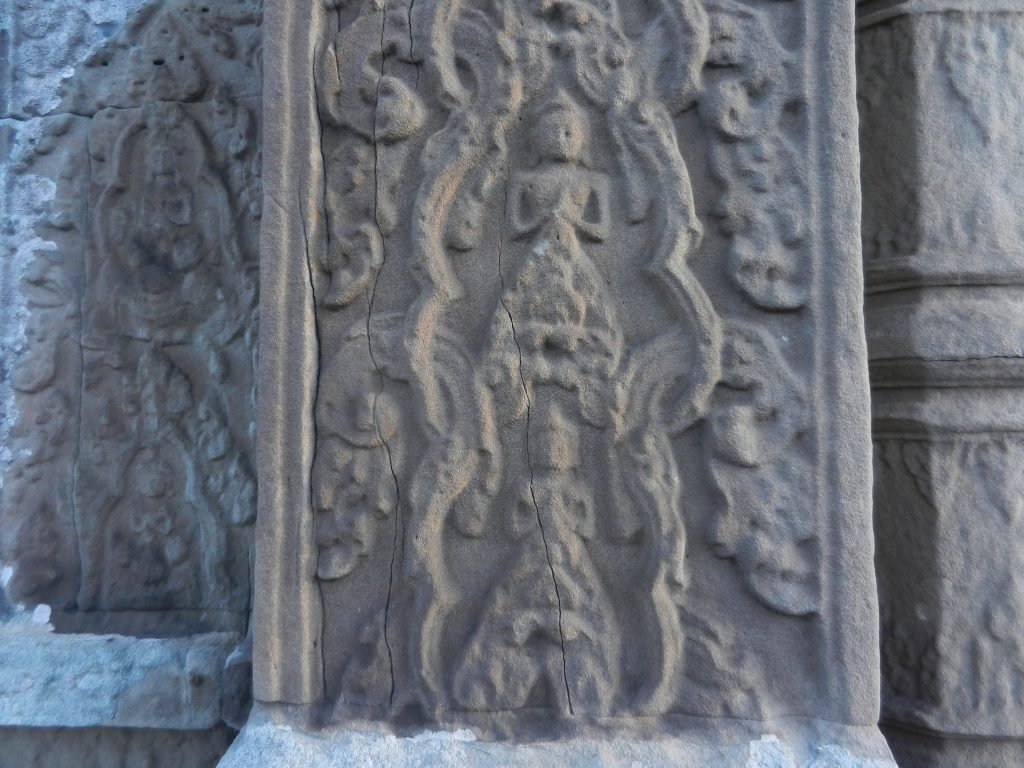
Preah Ko also has these features, so Yasovarman was imitating his father by balancing alpha-male force with refinement. But what makes the temple on Phnom Krom special is its location.
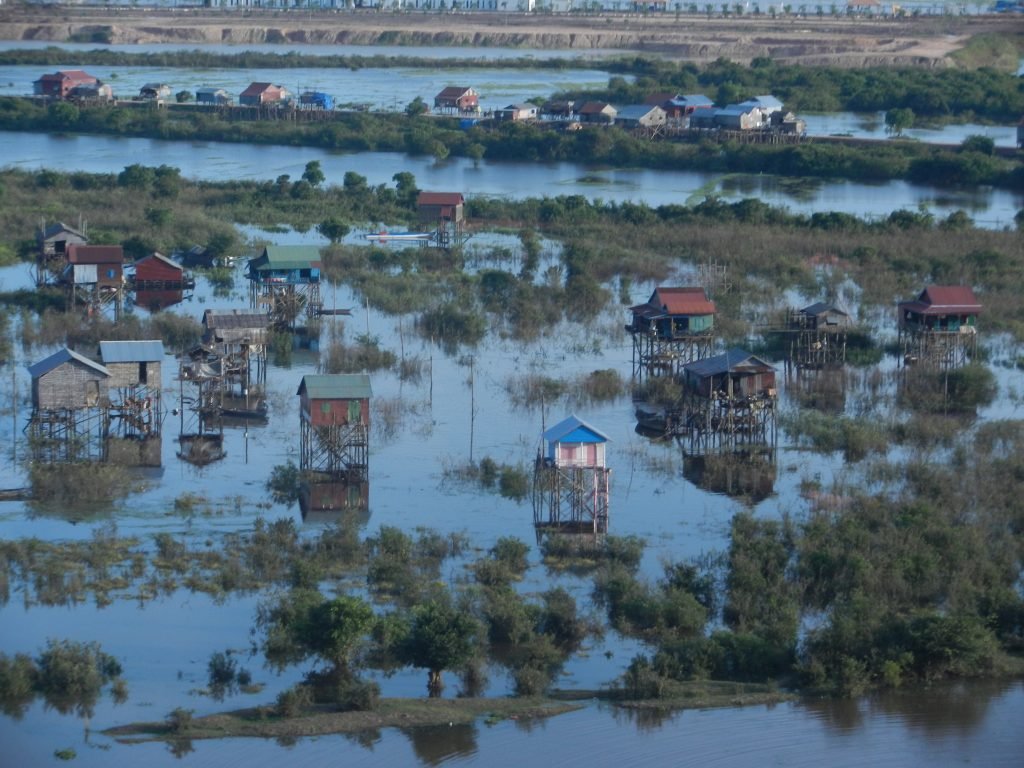
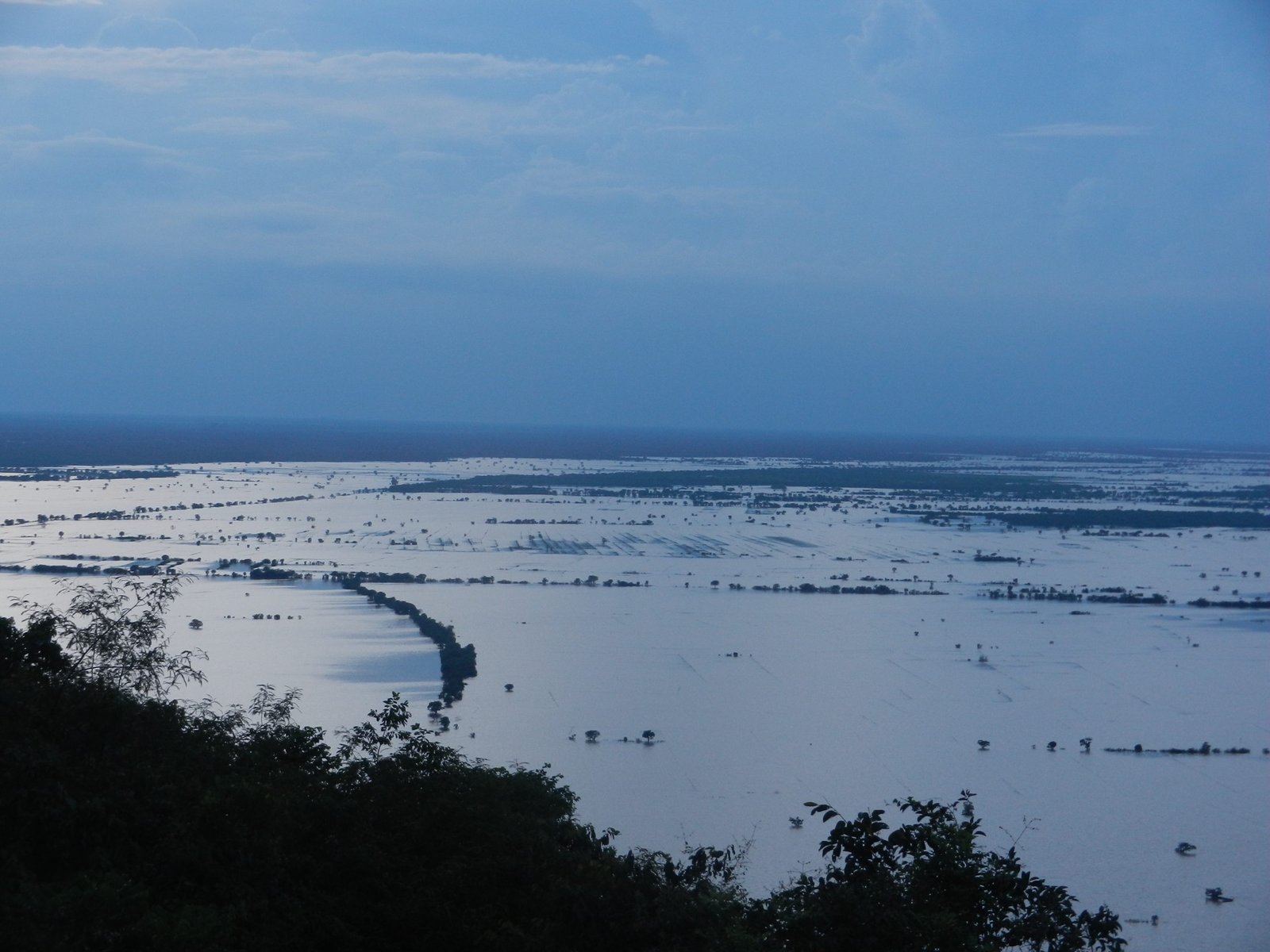
It rises from a flat plain, seemingly from out of nowhere as though it’s full of sacred power. I took the above shot and the featured photo during the rainy season, when Tonle Sap rises and inundates the rice fields. So the temple connected Yashovarman with the forces of nature that fed his empire’s growing population. Thai art often avoids stating things too directly, but Khmer kings pulled out all the stops to express their ability to link the realm with the cosmos.