Yunnan’s Erhai Lake has been multicultural for centuries.
It was the center of the fabled Nan Chao kingdom, which presided over much of northern Southeast Asia during the Tang Dynasty. People from many states came to trade, but while exploring villages along its shores I got more than I bargained for.
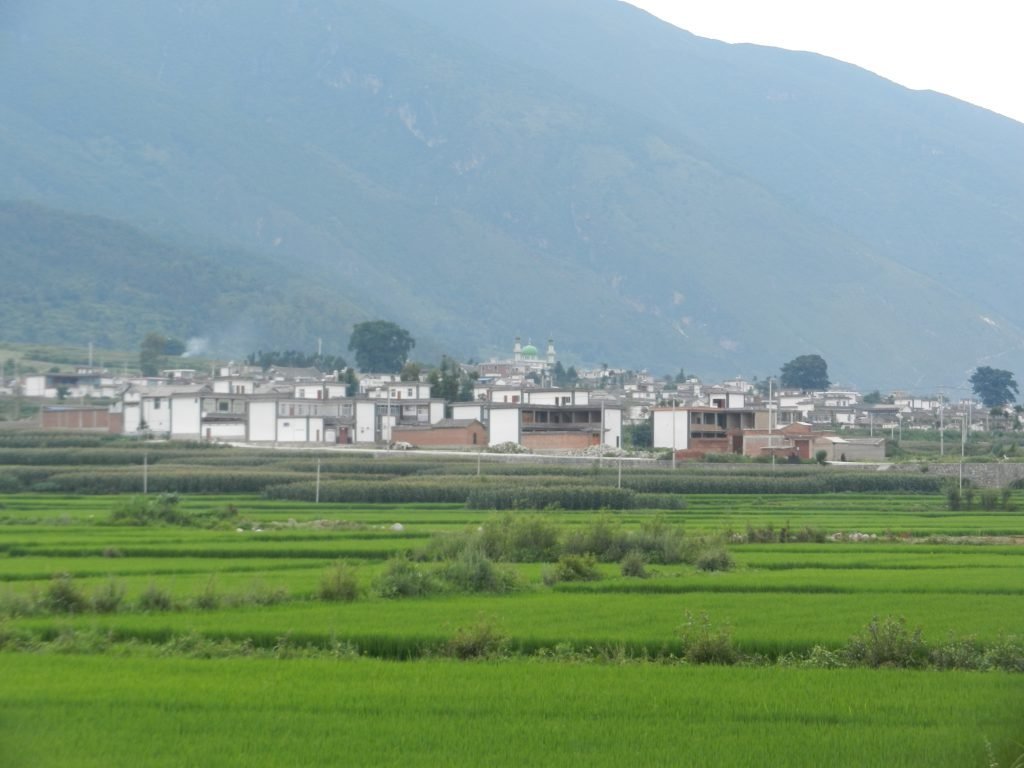
When I reached the edge of one village, I looked towards the mountains and saw a palatial building glittering at its summit. It looked like a mosque. This was no surprise, since many Muslims came from Central Asia during the Tang and Yuan dynasties to trade.
But this village wasn’t even on the map I was carrying. Did the Chinese government want to keep visitors away from Muslims? Too bad for all unadventurous visitors.
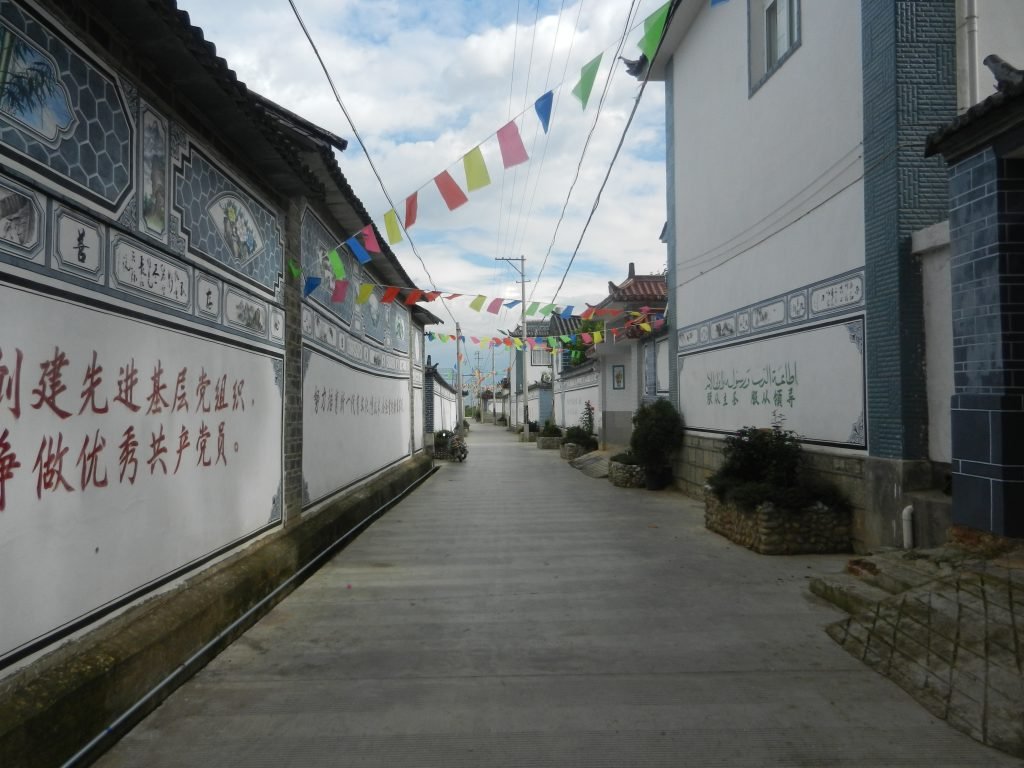
I immediately noticed that the village was cleaner than the other ones I had seen.
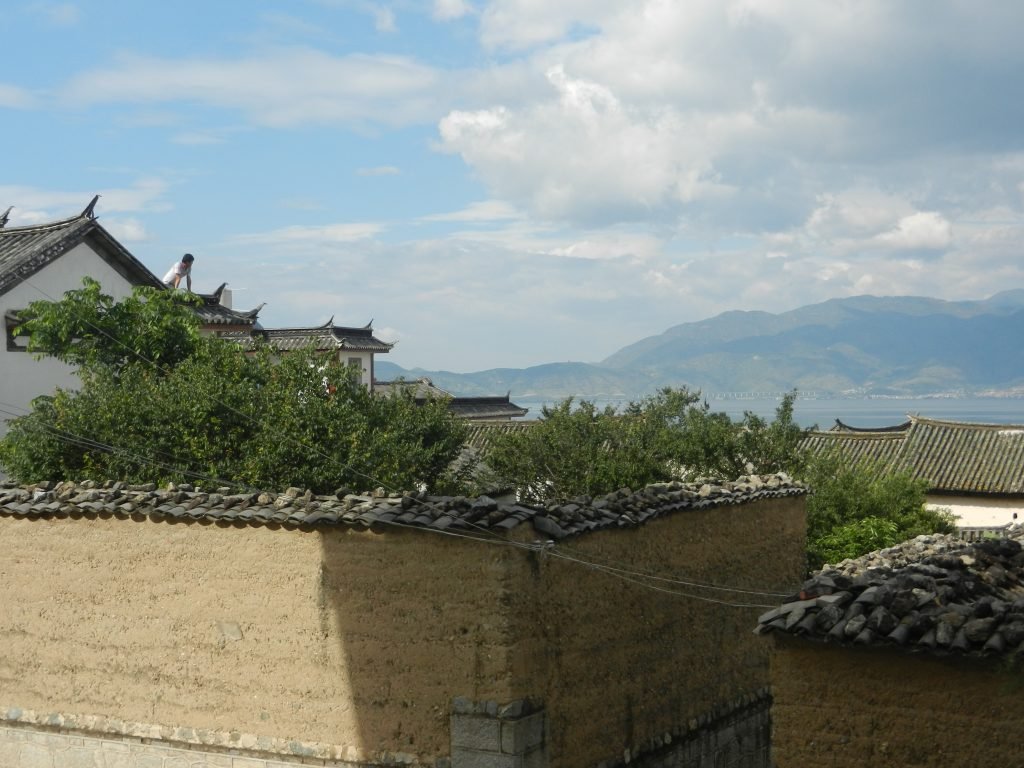
That was pleasant enough, but as I kept walking uphill vistas of Erhai Lake opened up. The lake and the mountains behind it sparkled on the sunny day. The locals savored their beautiful environment, and they kept it in order.
I kept walking uphill to explore the gleaming building that attracted me in the first place. The previous article here gives details of the mosque and other mosques in China.

I then headed into a mom & pop grocery shop for a snack.

The woman at the counter and her customers invited me to sit with them as I ate.
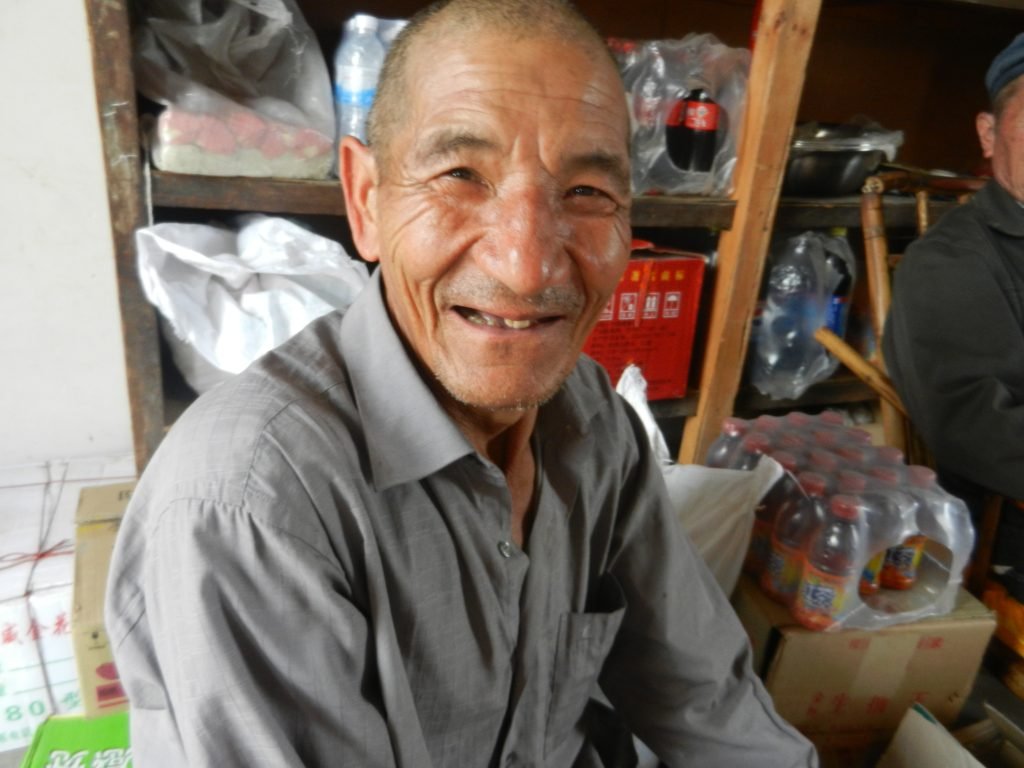
All were elderly and cheerful. They were speaking Uighur instead of Mandarin, so I couldn’t understand a word they were saying. As a Turkic language, it’s in a different family. But they still welcomed me.

After refueling, I explored more of the village, and everyone was just as friendly.

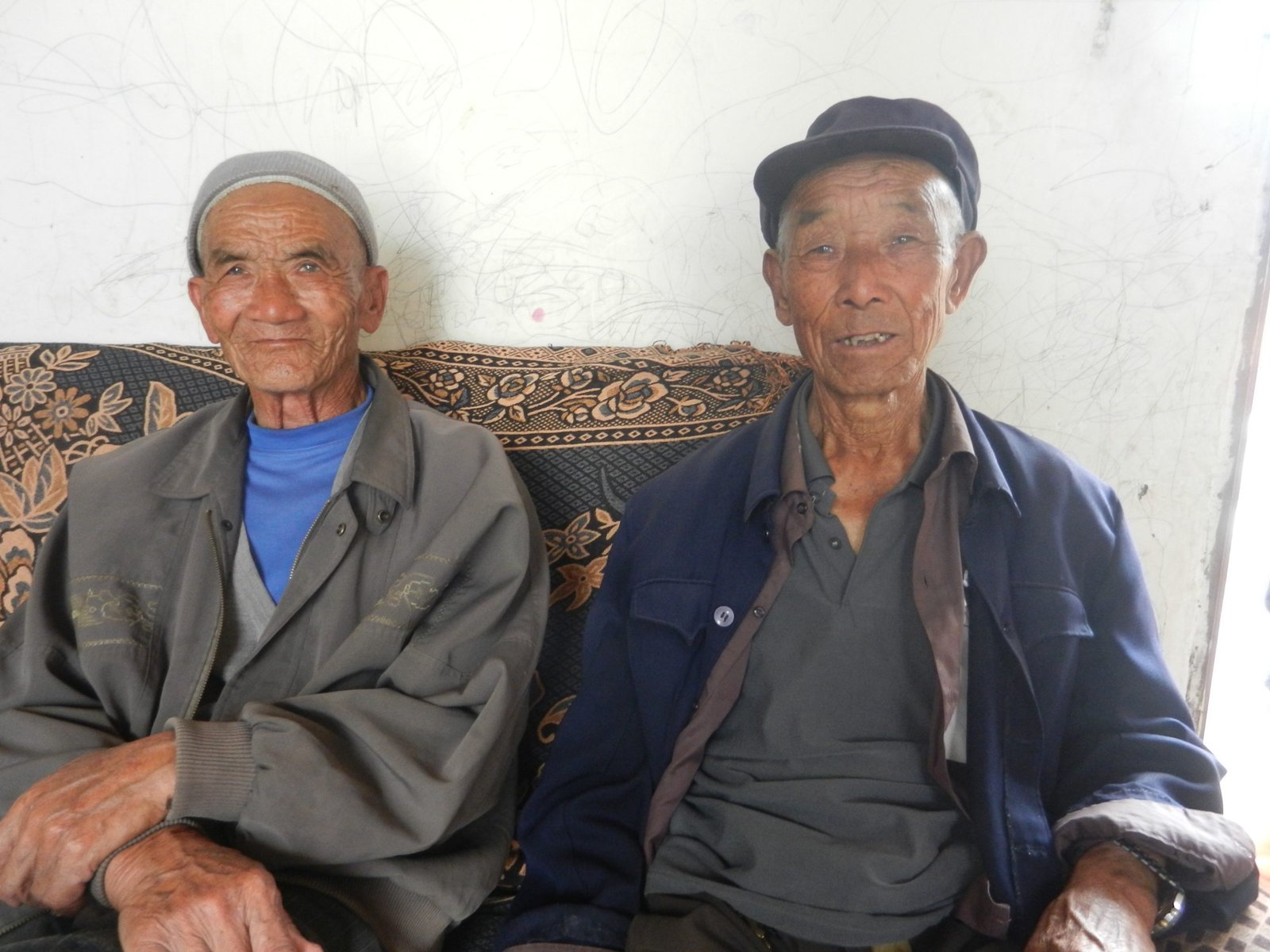
These two merry men were sitting in front of a house on one of the many clean residential streets. The school was a few doors down, and several children were playing in the yard.
Most homes in the village had paintings on their outer walls. This is customary around Erhai Lake, but this town blended Islamic and Chinese styles.
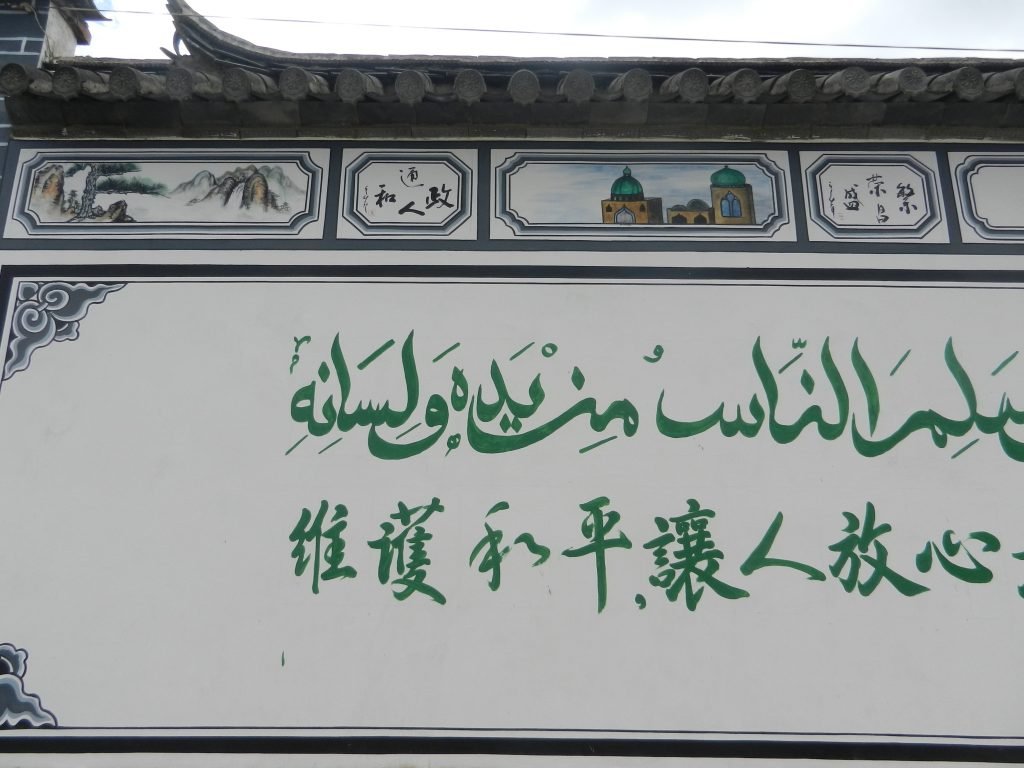
Chinese and Arabic calligraphy harmoniously mixed. So did the Chinese and Middle Eastern scenes above the writings. Islamic art in China is greatly under-appreciated, and it deserves many books.

Upstanding people shared a clean neighborhood on a hillside over a sparkling lake.
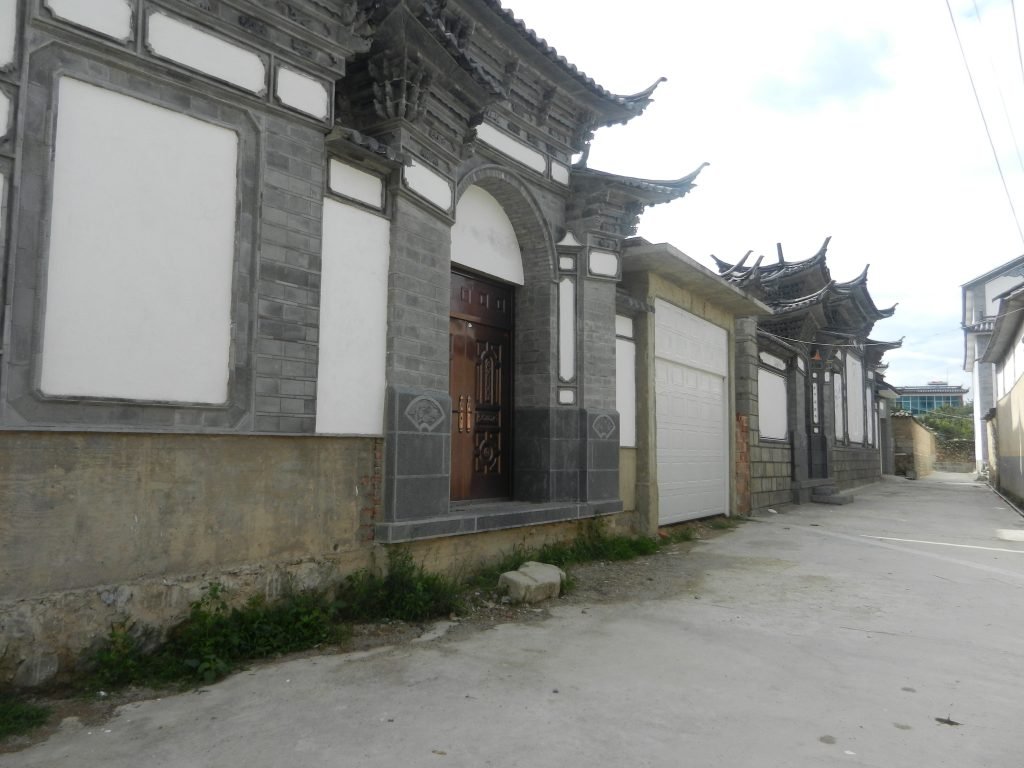
This image became even stronger as soon as I left and entered the next village.

I always greatly enjoyed traditional Chinese villages, but this one’s dirty sides were out in the open. These poor guys were within hearing range of the call to prayer from the Mosque–born on the wrong side of the tracks. The dump was a block away, and a big pile of garbage reeked in the hot sun.
I always found mainstream Chinese villages friendly too, but the Muslims took more care to keep their neighborhood spotless. So I left with a lot of respect for the people I met. The government might be hiding this village from tourists, but its folks were doing just fine on their own. Hopefully they still are.