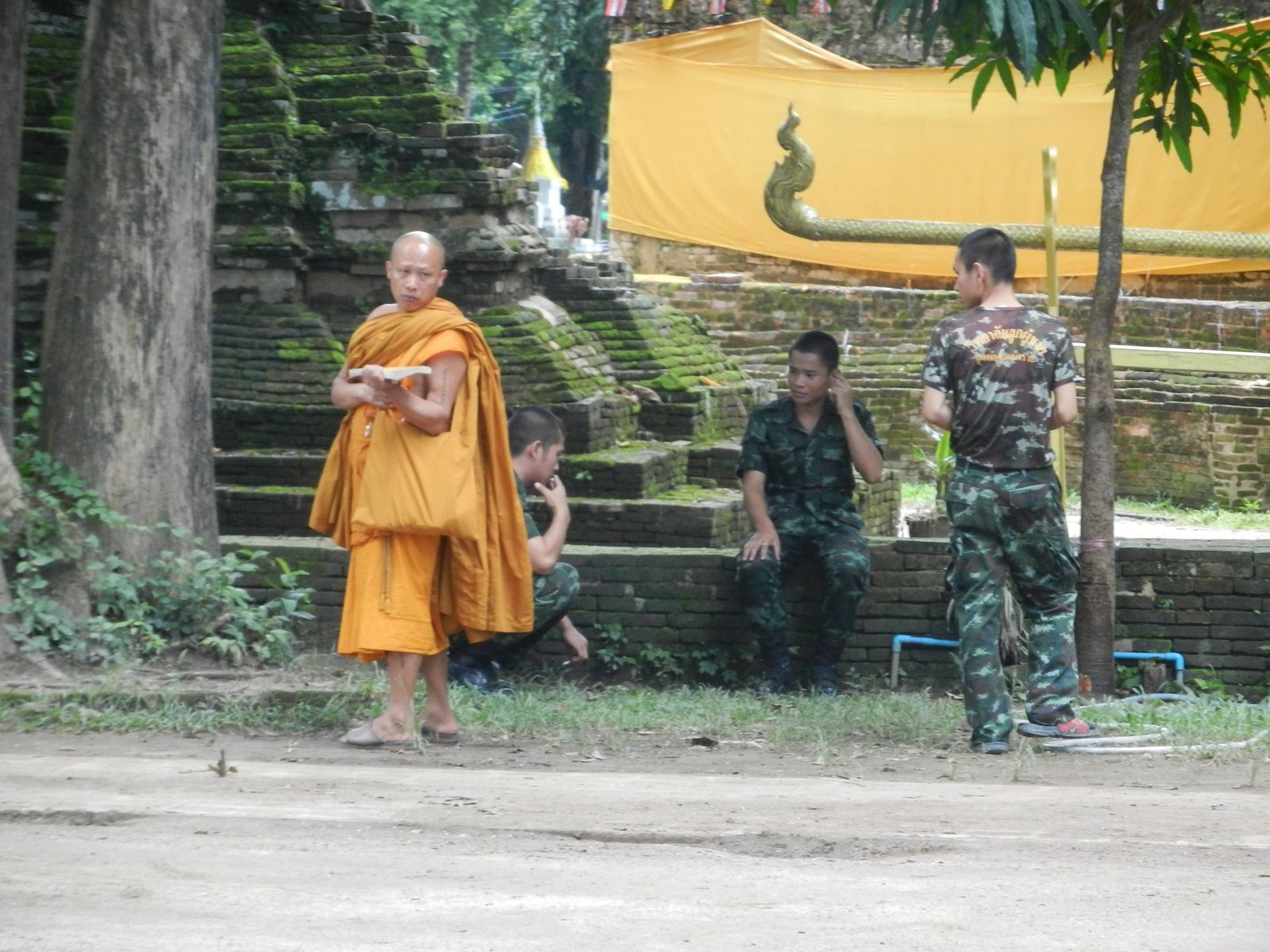
The historic northern Thai town of Chiang Saen is full of ancient Buddhist monuments, but Wat Phra That Chedi Luang is its main shrine. People from all walks of life still pay their respects there.
About 200 soldiers on a break shared the grounds with monks. Their garb differed, but all were disciplined young men quietly ambling around the temple. The temples in Chiang Saen represent a different way of encouraging people to cohere than the Athenian agora and acropolis.
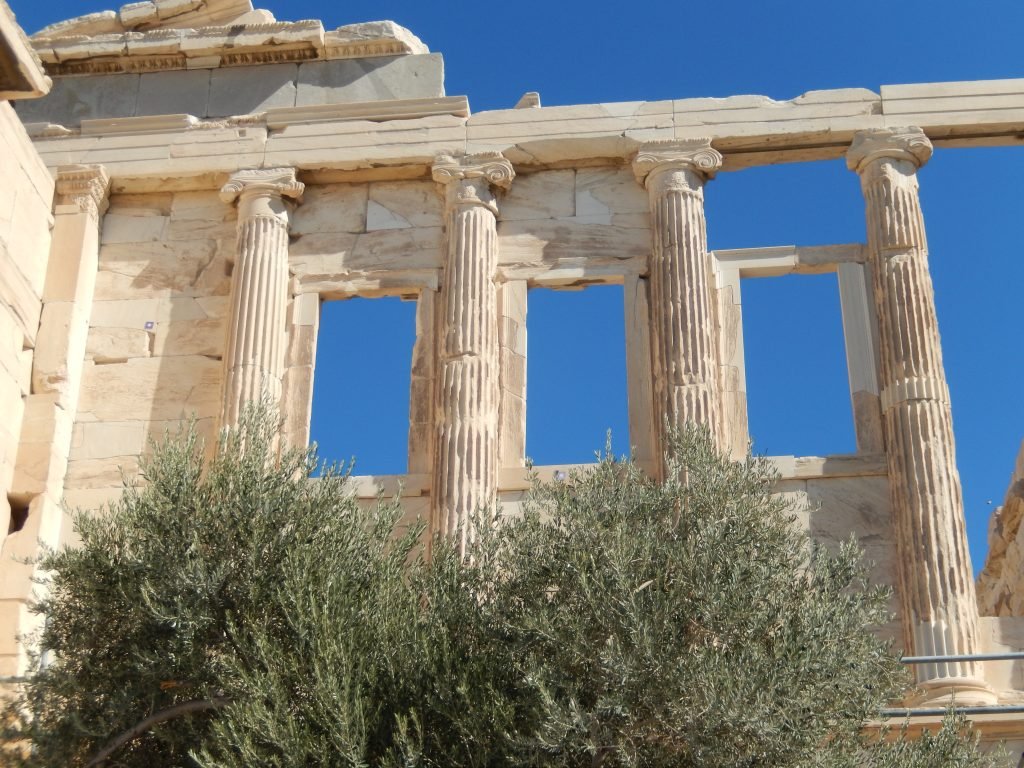
Wat Chedi Luang and Chiang Saen‘s other temples represent a different way of ordering the world than the linear relationships that many ancient Greeks focused on.
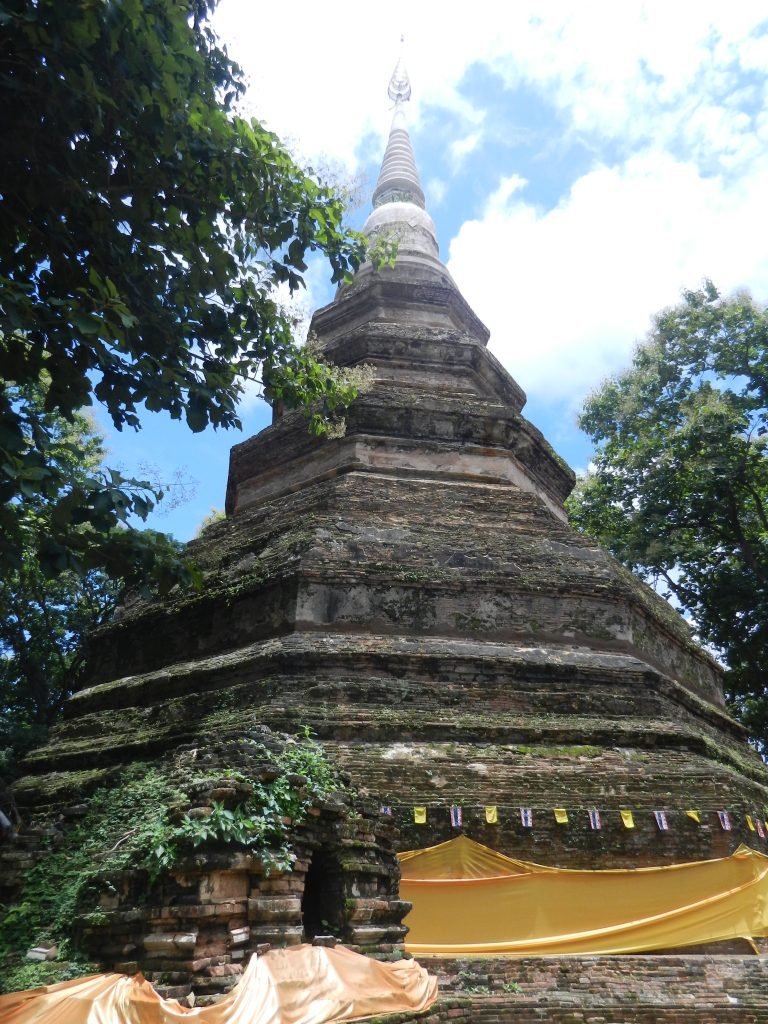
Wat Chedi Luang ‘s stupa’s lower section is an octagon. Its entire form looks less like a static geometric shape and more like a flow of energy from the heavens. It ripples like a river as though grace is cascading from the sky.
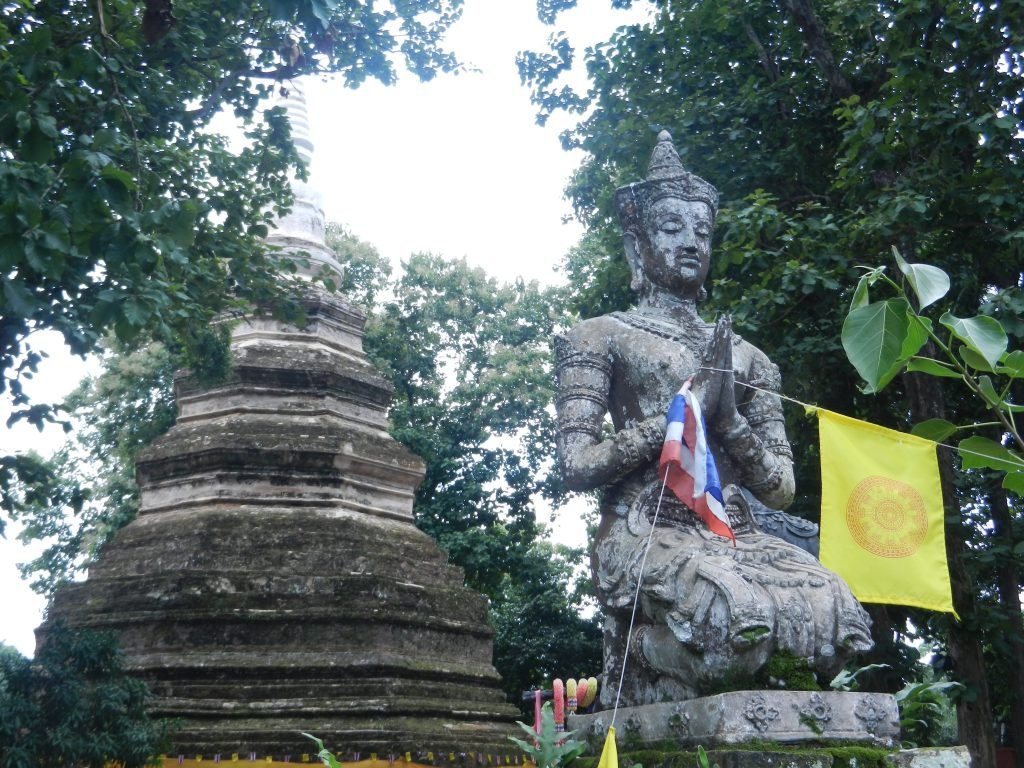
The rippling seemed even more real as I walked around the stupa. Statues of devotees like the one in the above photo line the top of a fence around the stupa. The statues seemed to glide around the monument as I strolled. The trees in the background seemed to gently blend with them, and birdsong filled the air. Most Southeast Asian temples blend several senses; they’re not as strictly focused on vision as many Western monuments are.
Though the soldiers and monks around me lived in ways that most people would consider austere, we melded with these beautiful forms and with each other so that we all seemed integrated in a flow of life’s energies, which the Buddha and Thai customs often render gentle.
The agora in ancient Athens was an open field with buildings around its borders. Their colonnades are in straight lines.
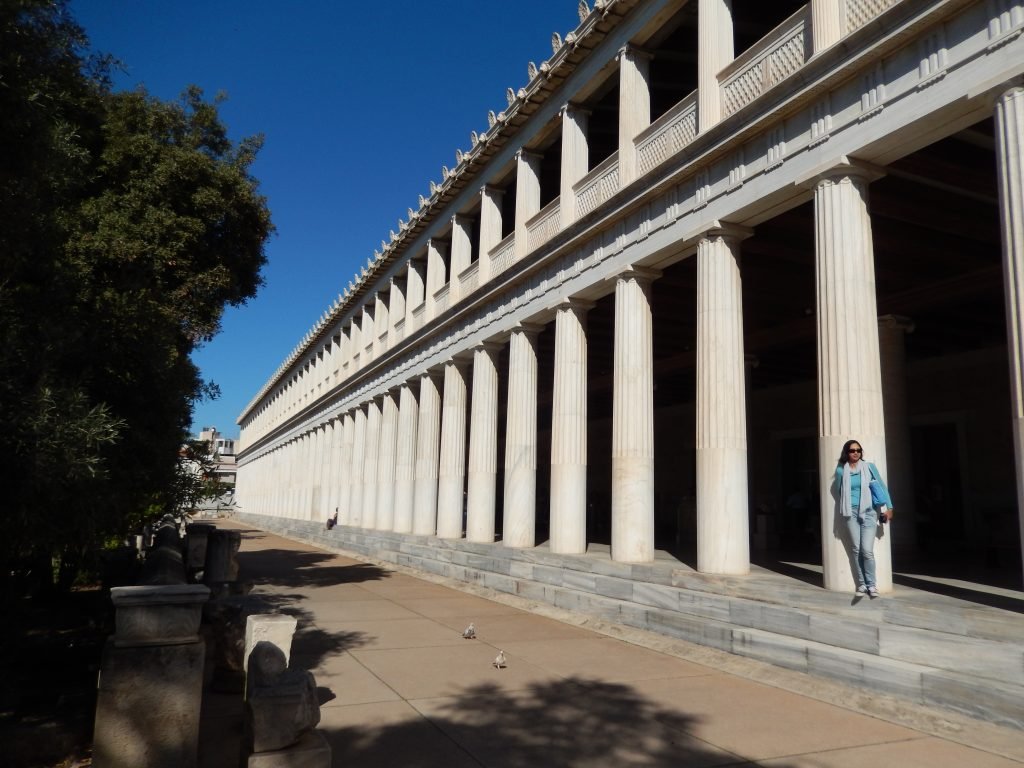
These architectural forms and the free interactions between people within clear sight of each other encouraged assumptions that the world is unified by linear relationships between distinct entities.
But Thailand’s rivers, flowing art-forms, and profuse vegetation blend so that things aren’t distinguished so sharply. Everything flows together. Graceful art and personal etiquette encourage society to cohere.
The Chiang Saen shrine below doesn’t look like much. Only the roosters seem impressed.
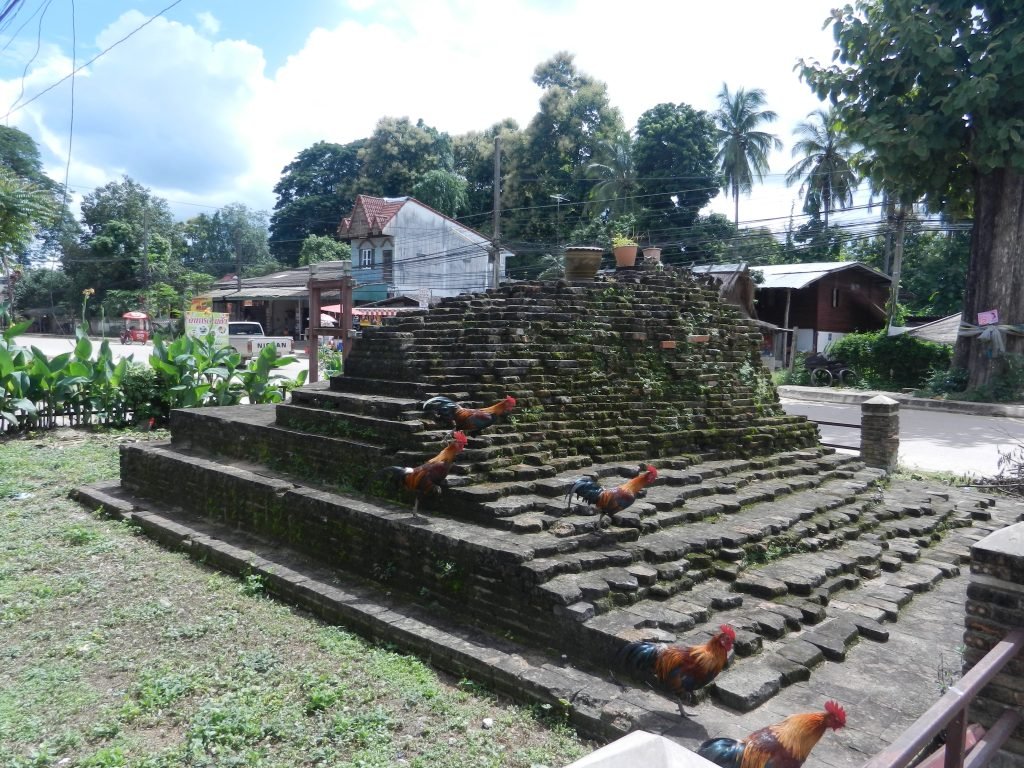
But a walk through its neighborhood revealed one enchantment after another.
I kept finding old stupas from the 14th to the 16th century.
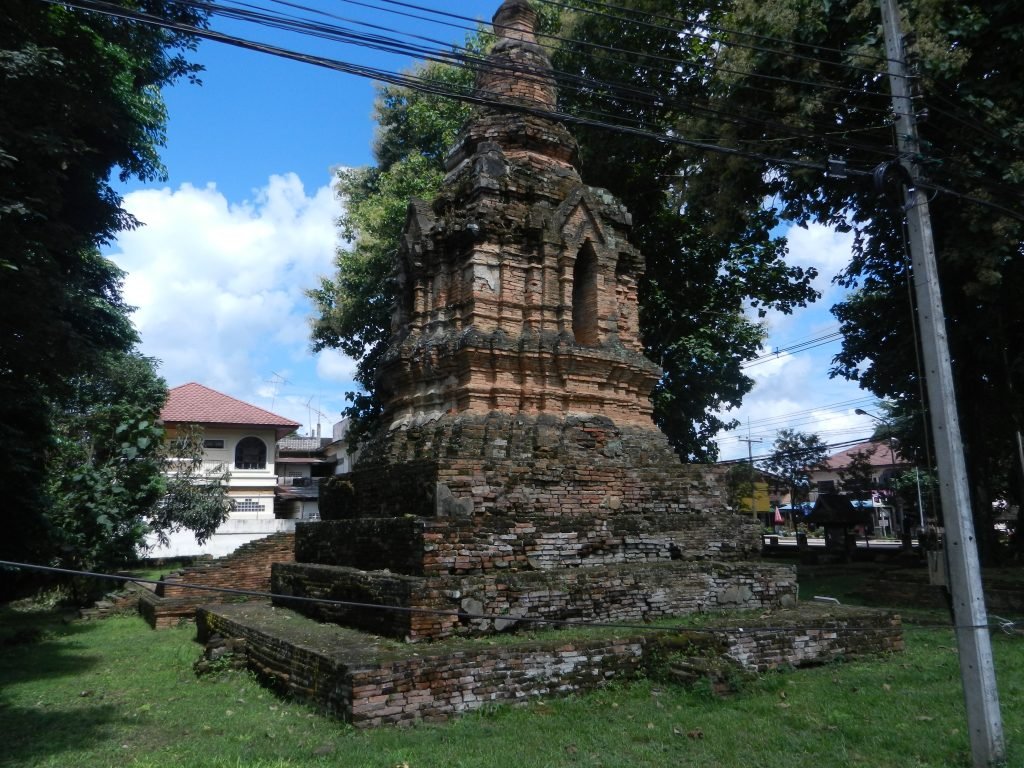
Most were much smaller than Wat Phra That Chedi Luang, but their forms were entrancing. The above shrine follows the three worlds cosmology that Thai Buddhism teaches. The bottom embodies the material world we live in. The middle section symbolizes the heavens. Its indented corners and niches show that this world’s structures are more subtle. The conical top is the formless realm.
The humble size of these shrines makes these cosmic perspectives gentle and humane. They seem to radiate peace through the neighborhood.
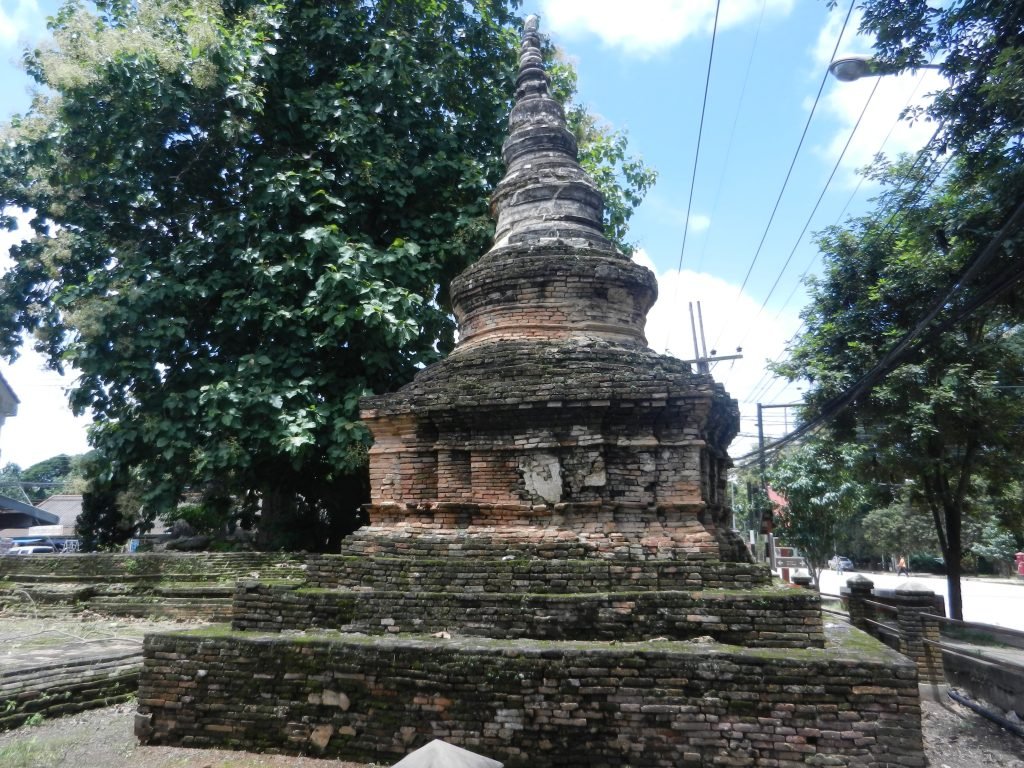
This one is also in the three worlds form, but its outlines are different.
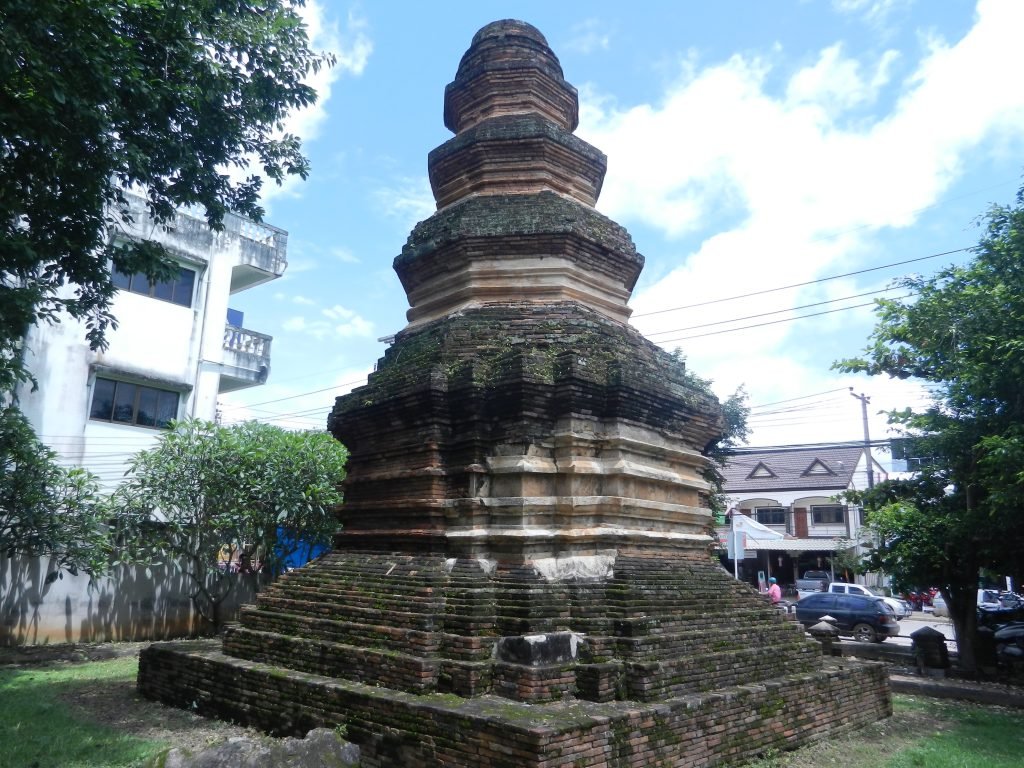
Ditto for this one.
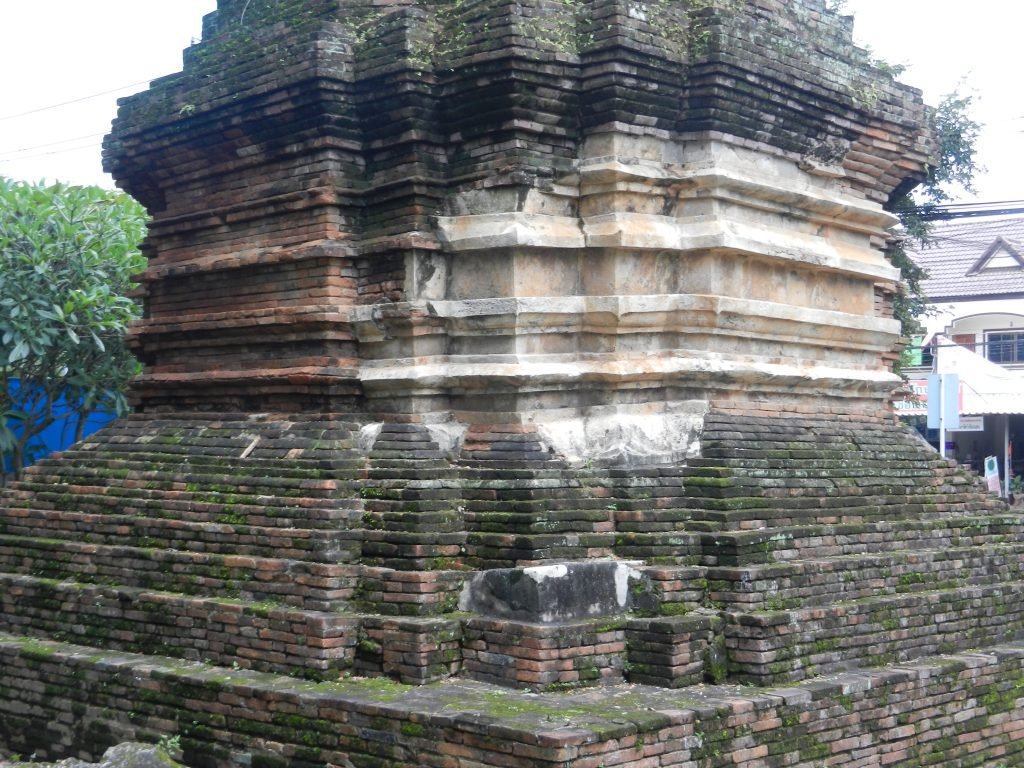
Its two bottom worlds’ indentations and fluting are as handsome as–
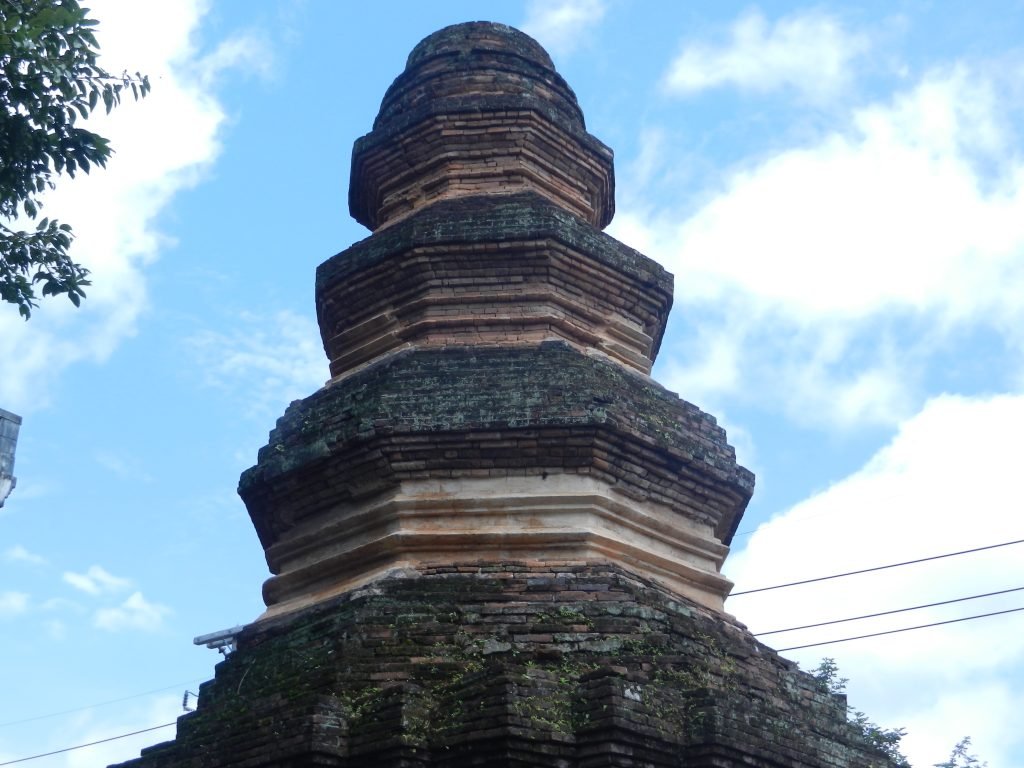
the highest world’s. This shrine’s designer exquisitely used forms to lift you into the formless world.
So every shrine that I saw was a new enchantment. But Chiang Saen’s national museum put all of them together.
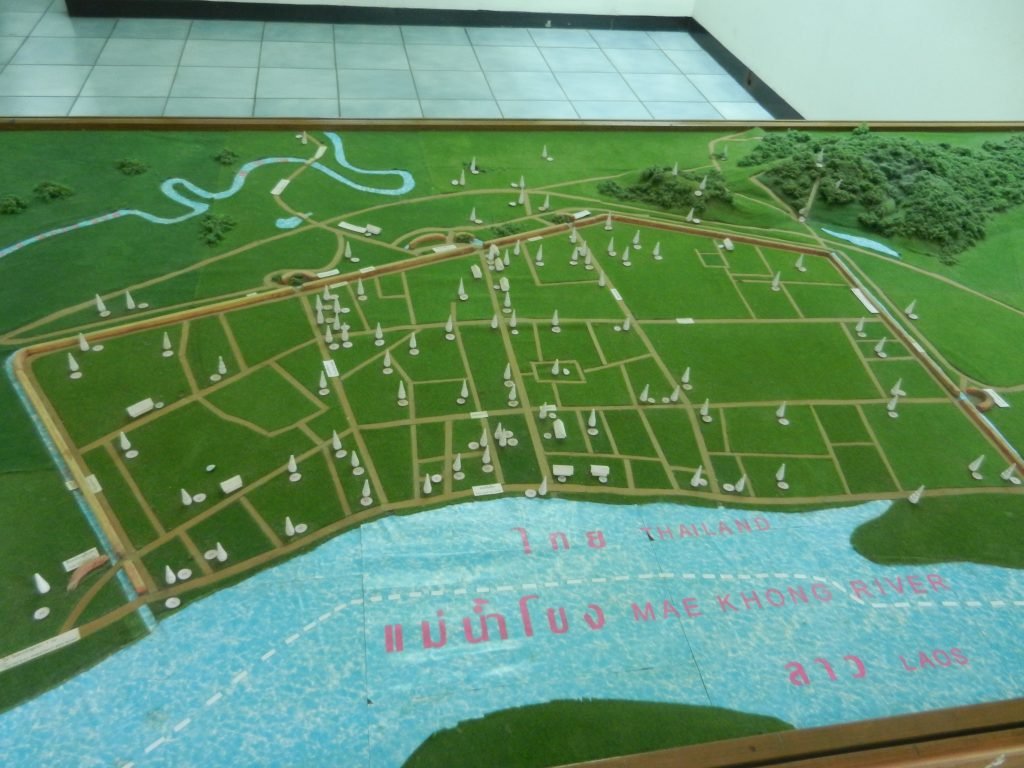
The whole town was full of these shrines, and most were built along its main roads. The streets were straight, so these little stupas were loosely arranged in lines.
But these weren’t the perfectly straight and abstract lines that ancient Greeks and their intellectual followers have assumed to be basic. The stupas seemed like batteries of spiritual energy that helped the town cohere. Their elegant forms and cozy sizes made this power seem friendly.
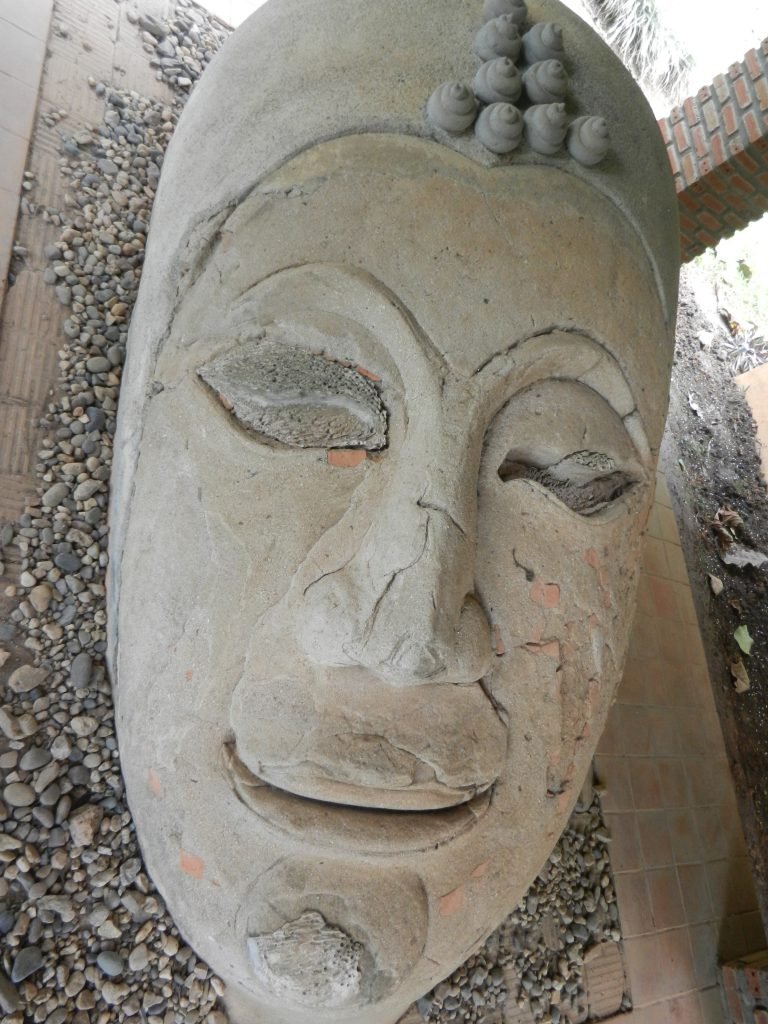
The face of this 14th-century reclining Buddha statue is also in a form that’s both elegant and soothing.
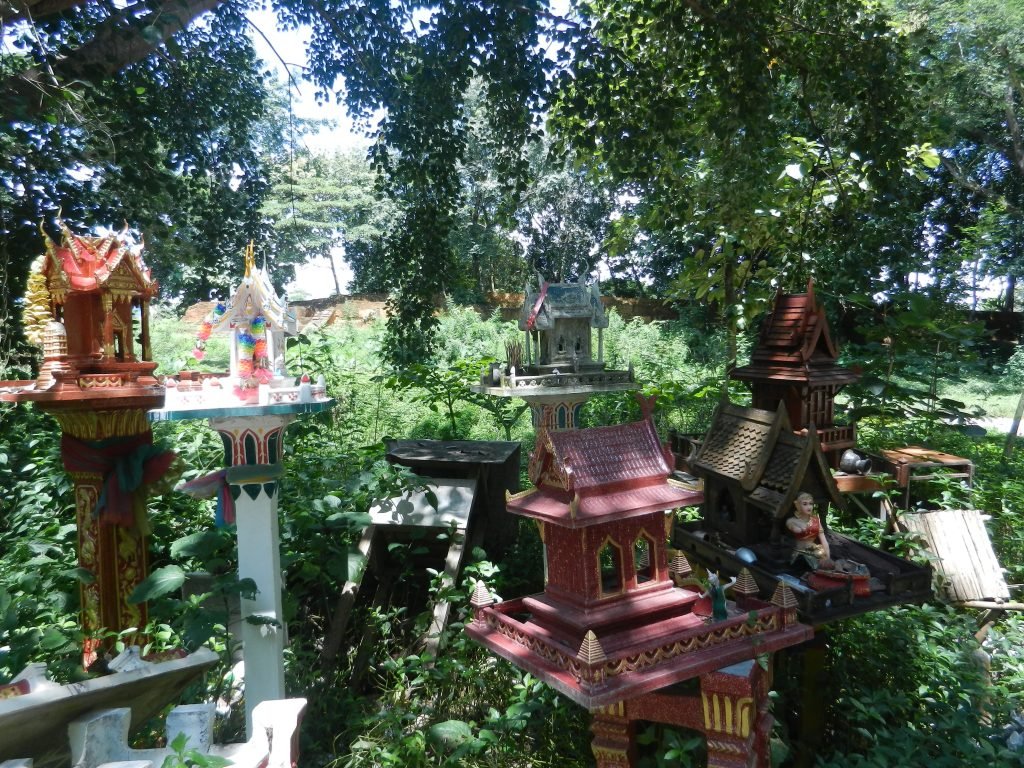
The above spirit houses enliven one of the entrances to the town. A lot of traditional Thais have believed that spirits linger around settlements’ entrances, so they placate them with shrines and offerings to keep them from entering the community.
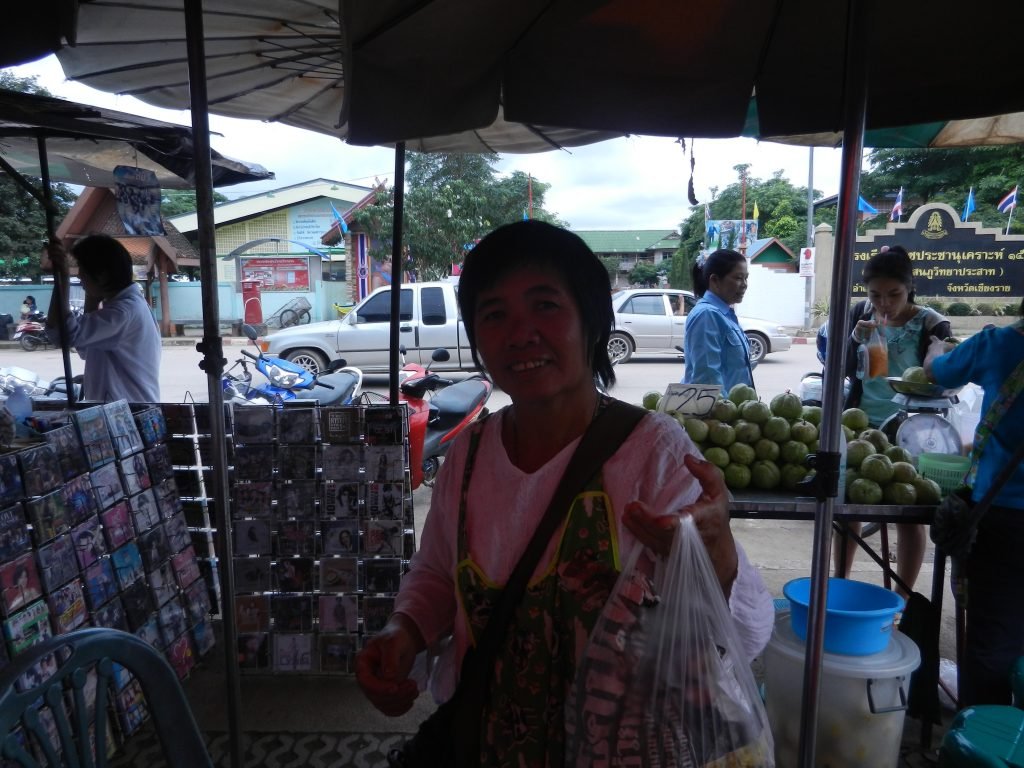
The town’s folks relax and practice etiquette that their architecture and sculptures follow.
Many other cultures’ communities also cohere by blending ideas and senses in several ways, including African, Native American, and Chinese. What seems ordinary, including common everyday objects, reflects an infinitely rich cultural landscape.