Many fans of Laotian art say that Luang Prabang’s Wat Xieng Thong is the most beautiful temple in the country.
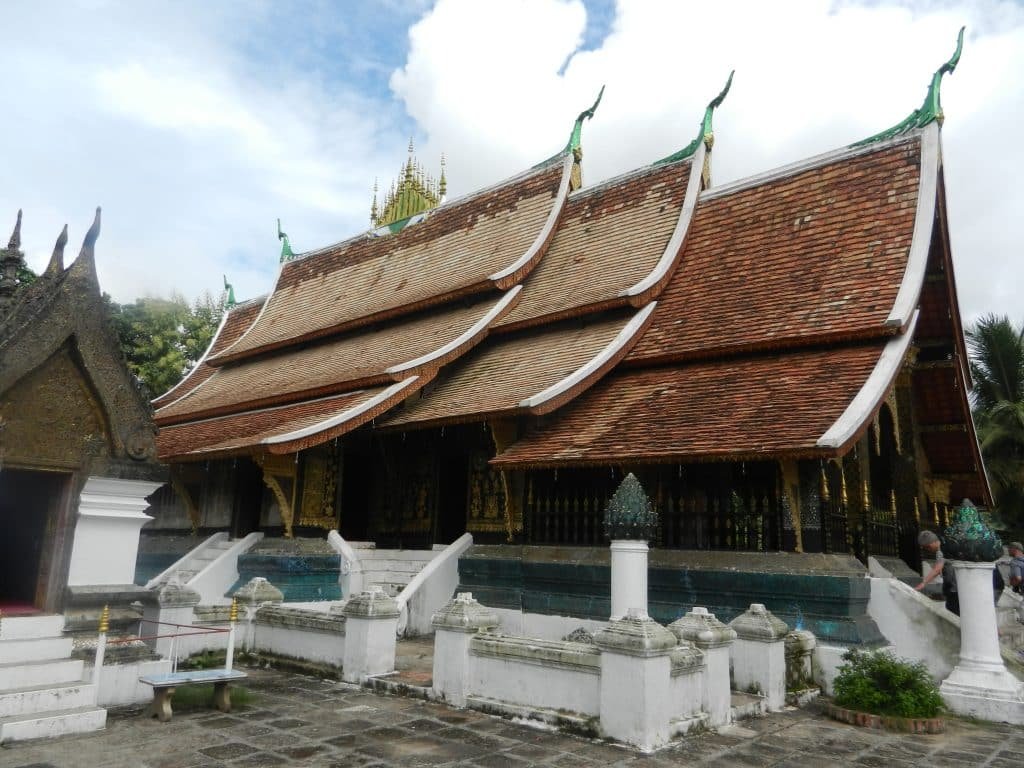
It was built by King Setthathirat in 1559. He ruled the Lan Xang kingdom, strengthened Buddhist practices, and linked them with his court’s image.
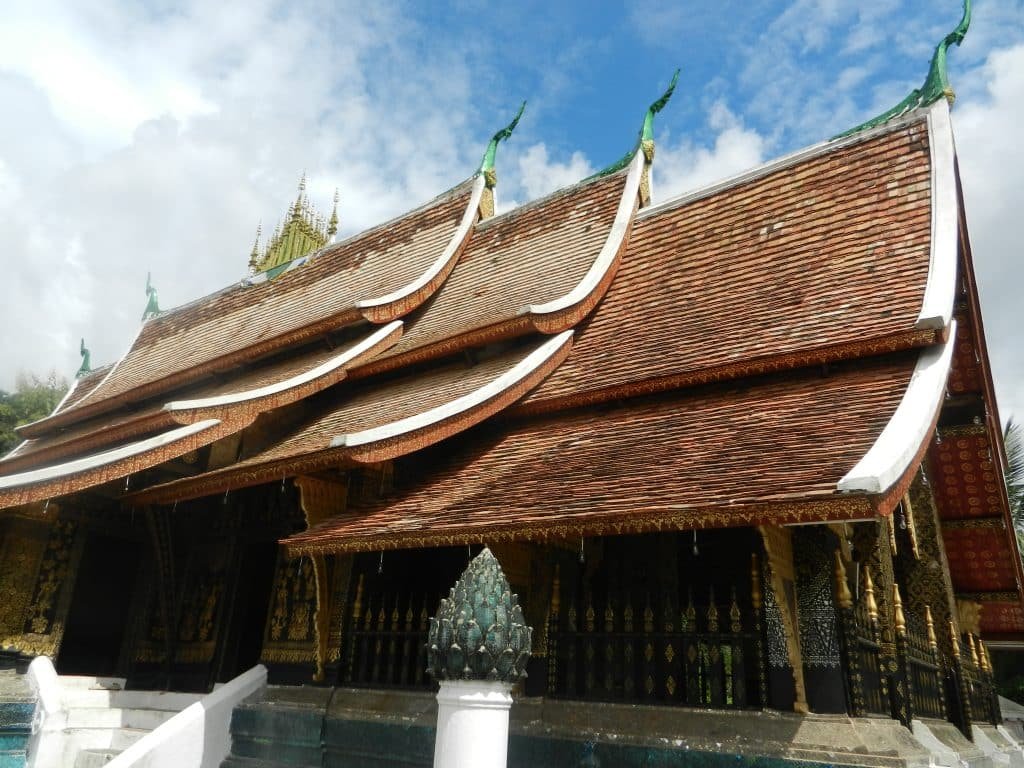
Several Southeast Asian monarchs fused religious and royal institutions in the 16th century to consolidate their holdings. But Setthathirat knew that his people’s folklore was so rich that he had to compromise with it rather than try to wipe it out. Behind Wat Xieng Thong’s beautiful forms were centuries of popular beliefs which preceded Buddhism in Laos. Both blended in cool ways.
Wat Xieng Thong perches on a little hill by the Mekong.
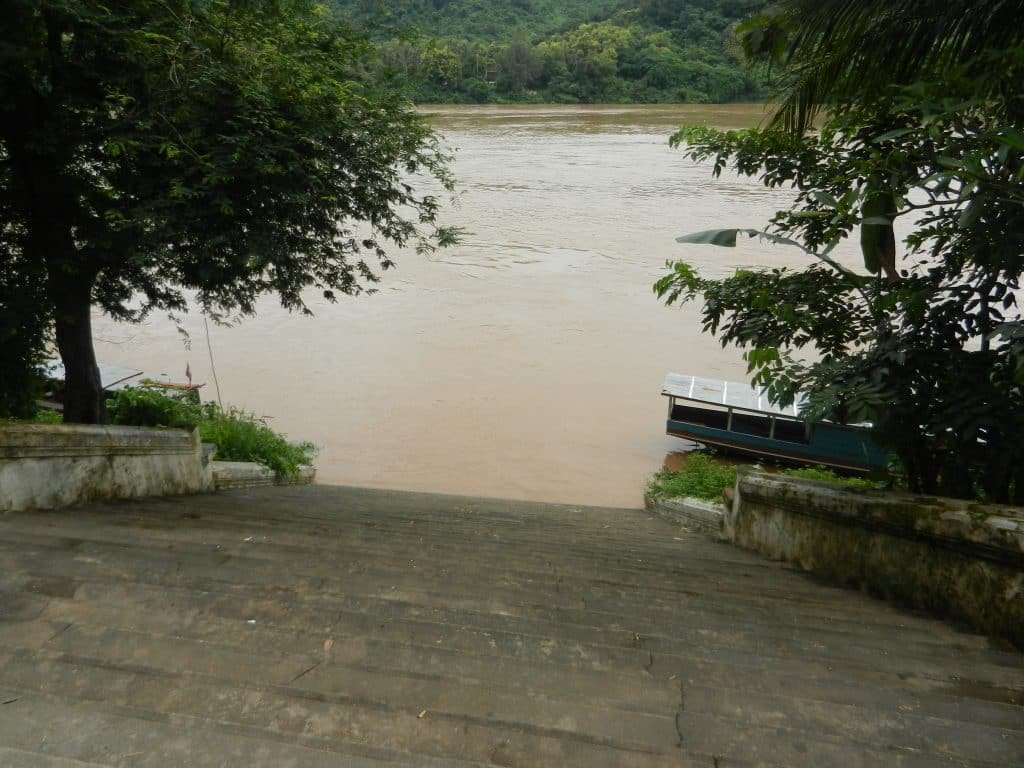
Here’s the view from the road by Wat Xieng Thong. The royal palace also presides next to the Mekong, several blocks to the left. Setthathirat’s most prestigious landmarks were thus embedded in the natural surroundings, where lore about nagas (serpents associated with fertility and protection) had long been strong. Naga lore literally shaped people’s ideas of their world.
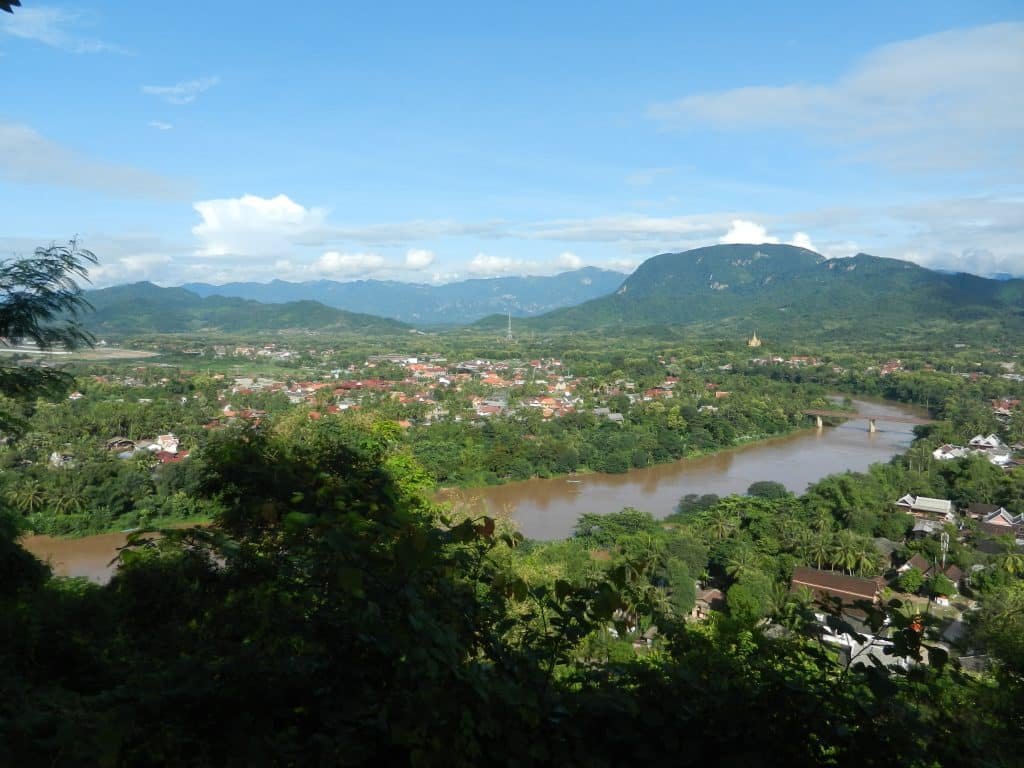
Mayoury and Pheuiphanh Ngaosrivathana, in The Enduring Sacred Landscape of the Naga, wrote that Luang Prabang’s residents saw their land as a naga’s body. Its head is where the Nam Khan River (above) flows into the Mekong. Its belly is the most auspicious place to trade. Some folks believed that those living at the head and tail can never be as wealthy as people in the belly.

Fifteen serpents protect Luang Prabang, and each is associated with a certain region. Wat Long Khoun (above) presides by a hill by the Mekong where one of the serpents is centered.
People believed that kings needed to organize boat races to honor the nagas if they wanted them to be benevolent.

The nagas got their respect while the people of Lan Xang had fun watching the sport. And priests conducted colorful rituals. Many religious ceremonies started with invocations to gods and nagas.
So the physical landscape, the royal court, and Buddhist rituals meshed with traditional lore about serpents. Thought in Luang Prabang blended all of these into a vibrant way of seeing the world that was usually tolerant, beautiful, and fun.
But two traumas bracketed the 19th century, and a lot of people lost faith in the serpents’ protection. Thailand’s new Chakri dynasty annexed much of Laos, and Thai armies plundered the land in the 1820s. They sacked Vientiane so savagely that it was abandoned. In the 1880s, bands of troops from Yunnan sacked Luang Prabang. Many ritual performers were slain and 14 royal rites vanished.
But Laotians’ folk cultures are robust so that that they responded to this crisis with more creativity. You can’t keep the nagas down for long.
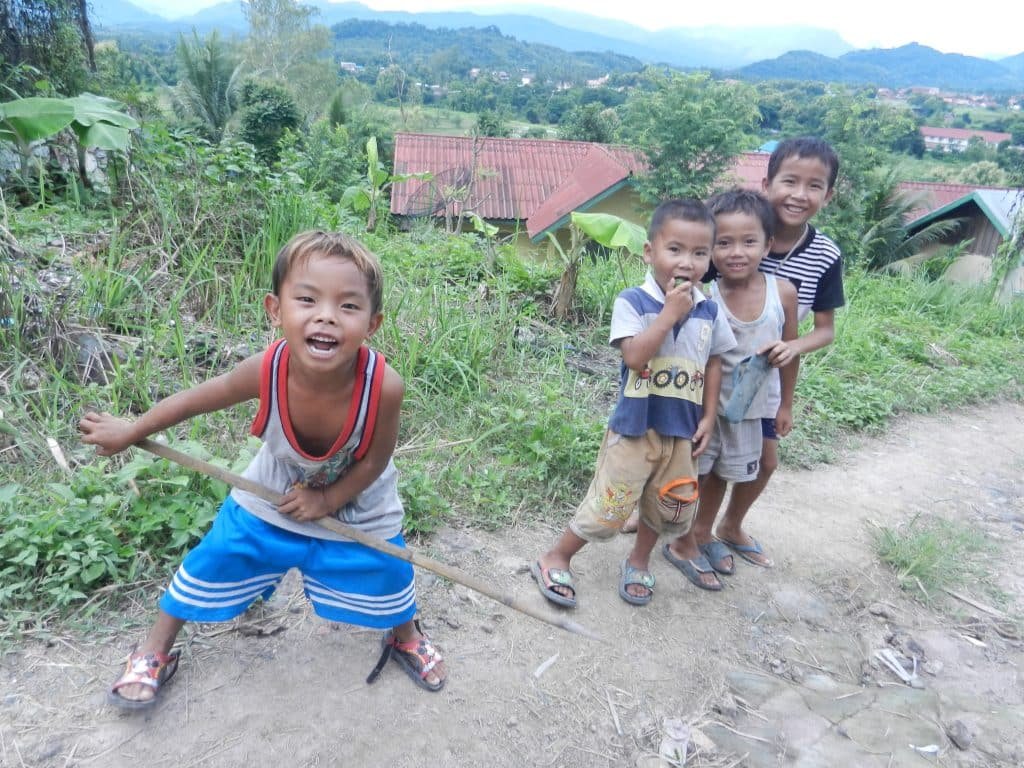
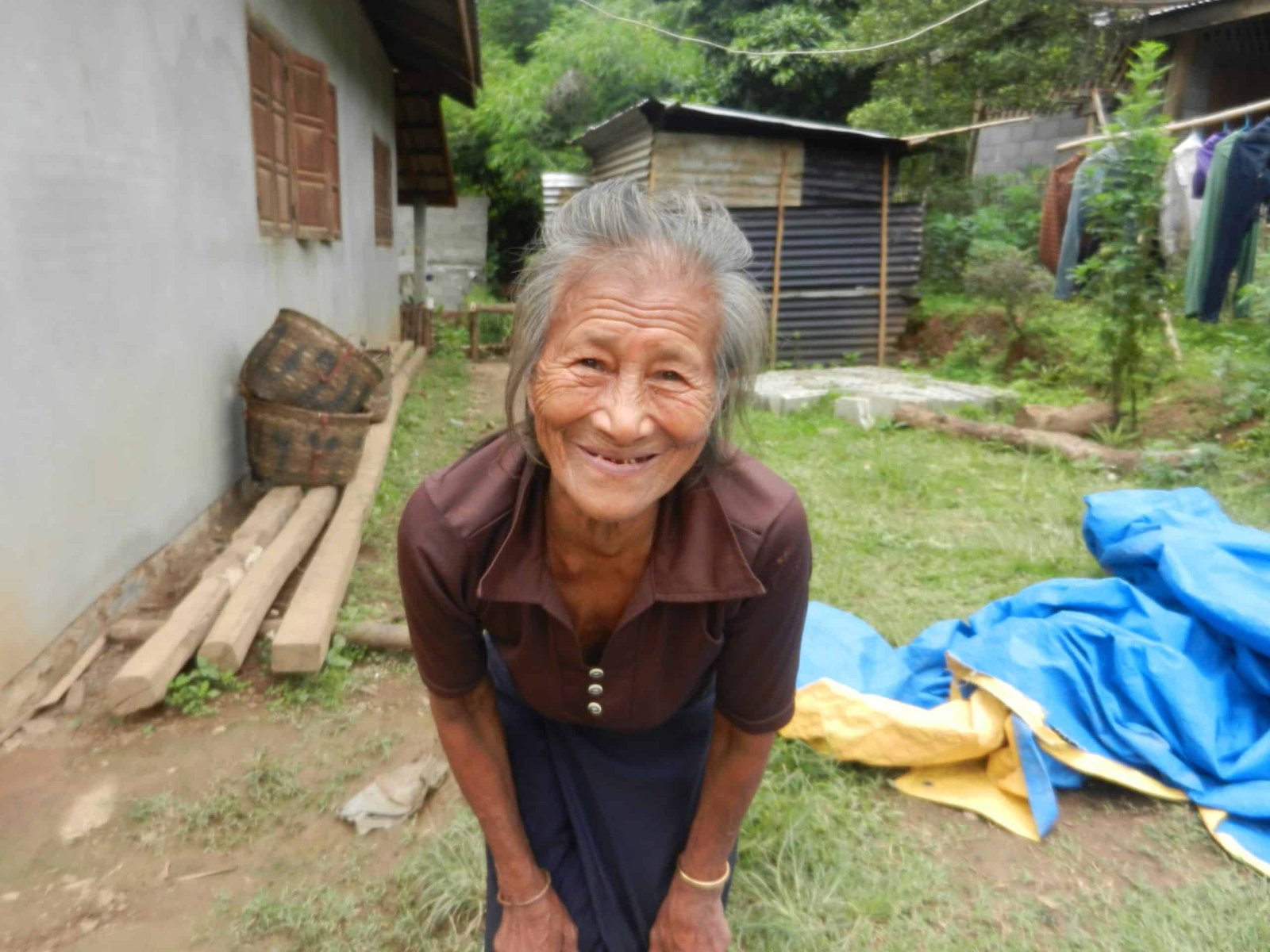
I met a Laotian woman who also found them to be sources of merriment. She’s about 60 years old, and when she was a girl people thought of them as grandparents. They’d pour liquor into the river and offer betel and chickens to them. Grandpa and Grandma have a good old time in the afterlife, the living get protection, and everybody has fun.
These traditions have remained strong because they have many levels. Kings could employ them to give cosmic backing to their authority. But regular folks could see them in terms of family and local spirits. Laos pulsates with so many ethnic groups and traditions that different stories keep resurfacing in one form or another.
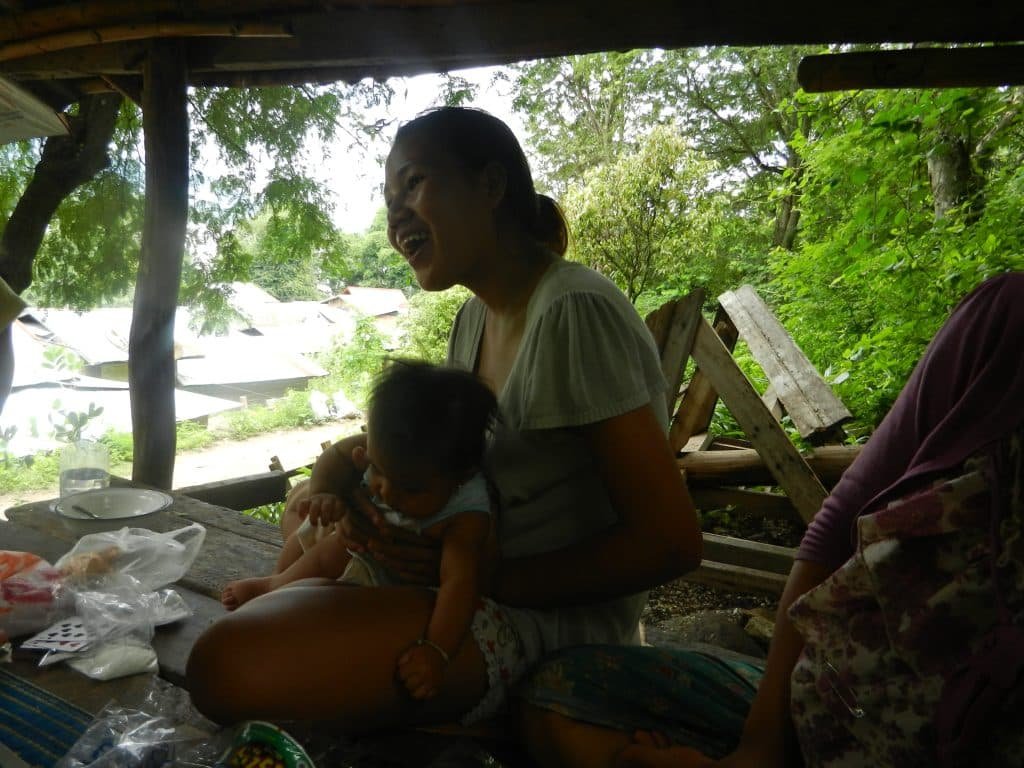
So it’s no surprise that nagas have returned. A Laotian friend told me that people in Vientiane believe that the nagas launch a rocket from their underwater kingdom every year. Some folks claim to have seen it shooting from the river at night. People have traditionally gathered by the shore to play music, drum, and dance in order to coax the nagas to join their celebration and fire the missile to increase agricultural and sexual fertility.
The stories that link Laos’s mountainous land are effective because they allow room for fun and family. They’re so flexible and diverse that more varieties can emerge when people suffer and lose faith in one form of belief. Laotians’ unifying myths don’t conform to one canon or belief system. Their abundance reflects the land’s ecological and ethnic variety. It can’t be shoehorned into a three-dimensional perspective, which Western artists were perfecting when the Lan Xang kingdom thrived. It also has too many varieties and meanings for current versions of AI to understand. Long live the nagas!