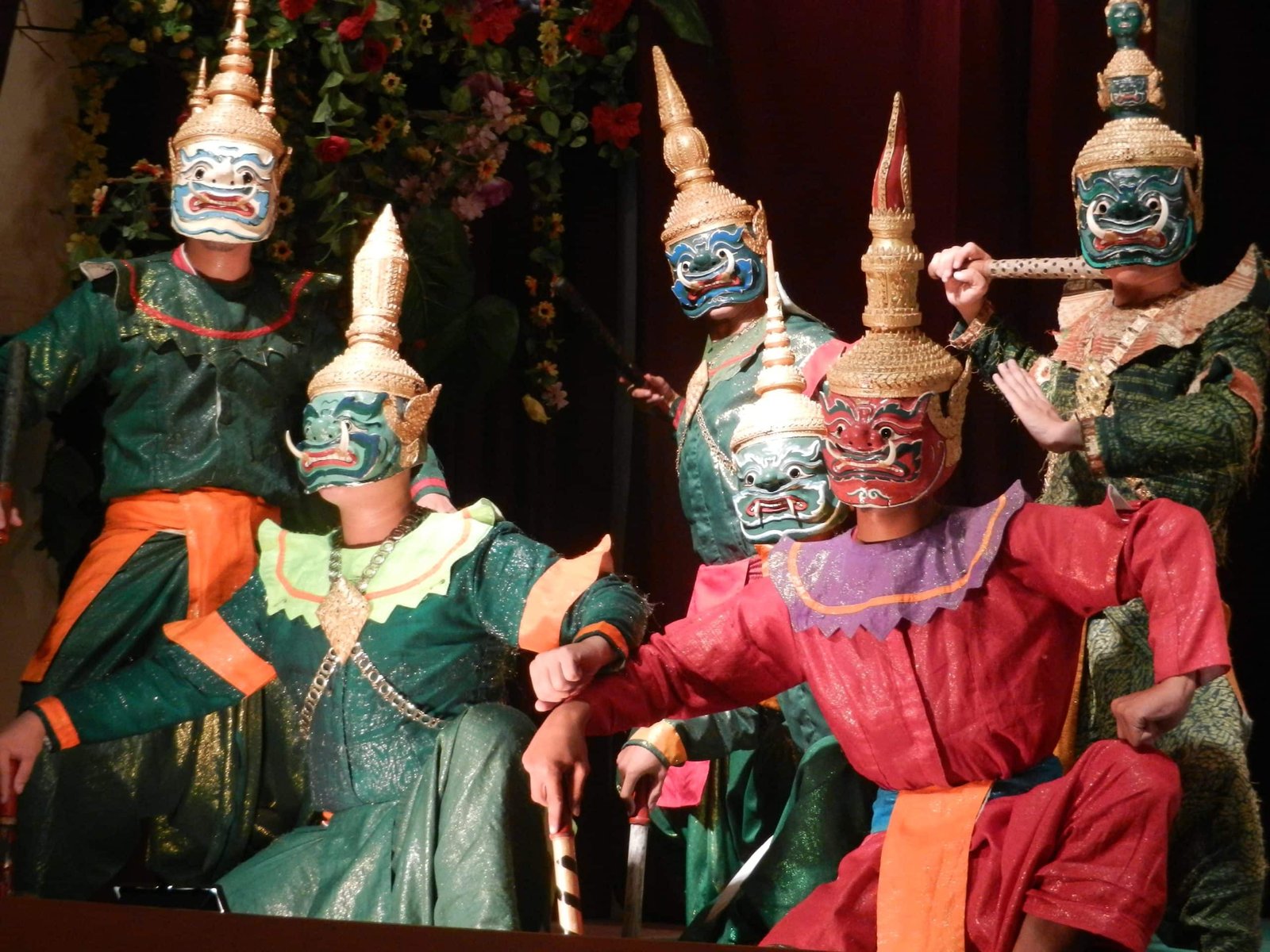
I’ve been looking forward to writing a series of articles on the Laotian Lan Xang kingdom. It was a fascinating cultural crossroads when its political power peaked in the 16th and 17th centuries. It imbibed influences from India (including the Ramayana, being performed above, in Luang Prabang), several Thai states, Yunnan, and Sri Lanka. But it was no copycat, since it mixed local cultural patterns with them. This lively kingdom fused lots of thought patterns within its beautiful natural landscape.
But things didn’t go so well after its founder, Fa Ngum, unified the local lords into one kingdom and his son and successor, San Saenthai, centralized court administration and Buddhist practices. The next kings don’t seem to have had their abilities; there were several quick royal successions.
A new king, Chakhaphat, was stronger. He reigned from 1442 to 1479, and he appointed his six sons to key political positions and strengthened Buddhist practices. But Vietnam’s new Le dynasty invaded the capital, Luang Prabang. The Lao expelled it in a very costly war. but Lan Xang’s star was about to rise.
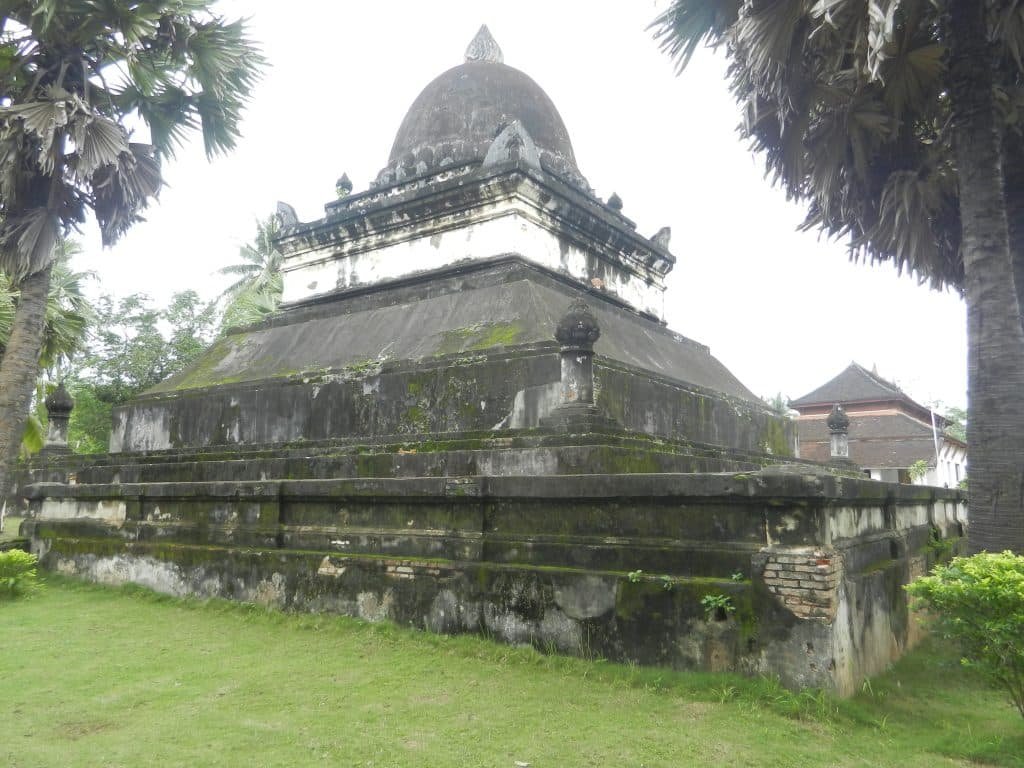
King Visoun reigned from 1501 to 1520. He centralized the court and began Lan Xang’s glory period of building monuments and monasteries. Wat Thakmo (above) was erected in 1504 or1514 by Queen Visounnarat. The current shrine is a reconstruction from the beginning of the 20th century–armies from Yunnan destroyed the original when they sacked Luang Prabang in the 1880s. Its style is mainly Sri Lankan; it stresses mass more than Thai art does. It must have seemed stately to Visoun’s followers. His successors would develop Lan Xang’s own style in their monuments.
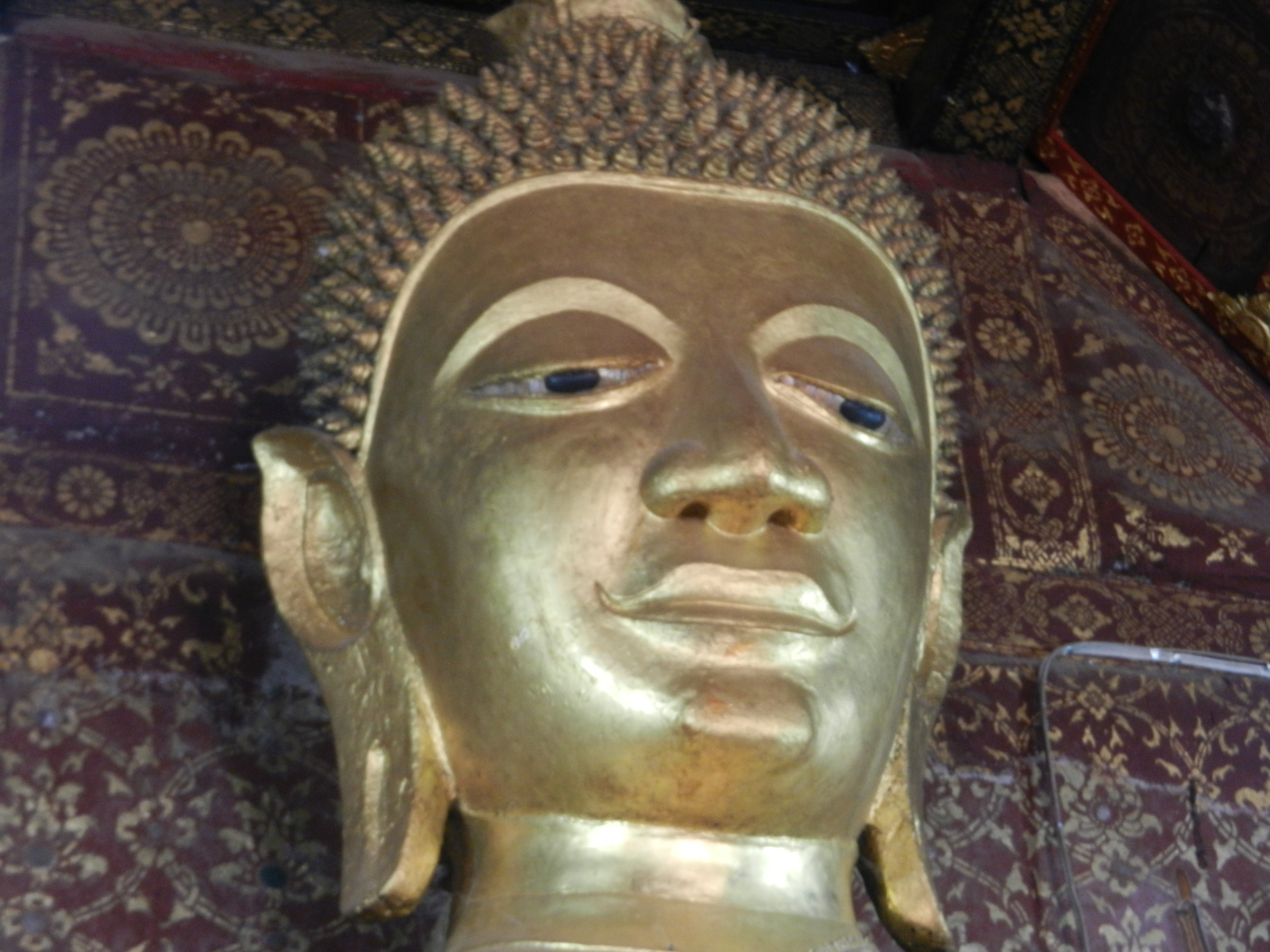
Wat Thakmo was full of Buddha images before the Chinese invaders carted them off. According to John Clifford Holt, in Spirits of the Place, Visoun and his son and successor, Photthisarat (1520-48) strengthened Buddhism in Lan Xang and integrated it with the royal court. Fa Ngum had carried Laos’s most sacred Buddha statue, the Phra Bang Buddha, from the Khmer court when he advanced north to found his empire. Visoun built a monastery that stored it, Wat Visoun (some historians think Photthisarat constructed it). The image is still considered so sacred that it’s now sheltered in the national museum–photography wasn’t allowed inside when I was there. The above Buddha is the principle statue in Wat Xieng Thong, which was also built in the 16th century. Most people consider it the most beautiful building in Laos, and it will soon grace a separate article here.
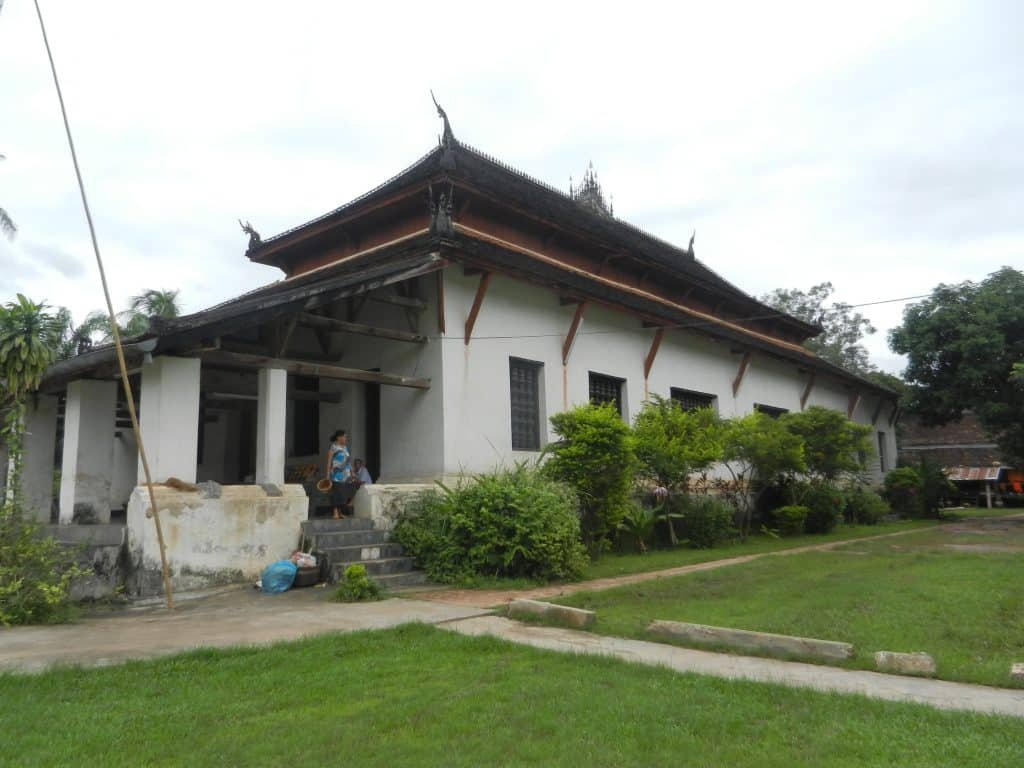
The above picture is of the 1898 reconstruction of Wat Visoun’s assembly hall–the original was torched during the Yunannese invasion. Traditionally Lao and all other Tai cultures have believed that a crowded community of spirits called phi and serpents called nagas protect their land and communities. The Phra Bang Buddha now assumed this function, and Photthisarat outlawed the old spirit cults. Like Thailand’s Emerald Buddha, the Phra Bang Buddha protects the whole kingdom. Lords pledged their loyalty to the king in front of it.
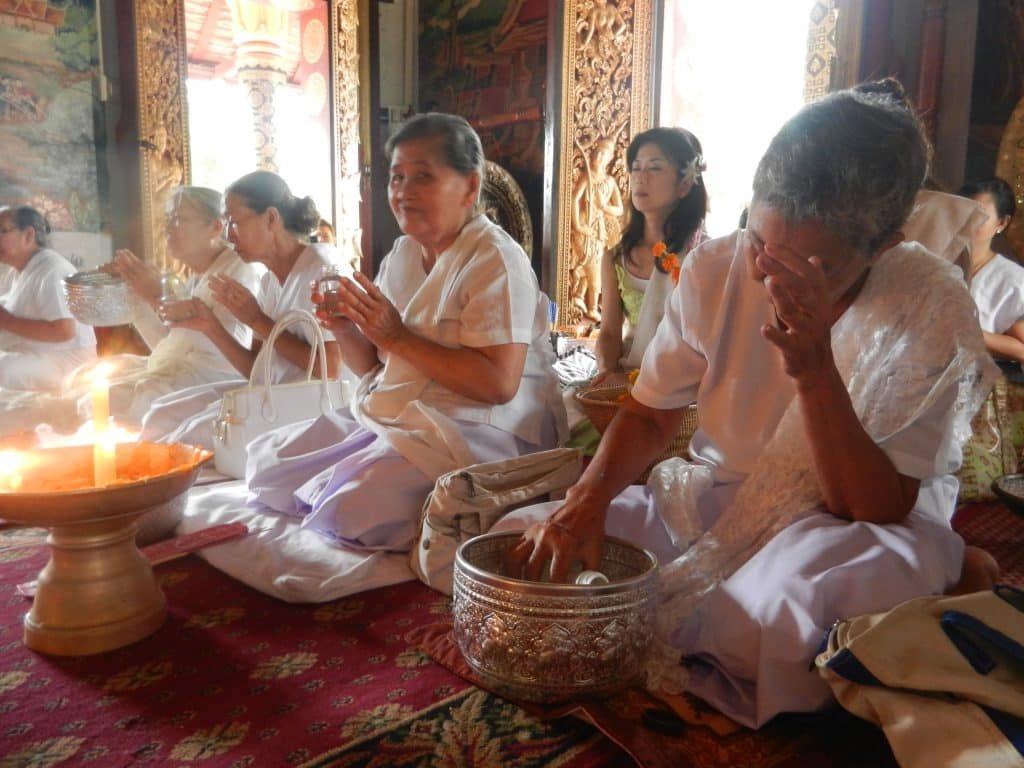
Lan Xang’s two great kings built more monasteries and invited the most scholarly monks to live in Luang Prabang and copy sacred texts. Monasteries became centers of literary culture.
They also held services that became centers of Luang Prabang’s ritual life. Buddhism became integrated with the centralizing royal court, but it also spread to the people. I took the above picture in Luang Prabang’s Wat Mahathat during a service which the monks held for the community every afternoon.
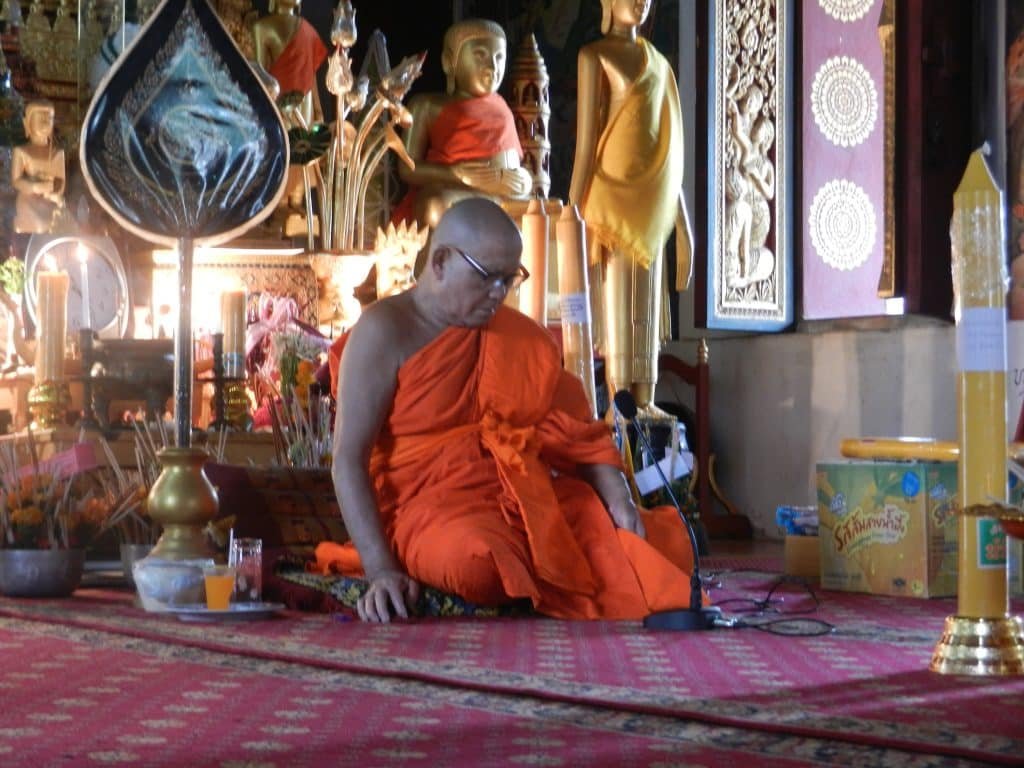
I shot the above photo while facing the other direction (with the zoom on). The abbot and an assistant took turns reciting scriptures. The abbot then lectured in a deep voice. The women in the row behind me were nuns and the people behind them were secular. After the roughly hour-long service we left, and–
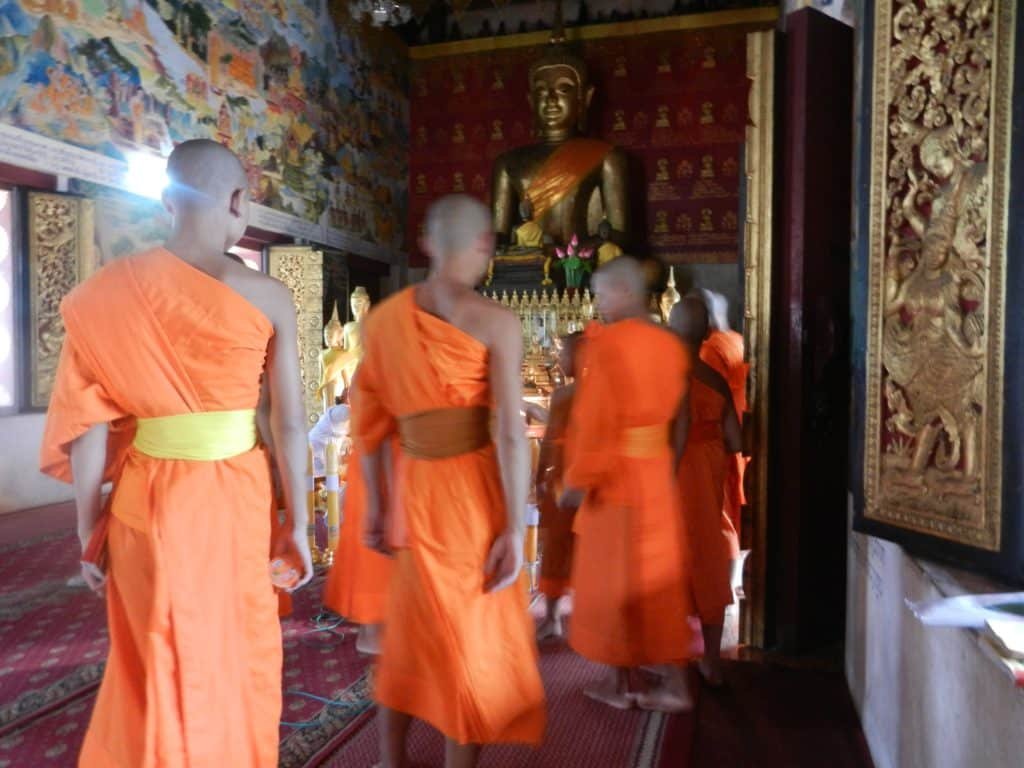
monks started to fill the hall for their own service. By crowding together and chanting they supposedly concentrated the Buddha’s protective power for the neighborhood, as phi and nagas had. So royal power and Buddhist orthodoxy from Sri Lanka and India spread in Lan Xang like this as it became a major Southeast Asian state.
A wealth of other influences came from India and Sri Lanka, including the Ramayana and its stately dance performances.
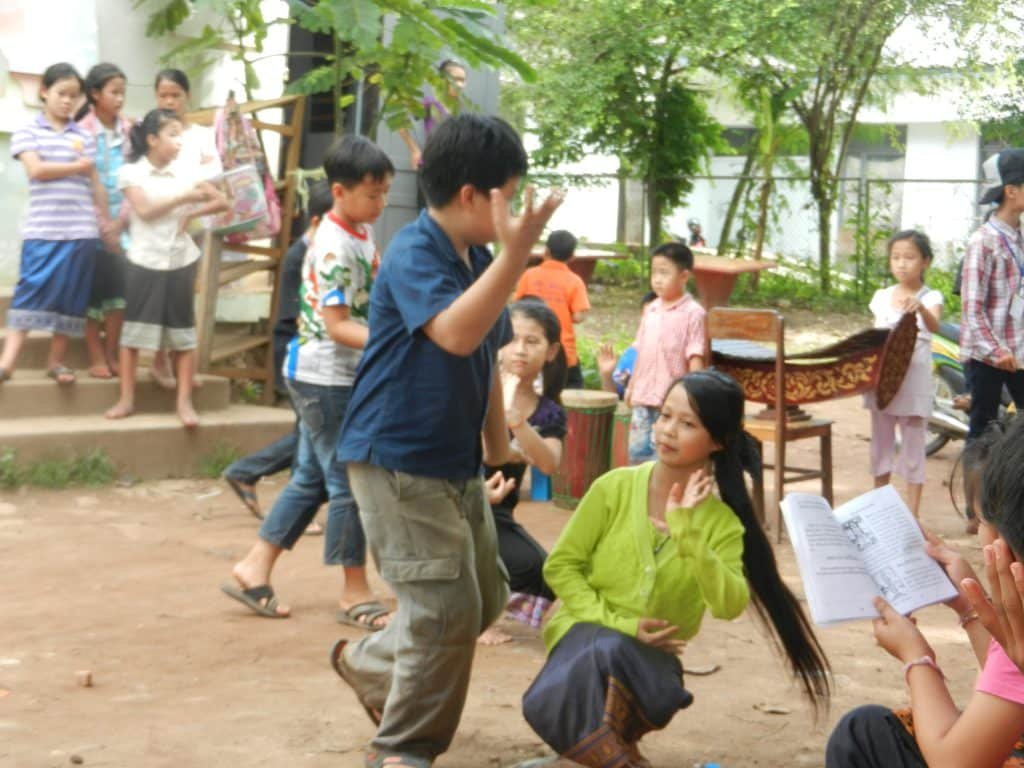
As in many other Southeast Asian states, stories in the Ramayana became the subjects for elegant dances at court. The children in the above photo attest that this is still a living tradition, and very pleasant to watch.
So when ancient Laos became a large state, its royals used ideas and arts from India to help unify itself. Khmers and states in Thailand, Burma, and Indonesia did too. But all these kingdoms added as much inspiration from their own traditions.
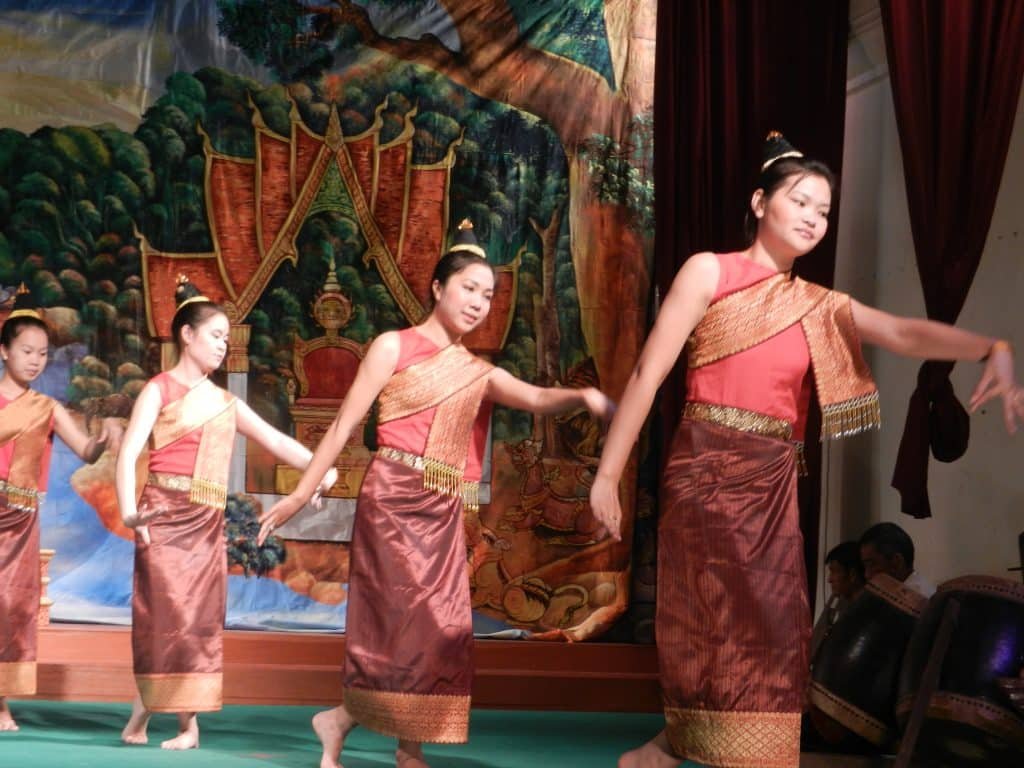
The Ramayana was translated as the Phra Lak Phra Lam, which was modified to fit Laotian contexts. John Clifford Holt, in Spirits of the Place, wrote that the Laotian version focused less on the Sanskrit epic’s sweeping perspectives of the universe and was more centered on the immediate family. Instead of the vast metaphysical background of the dharma which royal power is supposed to be based on, the Phra Lak Phra Lam focuses more on how to conduct familial relations.
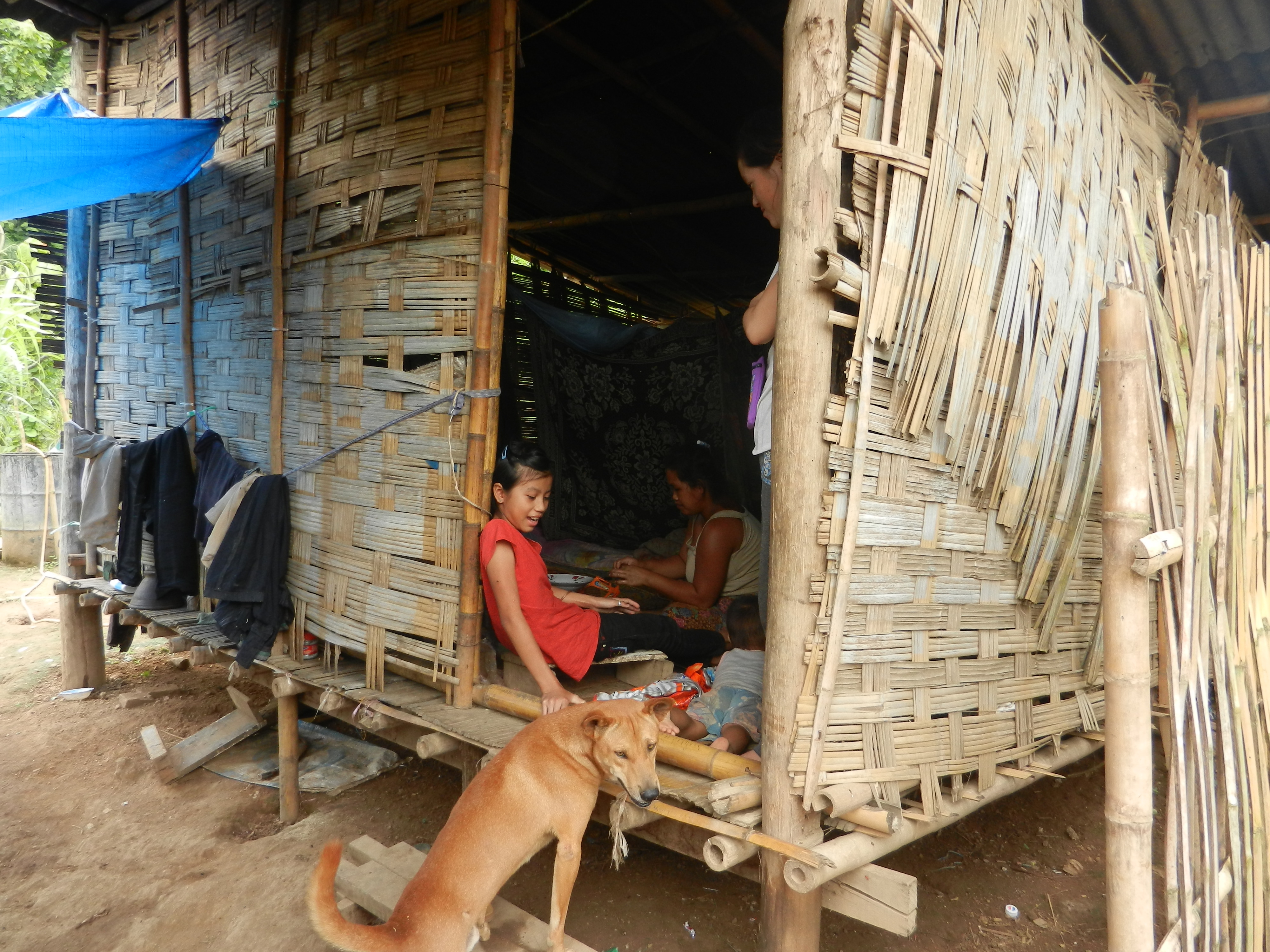
Holt felt that this is because Lan Xang’s kings married into other Thai states to give themselves more diplomatic clout. The Phra Lak Phra Lam portrayed the hero, Rama, as the heir to Lan Xang’s throne. He exemplified Buddhist merit and royal etiquette.
But theater was staged in towns and villages too. Most Lao had been living in cozy riverine valleys and uplands, in small communities that stressed harmony with nature and its spirits. Their epic’s focus on the family resonated more than the vast cosmic landscape in the Indian versions did.
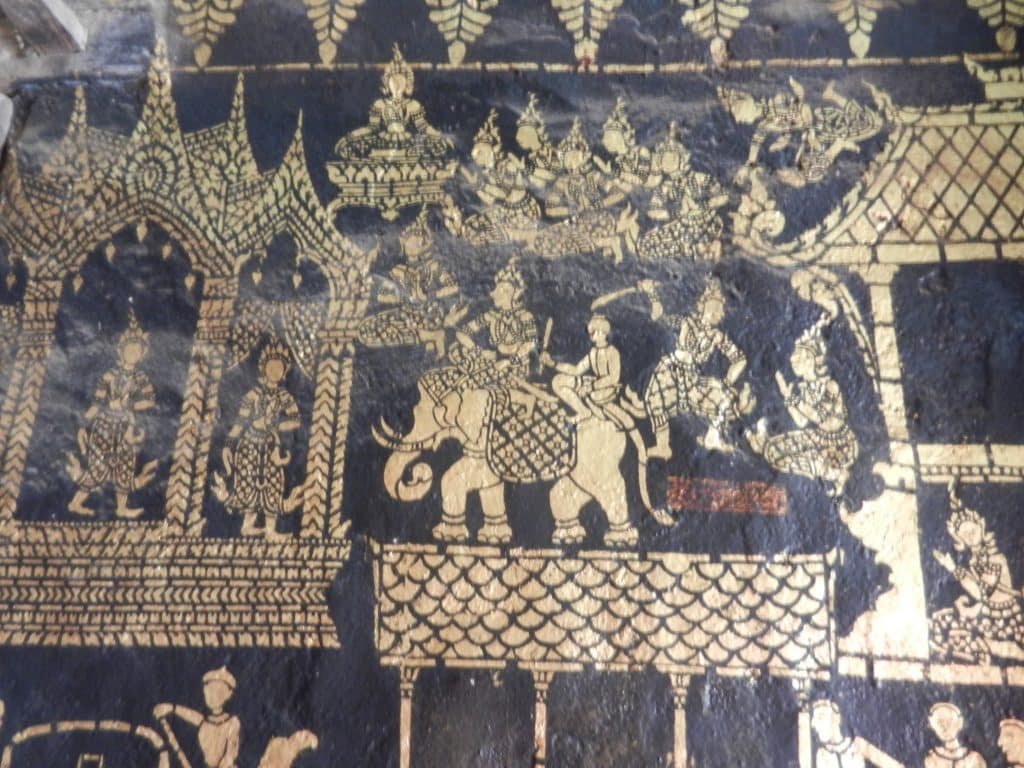
Monks in Luang Prabang translated another huge literary tradition from India and Sri Lanka, the Jatakas. They were stories of more than 500 of the Buddha’s past incarnations. Luang Prabang’s kings especially focused on the Vessantara Jataka, which was about the last reincarnation before the historic Buddha. The above photo is of an illustration of it inside Wat Xieng Thong’s public assembly hall. Vessantara was a prince who gave away everything he owned. In Thai traditions, each of the most popular Jatakas illustrates one of the Buddha’s virtues (parami). The Vessantara story exemplified his generosity.
Holt says that the Vessantara Jataka was ritually recited in wats all over Laos every year and that this ceremony became the most important occasion for merit making. Though the story is more ideal than real, since Lao and Thai kings often battled each other and their own lords, the focus on giving resonated with ordinary Laotians.
The Vessantara story brought the vast perspectives in Indian texts down to the cozy village.
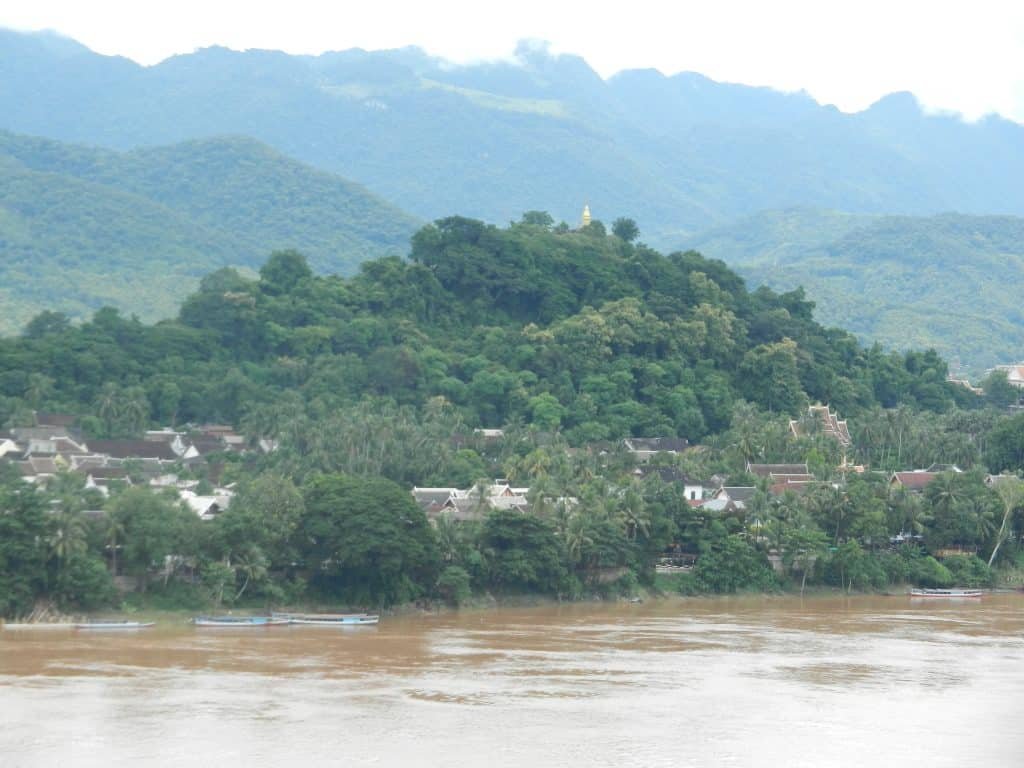
Buddhist and Hindu cosmologies saw Mount Meru as the center of the world, and many Southeast Asian cultures transposed this idea to their own lands. Khmers saw Angkor Wat as a model of Meru, and the Thai Sukhothai kingdom probably saw its Wat Mahathat in the same terms. A hill in the middle of Luang Prabang called Phousi (above) rises in the center of town. The royal palace is in the bottom right of the picture, so it was built at its foot. Ideas inspired by the vast Himalayas were thus grafted onto Luang Prabang’s environment of undulating hills and rivers and the tropical monsoons. The locals also retained their geography of serpents who protected different regions of Luang Prabang.
Laotians also blended their spirit lore with Buddhism. Wat Aham (below) was built by King Photthisarat on the site of Luang Prabang’s tutelary spirits, Pu No and Na No.
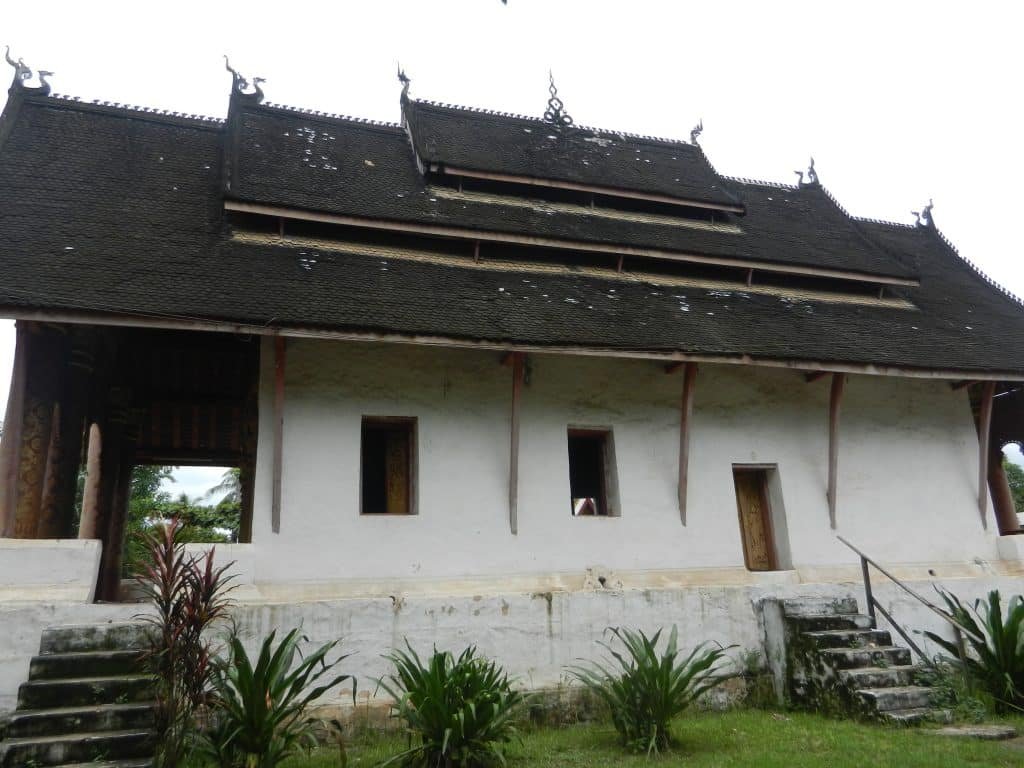
They were and still are associated with fertility and protection, but they must be respected. Weather that hindered crop growth occurred, and the people thought that was because the king had forbidden the veneration of local spirits, called phi. A new shrine was built, and many folks today believe that the two reside in nearby trees. They celebrate New Year by wearing costumes and masks that represent them. On the third day of New Year, the monks of Wat Aham, Wat Xieng Thong, Wat Visoun, and Wat Mai travel in a procession to Wat Mahathat to watch a sacred dance of Pu No and Na No.
So every major idea and tradition that was imported from India blended with Lao cultural patterns. India’s vast panoramas were balanced by the centrality of the local world of the family and village. And ideas that reflected the enormity of India’s natural environment fused with the Lao worlds of narrow riverine valleys. You can’t reduce Laos to one system. Lan Xang’s kings tried to unify their realm with ideas from India, but in the process they added yet more variety to their inherently irreducible land.