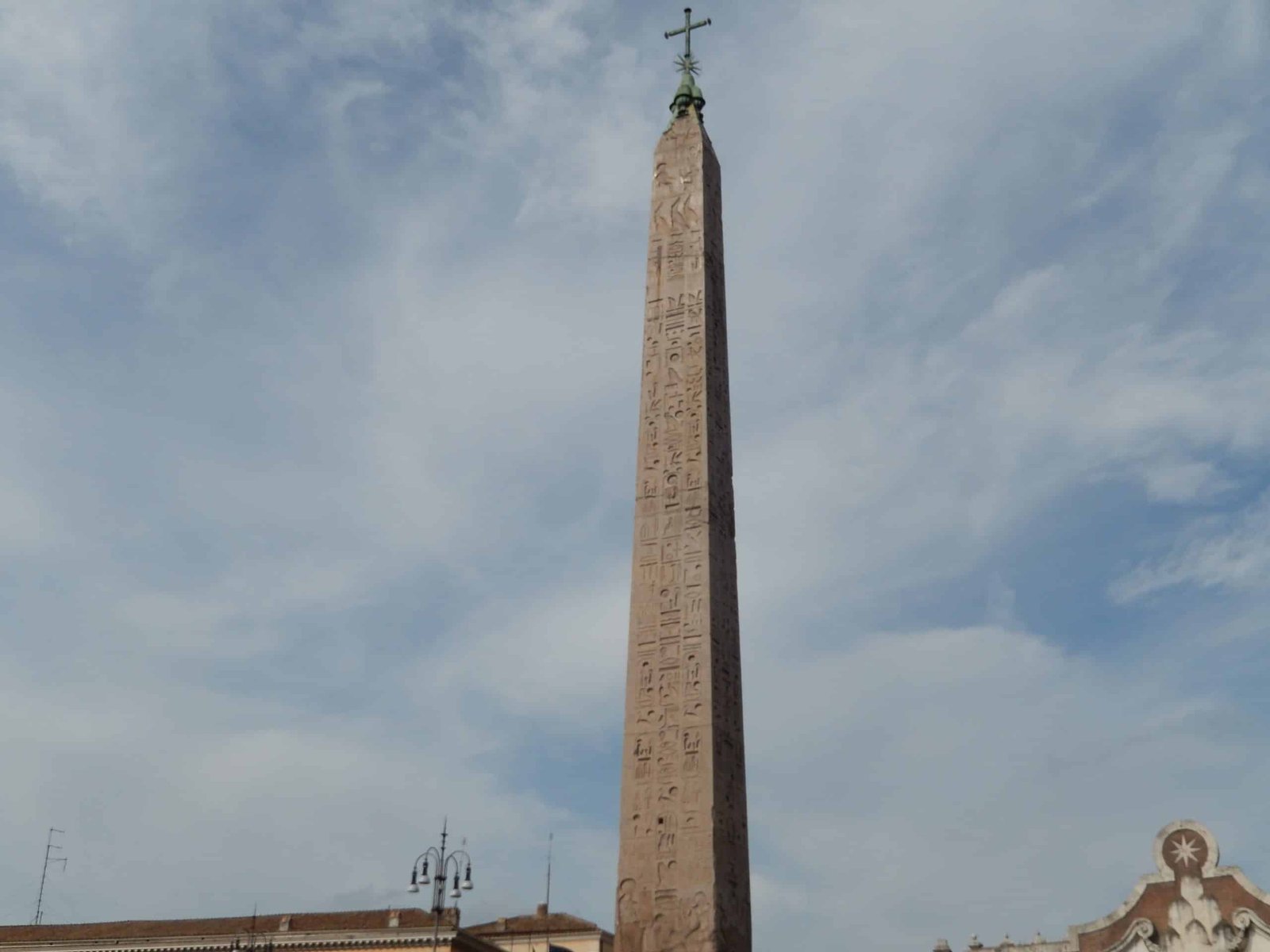
To this day historians aren’t sure how ancient Egyptians raised obelisks. There are well-educated surmises though.
The most plausible ways required an enormous amount of effort, so obelisks had a lot of meaning for ancient Egyptians. Many Western cultures have also given them central importance. The Washington Monument and the Bunker Hill Monument are in the form of an obelisk, so Americans used it to assert their new country’s identity. So we’ll explore some of the most plausible ideas about its meaning and construction.
1. Obelisks were first built around the time when the sun god Re became a central cult in Heliopolis in the Fourth Dynasty. So ancient Egyptians were began to build obelisks when they were erecting the pyramids at Giza.
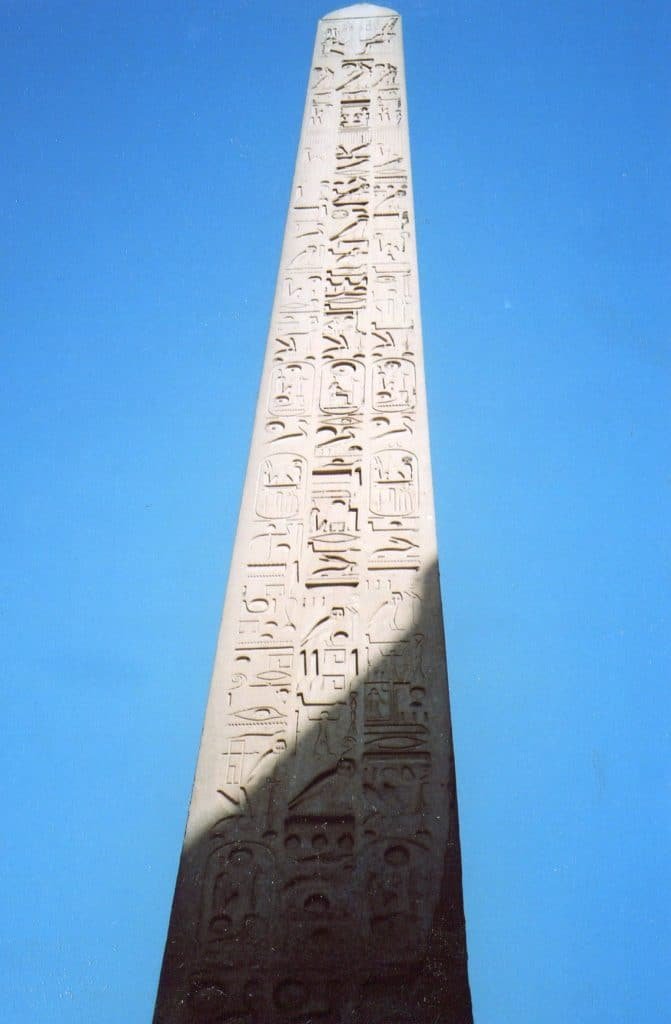
2. Obelisks at that time were much shorter and squatter than the skyscrapers that New Kingdom (1550-1070 BCE) kings built. The Ramesses II (1290-1224 BCE) obelisk in the above shot at the Luxor Temple is 82 feet high.
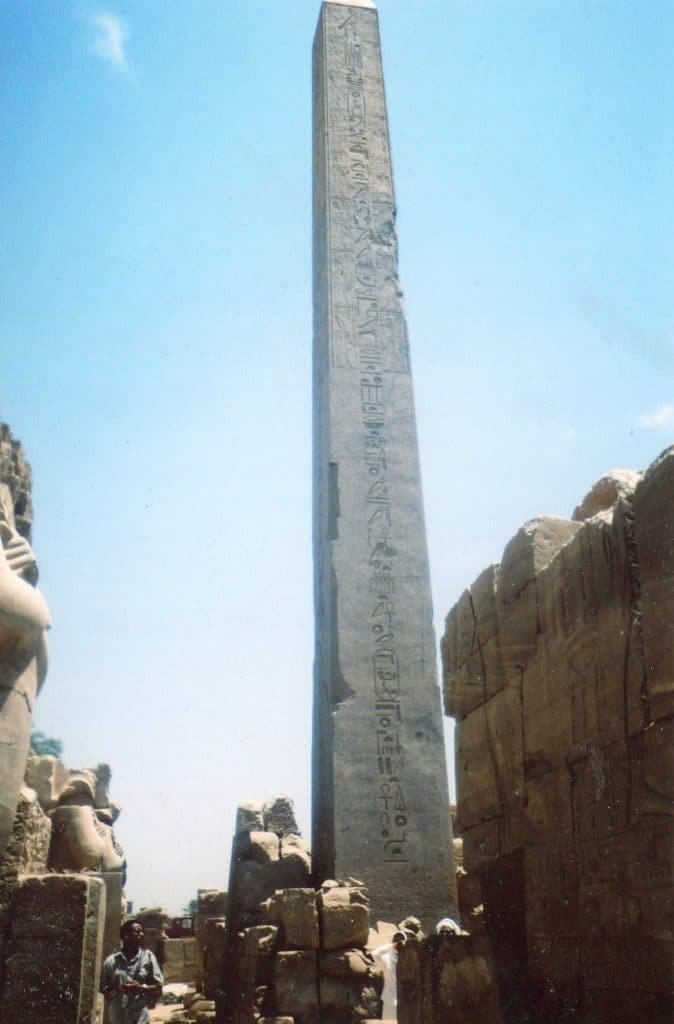
Queen Hatshepsut’s (1473-1458 BCE) obelisk at the Karnak Temple soars to 97 feet (above). The tallest obelisk is the Thutmose III obelisk in Rome, which is 105 feet.
3. So like pyramid building, obelisk making evolved over a long period. The first really tall obelisk was built by the Middle Kingdom pharaoh Senusret I (1971-1926 BCE, 12th Dynasty; he is also known as Sesostris I) at Heliopolis, which was 65 feet. It was cut as a single block of Aswan red granite. So ancient Egyptians perfected this art form over a period of more than 1,000 years. What did it mean to them?
4. Ancient Egyptians didn’t write a full explanation down, so we can only surmise. Stephen Quirke, in The Cult of Ra, writes that obelisks were mainly associated with the sun, but feels that they also might have had phallic meanings, and that Egyptians associated both ideas–both are full of creative power. But he notes that the ancient Egyptian word for obelisk, tekhen, didn’t specifically refer to the sun or the phallus. So obelisks might have had an even larger range of meanings.
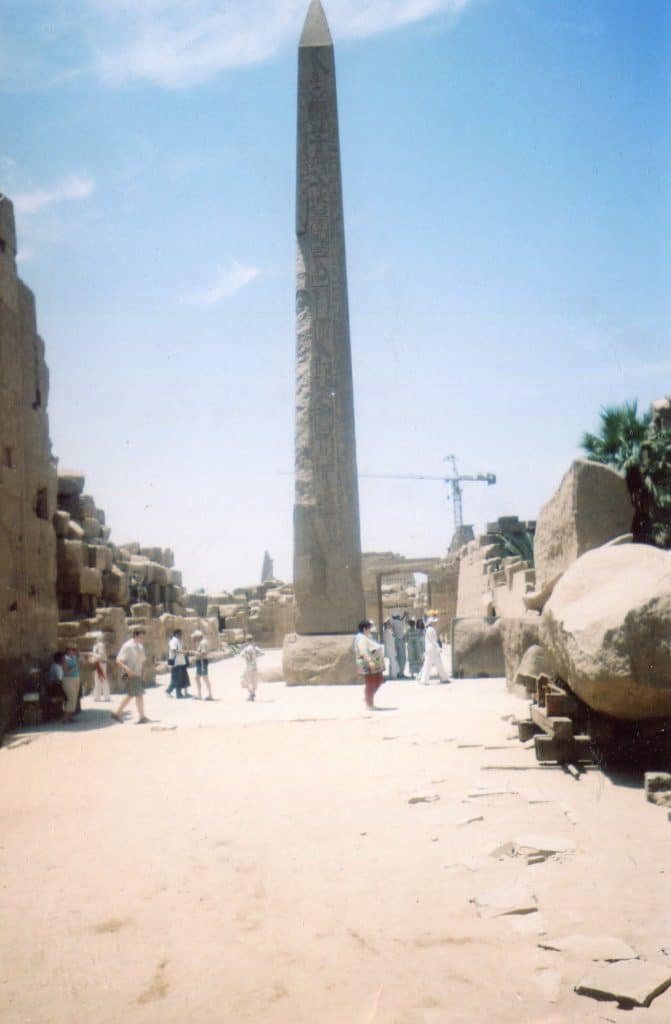
But other scholars have also speculated about their solar meanings. Richard H. Wilkinson, in The Complete Temples of Ancient Egypt, wrote that they were often raised in pairs before temples’ entrances in the 18th and 19th dynasties and that they were the first and last points of the temple to catch the rays of the rising and setting sun.
5. Obelisks were closely associated with kings. They built them rather than temple priests.
6. How were obelisks erected? Wilkinson noted that Egyptians might have preferred different construction methods at different times. But obelisks were probably pulled up artificial ramps, bottom first with ropes, and lowered onto their bases. How was a single block of stone 100 feet high so accurately positioned without breaking? We don’t have any writings from Ancient Egypt that explain it. Wilkinson wrote that an artificial ditch could have been created, with the obelisk’s base in the middle. People could have filled the ditch with sand, and several could have pulled ropes from many directions to carefully guide the monument. This is only a maybe. Ancient Egyptian ingenuity is a hell yes!
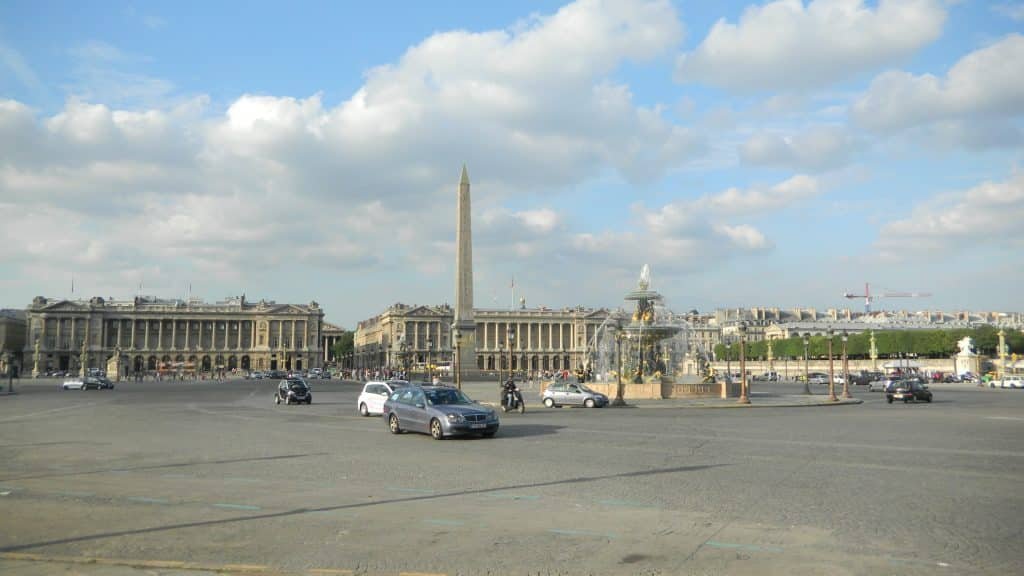
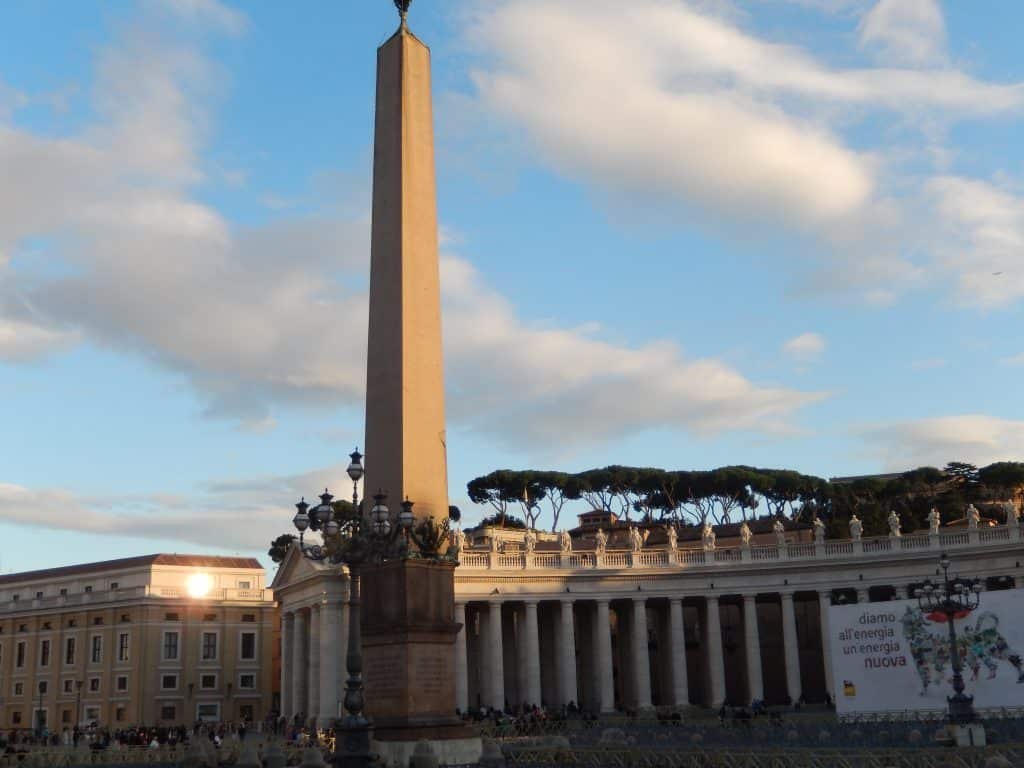
7. Obelisks have continued to have central meaning in Western culture. The Assyrian king Ashurbanipal brought two to Nineveh. Roman emperors took several to Rome and Constantinople. Modern Western countries have continued to make political and artistic statements by hauling them to their cities, including Paris, London and New York–it seems that a world-class city has to have an ancient Egyptian obelisk to signify its status. Most ancient Egyptian obelisks now stand outside of their homeland, including the one in Paris (above) and St. Peter’s Square in Rome (below).
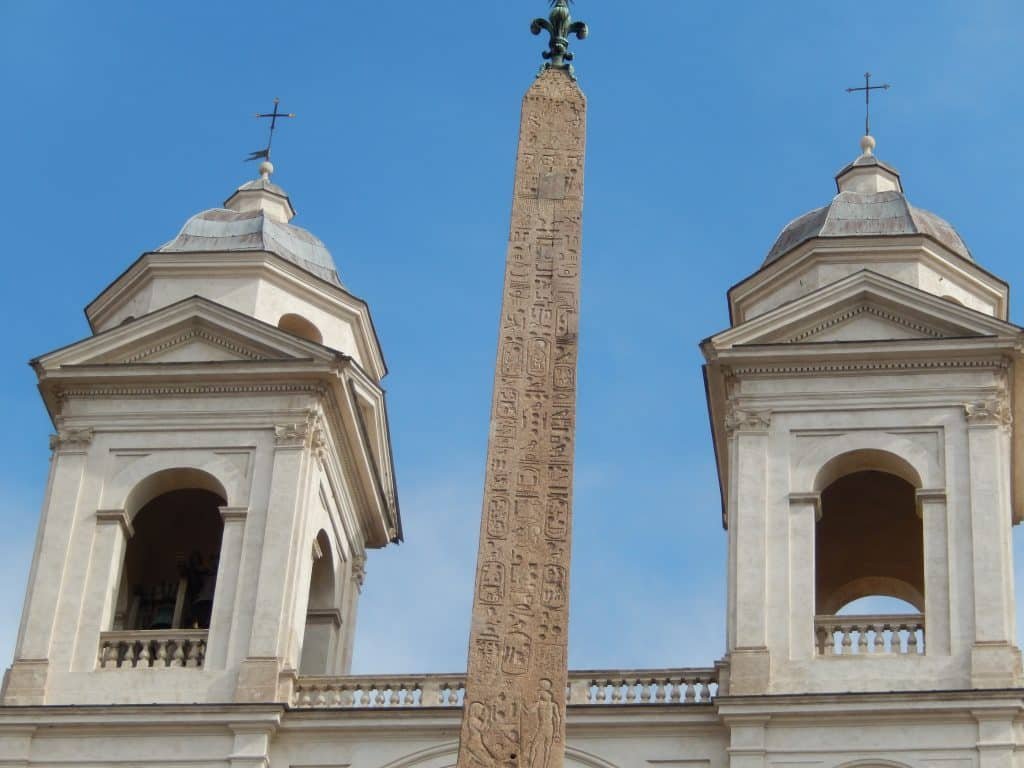
The one in the below photo graces Trinita dei Monti on Rome’s Spanish Steps.
8. The continuity of the obelisk in Western culture is a fascinating contrast with the most prestigious columns in China. The columns on the Confucian Temple in Qufu were made according to ideas of holistic flow of energies. But the obelisk’s form complements pyramids’ forms. Both represent nature’s most creative powers and the sun’s permanence with a simple, abstract form. Ancient Greek temples were later made according to simple and abstract forms too. Both types of building reinforced Westerner’s assumptions that simple and abstract forms embody the most basic truths. The flowing pillars in the Confucian Temple are easily associated with other ancient Chinese ideas, including yin/yang.
So an art form that’s treated as basic seems so because many facets of the culture that emphasizes it.