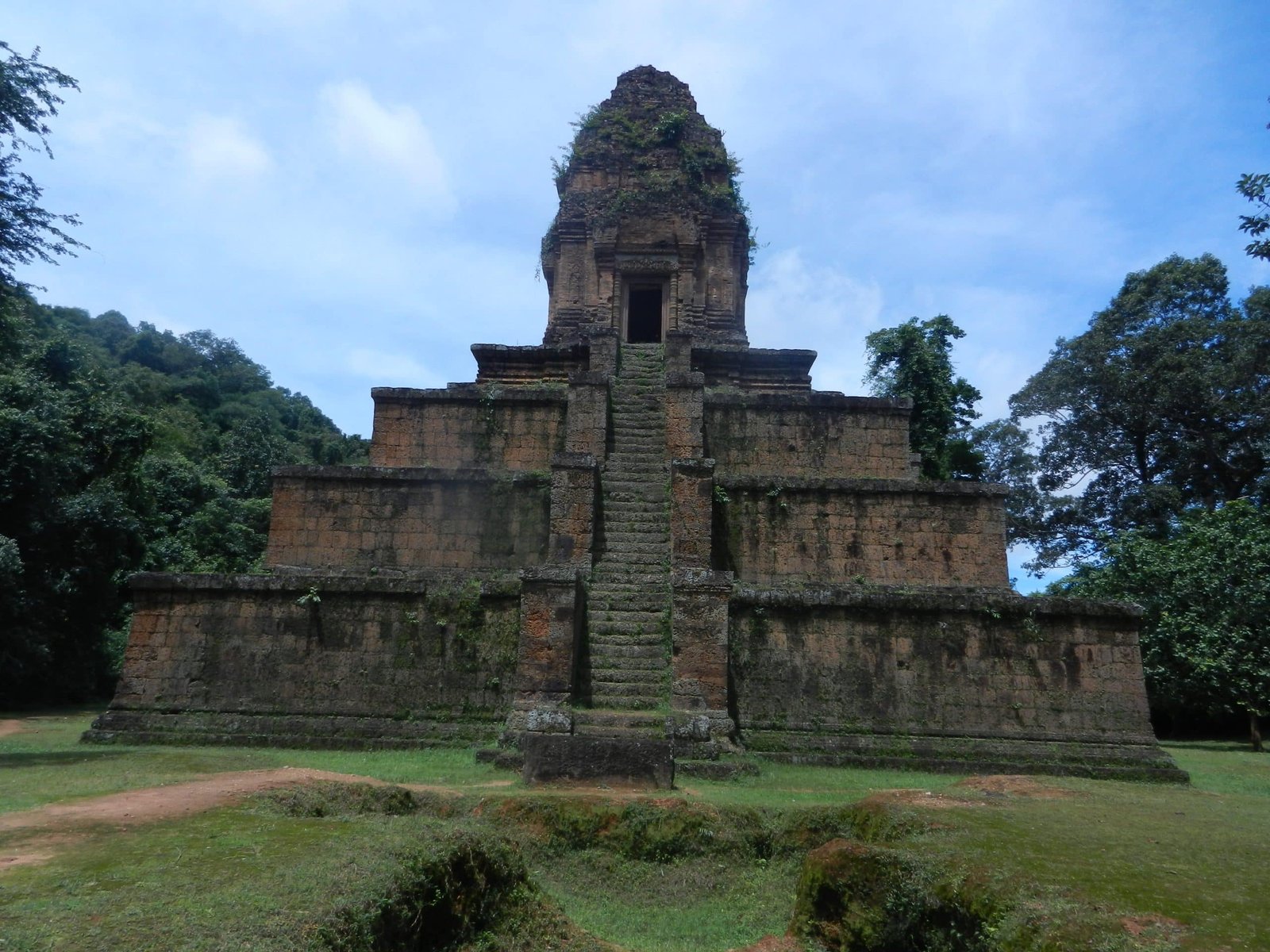
Baksei Chamkrong is another easily overlooked Khmer temple that’s well worth savoring. Harhavarman, the king when Prasat Kravan was built, probably started its construction. The great king Rajendravarman, the builder of Pre Rup, finished it. Harshavarman began it in the shadow of his father’s great temple Phnom Bakheng. The latter crowns a 220-foot-high hill. Baksei Chamkrong is a much humbler effort, but like Prasat Kravan, it set new standards for blending elegance and simplicity.
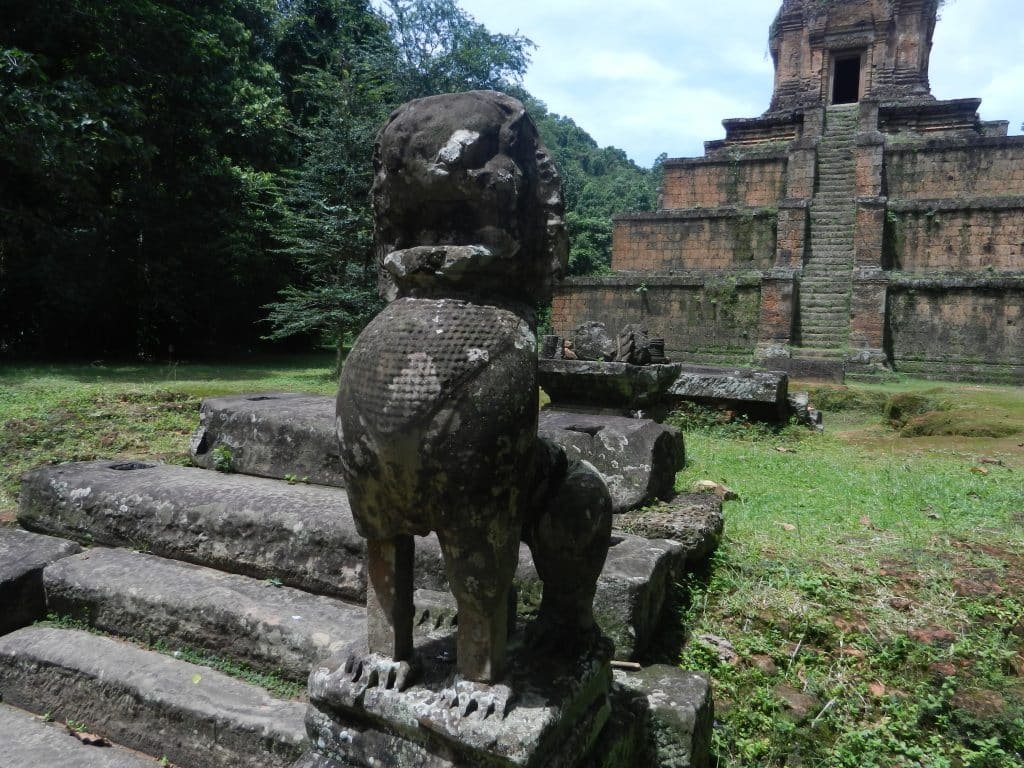
It was probably approached from this little causeway. Guardian lions on each side ensured that only worthy people could come near the altar in front of it.
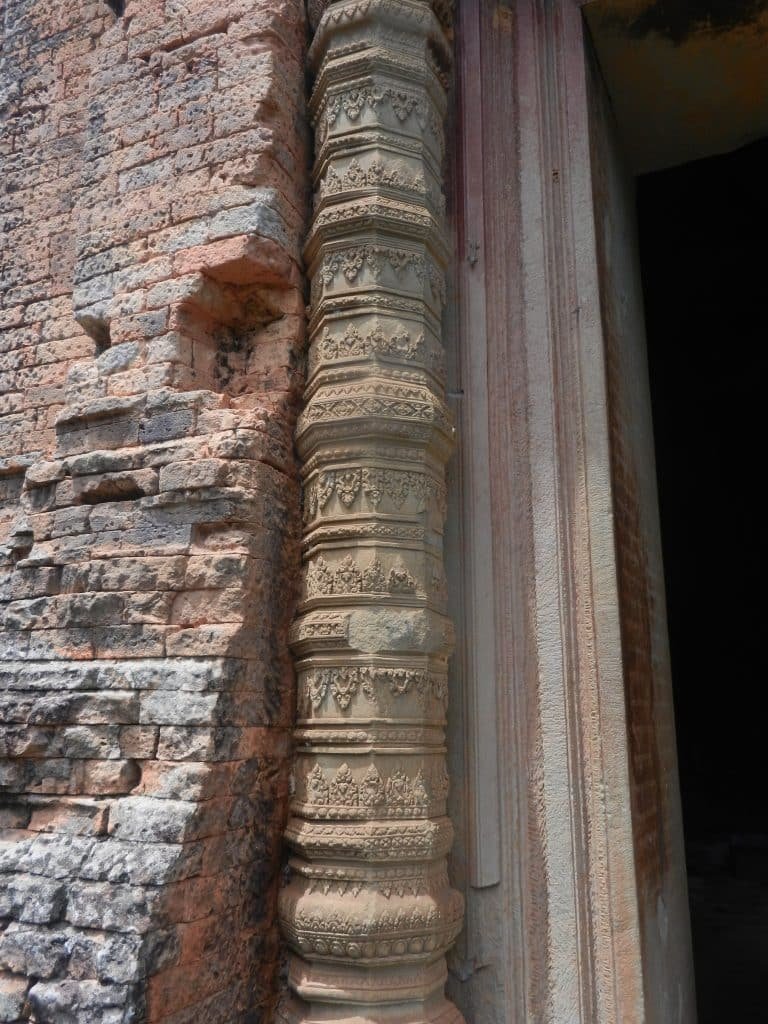
I was able to sneak past them, pass the altar, and climb the temple’s stairway. The entrance to its shrine rivaled Preah Ko in elegance, including the columns, which mix vitality and refinement.
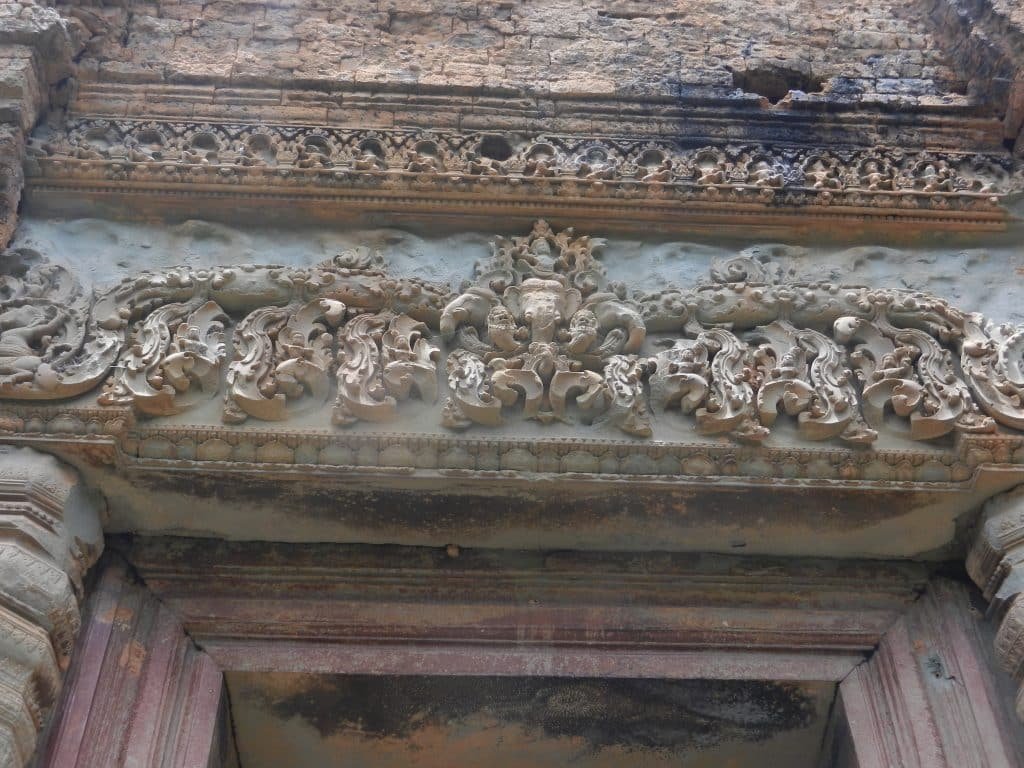
The lintel over the door does so too. It continued the Khmer tradition of sculpting vegetal growth surrounding human and animal figures over shrines’ thresholds.
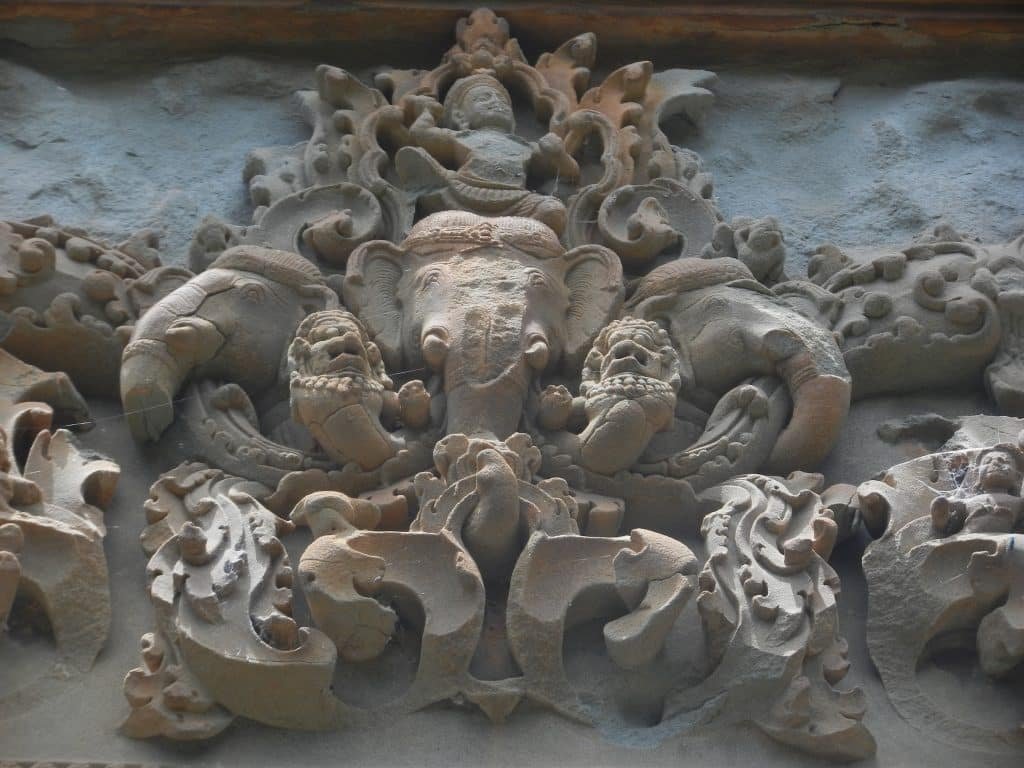
This close-up of the middle of the lintel shows Indra riding a majestic three-headed elephant. This Vedic god and elephants were closely associated with the coming of rain in ancient India. The Rigveda frequently celebrated the freeing of the annual monsoons by this god. Khmers were equally dependent on them, but they made this enormous event human scale at this temple.
Baksei Chamkrong is only about half a mile from Angkor Wat. You might find it refreshing after the latter’s overwhelming scale. Its form is simple and easy on the eye, like Prasat Kravan’s. The base and tower balance each other perfectly. The temple is about the same size as the surrounding trees. You can walk around it and enjoy its harmony with the natural surroundings.
A great way to enjoy Baksei Chamkrong and Prasat Kravan is to stand about 200 feet away for a few minutes and savor their formal perfection.
King Rajendravarman II’s minister of public works might have actually created Baksei Chamkrong’s final form on the base of what Harshavarman built. But either way, it represents a time of trying new varieties of art forms. This is the temple at Angkor that most closely resembles the Mayan pyramids at Tikal, with a thin, steep base and shrine on top. Khmers usually went for bulk and preferred large horizontal frontages.
Many other varieties were used by Harshavarman’s uncle Javayarman IV when he built his own royal capital, at Koh Ker, about 50 miles northeast of Angkor. It’s known for a sculptural style that’s lively, which contrasts with the stiff and formal styles associated with Phnom Bakheng and Pre Rup.
Pre Rup’s builder, Rajendravarman II, would unify the Khmer empire again in the mid-tenth century and expand it further. He employed a master builder who erected temples that compete with Phnom Bakheng in majesty. But don’t overlook the period between the two great builders. The Khmers were testing new art forms and expanding the range of what they could make. Their best products are almost as memorable as Angkor’s biggest monuments. They show that Khmer culture remained a fountain of creativity throughout its history. There’s much more at Angkor than Angkor Wat.