
I recently told ChatGPT, “Describe Preah Ko in 1000 words.” Built 250 years before Angkor Wat, it’s one of the two earliest large temple complexes that were constructed in the area. Amazingly, there is nothing formative about it. Its sculpture is refined from ground to crown, and it set standards that Khmers followed for the next 500-plus years.
Influences on its sculpture can be seen in India, Java, the Cham civilization in Vietnam, and two ancient cultures around the Mekong, Funan and Chenla. For example, Preah Ko’s opulent door lintels–
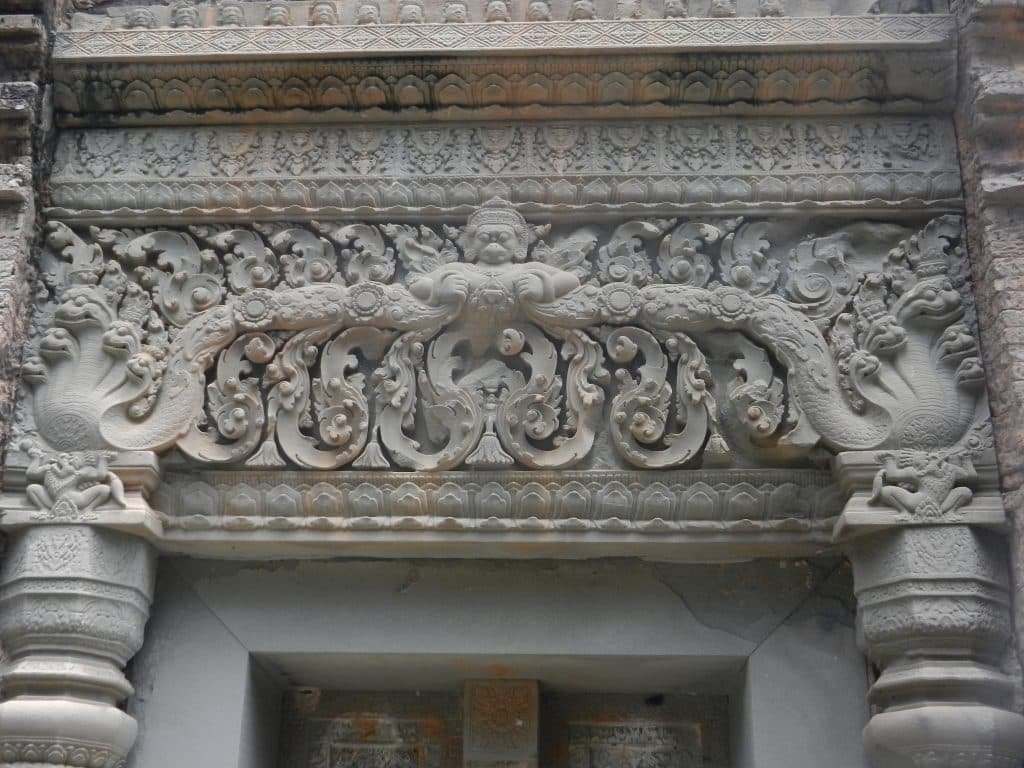
were inspired by earlier lintels in the Chenla culture in central Cambodia, which thrived 200 years before–
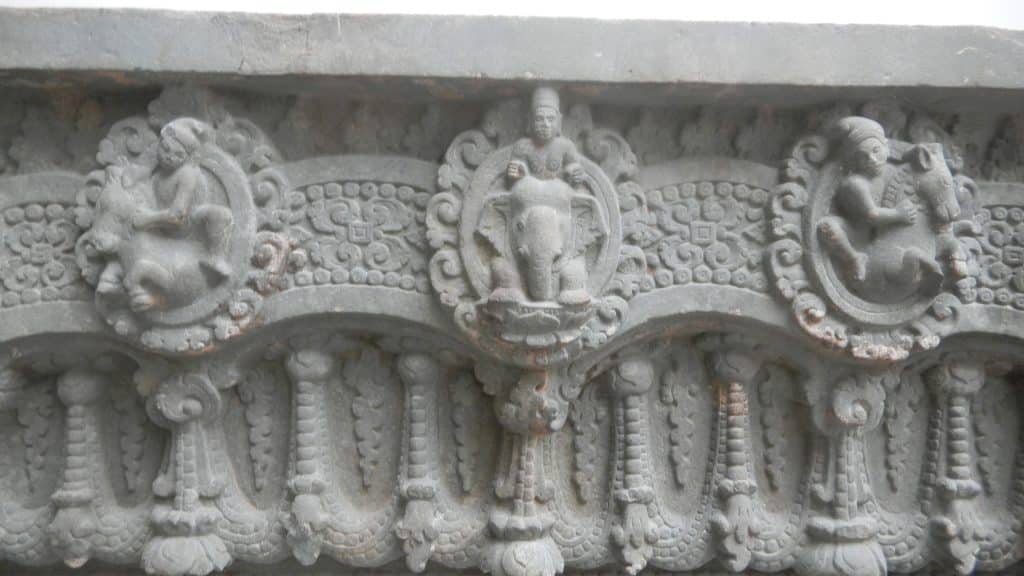
as well as from the even earlier Fu Nan culture, which flourished farther south, in the lower Mekong area.
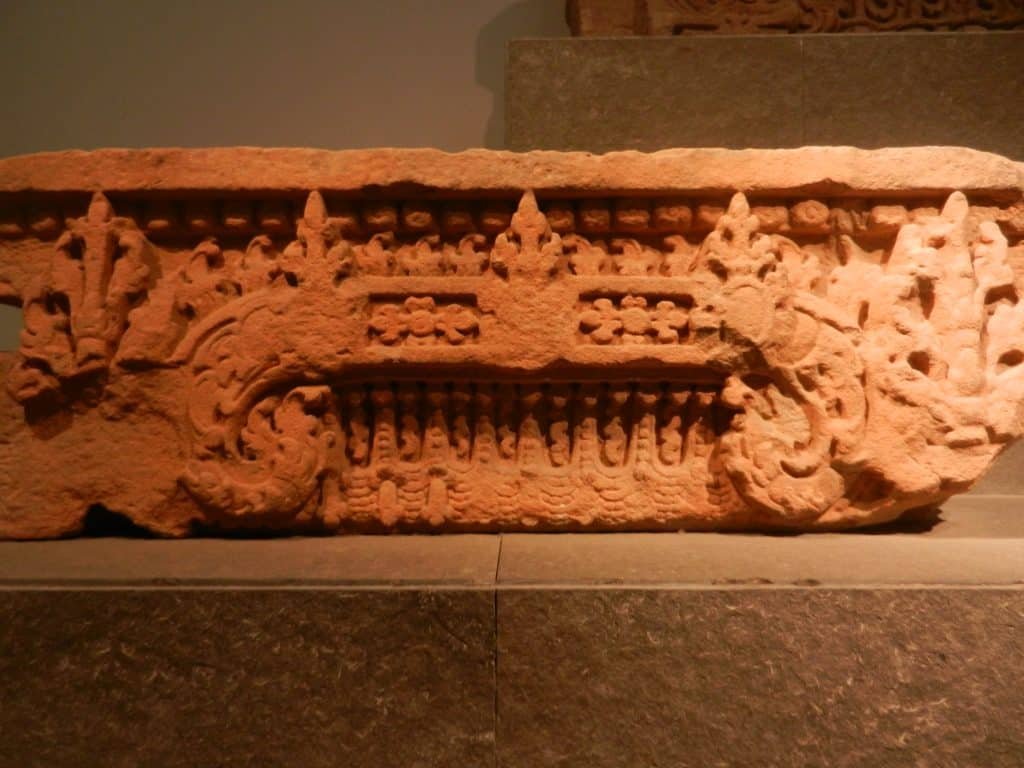
The Khmers took all these influences and synthesized their own style, with dignified portrayals of the human body and foliage that are both animated and elegant.
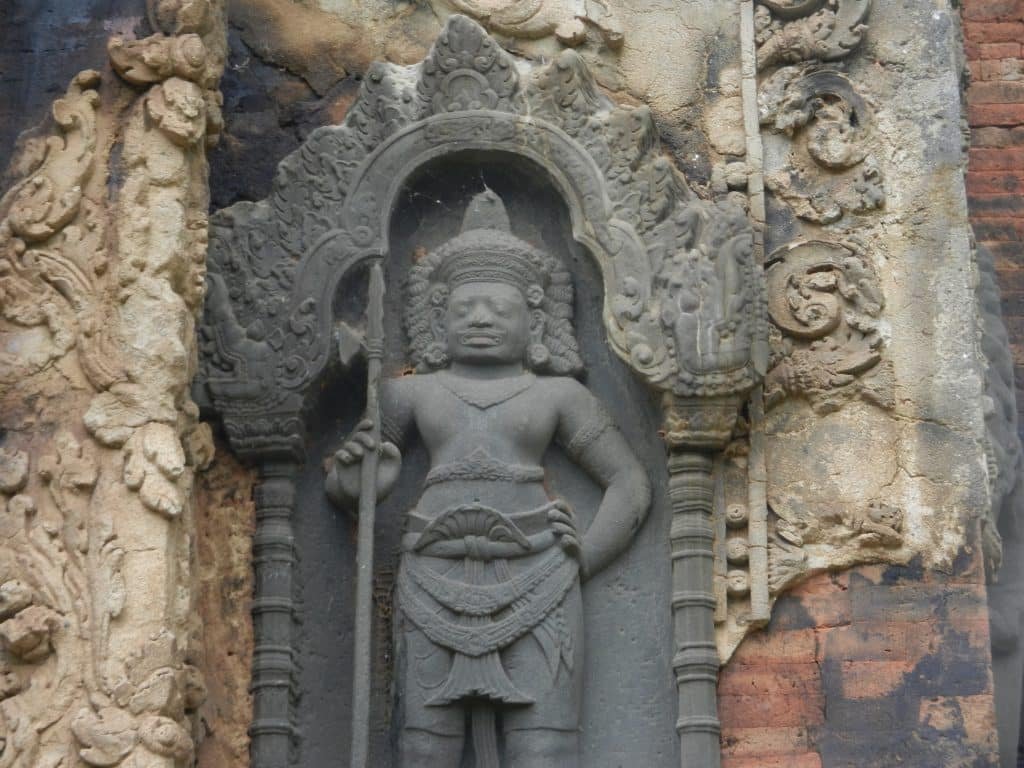
In addition, the spaces between two sets of enclosing walls and between the out buildings are perfectly balanced.
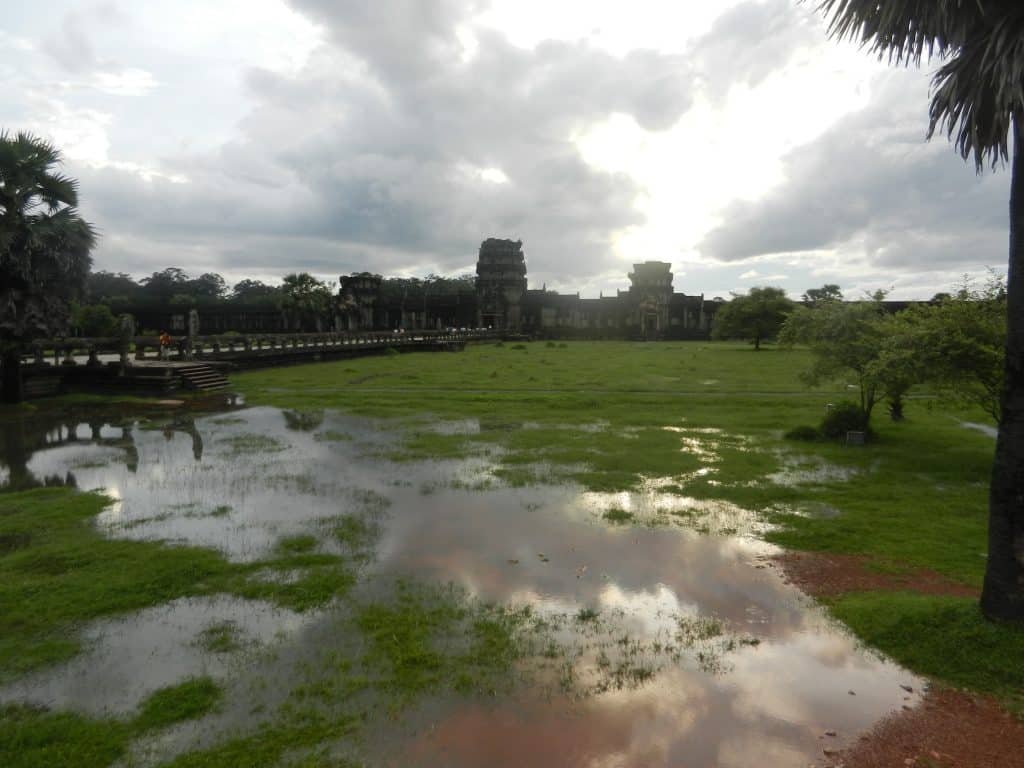
And Preah Ko, like all great ancient Khmer temples, was multisensory. Music and dances were regularly performed in them. Between the rituals, visitors would have heard the jungle’s constant hum of birds and insects, and these sounds would have blended with the vivacious carvings. I took the photo below at Angkor Wat in the late afternoon. The sounds of birds and insects mixed with the reflection of the sky after a monsoonal rain to create a feel of all-enveloping vitality.
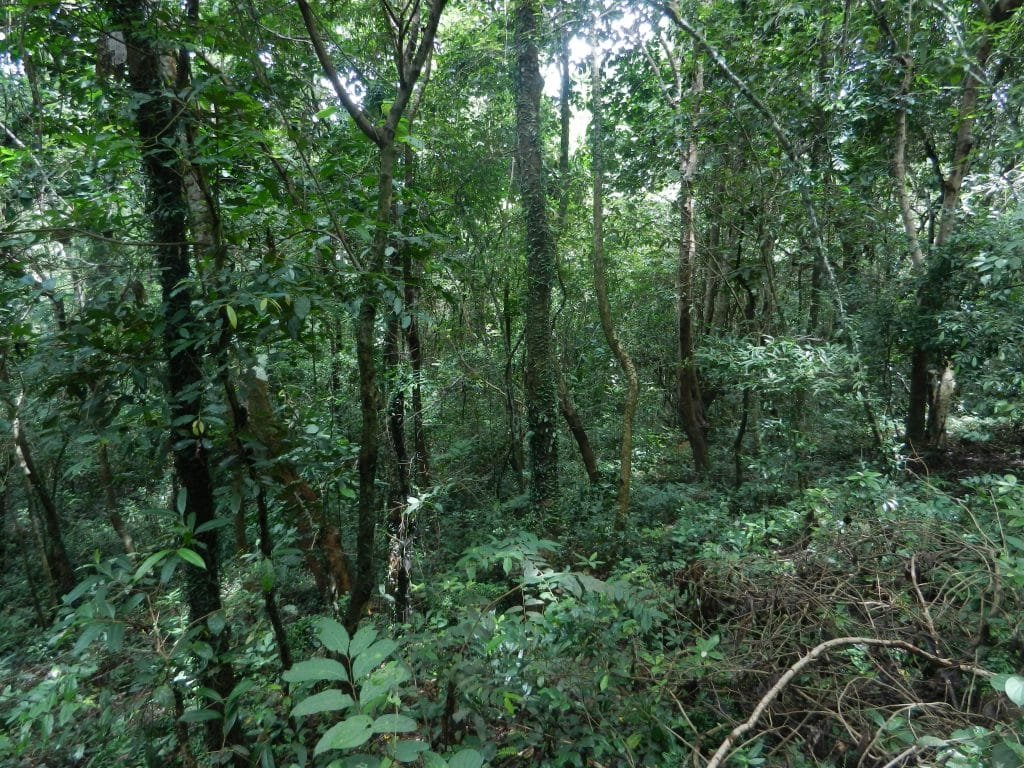
While descending the hill that an early Khmer temple, Phnom Bakheng, rises on, I became captivated enough by the loud mixture of birds and crickets pervading the trees and bushes to stop and listen. As they chirped, the dense canopy of leaves enveloped us. Instead of one sight or sound to focus on, there was an all-pervasive energy.
When I reached the bottom, a traditional band played stringed instruments and a hand drum. Their sounds were as energetic but more ordered, as though the forces of nature were made refined and mystical.
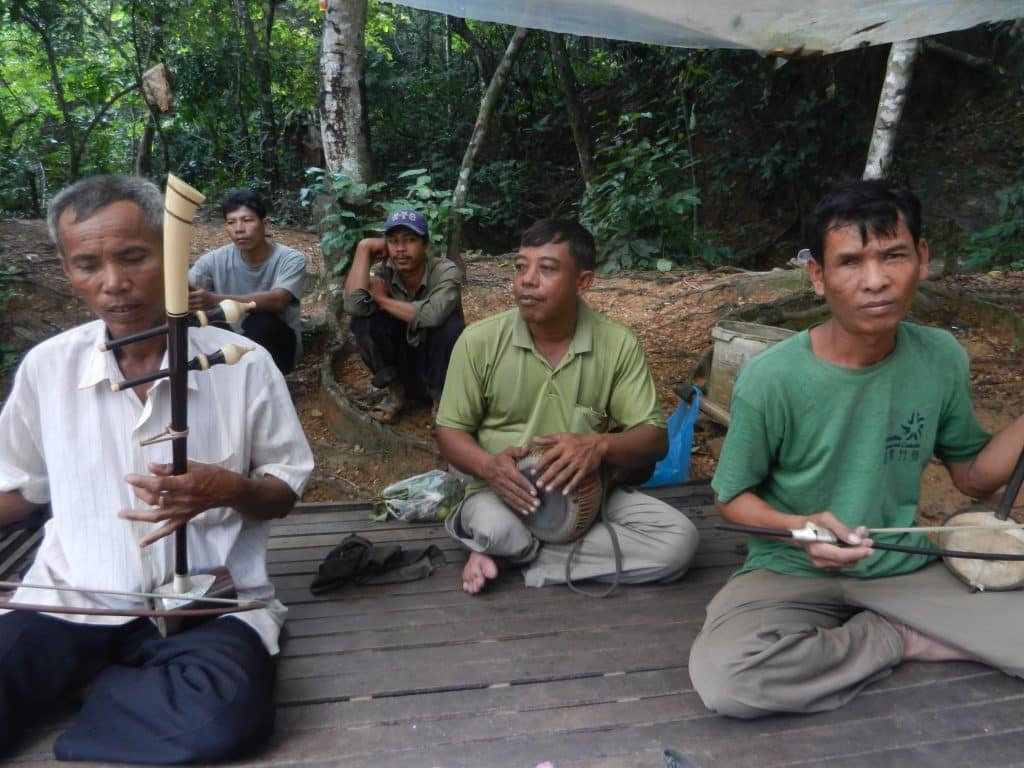
Ensembles like this performed in the courtyards and open pavilions of ancient temples and palaces (they were depicted in some temples’ friezes).
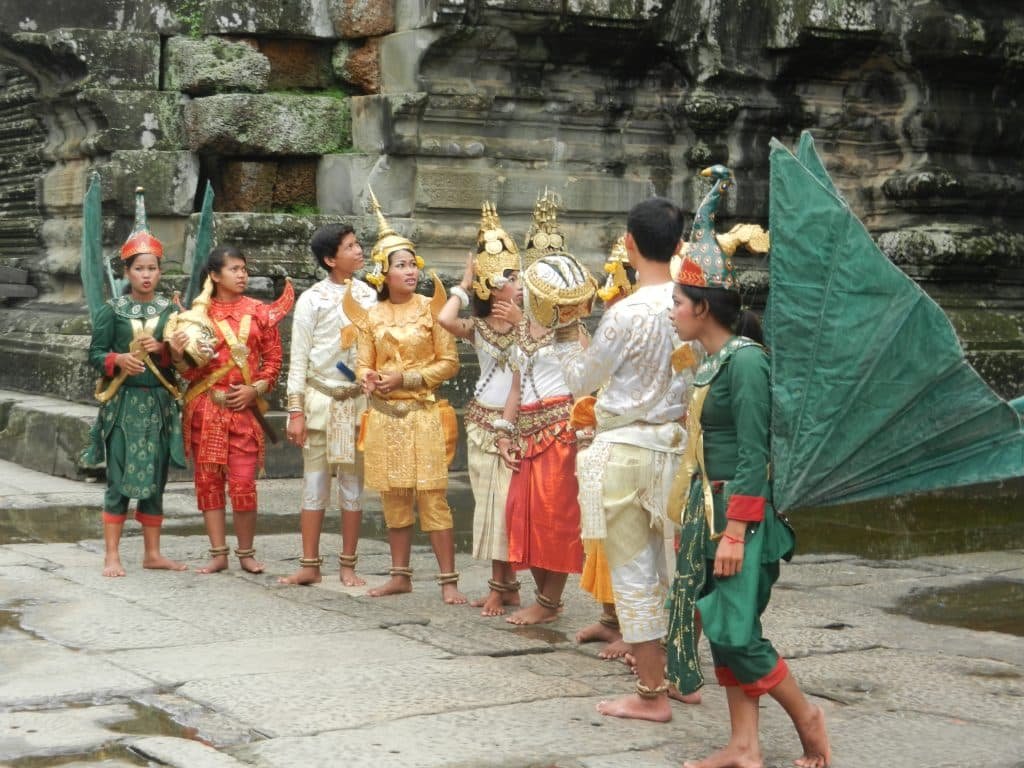
Musicians that the friezes represented probably accompanied dancers who were enacting rituals to bring rains and commune with ancestors of royals and with other spirits. The dancers would have added more refinement to the vigorous mixtures of impressions in and around the monuments. Paul Cravath, in Earth in Flower, wrote of another idea which the symmetry of the temples might have expressed: male and female energies balancing each other and encouraging rains and crop fertility—he felt that the dances embodied this harmony (you can see a way that dance was used here).
But ChatGPT mentioned nothing about these characteristics of Preah Ko. It instead sounded like a tourists’ guidebook which gave only standard information.
ChatGPT chooses its words based on probabilities. It scans all the content online and ranks words according to their frequency of following the word or phrase that was just written. It sometimes selects a word with a lower probability to avoid being too mechanical. 0.8% has been found to somehow make the text seem more lively. But it still selects the words according to what is already published online and usually according to the highest frequency of occurrence. Topics that are under-represented in the digital world don’t get well represented by ChatGPT, because it’s biased by the content that’s already in it.
So ChatGPT didn’t come close to explaining what Preah Ko really is. What makes it a seminal art work? What inspired it? How did people experience it? Other cultures’ monuments and art works reflect their unique and multidimensional ways of experiencing the world, including Egyptian pyramids, Chinese temples, and Christian churches. All of these were created in cultures with ancient histories, unique ways of perceiving and thinking, and natural environments. Most of the thousands of cultures in the world are under-represented by AI, which his biased toward the modern West.
So instead of passively accepting what an AI system initially says, ask it more questions. You can give it many prompts to try to unpack more meanings, including:
- That’s not deep enough. Please tell me more.
- Can you give me an alternative perspective?
- What are the best books about (the topic in question)?
- What does (such and such book) say about (the topic in question)?
- Please compare X with Y (e.g., Preah Ko with Borobudur, or My Son).
- Please compare it with Chinese (or Indian, or Western, or African) culture.
- Please critique your answer. What are its shortcomings? What are its biases? How can it be improved?
Keep asking it out-of-the-box questions so that it compares multiple perspectives. Instead of being passive recipients of content it gives, we can engage with it in romantic dialogs that can uncover ever more facets of the topic and connections with other topics.