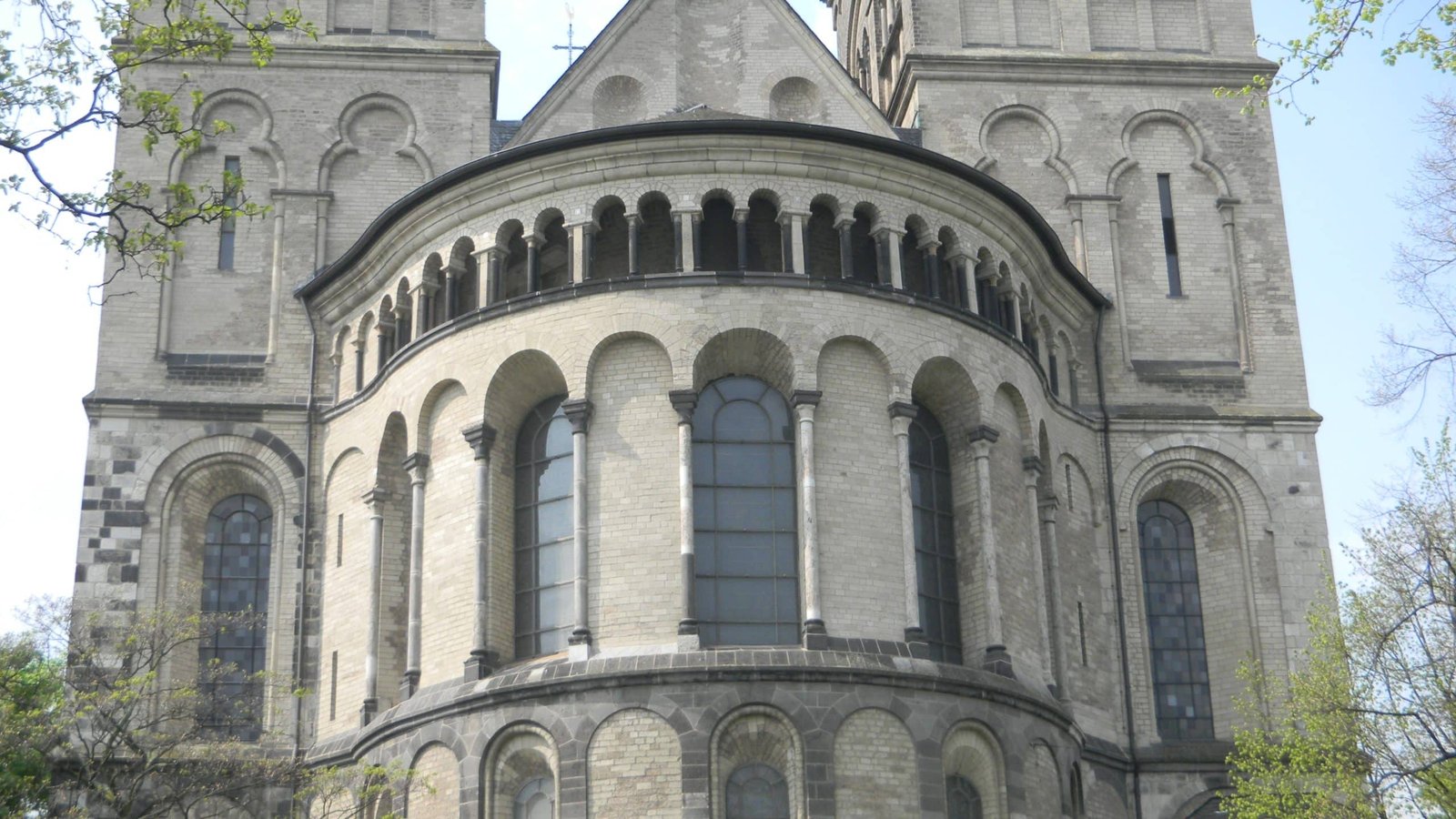
Germany created many of the best examples of Romanesque architecture. She stuck with the forms while people north of Paris developed Gothic Style and gave us many buildings to savor. Several of my favorites are in Cologne.
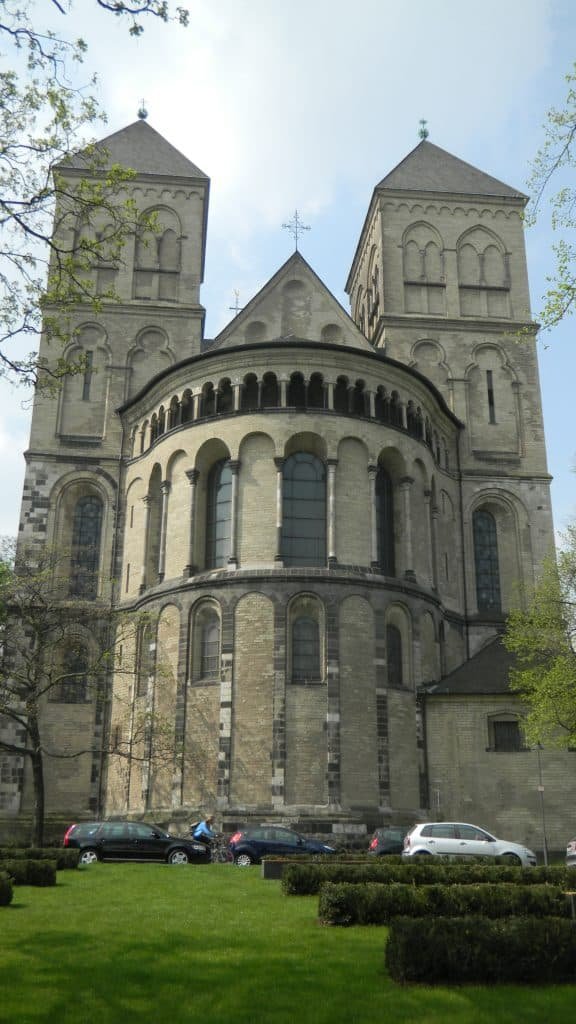
The stately building above is St. Kunibert’s church. It’s the northernmost Romanesque church in Cologne. It’s on the Rhine, and the facade you see faces the river. So people who sailed into this busy commercial hub immediately saw these ordered forms. They showed that Cologne is a city of law-abiding Christian merchants. This facade also hinted at other gems in one of Northern Europe’s most prosperous medieval cities.
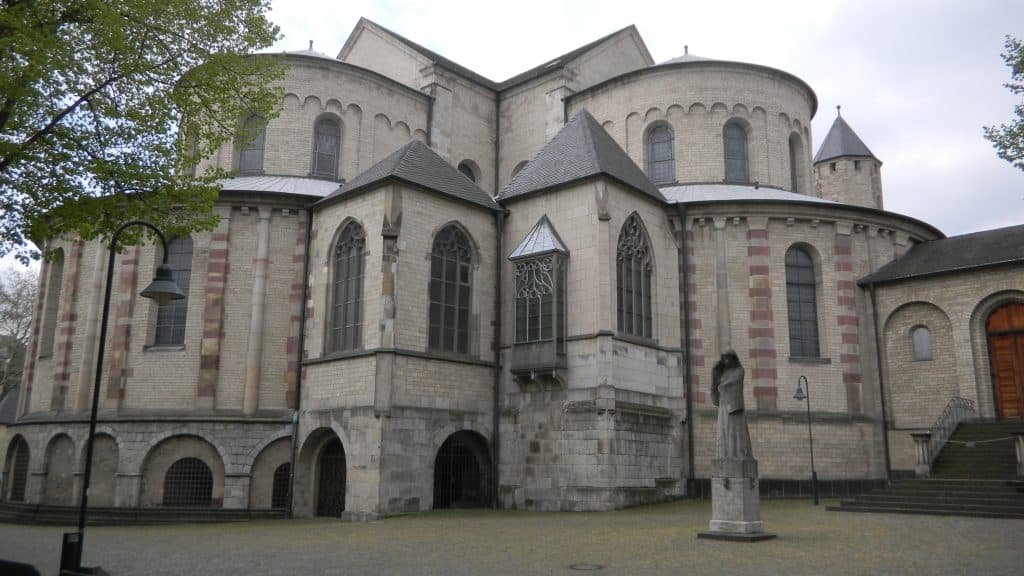
The church you see above is St. Maria im Kapitol. It had been a women’s convent since the early eighth century, and the building in the photo was constructed in the 11th century. It’s one of my all-time favorite Romanesque churches. I found its cloverleaf-shaped choir especially savory. You can see the top part of the clover on the left side of the above photo–the semi-circular apse, which is at the opposite end of the entrance. On the right side is one of the two semicircular wings.
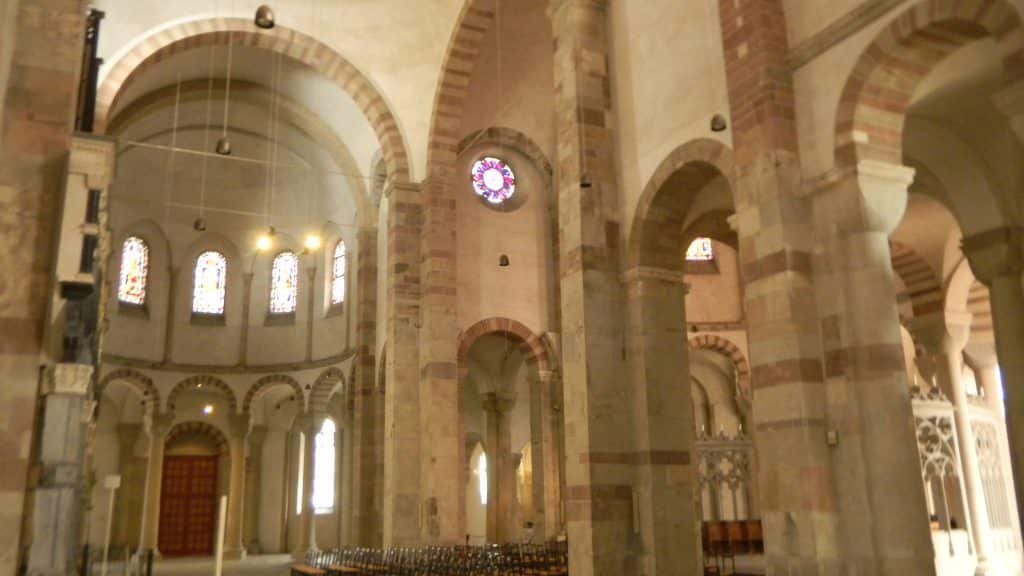
I took the above photo within the wing on the opposite side. So you’re looking at the inside of the wing that you see in the prior picture. The apse flowers on the right side.
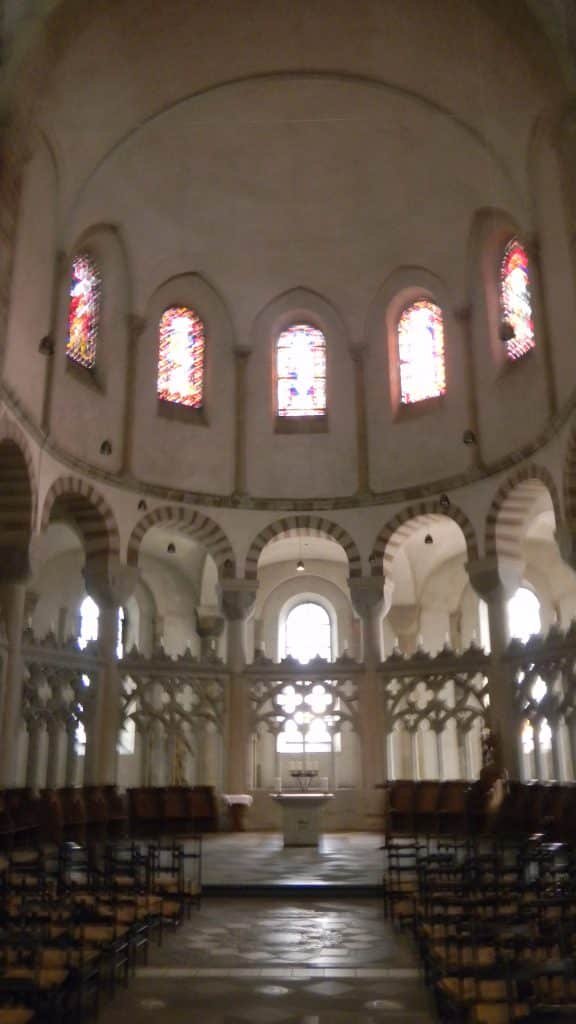
And above, you can view the apse–Romanesque perfection (the ornate Gothic ambulatory around the bottom was added later).
The builders of this church modeled the cloverleaf design on the one in the Church of the Nativity in Bethlehem. As 11th century Europe grew economically, more people made pilgrimages to the Holy Land. This design impressed them so much that they used it as a model for universal order after returning home. It’s simple, proportioned, stately, and graceful.
This idea of the world being unified through simple static geometric forms was common in ancient Greece. Europe used it again as it emerged as one of the world’s great civilizations in the Middle Ages.
Another example is the basilica of St. Gereon in Cologne.
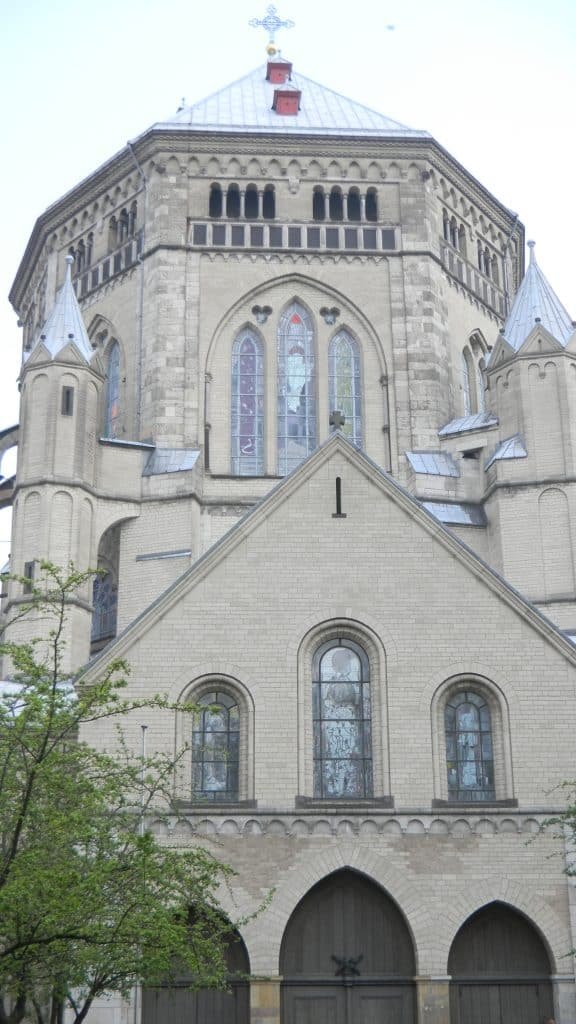
St. Gereon is supposed to have been a Roman soldier from Egypt who bas beheaded in the third century for refusing to sacrifice to pagan gods for victory in battle. Like the story of St. Ursula, which was also central in medieval Cologne, Gereon’s story grew bigger in the Middle Ages–people believed that he died with many martyrs. The beheading might have happened at the site that the first church was built on in the fourth century (it wasn’t a basilica until 1920).
But though the merchants in medieval Cologne admired St. Gereon for his will to resist, the basilica’s nave combines Christian and ancient Roman art so well that I found it majestic.
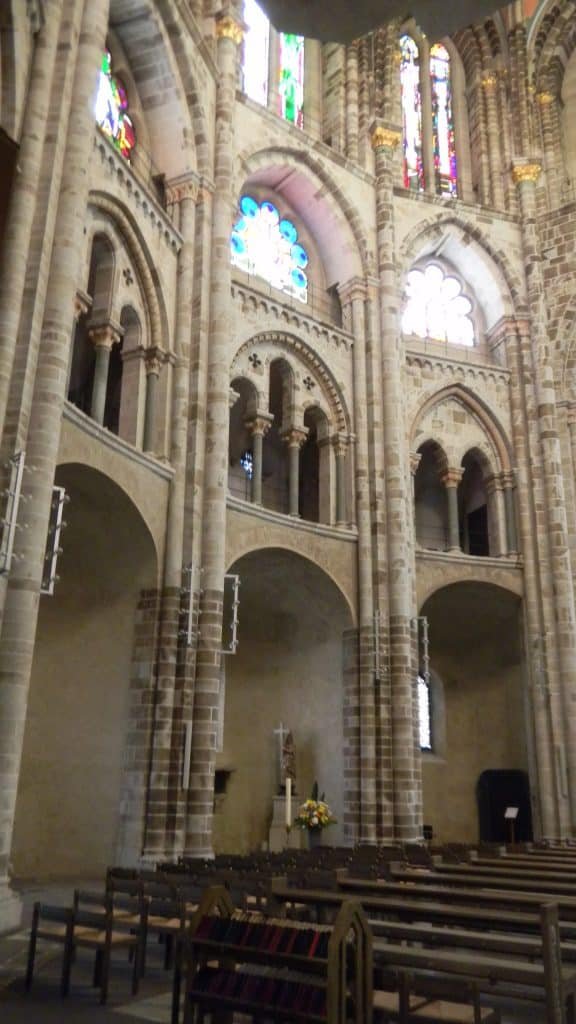
The nave has 10 sides, and it soars to a spectacular vaulted ceiling, which was the largest dome built between Constantinople’s Hagia Sophia in the sixth century and Florence’s cathedral in the 15th century.
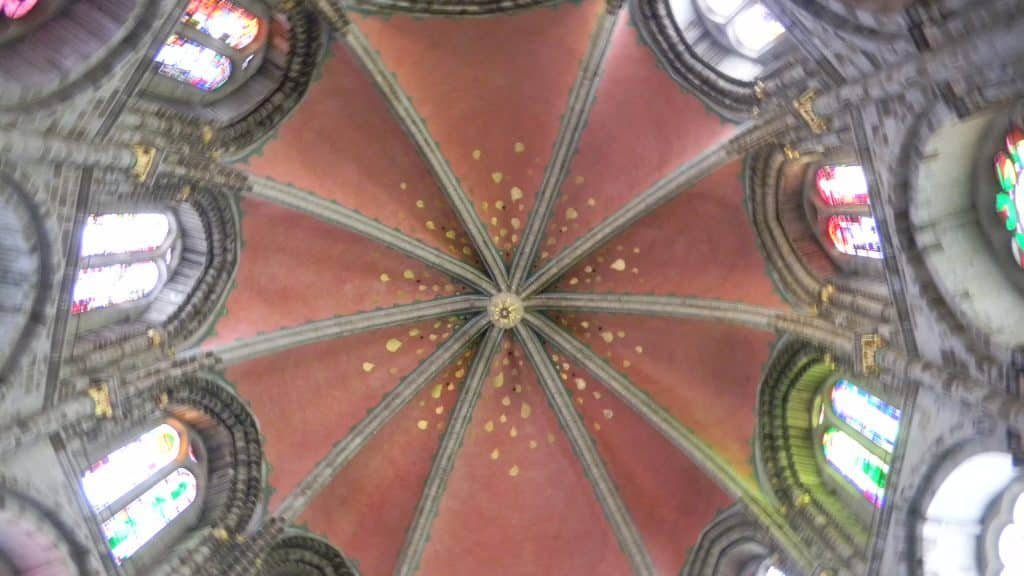
Why this unusual form? It was built on the walls that ancient Romans constructed. So this stately geometrical pattern from the ancient West shaped the medieval church.
This nave has two levels. The first was begun in Roman times and added to in the late 11th century. The upper contains the soaring Gothic windows, and its vault was completed in 1227. So the ancient architectural form shaped the nave’s flight into the heavens.
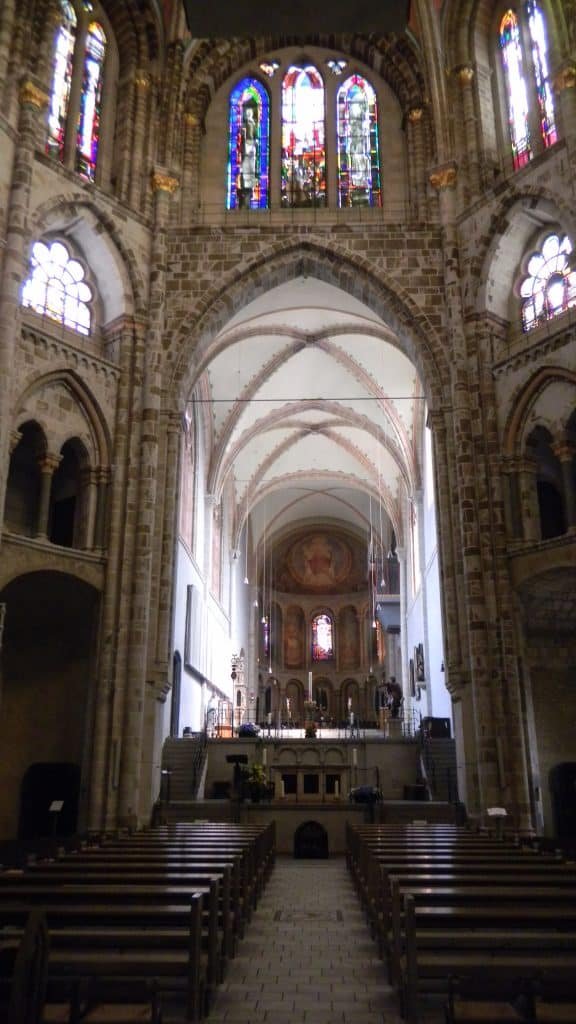
The above shot looks through the nave and towards the choir at the far end, which is in equally stately Romanesque forms.
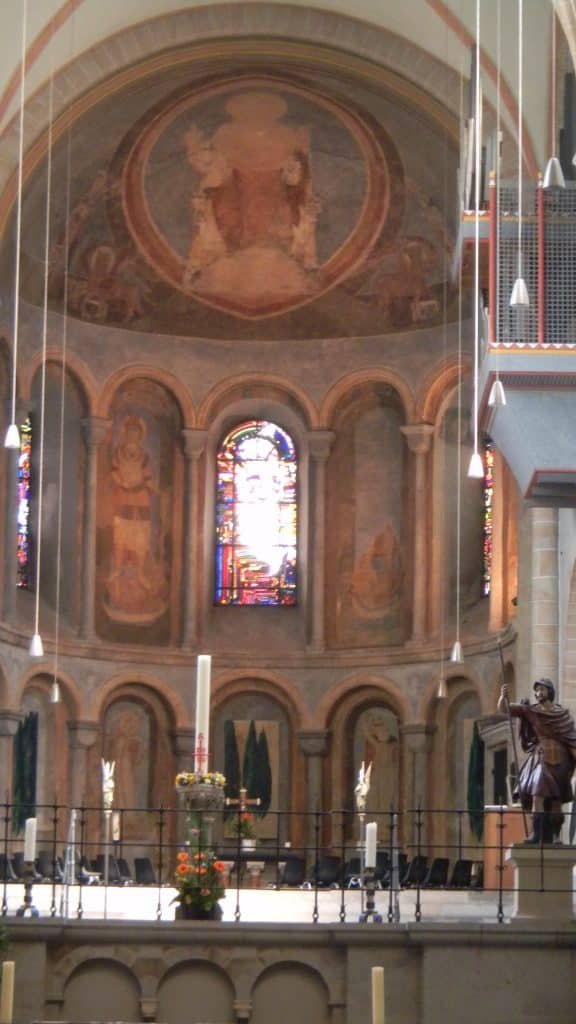
So the basilica reaches for the sky, but with static forms from ancient Greece (colonnades) and Rome (arches) that are arranged in lines. Gothic architecture also stressed linear arrangements of proportioned geometric forms.
You might think that there’s nothing simpler than a line, an arch, or a cloverleaf. But these seemingly basic forms have blended with other ideas that Westerners have emphasized. A seemingly simple idea is characterized by the whole culture and its history. You can see interesting contrasts in Chinese culture and Khmer culture.