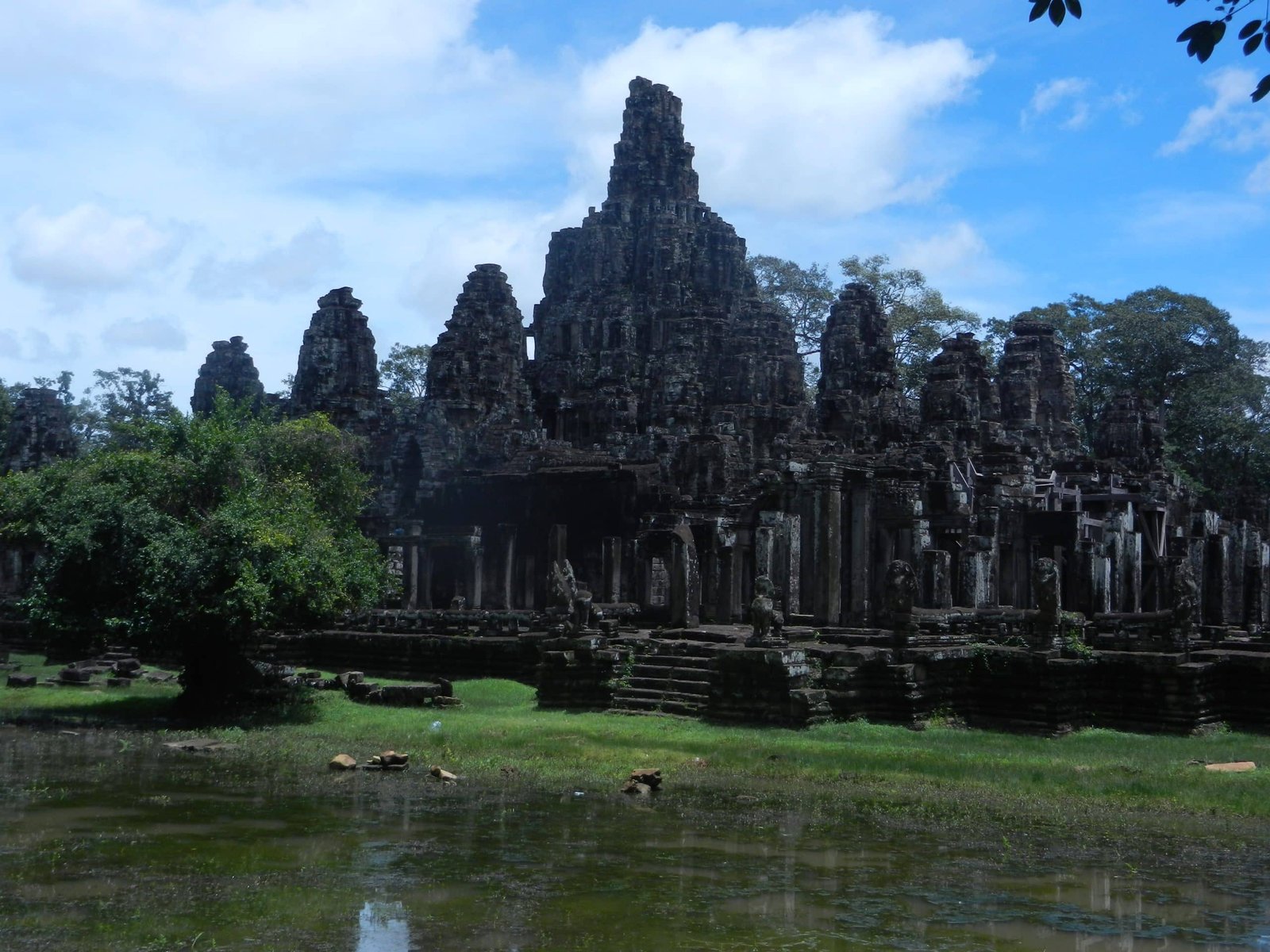
Similar things were happening in Angkor and Medieval Europe in the 11th century. Both lands were becoming more politically centralized under strong rulers who built symmetrical monuments. These buildings expressed the all-encompassing order that kings and religious authorities wanted to impose.
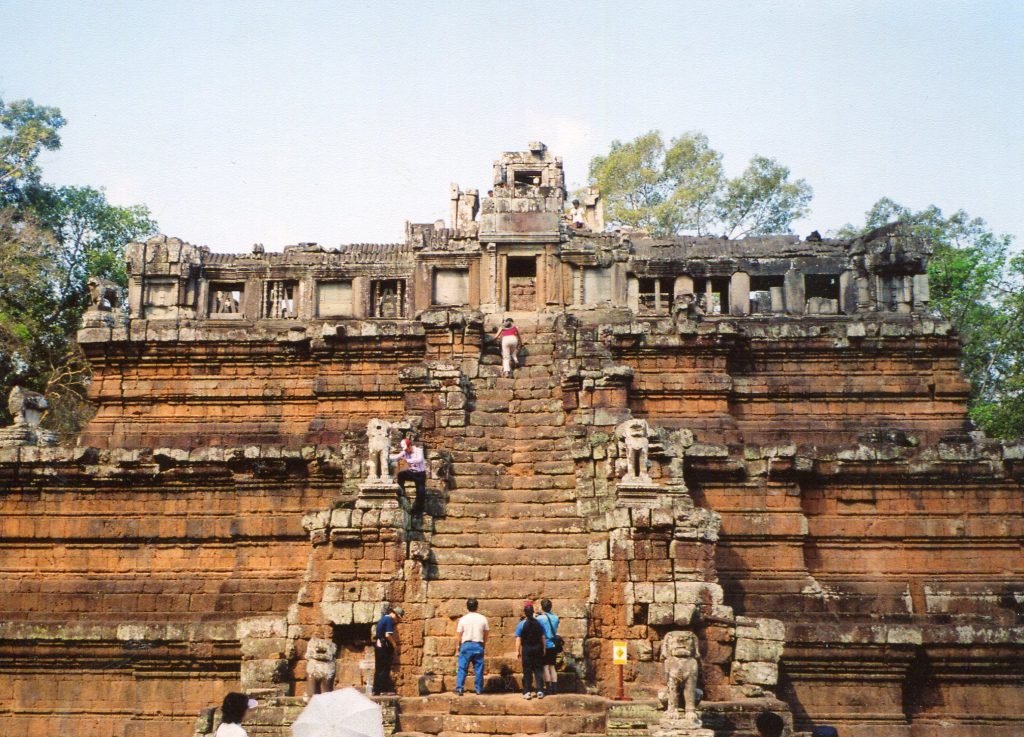
But the symmetries that 11th century Angkor and Europe preferred are very different. The forms that each society used to unify itself had deep cultural roots, and they’ll take you into two fascinating worlds.
In the above photo, we see the royal chapel that King Suryavarman I built in the middle of the palace. He extended the Khmer empire farther than any previous ruler had. But the symmetry of his monuments is much more ornate than the simple linear forms in Romanesque cathedrals.
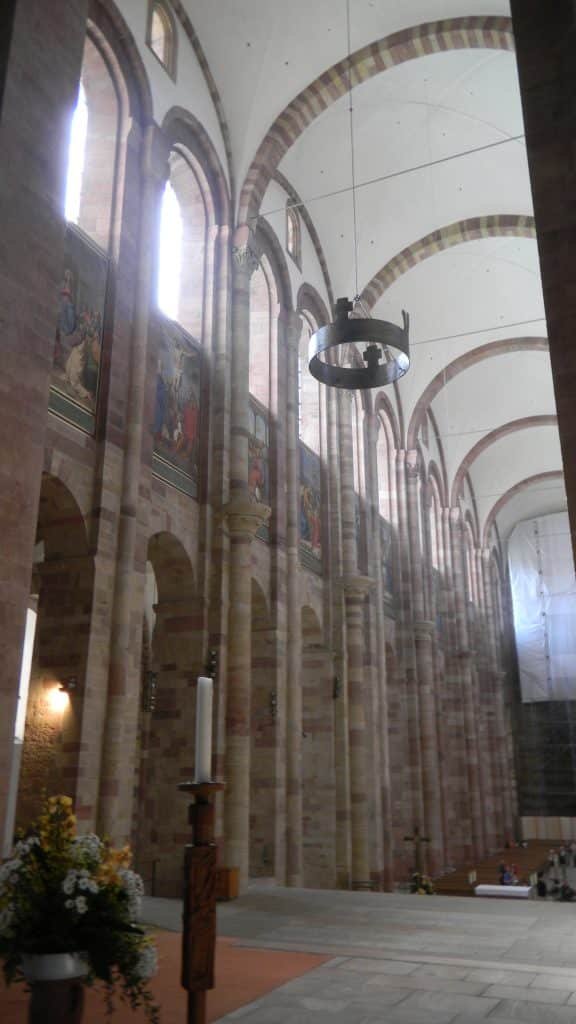
In the above picture of Speyer Cathedral, a monumental 11th century building that expressed political and spiritual unity in Germany, the columns are as simple and evenly spaced as they are in ancient Greek temples.
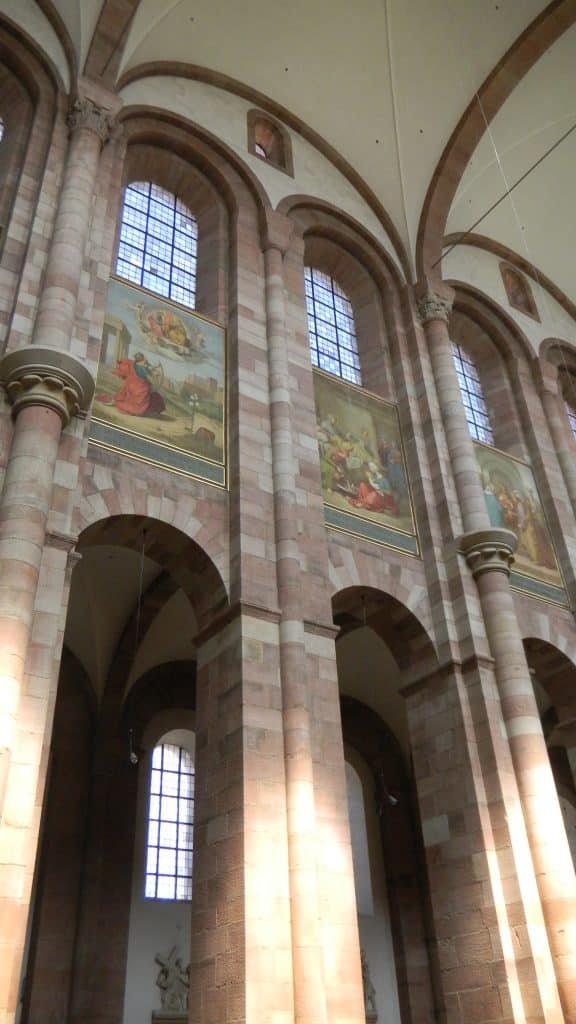
Simple Roman arches integrate them. What a difference from Phimeanakas and Ta Keo, another symmetrical monument that Suryavarman used to express the Khmer Empire’s unity:
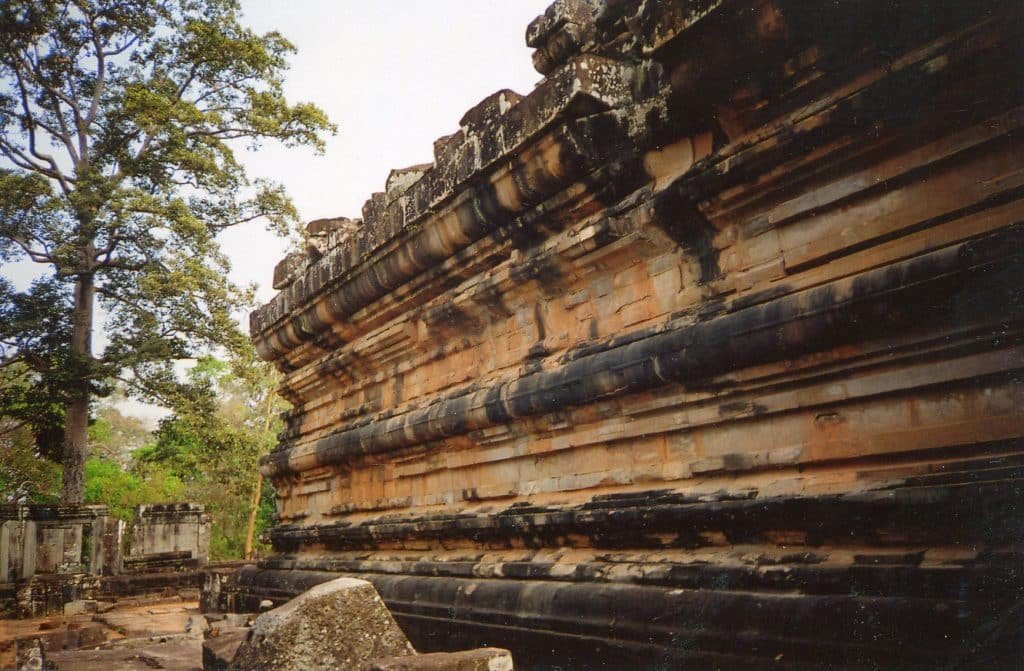
The hyper-ornate form of Ta Keo’s base (above) is as far from Romanesque’s pure linear forms as you can get.
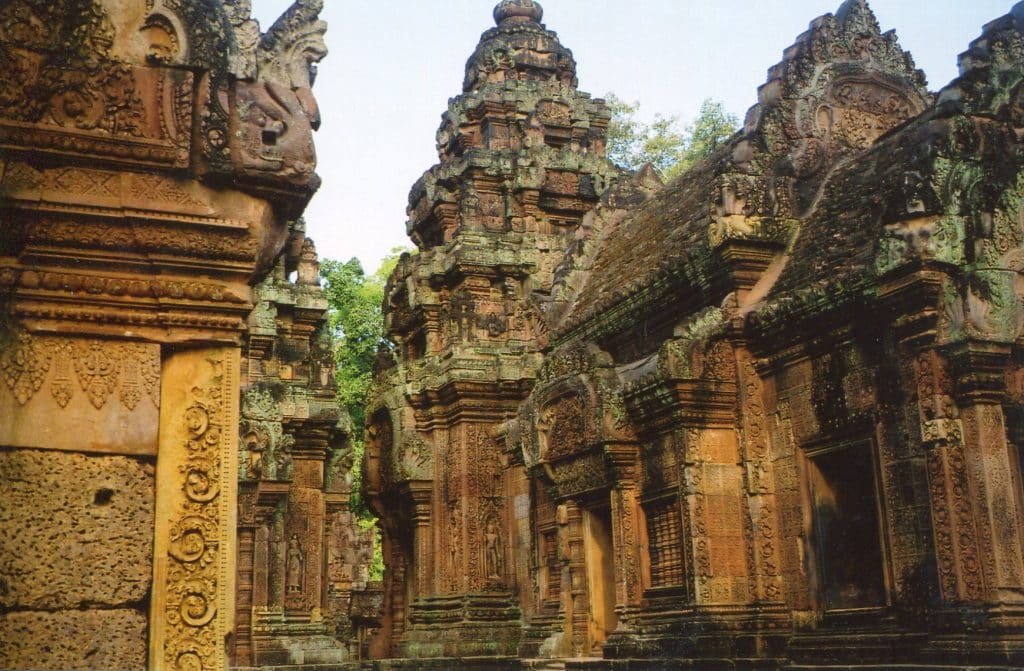
Banteay Srei’s inner shrines (above) are equally ornate–
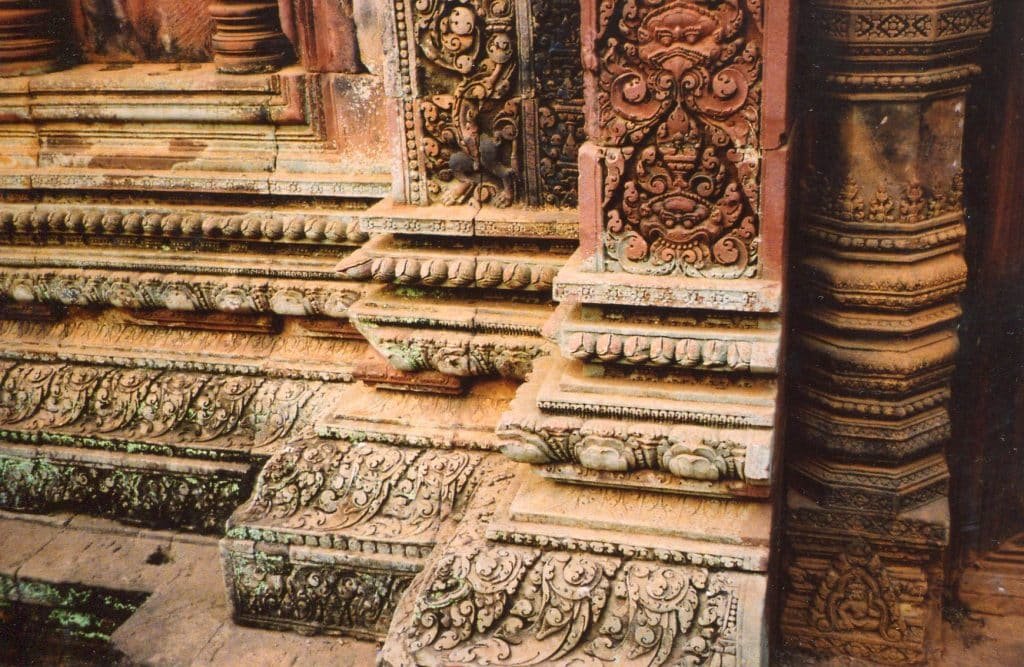
from ground to crown.
I found this opulence and the West’s emphasis on simple forms equally beautiful. But why did Europe and the Khmer Empire think of symmetry in opposite ways in the 11th century?
1. The West had an already ancient tradition of favoring the simplest and most linear forms to unify the world.
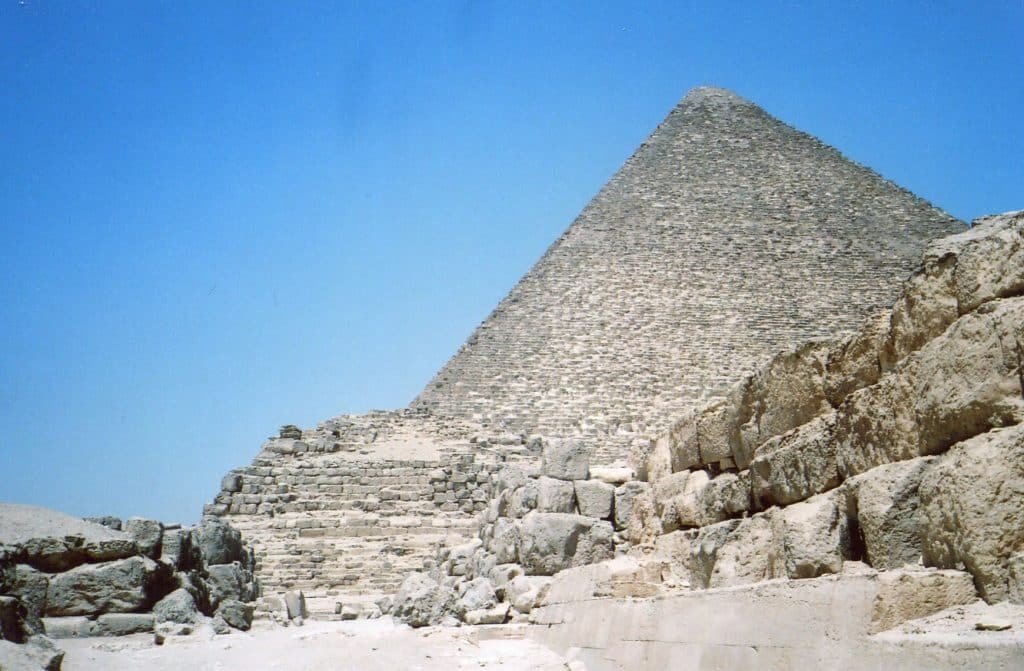
The Great Pyramid has been a model of perfection for the West for 4,500 years.
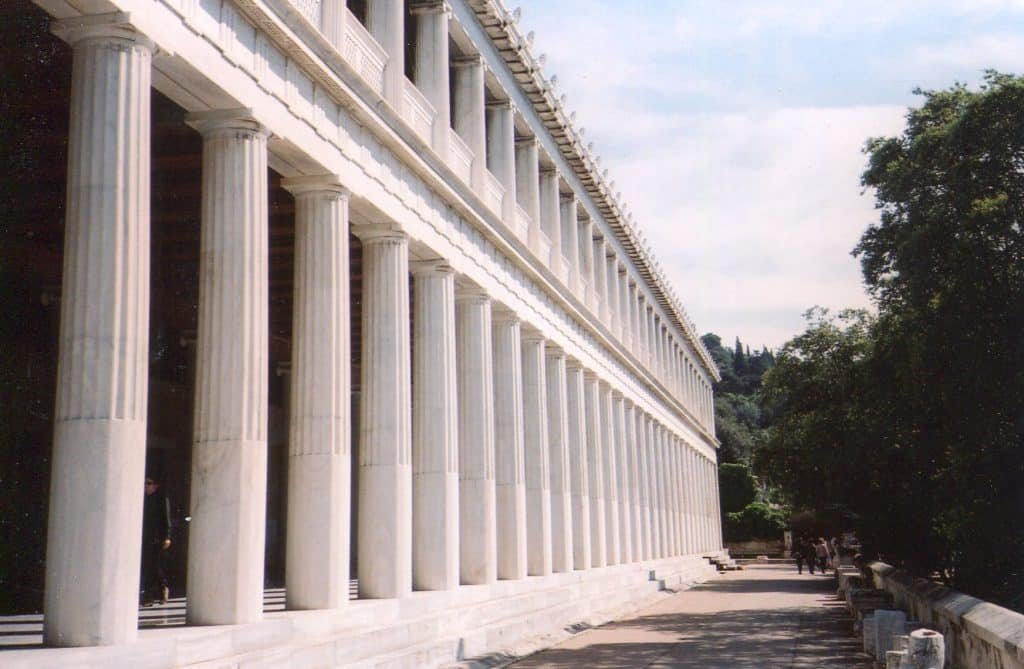
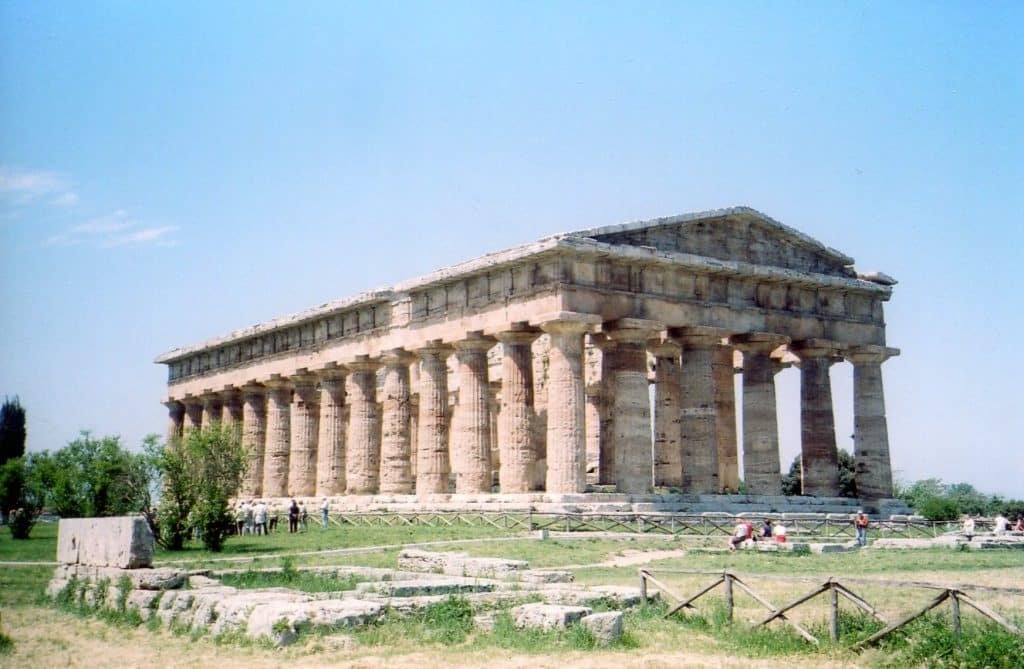
Ancient Greek temples and stoas have also been models of perfection. So the builders of Romanesque cathedrals were resurrecting ancient ideas that Westerners have emphasized since they began to establish large states.
2. This focus on a few simple forms meshed well with Christian thought. Christian thinking has usually been organized around small numbers of basic aspects of reality. The Old and New Testament, the Trinity, and the four evangelists easily lent themselves to simple architectural forms. The north sides of cathedrals were often associated with the Old Testament, and the south with the New–the sun emerges from the south in spring, and its renewal was associated with Christ in chilly Northern Europe. Each corner at the base of domes sometimes had a painting of one of the evangelists.
3. The Khmers had inherited much art from India, which has usually reveled in an abundance of forms and huge numbers of gods.
4. The Khmers didn’t stress a timeless and universal system of concepts in their theology. The Khmer king identified himself with a Hindu god (usually Shiva, but Vishnu at Angkor Wat), but many other gods and nature and royal spirits made the pantheon as crowded as India’s. The king could incorporate any deities he fancied without an independent church to challenge him.
5. The tropical natural environment, with its heat and monsoons, encouraged people to think that the key patterns that order nature are dramatic gushes, rather than the measured changes that Greek temples express.
6. The Khmers already had a rich network of ideas and art forms to use before the 11th century–you can explore more of it in another article.
So Europe’s and Khmers’ ideas of symmetry blended different concepts, and each culture’s mixture had many facets and was already ancient. The most basic forms that a culture organizes its thought around actually have limitless depth when you examine them.
You can explore another unique blend of concepts in the idea of symmetry in Chinese culture.