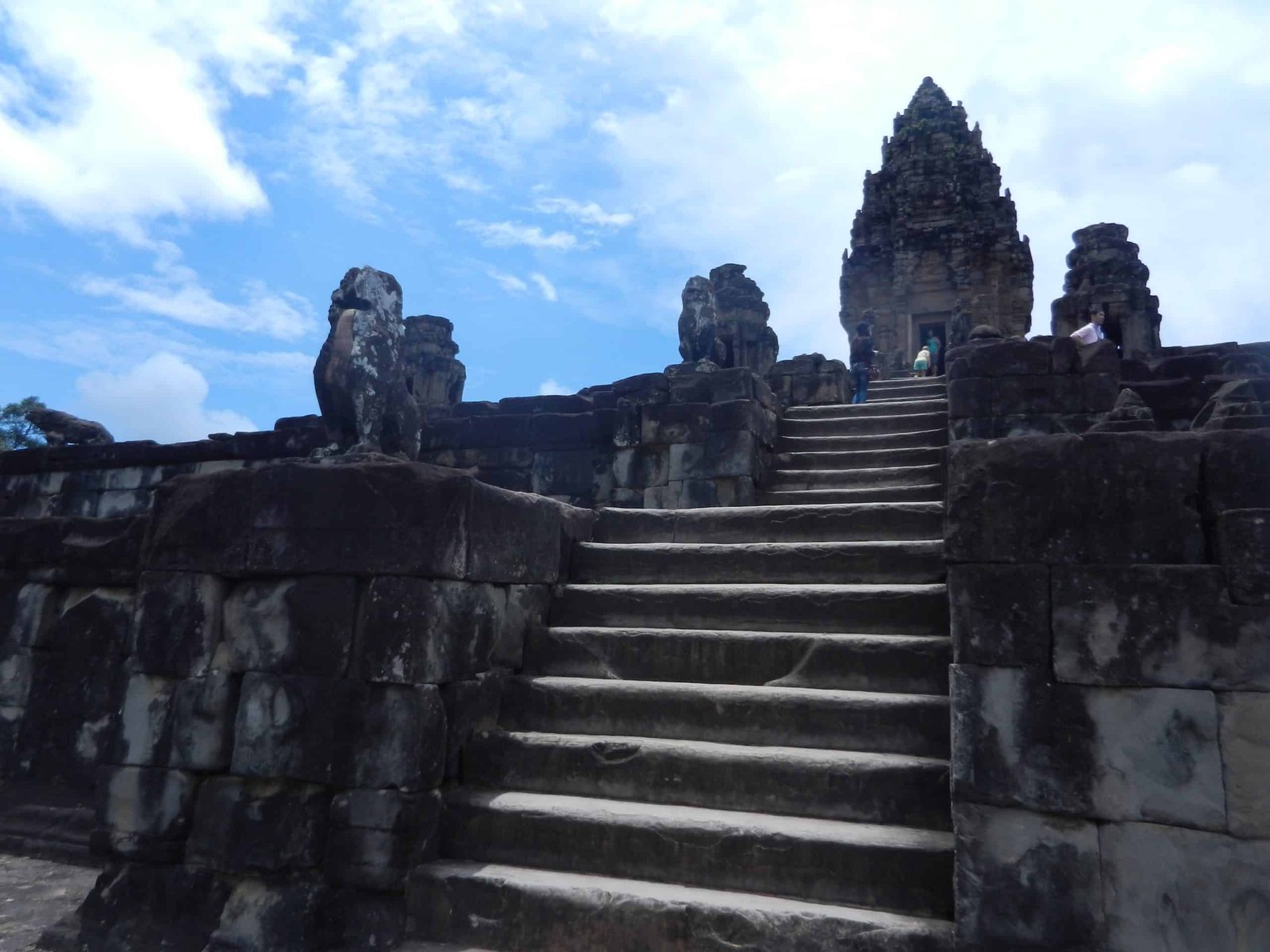
The Bakong and Preah Ko were the first two large temples that the Khmers built on Angkor’s plain. Erected about 250 years before Angkor Wat, they set standards for all later temples at Angkor, which influenced nearly every temple that was built there over the next 500 years. Yet only a small percentage of tourists visit them. Now that Khmers had created the foundation of their empire around Angkor, they began to build big to impress the people who had moved in to take advantage of the area’s fertility to grow rice and harvest Lake Tonle Sap’s fish. In the late ninth century, the Khmers created architectural traditions that lasted throughout Angkor’s history. We’ll explore the Bakong in this article.
Its builder, King Indravarman I, spearheaded a construction program that became the main prototype for all later kings. Jayavarman II previously laid the political and spiritual foundations for the Khmer empire (see What Wat? How Was Angkor Wat Created), but Indravarman built things that we can still gawk at today. He created much of the Khmer empire’s initial wow factor.
In addition to being a key predecessor of Angkor Wat, the Bakong is an interesting contrast with Egyptian pyramids. Both purported to lift the royal state cult into the heavens. The Bakong has these characteristics:
1. Indravarman built it with sandstone in 881. He probably constructed it over an earlier temple.
2. It represented the cosmic mountain, as Angkor Wat’s center later did. A linga for Shiva presided at the Bakong’s summit.
3. The Bakong is five nearly square levels of sandstone on top of each other. They represent different levels of existence. The realm of nagas (magical snakes that live in underwater kingdoms) is the lowest, and the world of the maharajas (great kings) is the highest. So an ascent to the top represents a spiritual journey (the tower at the top, in Angkor Wat’s pineapple style was built in the 12th century).
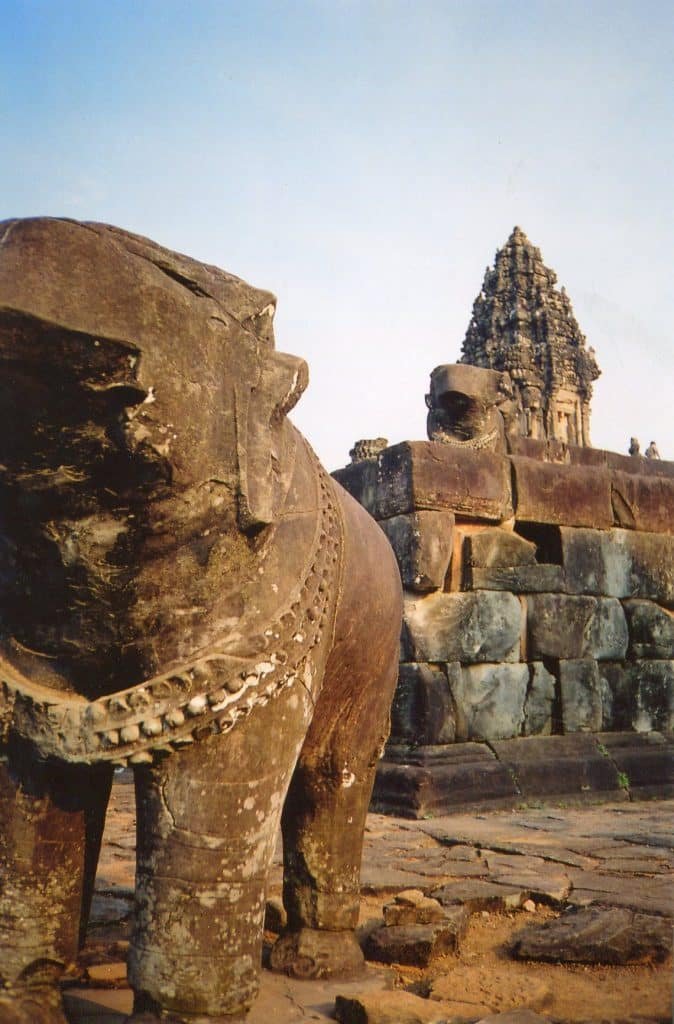
4. The Bakong is symmetrical. A stairway ascends each side, and sturdy elephants guard the corners. Khmers loved symmetry. They already had emphasized it at the old Chenla capital Ishanapura. They would make it stunningly more complex at Angkor Wat and the Bayon, but the Bakong already mixed the combination of symmetry with ornate outer forms and lush vegetal carvings. Ancient Egyptians and Greeks erected monumental buildings with simple forms and clear lines, but Khmers loved to embellish.
5. Eight brick shrines were built around the monument. Each housed a different murti (body) of Shiva. The five brick temples around the center are probably the survivors.
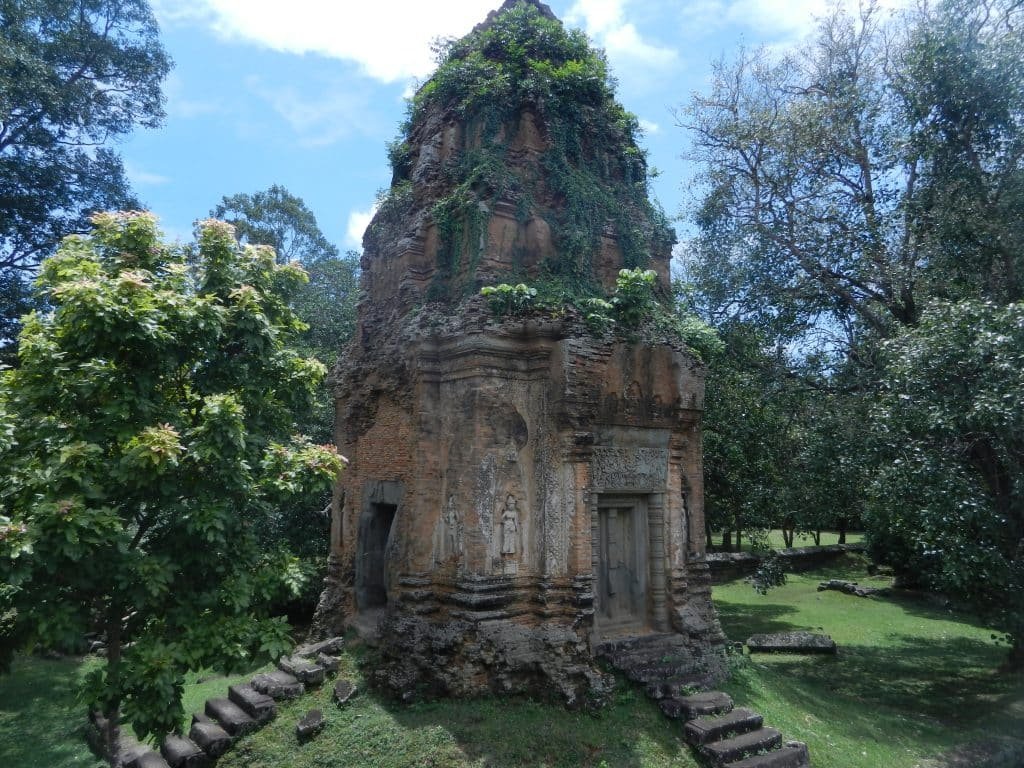
The elegant door posts, guardian statues, and lintels set examples for Khmer architecture for the next 500 years.
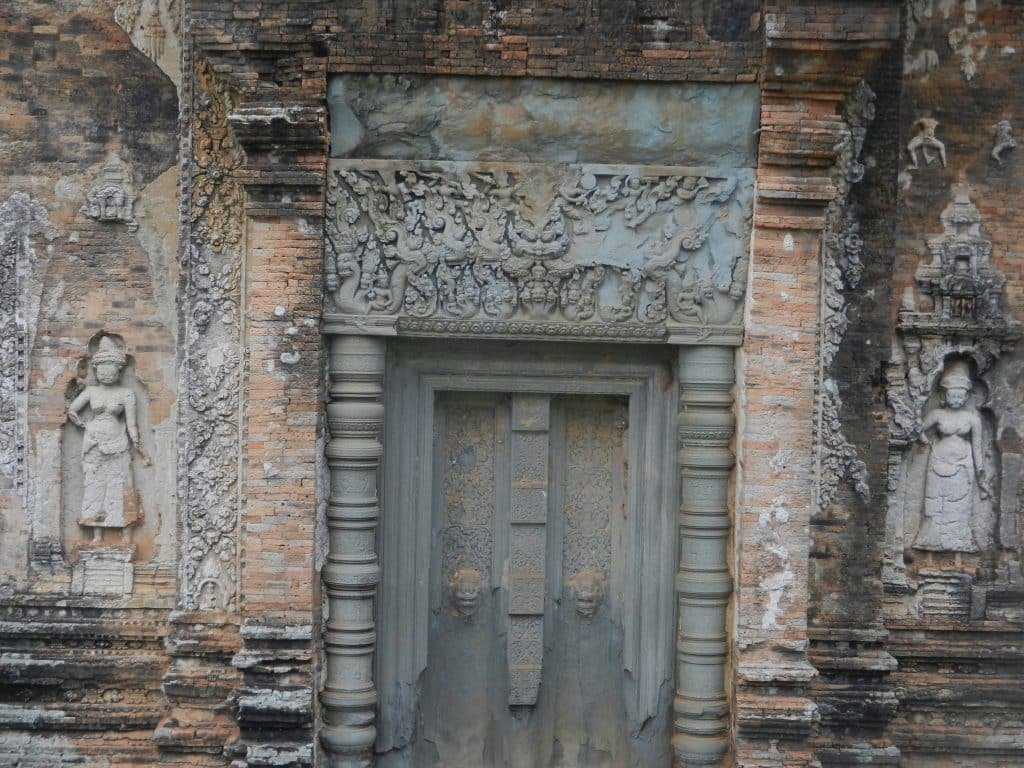
All three seem to project the animated power of the king of a great Southeast Asian state.
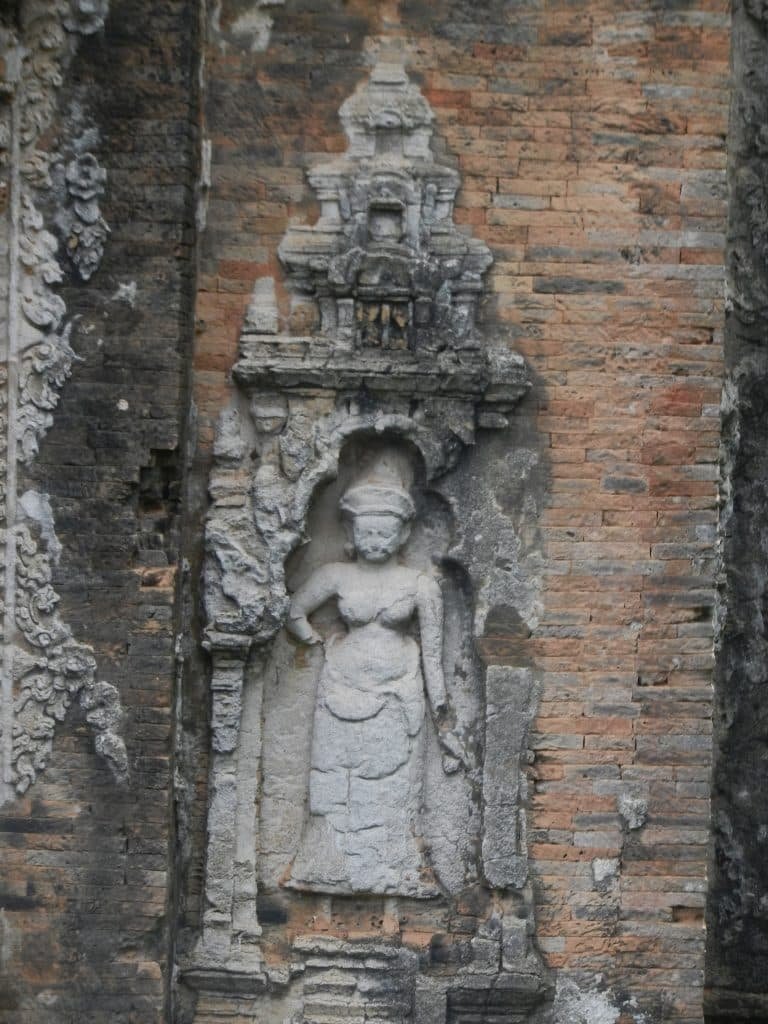
But their elegant forms balance it. They seem animated, and thus mirror the surrounding jungle that people settling in the area to grow rice needed to tame. Their equal refinement seems to render the animated power in the environment livable.
6. Several other buildings were constructed around the Bakong. Some might have housed ritual objects, and others could have been priests’ quarters. Some might sheltered pilgrims to the royal center.
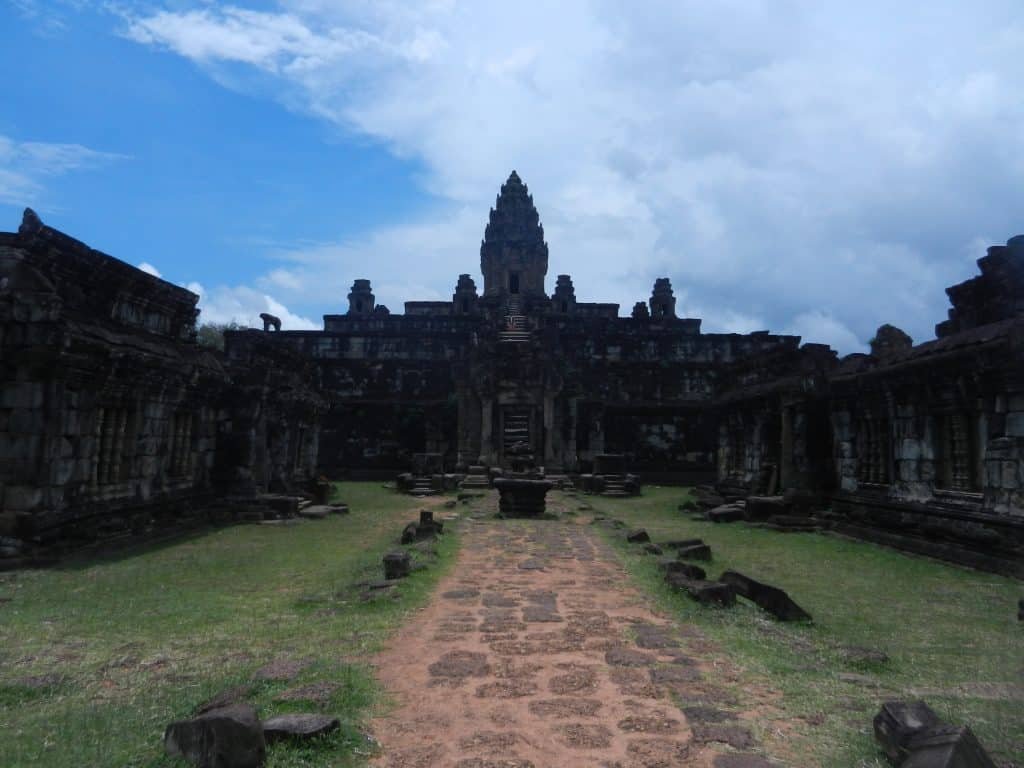
In the above photo, two are flanking me as I’m walking towards the main temple. This was an ideal space for formal processions with the gravitas of rituals that were supposed to keep the state in order.
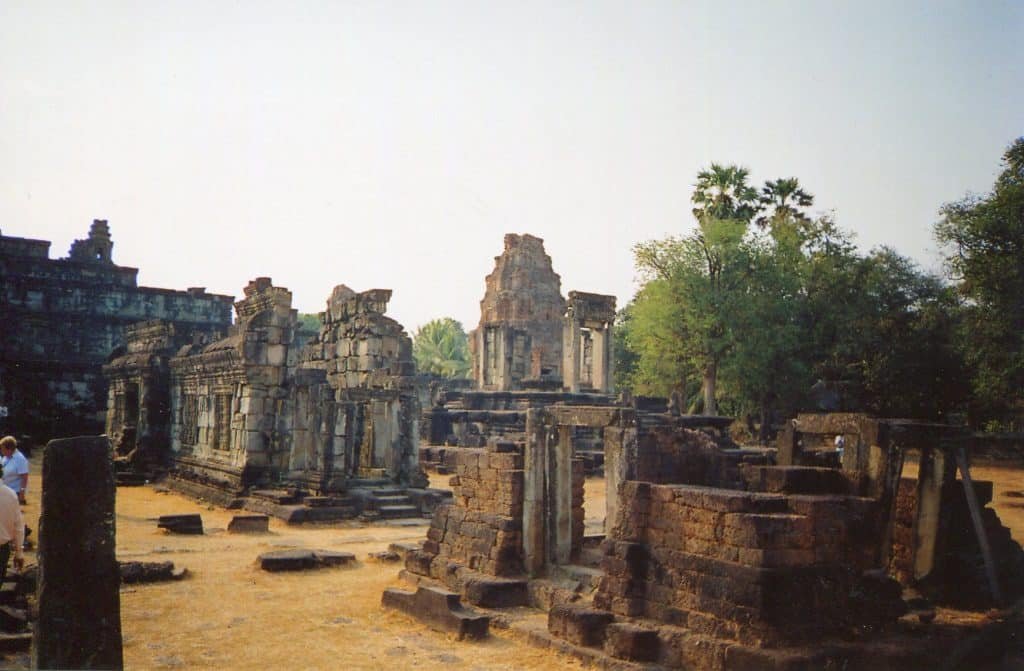
I’m looking a little to the right in the above shot.
These buildings were free-standing. Angkor Wat integrated all structures into one complex system of courtyards. But the Bakong’s buildings were still laid out on a symmetrical plan.
The drama increases as you reach the central temple and begin to climb its five cosmic levels.
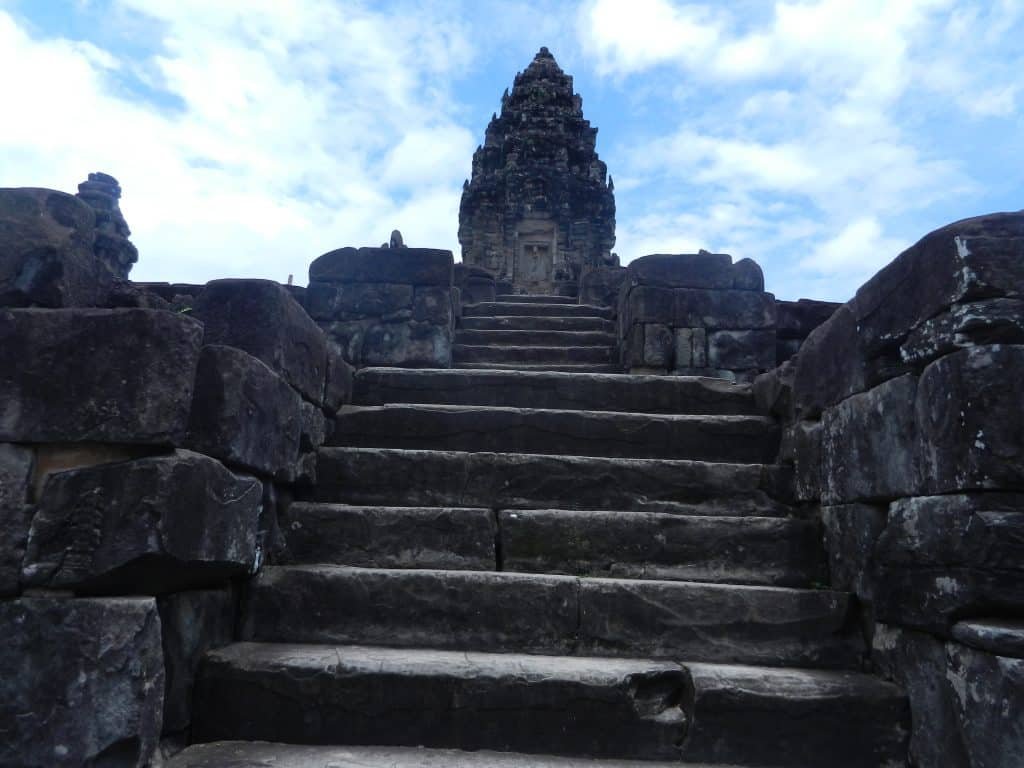
Each terrace has ample space for processions to harmonize the royal cult with all cosmic levels.
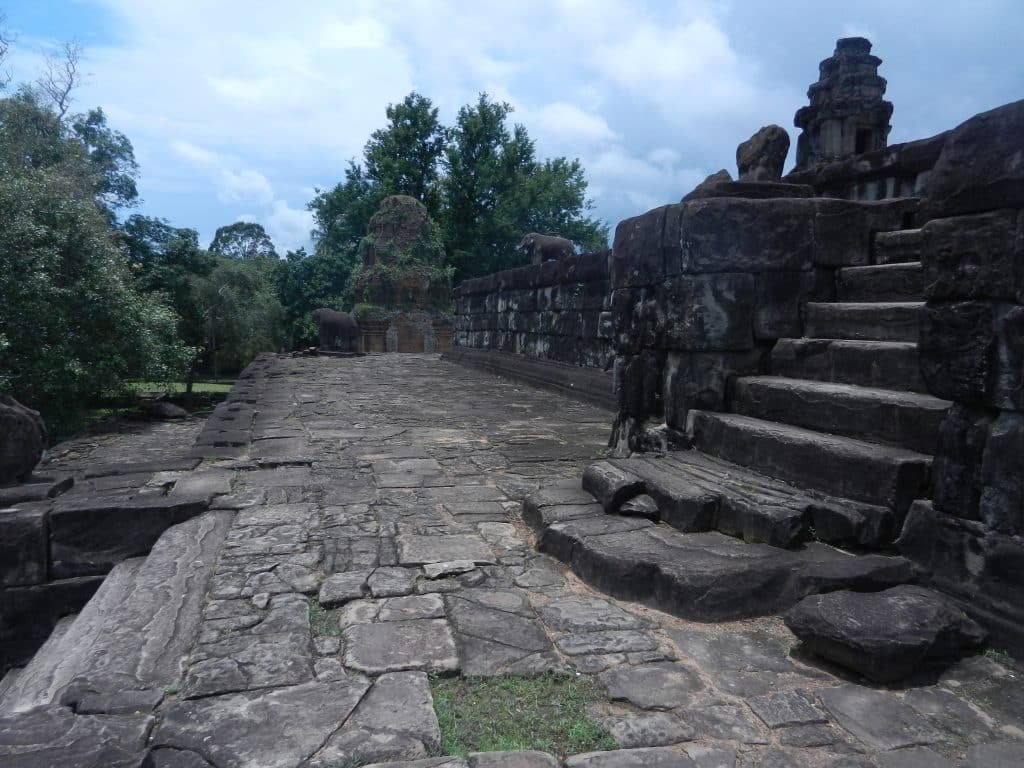
The top terrace is surrounded by carvings which were probably created later, in the 12th century, when Angkor Wat was built.
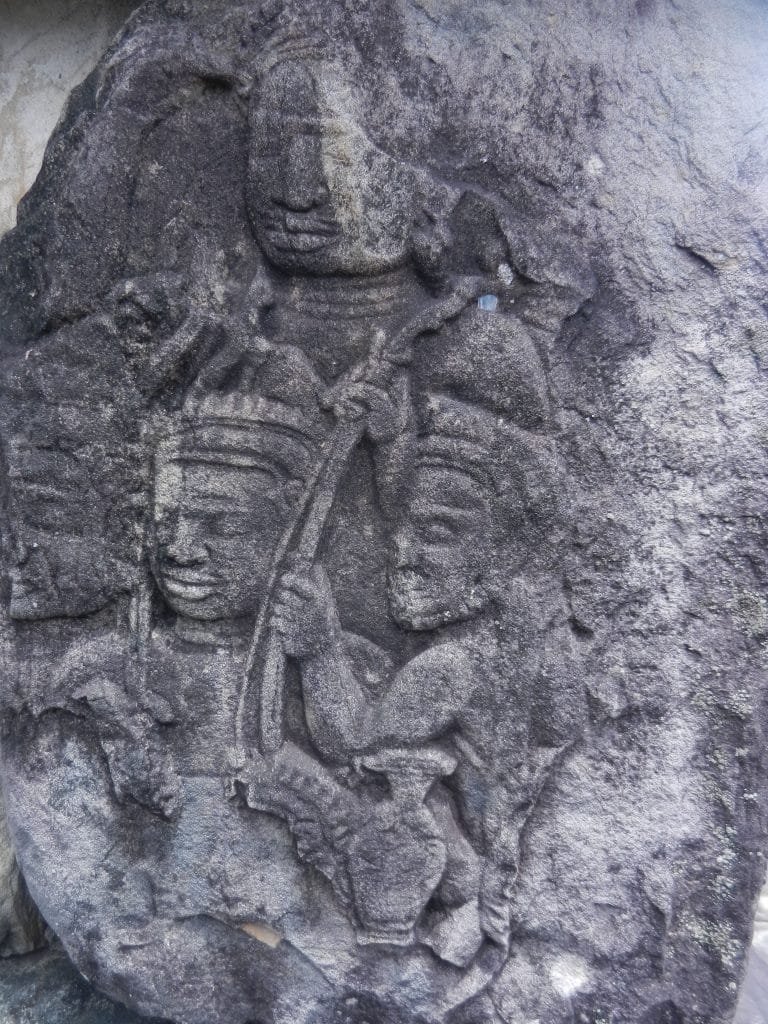
The person in the above photo is playing what appears to be a kse diev, which has a single string and half a gourd as the body. The musician moves the gourd against his own body to create sounds that are both animated and elegant. It’s very hard to play, but it has been making a comeback in modern Cambodia as music students want to preserve their proud Khmer traditions.
The sky was clear before I climbed the temple during a return trip so I didn’t carry an umbrella from my tuk tuk even though the rainy season was in full majesty. Dark grey clouds soon rolled in and the heavens were infused with the lifeforce that irrigated the rice fields that the Khmers initially created in the area in the late first millennium CE. How many priestly ascents up the great temples coincided with a sudden downpour? Ancient Khmers must have associated one with the other.
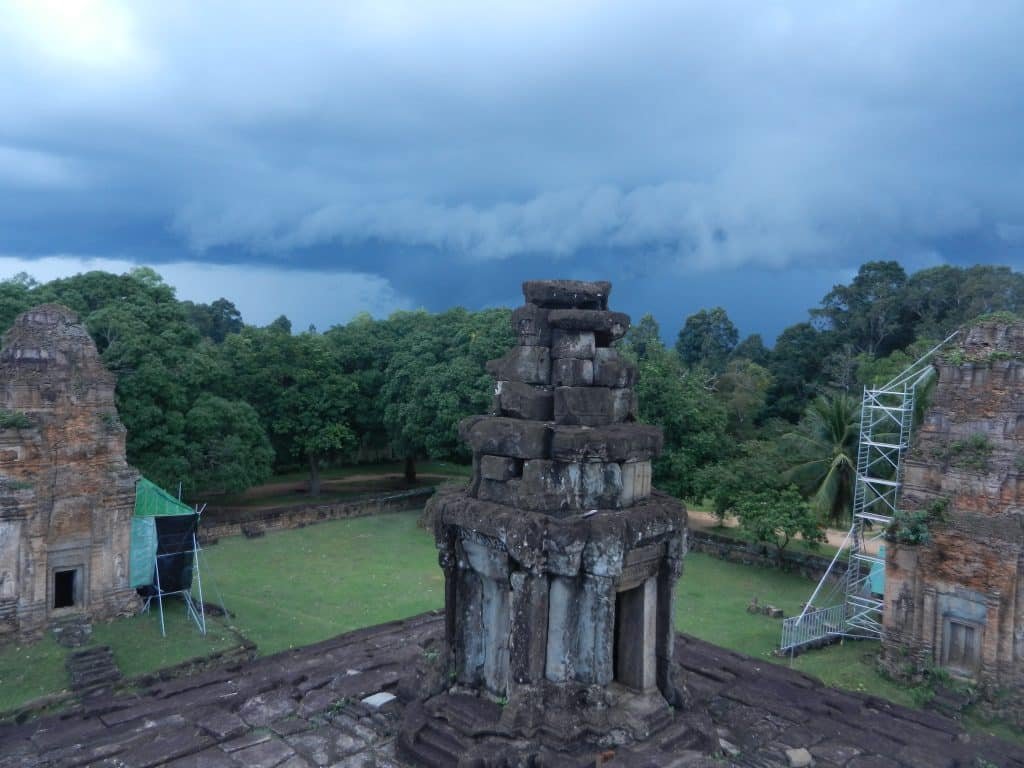
But nobody put priestly finery on me when I returned to Earth. Instead, I scuttled back to the tuk tuk just in time to avoid getting fire-hosed, and remained in awe of how nature and Khmer culture converged to create thought and art that have been some of the most inspiring in Asia.
But Indravarman wasn’t done. We’ll explore an equally magnificent temple in next post.