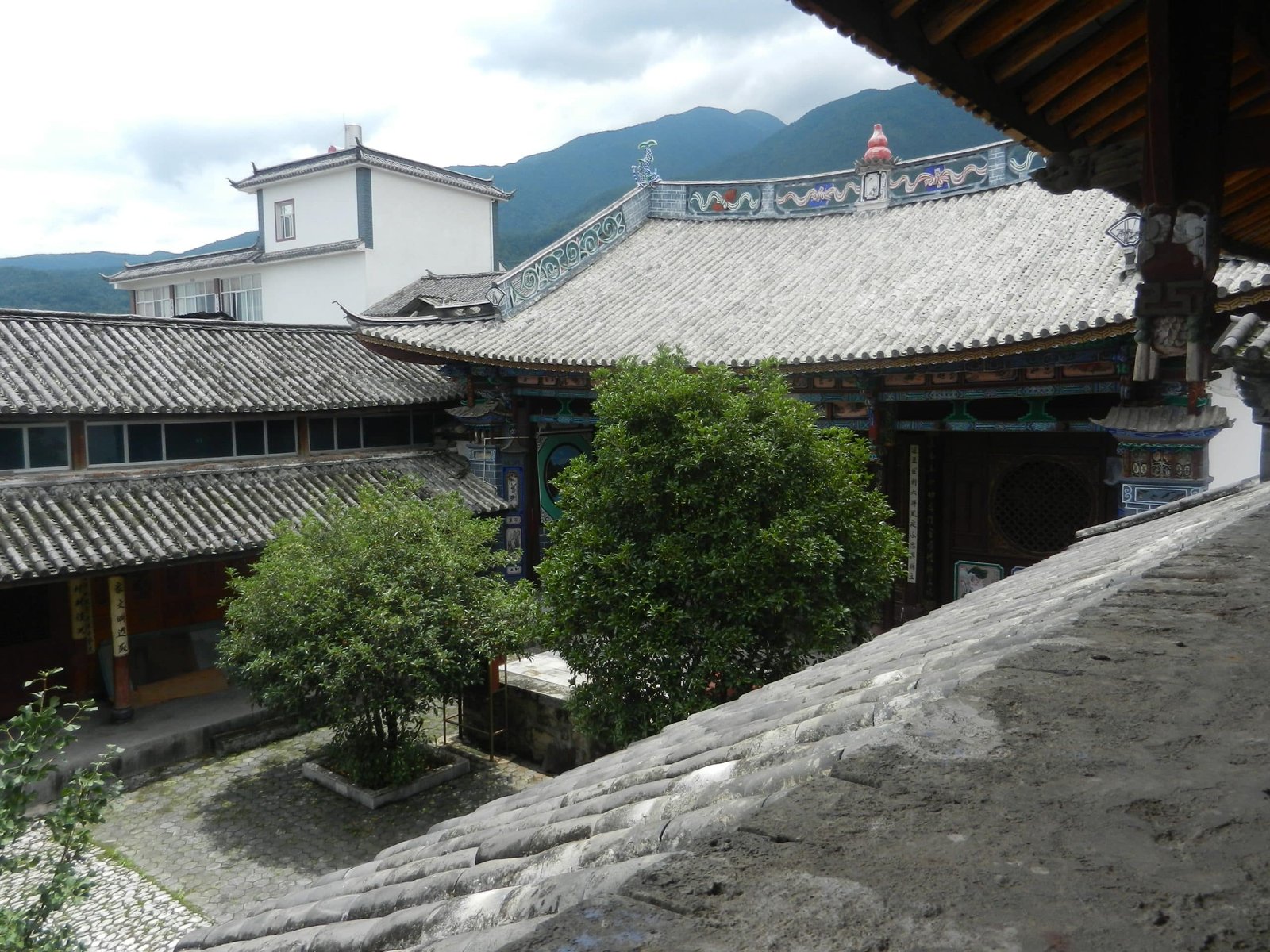
A temple a little north of Dali Old Town, Yunnan immersed me in China from imperial times. I walked through its village’s narrow streets which twisted uphill between old ramshackle homes.
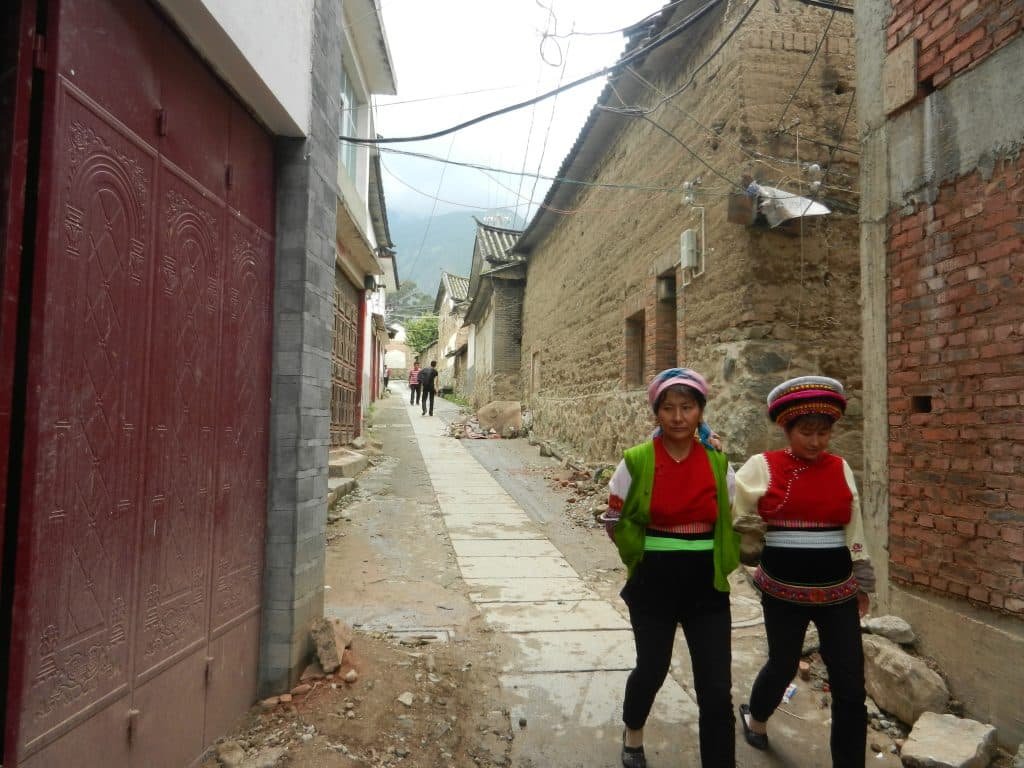
After many twists and turns–

I found this painting. It was so big that it almost blocked the road–it was made to be noticed.
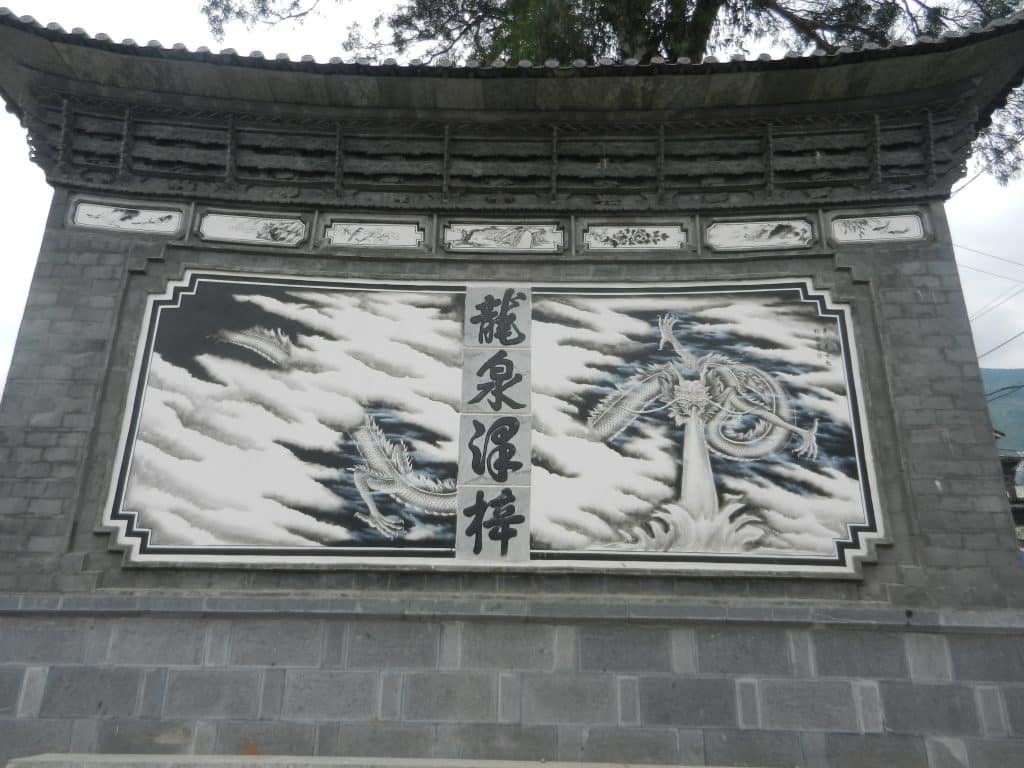
The soft clouds and powerful dragons balanced each other like Yin-Yang patterns in Daoist cosmology. So did the dark and bright colors. Everything flowed together in a whole that blended softness and strength. The universe is in harmony.
These balances were also expressed in traditional Chinese painting. Chinese landscapes were perfected back in the Song Dynasty. So why did I find them in this humble village?
I walked around the wall and found a peaceful little yard. It was quieter and prettier than the cramped and dingy streets.
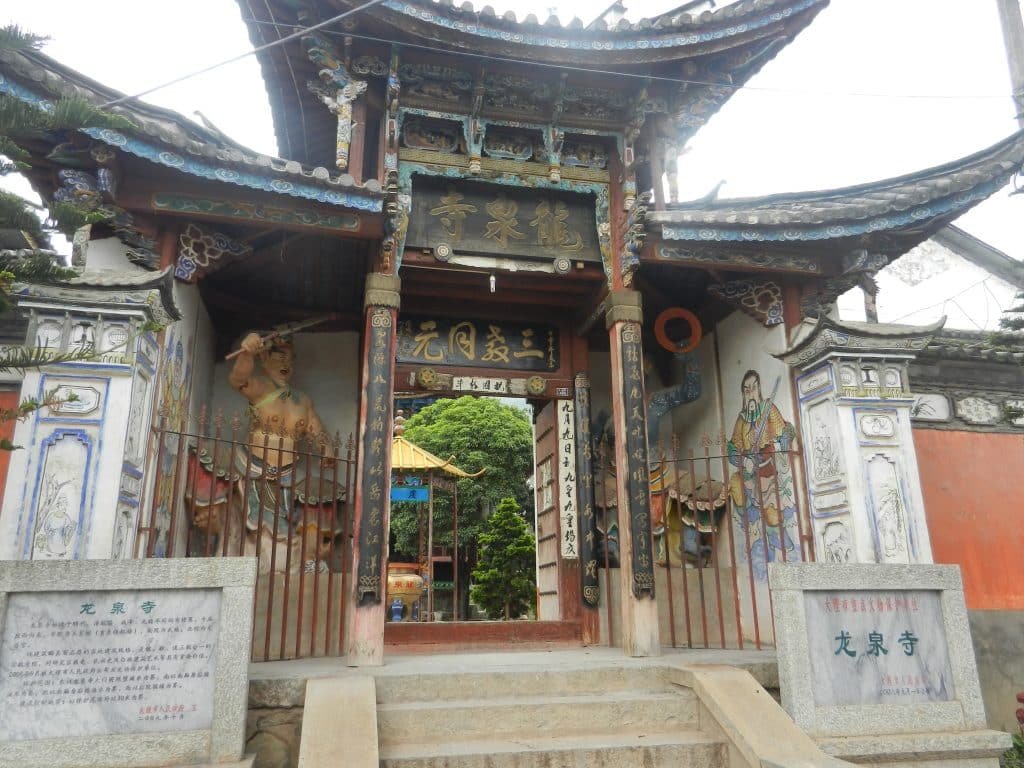
I was approaching the gate of a very old Chinese institution, the city temple. I blissed out on the other side because I became as immersed in traditional China as I’ve ever been. We’ll enter it now.
A shrine housing several spirits presided across the courtyard.
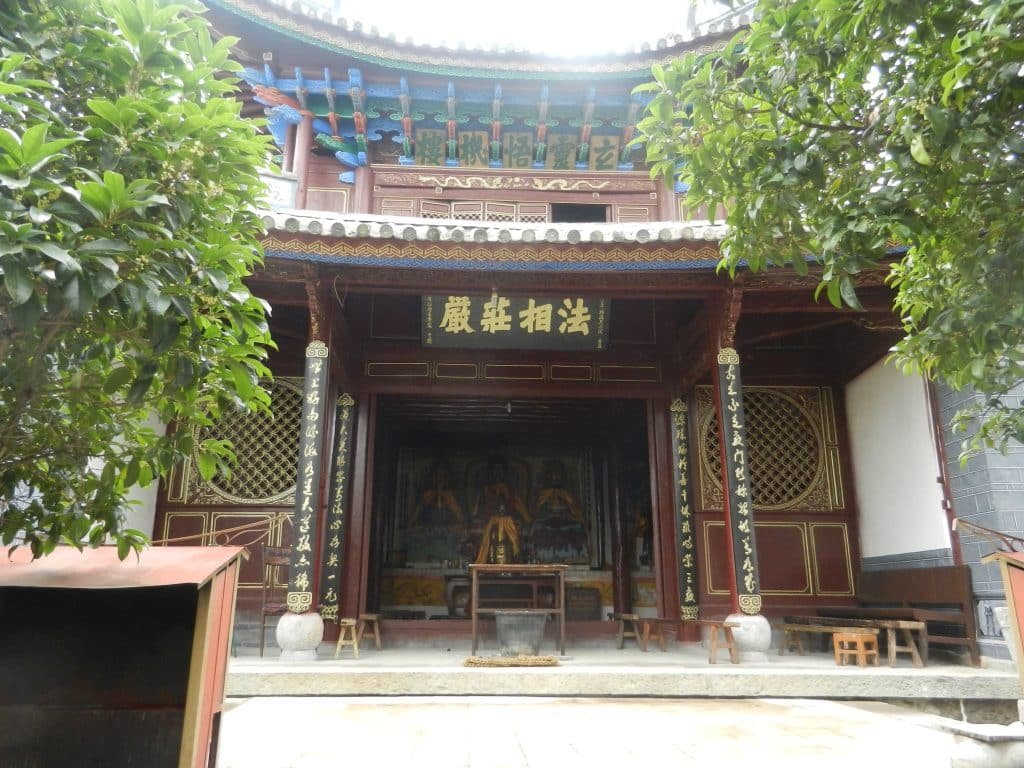
Inside a characteristically Chinese assortment of gods were roomies.

The Buddha’s in the middle, within the glowing halo. He rubs shoulders with Daoist deities. One sports a long white beard, and his throne is painted as rolling clouds. The other has a trimmed black beard and sits on a throne painted to resemble mountains. Water and mountains (a basic concept in Chinese landscape painting) flank the Buddha to create a holistic view of the world.
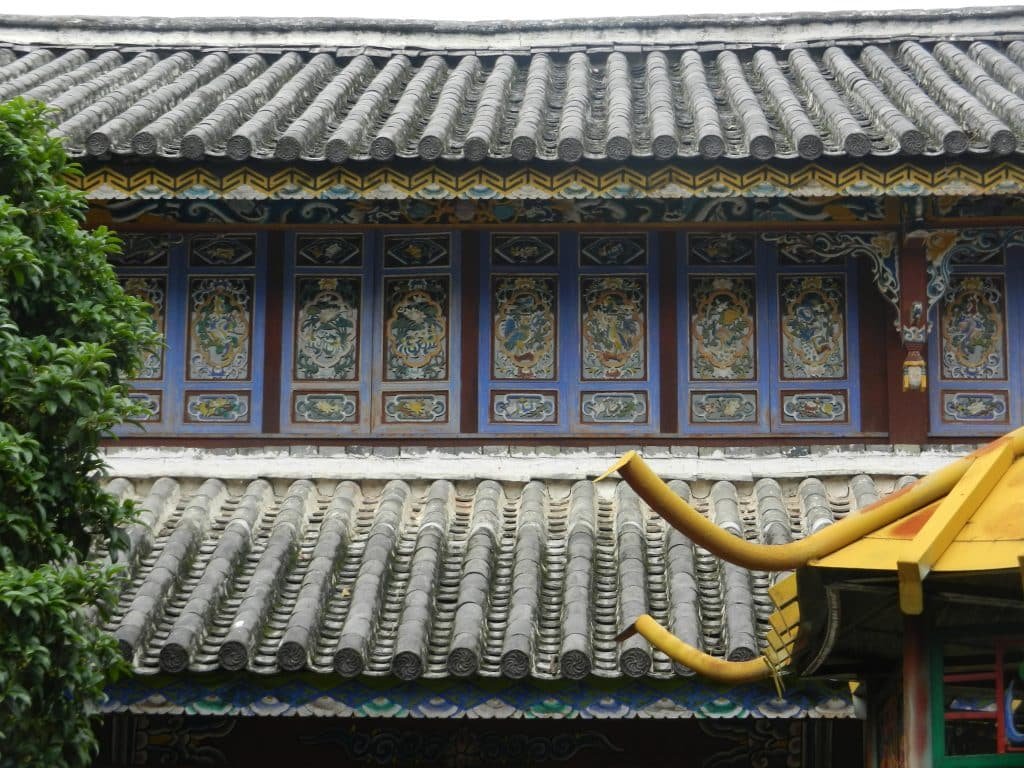
Back outside, I looked across the courtyard and admired this elegant building with a hall on the upper floor. I couldn’t resist entering.

More elevated spirits were awaiting their due honors.

The plentiful incense sticks in a well-worn box showed that they’re getting lots of business.
So far, nothing was different from what I had seen in hundreds of Chinese temples. But several things made the place grow on me so much that I still treasure the memories of lingering in it.
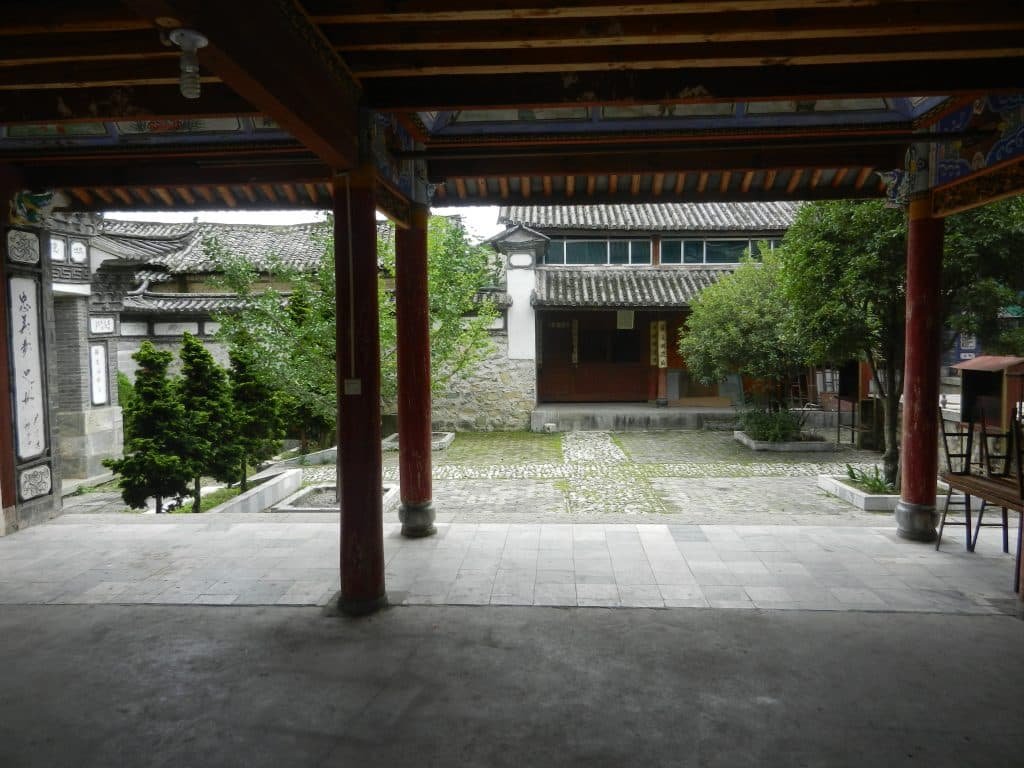
1. Balance between closed and open spaces. Above, I’m looking through the area under the upstairs hall, towards one of the two courtyards. The yards are about the same size as the cluster of buildings around them. Yin and Yang felt harmonized. Other Chinese temples have this spatial balance too, but this one’s small scale gave it an intimate atmosphere.
2. Community. A group of elderly men chatted, sipped tea and played cards in an open hall behind me. I didn’t photograph them because I wanted to respect their space. This was a small town with no tourists or English speakers. Secular and sacred often blend in Chinese temples–people go there for communal functions, and sometimes just to enjoy each other. This temple blended sacredness and worldly life so well that I wanted to let them stay balanced.
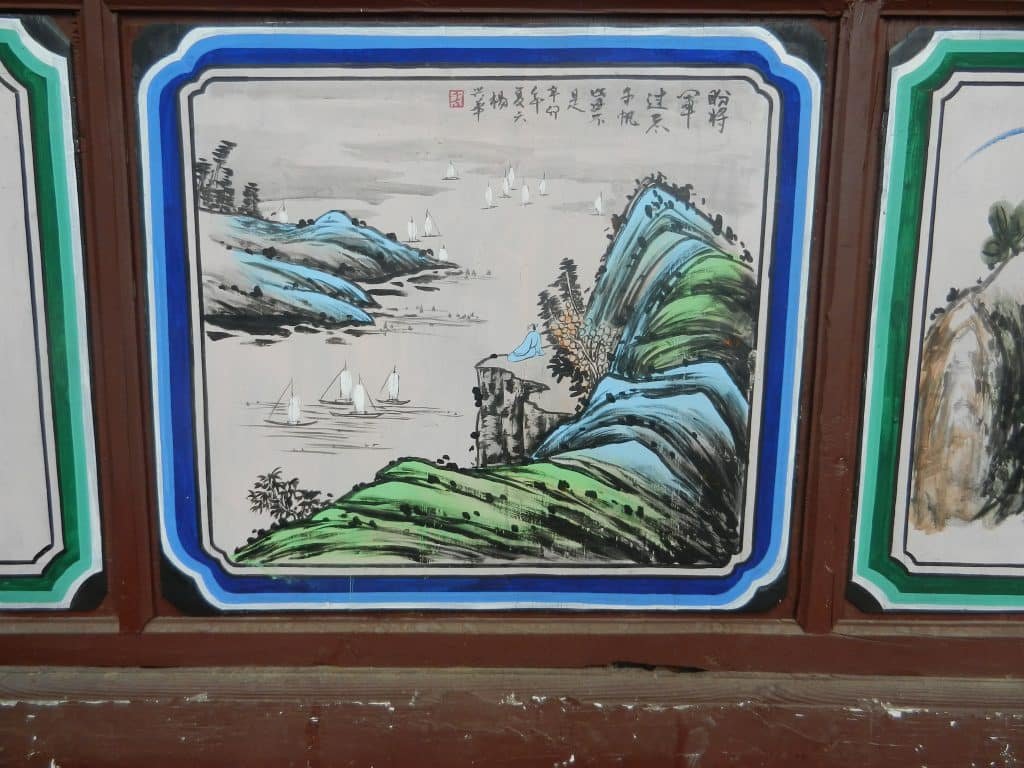
3. There were a lot of paintings on the buildings.
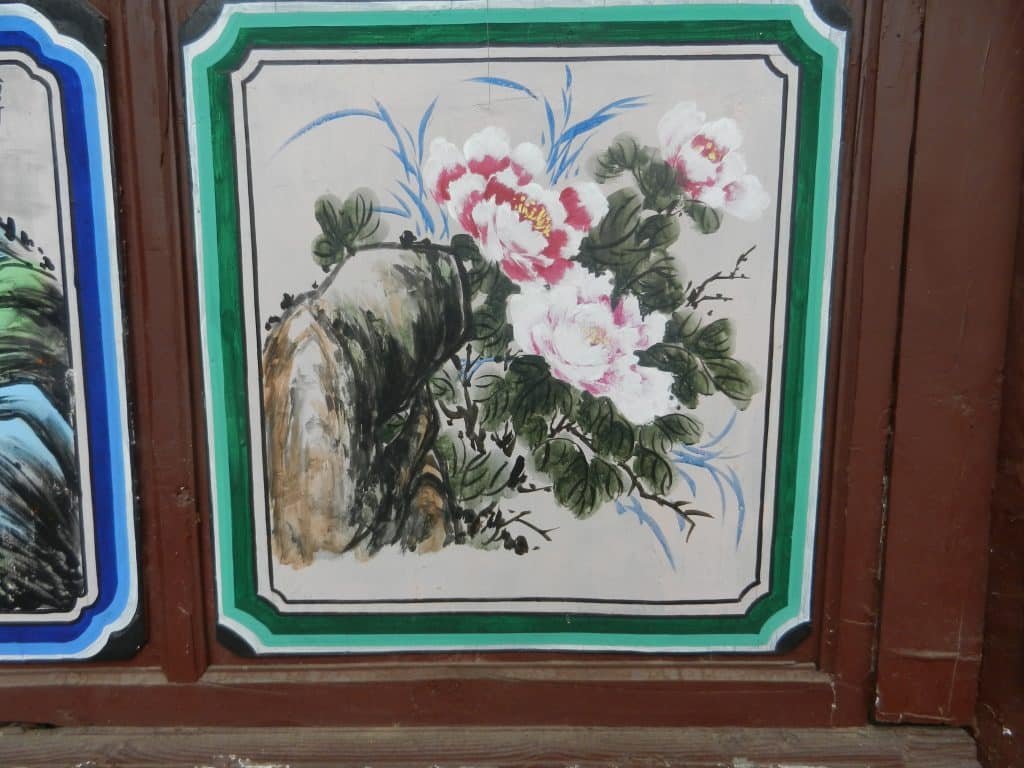
They’re traditionally Chinese in style, but new. China’s artistic traditions are still living, and these paintings show nature as a balance of colors and energies. Like the temple’s spaces, everything is in harmony.

4. The roofs flow together, as though they have energies that make up a circuit that harmonizes the whole compound.

The roofs and the mountains seem to flow into one field that embraces the whole town.
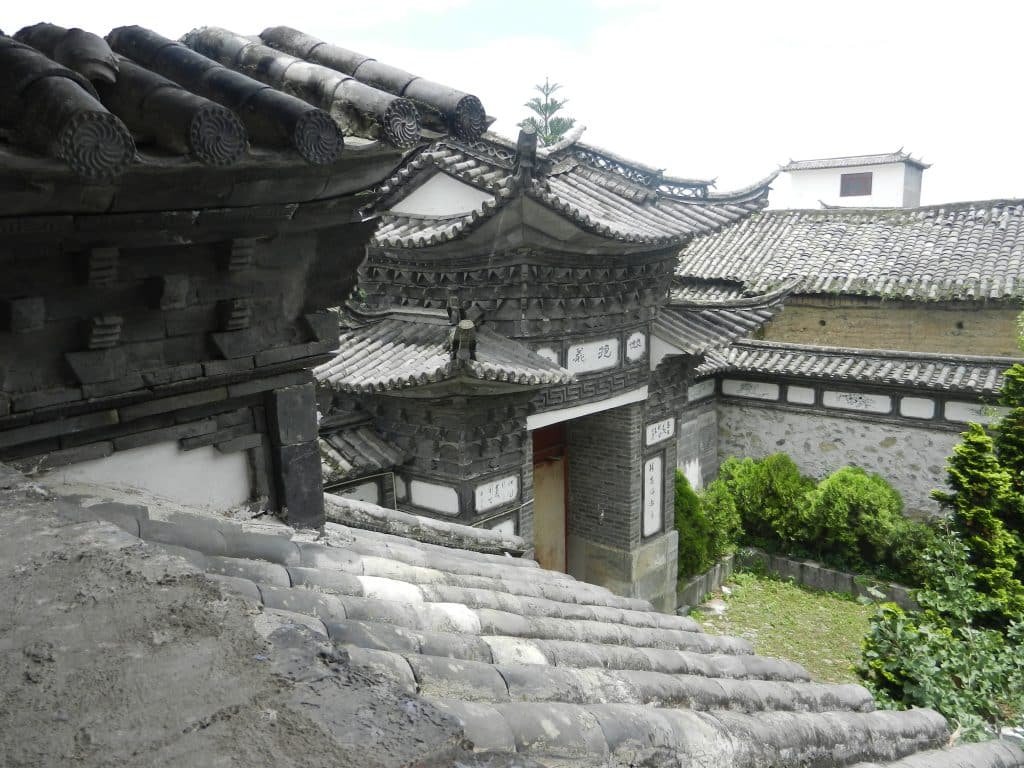
So everything in the temple was in harmony:
1. Multiple honored spirits together
2. Open and closed spaces
3. Spiritual and worldly life
4. The past and present
5. Flows of energy
6. Temple and community
7. Buildings and nature.
To me, no elite artwork has expressed the integration and resonance of all domains better than this intimate temple in a humble village. Back in Silicon Valley and dodging SUV’s again, I still treasure memories of this place.