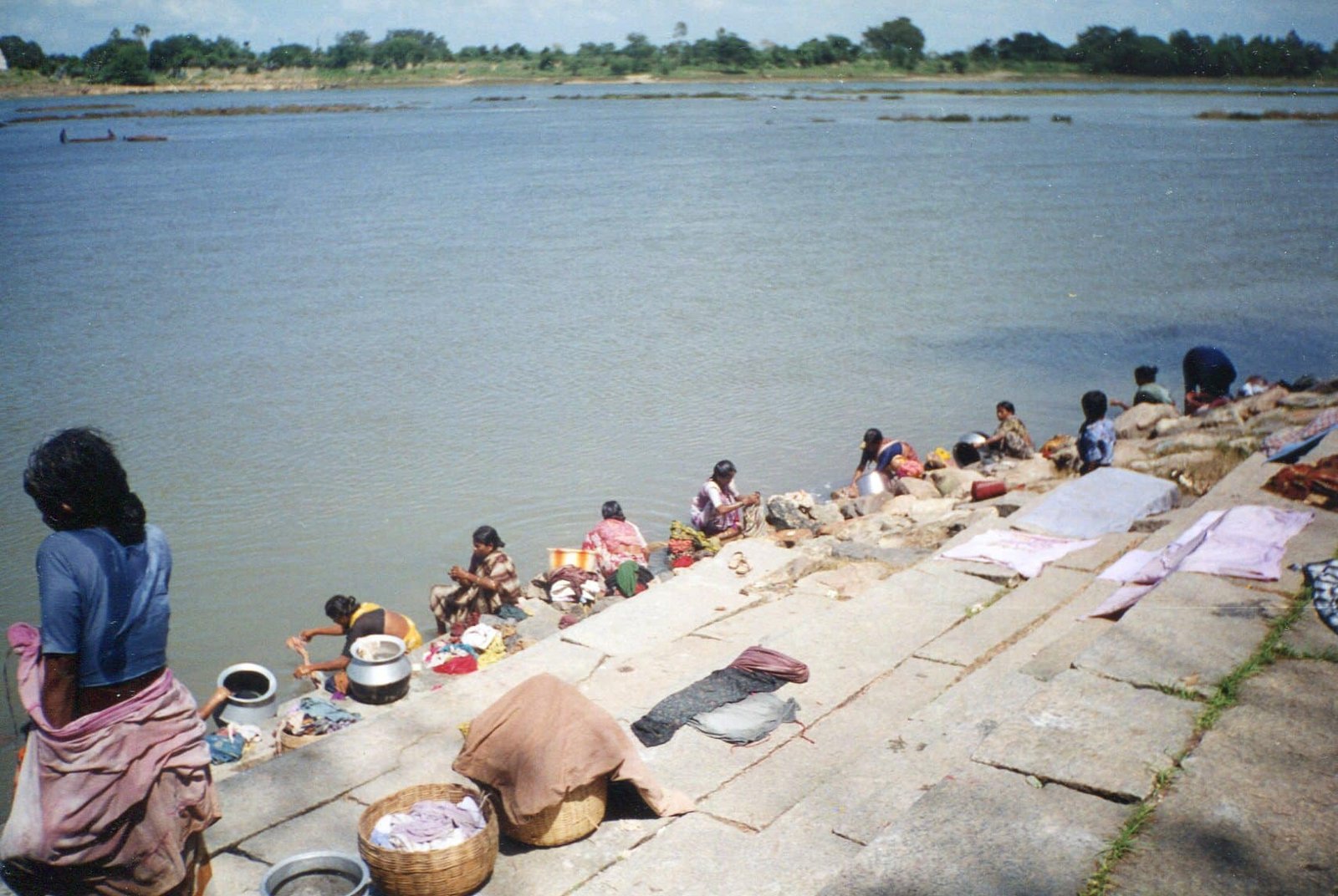
Things often seem to happen on a cosmic scale in India. While living in the school outside Chennai in 1996 (it was called Madras then), I always got up around 6:00 a.m., stepped out of the dormitory, and ambled to the showers, which were about 600 feet away. I arrived in Chennai in late summer, when temperatures skyrocket during the day. The weather was already warm at dawn, but comfortable as long as I walked slowly. The air was still and the neighborhood was quiet. The area was rustic then; most homes had thatched roofs and dirt floors. This time, when night transitions into day so that both are equally balanced, has been considered ideal for meditating. The environment is tranquil, like the original unity that everything differentiated from.
But it was already hotter when I finished my shower. Sweat began to drip from my temples and the back of my neck as I strolled back to the dorm. High-pitched nasal voices of female singers began to emanate from local farmers’ radios. Pariah dogs yapped and cows mooed. It felt hotter every 30 minutes.
By noon the sun blazed in full majesty. The road teamed with motorcycles, cars, donkey-pulled carts, pedestrians, bikes, cows, dogs, and goats. The aromas mixed truck exhaust, animal dung, and spices—a thick concoction that’s probably burned into my brain for the rest of my life. The neighborhood now bustled with all of nature’s life forms. The energy that the universe came from flowed in full abundance.
The morning thus seemed like a microcosm of creation. I was first immersed in the unity and peace before all the universe’s patterns emanated, and then became part of an infinitely profuse river of life.
Locals joked that Chennai has three seasons: hot, hotter, and hottest. But in December (during the same trip), the monsoon roared in. Sheets of rain slammed the dorm walls, and wind ripped panels off the main hall. The water quickly rose to the middle of my thighs. Wading in its cool caresses felt soothing until a groundskeeper warned me about poisonous snakes. We all finally evacuated to an apartment complex on higher ground.
When the rain subsided, three other young American men and I walked out to the main road. We felt giddy after being cooped up, so we decided to ride into town for dinner. The area was now cleaned of the grime that normally gave its light-colored buildings dark brown frames. A dead cow sprawled on the roadside, and a lone baby goat frantically called for its mother. But the water drops on the trees and bushes sparkled under the triumphant sun, and the area looked fresh. The cycles of nature in this ancient land had turned again. The old had passed away and life was renewed.
When we reached the main road, I spotted my regular auto rickshaw driver, Surya. He was yacking with a few other drivers, and one of my companions remarked in his Alabama drawl, “Hey! Surya’s drunk!” When Surya realized what we were laughing about he exclaimed, “No! No! Surya no like drinks! Surya clear! But today, fight with wife and I’m having some feelings.” We threw caution to the wind and insisted that he drive us anyway, since auto rickshaws don’t go very fast. Surya sang and we helped him navigate—“Here comes a bus, Surya.” We all had a lot of laughs that evening. Emotional patterns in India often reflect nature’s copiousness. Many people feel fully and sometimes express themselves with less reserve than folks from many Northern European and East Asian cultures expect. A Danish man that I met in Chennai found the locals “childlike.”
Sanskrit has several beautiful words for free-flowing emotions. Mudita is a sympathetic joy, which you feel by delighting in other people’s happiness. Prasanna means clear and bright, and it also refers to feelings of pleasure that ripple to more and more people. These positive emotions are less bound to the individual than most American and English concepts of emotion; they instead seem to extend throughout the environment.
The modern West has often centered its thought on distinct objects, but it’s easy to think that things and emotions are expanded to cosmic proportions. This tendency has inspired a civilization that has been as creative as the West. We’ll explore it in several more articles. Music is a great way to start.