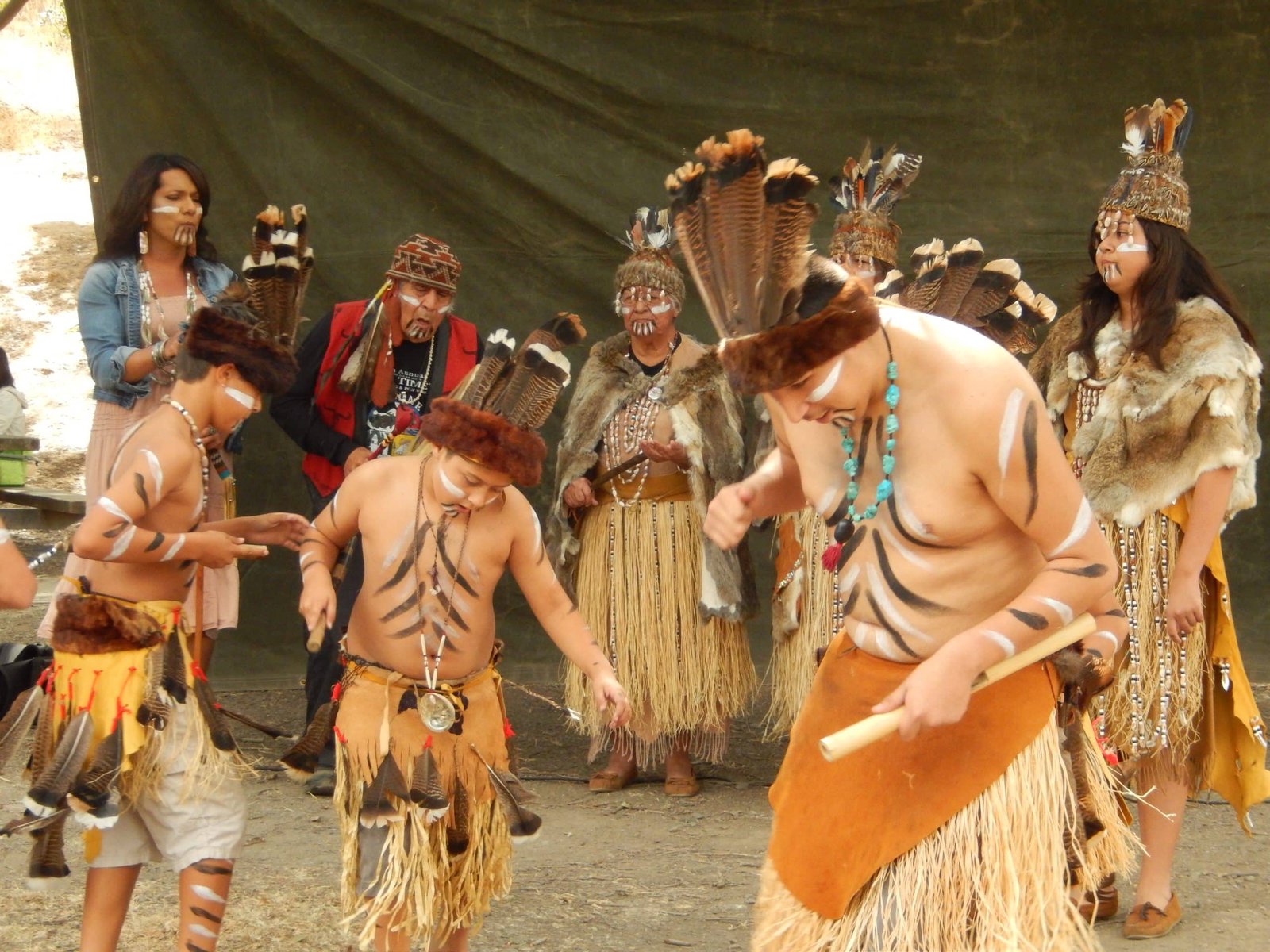
My perspectives of my own turf transformed when I attended a gathering of Ohlone Indians in Fremont, California. They haven’t been as well known as the Anasazi who built 1,000-room pueblos in the Southwest, the Mississippians who erected the city of mounds at Cahokia, Illinois, or the Iroquois and Huron who built longhouses up to 200 feet long in the Northeast. Ohlone buildings were often humble circular and oval huts and lean-tos made from reeds and branches, but Spanish explorers that discovered them in the 18th century noted that they were well fed.
Like most Native Americans, the Ohlone were seminomadic. People living around the southern half of the San Francisco Bay often stayed near the shore in the chilly months, where they could fish and hunt the area’s wealth of birds. In the spring, when houses were soggy from the winter rains, they left the camps for the surrounding hills, where they could harvest acorns and hunt deer and other game. Some anthropologists noted that Native Americans often immensely enjoyed the variety of experiences while moving between locations each year.
The Ohlone language in the South Bay reflects this deep integration with nature. People stopped using it by the 1930s, so I was surprised to hear a young man giving a speech in it at the gathering. He later told me that the language has been resurrected from dictionaries and recordings. I noted that the pitches of vowels sometimes slowly rose as though they were melodies in songs, and said that I enjoyed the sounds’ softness. He said that he often noticed the deep glottal sounds. They reminded him of the mountains around the Santa Clara Valley, and the soft tones reminded him of the flatlands and the bay. Together, they recreated the whole natural environment and made people feel deeply immersed in it.
Many indigenous New World languages are rich in onomatopoeia (the formation of a word that sounds like what it names; boom, whack, flit, zip, and thump are common English examples). Some speakers of Quechuan languages (the Incas’ linguistic family) appreciate their phonetic resonances with nature so deeply that they distrust Spanish speakers. They see Spanish as literary rather than grounded in the natural environment, and thus feel that it’s easy for its speakers to lie, since they’re distant from reality. Janis B. Nuckolls, in Sounds Like Life; Sound-Symbolic Grammar, Performance, and Cognition in Pastaza Quechua, wrote that lowland Quechua speakers in Ecuador move the mouth, vocal track, and vocal pitch to create sounds that mimic movements, rhythms, and visual patterns in their world. For example, the adverb sa represents a radial pattern of movement from a center. People feel that it imitates a turtle’s hatchlings emerging from a nest in the sand and crawling in every direction. The pitch glides upwards to mimic the movement.
Ohlone myths have also expressed intimacy with nature. The center of the world is Mt. Diablo, which rises a little beyond the South Bay’s eastern hills. Water once covered the entire earth, and the mountain was one of only two islands that remained. Coyote, Eagle, and Hummingbird lived on its peak (Pico Blanco in southern versions) and then recreated the world. Local Ohlone believed that rocks contain special powers associated with creation. Some made indentations and carved images on stones in the hills a little north of Berkeley. Learning about their ideas of rocks transformed my experiences of my own land so that it now seems more alive. The stones and grassy hills they sit on balance each other in hard and soft patterns that seem as exquisite as the Parthenon’s forms.
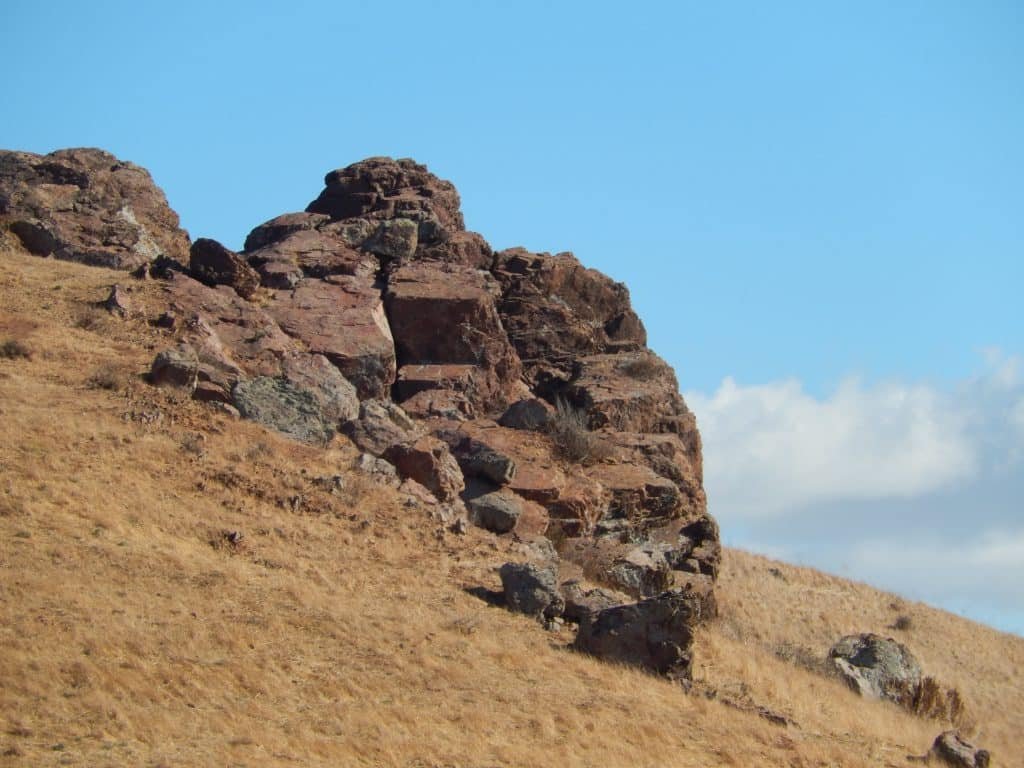
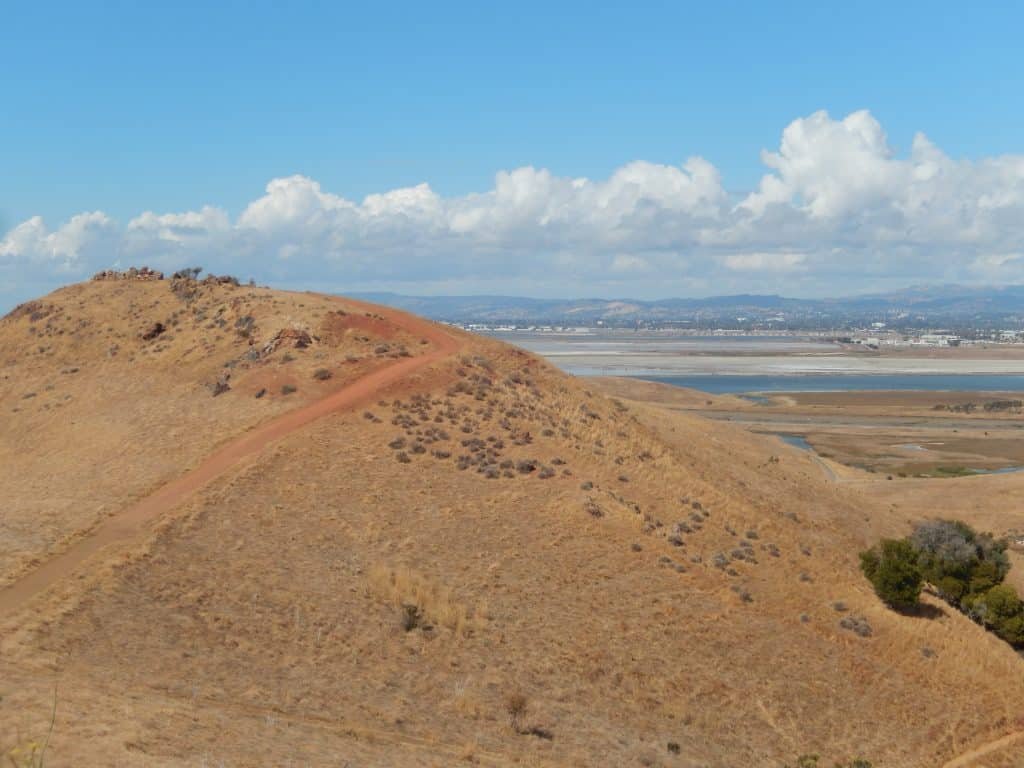
I grew up admiring San Jose’s freeways, office buildings, and suburban neighborhoods as apogees of progress. I now more profoundly realized that the land they cover teams with life.
The Ohlones’ staple food was acorn bread, which was sometimes served as a warm broth. I found the broth to have a smoky taste and a thick texture; it’s comfort food. We watched the bread being cooked in baskets placed on heated stones in an open pit. I didn’t wash my hands all evening after going back home because they still smelled like the smoke and that carried my thoughts back to the hearth. The campfire was where families gathered, women prepared meals, children played, and elders told myths and other stories. I missed this center of communal life when I returned to my suburban home.
Ulysses S. Grant’s great-great grandfather Mathew Grant arrived in Massachusetts in 1630 and worked as a surveyor. He trekked through the local countryside and measured it in grid patterns to demarcate the jurisdictions and private property lines. People came to him to settle disputes about borders. He played an essential part in the growing community, but this abstract geometric way of seeing which emerged in Europe was emphasized at the expense of Native Americans’ intimate ways of experiencing the land. This has been a tremendous loss for us. We can now begin to see land through multiple cultures’ eyes and realize that every parcel of earth is sacred; it’s a convergence of many cultures, perspectives, and natural ecosystems, and it thus pulsates with endless fertility. Our ideas of space can expand from a three-dimensional Cartesian grid to an infinitely abundant and multidimensional whole that integrates many people, and which offers boundless potential for new perspectives of the world.